How Do I Fill an e-Recepta at a Pharmacy in Poland?
Standing at the counter of a Polish pharmacy for the first time can feel like a test of your survival skills. You’ve just navigated a doctor’s appointment, but instead of a signed piece of paper, you have a four-digit code and a feeling of uncertainty. This guide provides the practical, step-by-step clarity you need to successfully fill an e-Recepta and manage your medications in Poland.
The Digital Shift: What Exactly Is an e-Recepta?
I remember the first time I walked into an Apteka (pharmacy) after the digital transition. I was clutching my phone, searching for an email that hadn't arrived, while the pharmacist stared expectantly at me. In the "old days," you had a physical green or white slip. Today, Poland is almost entirely digital. The e-Recepta is essentially a digital entry in a national database. When a doctor prescribes medication, they don't give you the medicine; they upload an authorization to this central system.
This system is designed to reduce errors and prevent the loss of physical documents. However, for a foreigner, it adds a layer of digital bureaucracy. To access this entry at the pharmacy, you need two pieces of information: a four-digit access code and your PESEL number. Without these, the pharmacist cannot even "see" what you have been prescribed. If you are new to the country, How to Get Your PESEL Number and Why It Matters for Healthcare is an essential first step, as your PESEL is the "key" to almost every medical interaction you will have.
The beauty of the system, once you get used to it, is its persistence. If you lose your phone or delete the SMS containing your code, the prescription still exists. It is tied to your identity. For those of us who have spent years in Poland, we’ve seen this evolve from a clunky pilot program into a remarkably efficient tool that saves a lot of time—provided you know how to trigger it correctly.
The Importance of the PESEL Number
In Poland, your PESEL is your lifeblood. When you arrive at the pharmacy counter, the pharmacist will likely ask, "Kod i PESEL?" (Code and PESEL?). If you haven't memorized those eleven digits yet, now is the time. For expats who are still in the process of legalizing their stay, this can be a point of stress. If you are waiting for your residency and don't yet have a PESEL, don't panic. Doctors can still issue prescriptions using your passport number, but you must ensure they enter it correctly in the system, or the pharmacy's computer won't find the match.
I’ve seen many newcomers struggle because the doctor entered a passport number with a typo, or the pharmacist was looking for a PESEL when the record was filed under a document number. Always double-check with the doctor which identification number they are using. If you’re still waiting for public health coverage through the NFZ, having a backup like SafetyWing can be a lifesaver, as it provides coverage for the private visits where these prescriptions are often generated.
Accessing the Internetowe Konto Pacjenta (IKP)
The IKP is the "Online Patient Account" and it is the central hub for your health history in Poland. While you can get by with just an SMS code, setting up your IKP is a game-changer. It allows you to see all your past prescriptions, dosage instructions, and even who issued the medicine. More importantly, it allows you to receive your e-Recepta codes via email or through the "mojeIKP" mobile app.
Setting this up usually requires a "Trusted Profile" (Profil Zaufany), which you can get through most major Polish banks. Once logged in, you can see exactly how many packages of a medication are left on a "recepta roczna" (annual prescription). If you’re curious about the technical setup, How Do I Set Up an Internetowe Konto Pacjenta (IKP) in Poland? covers the nitty-gritty of getting your digital health profile active. It’s one of those administrative hurdles that feels like a mountain but is actually just a molehill once you have your bank login ready.
Navigating the Apteka: The Practical Steps to Getting Your Meds
Walking into a Polish Apteka is generally a formal experience. You take a number or stand in line, and when it’s your turn, you head to the "stanowisko" (counter). Most pharmacists in major cities like Warsaw or Krakow speak some English, but the process is so standardized that you don't actually need much Polish. You simply say "Dzień dobry" and present your code.
There are three main ways to provide your prescription information. The most common is the "Code and PESEL" method. You verbally give the four digits followed by your eleven-digit PESEL. The pharmacist types this into their terminal, and your list of medications pops up. They will then confirm which items you want to buy today. You don’t have to buy everything at once; if a doctor prescribed three boxes of an expensive medication, you can buy one now and come back for the others later, provided the prescription is still valid.
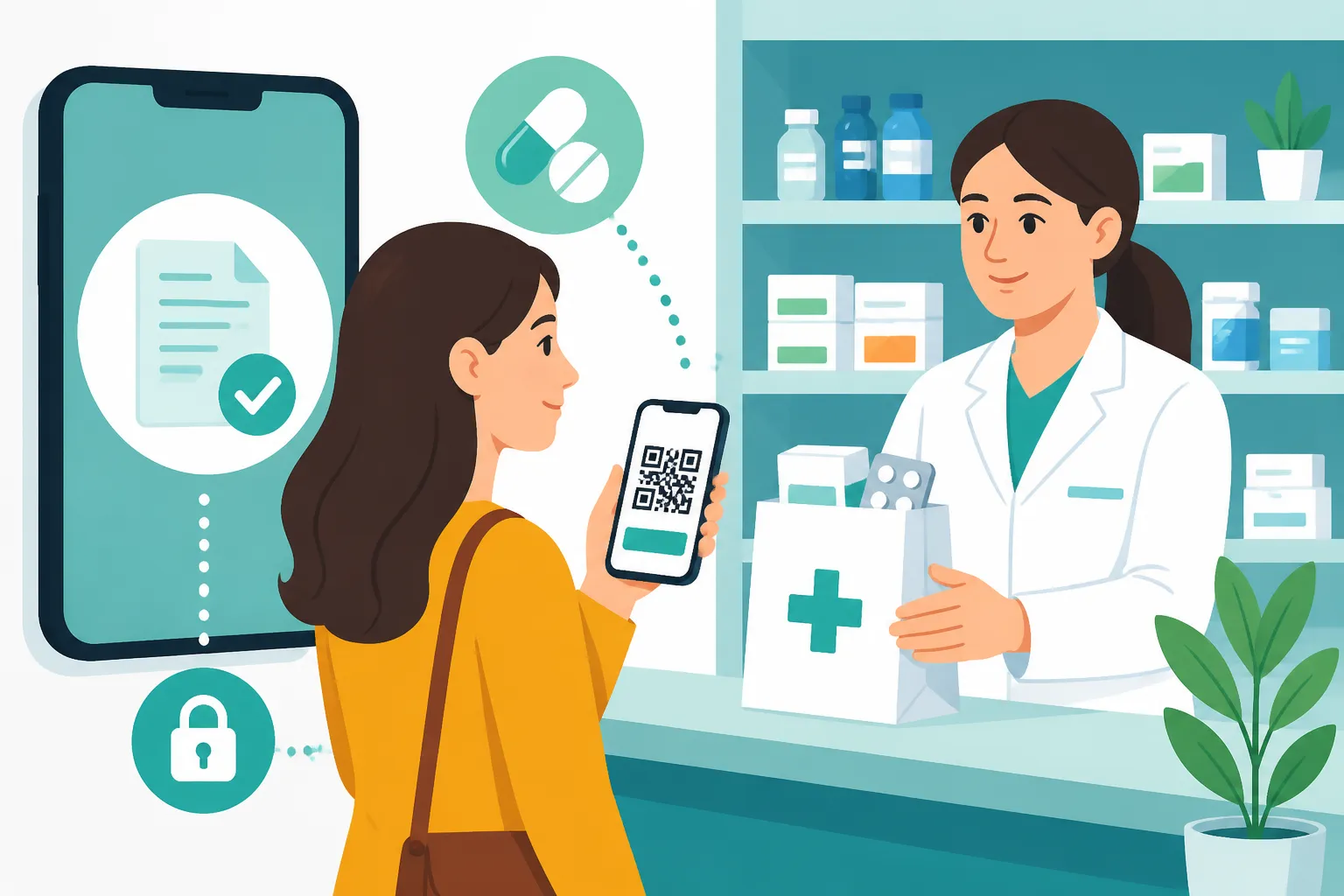
For those concerned about privacy or language barriers, using a QR code is often easier. If you have the IKP app or the PDF version of your prescription, you can simply show the barcode to the pharmacist. They scan it, and the system automatically pulls up your data without you needing to say a word. For more on the logistics of these shops, see Understanding the Polish Pharmacy (Apteka) System and Opening Hours, which explains why some pharmacies are open 24/7 and others close early on Saturdays.
Handling Prescriptions Without a PESEL
If you are a tourist or a very new expat, you might not have a PESEL yet. In this case, your "key" is usually the identification document you showed the doctor—likely your passport. When you go to the pharmacy, tell them you don't have a PESEL ("Nie mam PESELU") and present your passport. The pharmacist will manually enter your document number.
This process is slightly more prone to error, so keep a digital copy of the prescription "information printout" (informacja o wystawionej recepcie) that the doctor should have emailed you or printed for you. This printout contains a long barcode that acts as a fail-safe. If the system is being stubborn, that barcode will almost always work. If you're in Poland on a temporary basis and using insurance like SafetyWing, keep your receipts and the prescription printout, as you’ll need these to file for reimbursement later.
The Pharmacist’s Role and Substitutes
Polish pharmacists are highly trained and often act as a first line of medical advice. They are legally allowed (and often encouraged) to offer you "zamienniki" (substitutes). These are generic versions of the brand-name drug your doctor might have written down. They contain the exact same active ingredient and dosage but are usually significantly cheaper.
If the pharmacist asks, "Czy podać zamiennik?" (Should I give a substitute?), they are trying to save you money. In the Polish system, many drugs are "refundowany" (reimbursed by the state), and the generic version is often the one that receives the highest subsidy. If you are paying out of pocket because you haven't yet registered for the NFZ, asking for the cheapest "zamiennik" is a smart move. For a broader look at what medications might cost you, The Cost of Healthcare in Poland: A Complete Breakdown for Foreigners (2026) offers excellent context on pricing.
Deadlines and Expiry: When Your Code Becomes Useless
One of the most frustrating things that can happen is arriving at the pharmacy only to be told your e-Recepta has expired. Unlike some countries where a prescription might be good for a year, Poland has very specific and sometimes surprisingly short validity periods. If you miss the window, the pharmacist literally cannot sell you the medication; the system will block the transaction.
Most standard prescriptions are valid for 30 days. This clock starts the moment the doctor clicks "save" in their system. However, there are critical exceptions. For example, a prescription for an antibiotic is usually only valid for 7 days. If you wait until you "feel worse" a week later, you will likely need a new doctor's visit just to get a fresh code. On the other end of the spectrum, some chronic medications can be issued as an "annual prescription," but even then, you must "start" the prescription (buy the first pack) within the first 30 days.
| Medication Type | Typical Validity Period | Special Conditions |
|---|---|---|
| Standard Medications | 30 Days | The most common duration. |
| Antibiotics | 7 Days | Must be filled quickly due to urgency. |
| Immunological Products | 60 Days | Often includes vaccines or specialized serums. |
| Chronic Meds (Annual) | 365 Days | Must be "started" within the first 30 days. |
| Contraception | 30 – 60 Days | Depends on how the doctor marks the entry. |
The "Annual Prescription" Trap
The 365-day prescription sounds convenient, but it has a catch that trips up many expats. If a doctor prescribes you a year's supply of blood pressure medication, you don't have to buy it all at once. However, if you don't buy the first box within 30 days of the issuance date, the system might "calculate" that you've missed doses and reduce the total number of boxes you are allowed to buy.
Furthermore, if you start the prescription at one pharmacy, you generally have to finish it there. You cannot buy one box in Warsaw and the next box in Krakow if they are part of the same electronic "bundle." This is a quirk of the Polish system that aims to keep tracking consistent but can be a headache if you travel frequently. If you find yourself stuck without a valid prescription, you may need to look into How to Get a Prescription Renewed Online in Poland? to avoid a full clinic visit.
Managing System Glitches
While rare, the e-P1 system (the backbone of the e-Recepta) does occasionally go down for maintenance. Usually, this happens late at night or on weekends. If the pharmacist tells you "system nie działa" (the system isn't working), there isn't much you can do but wait or try another pharmacy.
In genuine emergencies, a pharmacist has the power to issue a "recepta farmaceutyczna" (pharmacist's prescription) for life-saving medication if you can prove you have been taking it, though this is entirely at their discretion and usually costs the full 100% price. This is why having robust coverage, like SafetyWing, is so important for those "in-between" moments when you aren't yet fully integrated into the public healthcare infrastructure.
Costs and Coverage: Saving Money at the Counter
One of the first things you will notice when the pharmacist scans your code is that the price can vary wildly depending on your insurance status. In Poland, many medications are "refundowany" (subsidized). This means the government pays a portion of the cost, and you pay a "co-payment." To qualify for these lower prices, you must be registered with the NFZ (National Health Fund).
If you are working on a standard employment contract, your employer handles this. If you are a freelancer, you might need to check Health Insurance in Poland: Mandatory, Private and Subscription Options Explained to see how to maintain your status. When the doctor writes the e-Recepta, they must select your "entitlement" level. If they mark you as "X" (non-insured), you will pay 100% of the price, even if you actually have NFZ. Always check that the doctor sees your insurance status in their computer.
Private Insurance and Pharmacy Claims
Many expats use private medical subscriptions like Medicover or LUX MED. While these clinics make getting an e-Recepta very easy through their apps, they do not usually cover the cost of the medication itself at the pharmacy. You will still pay the pharmacy directly.
If you have international insurance, such as SafetyWing, you will typically pay the full price at the Apteka, keep the "paragon" (fiscal receipt) and the prescription printout, and then submit them for reimbursement. Polish pharmacies are very good about providing a "faktura" (invoice) if you ask for one. Just say, "Poproszę fakturę na osobę prywatną" (An invoice for a private person, please) and give them your name and address. This document is much more official than a simple receipt and is usually required by insurance companies for claims.
Understanding Reimbursed vs. Non-Reimbursed
Not all medications are subsidized, even for Polish citizens. Many modern "lifestyle" drugs, certain types of birth control, and imported brand-name medications are "płatne 100%" (100% paid). The doctor’s system tells them the reimbursement status, but they don't always volunteer that information. It is always worth asking, "Czy to jest lek refundowany?" (Is this a reimbursed drug?).
If you are trying to decide between the public and private routes for your general care, Public vs Private Healthcare in Poland: Which Should Expats Choose? provides a deep dive into how these costs balance out over time. Sometimes, a private visit is faster, but a public visit ensures your prescription status is perfectly synced with the NFZ database for maximum subsidies.
Emergency Access to Meds
What happens if you run out of medication on a Sunday or at 2 AM? In every major Polish city, there is a "dyżurna apteka" (duty pharmacy) that is open 24 hours. You can find these by searching "Apteka całodobowa" online. Be aware that these pharmacies sometimes charge a very small "night fee" (usually a few złoty) for service during late hours. If your situation is a medical crisis rather than just a missed dose, Emergency Medical Care in Poland: What Every Expat Needs to Know is the guide you should have bookmarked on your phone.
Navigating the e-Recepta system is one of those small victories that makes you feel like a true resident of Poland. Once you’ve successfully given your PESEL and code, and walked out with your medication for a fraction of the price you might pay in the US or UK, the system's logic starts to make sense. It’s about preparation—having your ID ready, understanding the deadlines, and knowing your insurance rights.
Disclaimer
This guide is for informational purposes only and does not constitute professional medical or legal advice. Healthcare regulations and digital systems in Poland are subject to change. Always consult with a qualified medical professional or a legal expert regarding your specific health needs and insurance obligations. For the most current information, please refer to official Polish government health portals.