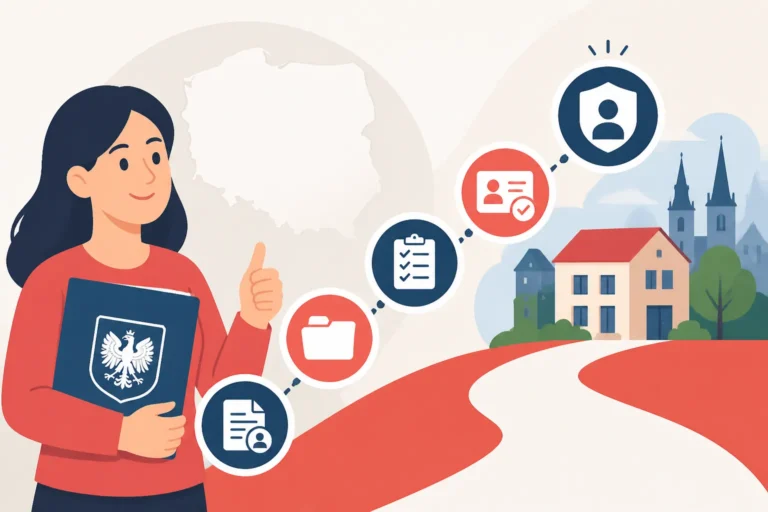
How Do I Get a Work Permit to Be Employed in Poland?
Ah, the Polish work permit – a topic that brings both excitement for a new chapter and, let's be honest, a fair bit of bureaucratic dread. If you've landed a job offer from a Polish company, congratulations! That's a huge step. But you're likely staring down a maze of paperwork, wondering exactly how you get the legal right to actually start earning that Polish złoty. This guide is here to untangle the process of getting a work permit specifically for employment with a Polish employer, walking you through the steps, pitfalls, and what to expect on this often-frustrating journey.
Understanding the Polish Work Permit System
Before diving into the nitty-gritty, it's essential to understand the overarching system. Poland, like many countries, has different types of work permits depending on your situation. For most people coming to work directly for a Polish employer, you'll be looking at one specific category.
The Different Types of Work Permits and What You'll Likely Need
The Polish government categorizes work permits into several types, from A to E, each designed for slightly different scenarios. For the vast majority of expats who have been offered direct employment by a Polish company, you'll be dealing with Type A.
- Type A Work Permit: This is the most common permit. It's issued when a foreigner is employed based on an employment contract or a civil law contract with an entity whose registered office or place of residence is in Poland. If you've secured a direct job with a Polish company, this is almost certainly the one your employer will be applying for on your behalf.
- Other Types (B, C, D, E): While less common for direct employment, it's worth knowing they exist. Type B is for foreigners performing functions on the board of directors of a legal person entered in the register of entrepreneurs (like a company director). Types C, D, and E are for various forms of delegated work or specific foreign entity operations. Don't stress too much about these unless your employer specifically mentions them; your focus will be on Type A.
It’s a common misconception that simply having a job offer means you can start working. Oh, how I wish it were that simple! Instead, that offer is just the first domino. The work permit is the next, crucial step. It's also important to note that citizens of the EU/EEA and Switzerland don't need a work permit for Poland. If you hold a valid [Karta Polaka], you're also exempt from needing a work permit. There are also some other specific exemptions, like certain students or graduates, but for most non-EU foreigners, a work permit is mandatory. This often adds to the confusion, as people hear about friends who "just moved and started working" and don't realize their friend was an EU citizen.
The Employer's Role: Your Biggest Ally (or Obstacle)
Here's the crucial part, and something that often catches new expats off guard: the responsibility for initiating and managing the work permit application lies almost entirely with your prospective employer in Poland. This isn't like applying for a visa where you're gathering documents and submitting them yourself. Your Polish company is the applicant, not you.
This means a few things:
- They are your main point of contact: Any questions, updates, or requests for documents will come through them (or their HR/legal department).
- Their efficiency matters: The speed and accuracy of the process are highly dependent on how organized and experienced your employer is with these procedures. Some companies, especially larger international ones, have dedicated departments and external legal support, making the process relatively smooth. Smaller companies might be doing this for the first time, which can lead to delays and misunderstandings.
- They bear the legal burden: Your employer must prove to the Voivodeship Office (Urząd Wojewódzki) that they intend to employ you, that the terms of employment meet Polish standards, and potentially that no suitable Polish or EU candidate could be found for the role.
Your employer will typically need to prepare an application (Wniosek o wydanie zezwolenia na pracę) and submit it along with a slew of supporting documents to the relevant Voivodeship Office based on their registered address. This whole process underscores why it's so vital to have a supportive and communicative employer. If they seem hesitant or unclear about the process, that could be a red flag for future bureaucratic hurdles. Remember, without them, you simply cannot get this permit.
The Application Process: A Step-by-Step Walkthrough
Alright, so your employer is on board. Now what? This is where the real work begins, and it’s a marathon, not a sprint. Be prepared for patience to be your most valuable asset.
Gathering Your Documents: What Your Employer Needs From You
While your employer is the primary applicant, they will absolutely need a range of documents from you. Think of yourself as the key supplier for their application. These typically include:
- Valid Travel Document: Usually your passport. Ensure it has plenty of validity left – ideally at least 6-12 months beyond your intended stay. Your employer will need clear, high-quality scans of all relevant pages (identity page, visa stamps, etc.).
- CV/Resume and Diplomas/Certificates: Your employer needs to justify why you are the right person for the job. This means your professional qualifications and work experience are critical. Make sure these are up-to-date and clearly present your skills. If your documents are not in Polish or English, they might require a certified translation. Don't skimp on quality here; poorly translated documents can cause delays.
- References/Work Experience Certificates: Sometimes, your employer might ask for proof of previous employment or references, especially if it's a specialized role or if the labour market test (which we'll get to in a moment) requires it.
- Photos: Standard passport-style biometric photos are usually required for your eventual visa or residence card, but some offices might ask for them as part of the initial permit application too. Always check the specific requirements for photo size and background.
- Other Personal Data: Expect to provide details like your parents' names, date and place of birth, and possibly marital status. This is standard for official applications in Poland.
Keep a digital folder with high-resolution scans of all these documents handy. It's likely you'll be asked for them repeatedly throughout this process and subsequent applications (like for your residence permit).
The Labour Market Test (Test Rynku Pracy): A Necessary Hurdle
Ah, the labour market test, or test rynku pracy. This is one of those uniquely Polish bureaucratic steps that can make or break an application, and it's a huge source of expat frustration. Basically, it's a requirement for your employer to demonstrate that there are no suitable Polish or EU/EEA citizens available or willing to take the job you've been offered.
Here's how it generally works:
- Advertisement: Your employer must advertise the position at the local District Labour Office (Powiatowy Urząd Pracy) for a specified period (usually a few weeks to a month).
- Recruitment: They must genuinely try to recruit local candidates.
- Report: After the advertisement period, the Labour Office issues an opinion (information from the starost) on the possibility of satisfying the staffing needs of the employer based on local labour market registers. If there are no suitable candidates, or if no qualified individuals respond, your employer gets a positive opinion. If suitable candidates do respond, things get complicated, and your employer might have to justify why those candidates weren't suitable.
When does it apply?
The labour market test is generally required for Type A work permits, but there are exemptions. For instance, if your profession is on a "list of professions in high demand" in a particular region, or if you're a high-level specialist (e.g., IT specialist, certain engineers) with specific qualifications and experience, or if you're earning a salary above a certain threshold (typically 150% of the average national salary), the test might be waived. Additionally, if you're applying for an extension of an existing permit with the same employer, it’s often not required.
This step can add weeks or even months to the overall process. It's designed to protect the local labour market, but for an expat waiting to start a new life, it can feel like an unnecessary delay. Your employer should be transparent with you about whether this test is required for your role and what the expected timeline is. If you're looking for a job in Poland, be aware that this process is often part of the hiring journey for non-EU citizens. For more on job hunting, check out The Expat Guide to Finding a Job in Poland (2027).
Submission and Waiting: The Test of Patience
Once all the documents are compiled, and the labour market test (if required) is complete, your employer submits the application to the Voivodeship Office responsible for their company's registered address. For example, if your company is headquartered in Warsaw, the Mazowiecki Urząd Wojewódzki is where the application goes.
After submission, prepare for a waiting game. The official processing times stated by the offices are often wildly optimistic. While legally they might aim for 30-60 days, in reality, especially in larger cities with high volumes of applications like Warsaw, Krakow, or Wrocław, it can easily stretch to several months, sometimes even longer than six months. The office will check the completeness and correctness of the application, and they might send requests for additional documents (we call these "wezwania"). Each time they ask for more documents, the clock essentially resets, adding to your wait.
This is often the most frustrating part of the whole journey. You're eager to start, maybe you've already moved, and you're just… waiting. It's crucial to understand that you generally cannot legally start working until your work permit (or a document explicitly allowing you to work while the residence permit is pending) is issued and you have the appropriate visa or residence status. Working without proper authorization can lead to severe penalties for both you and your employer.
If you are already in Poland and applying for a work permit and a residence permit at the same time (often called a "single permit" or "permit for temporary residence and work"), the process is intertwined. The work permit part is assessed as part of the temporary residence application. For more on the timelines for that, read How Long Does It Take to Get a Karta Pobytu in Poland?.
After Approval: What Comes Next
Congratulations! The news has finally come through: your work permit has been approved. But you're not quite done yet. This approval is a crucial step, but it’s still part of a larger immigration process.
Receiving the Work Permit and Applying for Your Visa/Residence
The Voivodeship Office will issue the work permit to your employer. This permit is a physical document (or sometimes an official declaration of intent to issue one, which is enough for visa purposes) that states you are authorized to work for that specific employer in that specific role under those specific terms.
What happens next depends on whether you are currently outside Poland or already in the country:
- If you are outside Poland: Your employer will send you the original work permit (or the declaration). This document is absolutely essential for your National (Type D) Visa for Poland application at a Polish consulate or embassy in your country of residence. You will book an appointment, submit your visa application form, passport, photos, proof of funds, travel insurance, and importantly, the original work permit. The consulate will then issue a D-type visa, which is typically valid for 365 days, allowing you to enter Poland and work legally.
- If you are already in Poland: You won't apply for a separate visa. Instead, the approved work permit (or the positive decision regarding it) will form a crucial part of your How to Apply for a Temporary Residence Permit (Karta Pobytu) in Poland. If you submitted a "single permit" application (which combines work and residence), then the work permit aspect will be integrated into the final temporary residence card decision. Once your Karta Pobytu is issued, it will explicitly state your right to work for that employer.
It’s vital to understand that the work permit itself does not give you the right to enter or reside in Poland. It only gives you the right to work. You still need a valid visa (if applying from abroad) or a residence permit (if already in Poland) to be here legally. Your employer should guide you through whether you need to apply for a visa or a residence permit. For a more general overview, you might find The Expat Guide to Polish Work Visas and Permits (2027) helpful.
The Job Contract and Official Registration
Once you have your visa or Karta Pobytu, you can finally officially start your employment! But the administrative steps don't stop there.
- Employment Contract: Your employer will formalize your employment with a contract (most commonly an umowa o pracę – employment contract). This contract will outline your duties, salary, working hours, notice period, and other terms. Make sure you understand it completely before signing. For more details on this, check out Understanding Polish Employment Contracts and Worker Rights (2027).
- ZUS Registration: This is non-negotiable for employees. Your employer is legally obliged to register you with ZUS (Zakład Ubezpieczeń Społecznych), the Polish social insurance institution. This covers your social security contributions, including pension, disability, and critically, health insurance under the NFZ (Narodowy Fundusz Zdrowia). You can't just pick and choose; it's mandatory. For a deep dive into this, see Understanding ZUS Social Contributions in Poland: The Full Guide. This registration is also key to accessing How Poland's National Health Fund (NFZ) Works: A Full Overview.
- PESEL Number: While not strictly part of the work permit process, getting your How to Get Your PESEL Number and Why It Matters for Healthcare is incredibly important. This unique identification number is like a social security number and is used for almost everything official in Poland, including taxes, healthcare, banking, and registering your residence. Your employer or the Voivodeship Office might assist in applying for it as part of your residence permit application.
Challenges and Common Pitfalls to Avoid
Navigating the Polish immigration system can be a test of endurance. Here are some common challenges and tips to mitigate them:
- Delays, Delays, Delays: This cannot be stressed enough. Expect significant delays beyond any official timelines. Patience is key. Follow up politely but persistently with your HR department.
- Incomplete Documentation: The number one reason for delays is incorrect or missing documents. Double-check every single document requested by your employer and the authorities. Ensure translations are certified if required. A small error can send your application back to the start.
- Employer Changes: A work permit is tied to a specific employer, position, and salary. If your employer changes, or if there are significant changes to your role or salary (outside specific allowances), your employer may need to apply for a new work permit or an amendment. This can be a major hassle and effectively restarts parts of the process.
- Visa vs. Permit Confusion: Always distinguish between your work permit (the right to work for a specific company) and your visa or residence permit (the right to be in Poland). Both are necessary.
- Health Coverage Gap: During the waiting period for your permit and subsequent ZUS registration, you might not have public health insurance coverage. It's highly advisable to consider private health insurance, such as through Cigna Global, to ensure you're covered for any emergencies or medical needs that might arise before your public insurance kicks in. This provides peace of mind when facing uncertain timelines.
- Moving Logistics: Once your work permit and visa/residence are secure, you'll be ready to make the big move. Planning international relocation can be daunting. Services like Sirelo can be incredibly helpful for finding reputable moving companies, comparing quotes, and getting guidance on the practicalities of moving your belongings to Poland. Don't underestimate the logistics of setting up a new life!
The journey to getting your work permit and starting your job in Poland can be complex, but with a supportive employer and a good understanding of the process, you'll get there. Stay organised, stay patient, and keep all your documents in order!
| Document Category | Who Provides It | Purpose | Key Consideration |
|---|---|---|---|
| Your Personal Docs | You | Identity, Qualifications, Experience | Passport, CV, Diplomas (certified translations if not Polish/Eng) |
| Employer Application | Your Polish Employer | Formal request to employ a foreigner | Must be accurate, complete, and submitted to the Voivodeship Office |
| Labour Market Test | Local District Labour Office (Powiatowy Urząd Pracy) | Proves no suitable local candidates for the role | Not always required, but common. Can cause significant delays. |
| Work Permit Decision | Voivodeship Office (Urząd Wojewódzki) | Official authorization for you to work for that specific employer | Sent to the employer; required for visa/residence permit application |
| Visa / Residence Card | Polish Consulate (abroad) / Urząd Wojewódzki (in Poland) | Legal right to enter and reside in Poland, often combined with work rights | Enables legal entry and stay, explicitly allowing work. |
| Employment Contract | Your Polish Employer | Formal agreement outlining job terms | Must comply with Polish labour law. |
| ZUS Registration | Your Polish Employer | Mandatory social security & health insurance contributions | Ensures public healthcare access and future pension rights. |
| PESEL Number | Urząd Gminy/Dzielnicy or as part of residence permit | Universal identification number | Essential for virtually all official transactions. |
Disclaimer
Please remember that immigration laws and procedures in Poland can change, sometimes without much warning. While I strive to provide the most accurate and up-to-date information, this guide is for informational purposes only and should not be considered legal advice. Always consult with your employer's HR department, a qualified immigration lawyer in Poland, or the relevant Polish authorities for advice specific to your situation.