How to Claim Reimbursement for Medical Costs in Poland
Moving to a new country like Poland involves a steep learning curve, especially when you are standing at a pharmacy counter or leaving a private clinic with a receipt in hand, wondering if you will ever see that money again. Navigating the administrative labyrinth of medical reimbursements in Poland is a notorious headache for expats, but it is a hurdle you can overcome with the right documentation and patience. This guide will walk you through the precise steps to reclaim your medical expenses, whether you are dealing with the public National Health Fund (NFZ) or a private insurance provider.
Understanding the Landscape of Medical Costs in Poland
Before you can successfully claim a single grosz back, you need to understand that Poland operates on a dual-track system. There is the public sector, managed by the Narodowy Fundusz Zdrowia (NFZ), and a booming private sector. The rules for reimbursement in these two worlds are almost entirely different, and mixing them up is the most common reason foreigners lose out on money they are rightfully owed.
Public Healthcare (NFZ) Reimbursement
The NFZ is a "third-party payer" system, meaning that if you are properly insured through your employer, you generally don't pay upfront for covered services. However, there are specific scenarios where you might find yourself paying out of pocket and needing a refund. This usually happens in cases of cross-border healthcare—for example, if you are a Polish resident who received emergency treatment in another EU country—or if you mistakenly paid for a service that should have been covered due to an administrative lag in Registering with the NFZ in Poland: The Complete Expat Guide (2027).
Getting money back from the NFZ is a marathon, not a sprint. The Polish bureaucracy is famous for its love of paper, and the public health fund is no exception. You must prove that the treatment was medically necessary and that you were entitled to the coverage at the time of the procedure. If your documentation is even slightly off, the application will likely be returned for "corrections," a process that can add months to your wait time.
Private Healthcare and Insurance Claims
Most expats in Poland supplement their public coverage with private options to avoid the long waiting lists associated with specialists. If you are using Understanding Private Medical Subscriptions (Medicover, LUX MED) in Poland, you are often using a "pre-paid" model where you don't pay at the point of service for basic consultations. However, for more complex procedures, dental work, or diagnostic tests outside your specific package, you might pay upfront.
This is where your choice of insurer becomes critical. Traditional Polish private insurers require a "Faktura VAT" (a formal VAT invoice) and a completed claim form. On the other hand, global expat plans like SafetyWing offer a bridge for those who are either waiting for their Polish residency to clear or who prefer a more flexible, international approach. These international plans often have much more streamlined, digital-first reimbursement processes compared to the local Polish companies that might still ask for physical mail.
Navigating NFZ Reimbursements: When and How?
The public system is generally not designed for "reimbursement" in the way Americans or British expats might expect. It is designed to be free at the point of use. If you are paying cash at a public hospital, something has usually gone wrong with your insurance status or your How to Get Your PESEL Number and Why It Matters for Healthcare registration.
Cross-border Healthcare (EU/EEA)
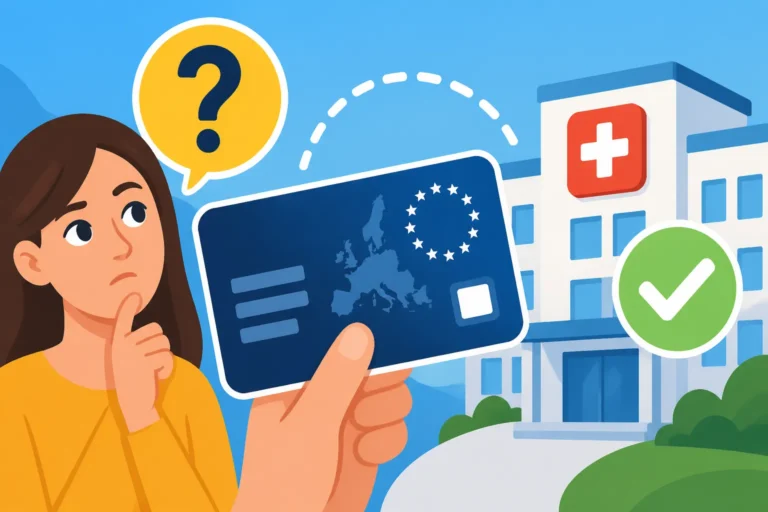
If you are insured with the NFZ but require treatment while visiting your home country (within the EU) or another member state, you should ideally use your EKUZ card. If you forgot the card and had to pay, you can apply for reimbursement once you return to Poland. You will need to submit a specific application to your local NFZ branch.
Be warned: the NFZ will only reimburse you up to the amount that the same procedure would have cost in Poland. If you had an expensive procedure in Germany, the NFZ might only pay back the much lower Polish "valuation" of that service. This is why many veteran expats also keep a policy like SafetyWing active during their travels, as it provides a safety net that covers the actual costs rather than just the local government rates.
Voluntary NFZ Insurance and Retrospective Claims
For those who are self-employed or between jobs, Health Insurance in Poland: Mandatory, Private and Subscription Options Explained details the voluntary insurance route. A common pain point occurs when a foreigner applies for voluntary insurance but has a gap in their previous coverage. The NFZ often charges a "gap fee" before they allow you to join.
While you cannot usually claim reimbursement for medical costs incurred during a gap in coverage, if you can prove you were actually entitled to insurance (for instance, if your employer forgot to register you but was deducting ZUS contributions), you can seek a retrospective correction. This requires a mountain of paperwork from your employer’s HR department and a formal "correction" of your ZUS (Social Insurance Institution) status.
Specific Medication Reimbursement (The Pharmacy System)
The most common "reimbursement" foreigners encounter is actually a subsidy applied at the moment of purchase. Many chronic medications in Poland are "refundowany" (subsidized). To get the lower price, you must have a valid Understanding the e-Recepta (E-Prescription) System in Poland issued by a doctor who has a contract with the NFZ.
If you pay 100% for a drug because your doctor didn't tick the "refund" box, or because you used a private doctor without NFZ authorization, you generally cannot get that money back later from the government. You must ensure the "Level of Payment" (Poziom odpłatności) is correctly marked on the prescription before you leave the doctor's office. You can track all these prescriptions and their costs by How to Set Up an Internetowe Konto Pacjenta (IKP) Patient Account, which is an essential tool for any expat.
Private Insurance and Medical Subscriptions Claims
When you step out of the public system, the rules of the game change. Private medical centers in Poland are efficient, but their billing departments are strictly regulated.
Reclaiming Costs from Global Expats Plans (SafetyWing)
For digital nomads or those on a mission to move to Poland, providers like SafetyWing typically allow digital uploads of your receipts. This is a lifesaver compared to the local Polish equivalent. If you see a private specialist in Warsaw for a sudden illness, you simply ask for an invoice in English (or a clear Polish one), take a photo, and upload it via their portal.
SafetyWing is often preferred by those transitioning into Poland because it handles the "emergency" aspect of healthcare without requiring you to navigate the local Polish "ZUS" bureaucracy immediately. When submitting a claim here, the key is the medical report. The insurer needs to see not just what you paid, but the diagnosis. Polish doctors are usually happy to provide a "Zaświadczenie lekarskie" (medical certificate) if you ask, but you must ask during the appointment; getting one retroactively is a logistical nightmare.
Claims with Polish Private Insurers (LUX MED, Medicover)
If you have a local Polish insurance policy (not just a subscription, but a full insurance product), you may be able to see a doctor outside their network and claim the cost back. This is often called the "cash-out" or "reimbursement" model.
To succeed, you usually need to follow these three rules:
- Pre-authorization: Some insurers require you to call them before you see the outside doctor.
- The Price Cap: They will often only reimburse up to the limit defined in your contract (e.g., 150 PLN for a specialist visit), even if you paid 300 PLN in central Krakow.
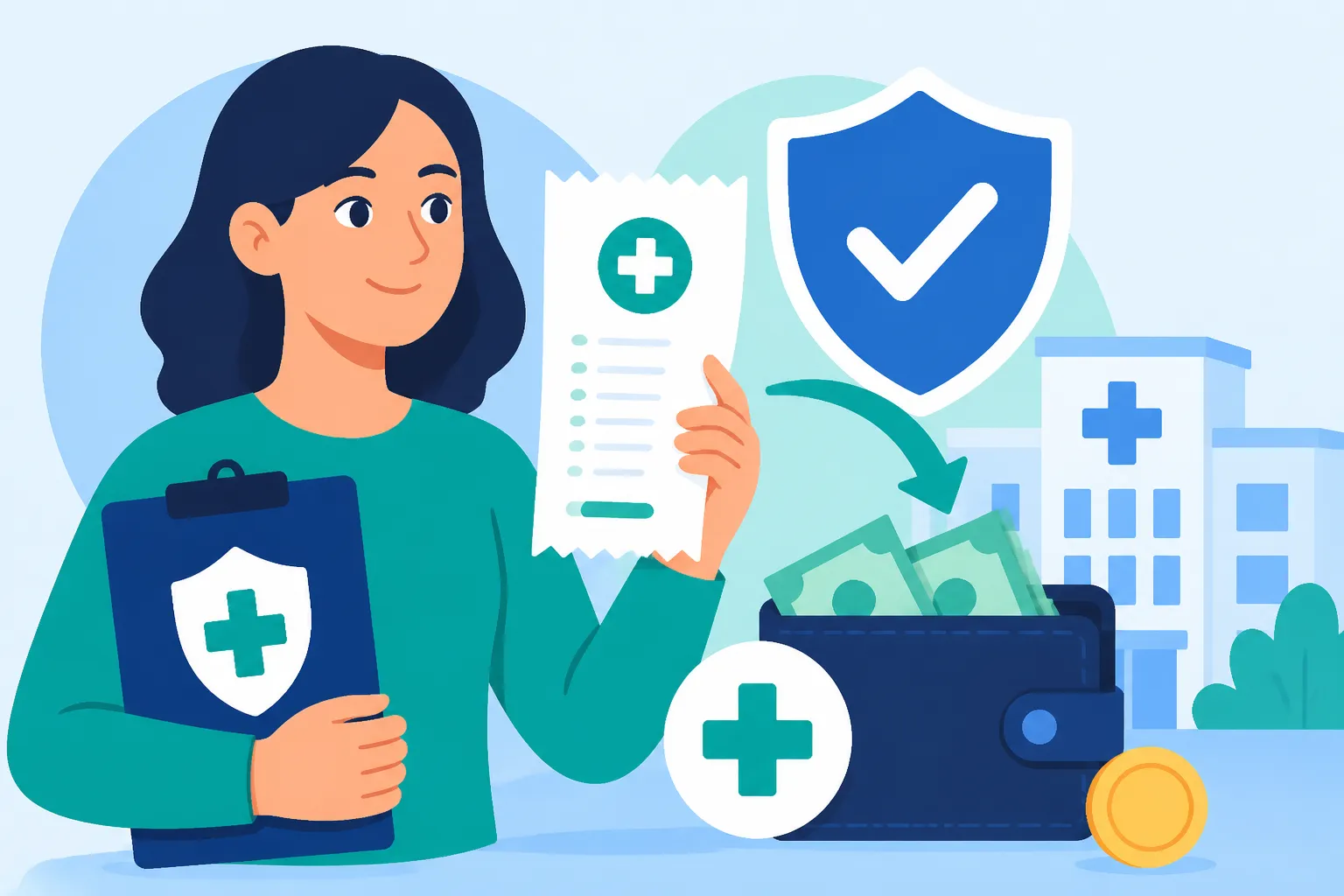
- Formal Invoicing: A simple cash register receipt (paragon) is worthless for insurance. You must ask for a "Faktura VAT na osobę fizyczną" (VAT invoice for an individual).
Essential Paperwork: The Documentation Checklist
In Poland, "Document is King." If you are missing a stamp or a specific tax ID, your claim will hit a brick wall. Whether you are dealing with the NFZ or a private firm, your "paper trail" must be impeccable.
The Importance of the Invoice (Faktura VAT)
In many countries, a detailed receipt is enough. In Poland, you must distinguish between a paragon (the small slip of thermal paper) and a faktura. For any reimbursement, you need the faktura.
When asking for a faktura, you will need to provide:
- Your full name (as it appears on your passport).
- Your address in Poland (matching your How to Register Your Residence (Zameldowanie) in Poland: The Complete Guide).
- Your PESEL number (if you have one).
| Document Type | Purpose | Why it’s required |
|---|---|---|
| Faktura VAT | Proof of Payment | Standard tax-compliant invoice required by all Polish entities. |
| Skierowanie | Referral | Required by NFZ to prove the specialist visit was necessary. |
| Karta Informacyjna | Medical Report | Explains the "why" behind the treatment for insurance auditors. |
| Paragon Fiskalny | Simple Receipt | Usually not enough for reimbursement; keep it as backup only. |
| Recepta | Prescription | Necessary to prove medication costs were doctor-ordered. |
Medical History and Diagnostic Reports
Insurers, including international ones like SafetyWing, need to verify that your claim isn't for a pre-existing condition (unless covered) and that the treatment was appropriate. In Poland, you should always walk away from a diagnostic test (like an MRI or blood work) with the "wyniki" (results).
If you are submitting these to an international insurer, you might need a "sworn translation" (tłumaczenie przysięgłe) if the documents are complex. However, many modern private clinics in cities like Wroclaw or Gdansk can issue medical summaries in English if requested in advance. This can save you hundreds of zlotys in translation fees later.
Bank Details and Residency Proof
For NFZ reimbursements, the money will only be sent to a Polish bank account. They generally will not wire funds to a foreign Revolut or a bank in your home country. Ensure your bank details are updated in the system. For private insurers, you will often need to provide your IBAN and SWIFT code.
Furthermore, if you are claiming as a resident, have your "Karta Pobytu" or your How to Use Your EHIC (EKUZ) Card in Poland as an EU Citizen documentation ready. The NFZ will check your "uprawnienia" (entitlements) in a system called eWUŚ. If eWUŚ shows "red" (uninsured), your claim will be rejected instantly, even if you have the receipts.
Step-by-Step Procedure for Submitting a Claim
If you've gathered your documents, it's time to submit. The process differs significantly depending on the target.
Submission via the National Health Fund (NFZ)
- Download the Form: Visit the NFZ website (or your local "Oddział Wojewódzki") and look for the "Wniosek o zwrot kosztów" (Application for reimbursement).
- Attach the Originals: Unlike private insurers, the NFZ often demands the original paper invoices. Make copies for yourself before handing them over.
- Submit in Person or by Mail: You can visit a "Punkt Obsługi Klienta" at the NFZ or send it via registered mail (Poczta Polska – list polecony). Never send original documents via regular mail.
- Wait: The statutory time for a decision is 30 days, but for cross-border cases, it can take up to six months as they coordinate with foreign health offices.
Submitting to Private Carriers (Digital Portals)
If you have a nomad-style policy such as SafetyWing, the process is far more "Expat-friendly":
- Log in to the App/Portal: Most modern insurers have a "Make a Claim" button on their home screen.
- Upload Photos: Take clear, well-lit photos of your Faktura VAT and your medical report.
- Describe the Incident: Briefly explain when the symptoms started.
- Submit: You will usually receive an automated confirmation, and funds are often disbursed within 7 to 15 business days directly to your chosen account.
For local companies like LUX MED or Medicover, you might have to use their internal "E-Member" portals. The logic is the same, but they may be stricter about the specific Polish tax IDs on the invoices.
Avoiding Common Pitfalls and Rejections
After years of helping fellow expats, I've seen the same mistakes repeated over and over. Avoiding these will significantly increase your chances of getting your money back.
Language Barriers and Translation Requirements
If your medical emergency happened outside Poland and you are claiming from the NFZ, they will almost certainly require a sworn translation of the medical documents into Polish. This can be expensive. Before you pay for a translation, check if the NFZ branch will accept a standard "EU Multilingual Form" which hospitals across Europe can often issue.
For private claims with international companies, translations are rarely required if the document is in a major language. If you are using The Expat Guide to Finding a Family Doctor (Lekarz Rodzinny) in Poland and they provide a report in Polish, check if your insurer has in-house translators before you spend money on a private one.
Deadline Sensitivities
Claims do not have an infinite shelf life. In the Polish public system, you generally have six months to a year to submit a claim for cross-border care. Private insurers are much stricter. Some require you to submit the claim within 30 days of the treatment.
If you are a freelancer or working on a specific contract, make sure you know your "notice periods" for insurance. If your coverage ends on the 31st of the month, and you try to claim for a visit on the 1st of the following month, even a one-day lag will result in an automatic rejection. Always double-check your Understanding the e-Recepta (E-Prescription) System in Poland dates to ensure they align with your active insurance period.
The "Referral" Trap
In the public system, you cannot simply go to a specialist and then ask the NFZ for money back. You must have a skierowanie (referral) from a primary care physician (POZ). If you bypass the GP and go straight to an orthopedist because your knee hurts, the NFZ considers that a "private choice" and will not reimburse you, even if the orthopedist is a public doctor. Always start at The Expat Guide to Finding a Family Doctor (Lekarz Rodzinny) in Poland to keep the "reimbursement" door open.
Disclaimer regarding Medical and Legal Advice
This guide is for informational purposes only and is based on the personal experiences of expats living in Poland and general administrative procedures. Regulations regarding the National Health Fund (NFZ), tax laws (ZUS), and private insurance policies in Poland are subject to frequent changes. We are not medical professionals or licensed legal advisors. Always consult with an official representative of the NFZ, your insurance provider, or a qualified legal expert before making financial or medical decisions. Ensure you check the most current requirements on official government portals such as pacjent.gov.pl.