What Is the Single Permit (Jednolite Zezwolenie) in Poland?
Navigating the labyrinthine Polish immigration system can feel like an Olympic sport, especially when you're trying to figure out how to both live and work here legally as a non-EU citizen. The constant juggling of different permits and appointments can be a real source of anxiety for many expats. This guide is here to cut through the confusion and explain exactly what the Single Permit (Jednolite Zezwolenie) is in Poland, and how it simplifies your path to settling down and building a life here.
What Exactly Is the Single Permit (Jednolite Zezwolenie)?
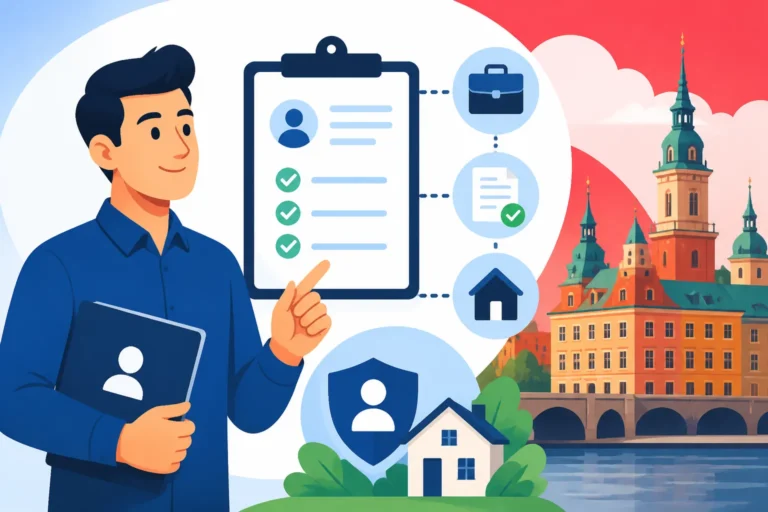
For years, non-EU citizens wanting to work in Poland faced a two-pronged attack on their patience: first, applying for a separate work permit (often from their home country), and then, once they arrived, applying for a temporary residence permit. It was a bureaucratic dance that often involved duplicate documents, conflicting deadlines, and a lot of head-scratching. The Single Permit, known officially as zezwolenie na pobyt czasowy i pracę (temporary residence and work permit), was introduced precisely to ease this burden, making it a much more streamlined process.
The Problem It Solves for Non-EU Expats
Imagine coordinating a job offer with an employer who needs to apply for your work permit, while simultaneously trying to understand the requirements for a residence permit that would allow you to actually live in Poland. If one part fell through, the whole house of cards could collapse. This fragmented approach caused immense stress, delays, and often led to expats being in a legal grey area for periods, unable to work or even leave the country without risking their application. It was a significant barrier for many talented individuals and families looking to relocate.
The Single Permit addresses this by doing exactly what its name suggests: it unifies the right to stay and the right to work into a single document. This means one application, one set of documents (mostly!), and one decision from the Urząd Wojewódzki (Provincial Office). It's a genuine relief for many, cutting down on administrative hassle and providing much-needed clarity. No longer do you have to worry about your work permit expiring before your residence permit is issued, or vice-versa.
Key Characteristics and Who It's For
The Jednolite Zezwolenie is essentially a combined temporary residence and work permit, issued for a specified period, typically ranging from one to three years. It's exclusively designed for non-EU/EEA/Switzerland citizens who intend to work for a specific employer in Poland. This means if you're from a country like the United States, India, Ukraine, or South Africa, and you've secured a job offer with a Polish company, this is very likely the permit you'll be applying for.
This permit isn't a free-for-all; it's meticulously tied to your employment. It specifies your employer, the position you hold, and sometimes even the salary range and location of your work. While predominantly for those employed under a contract, it can also apply to certain categories of self-employed individuals, board members of Polish companies, or those performing specific highly skilled roles. The core idea is that your right to reside in Poland is directly linked to your legitimate employment here.
Eligibility Criteria for the Single Permit in Poland
Before you even think about tackling the application forms, you need to be sure you meet the fundamental criteria for the Single Permit. This isn't just about having a job offer; it's about proving you can support yourself, that your job is legitimate, and that you won't become a burden on the state. It's a comprehensive check designed to ensure that foreign workers are a beneficial addition to Poland's economy and society.
General Requirements You'll Need to Meet
First and foremost, you'll need a valid passport that has at least a few months' validity beyond your intended permit duration. The Polish authorities are quite particular about this, so make sure it's up to date. You’ll also need to demonstrate stable and regular income. This isn't just a casual promise; you need to show that your salary is sufficient to cover your living expenses and is at least equal to the minimum wage, which in 2024 is set to increase to 4,242 PLN gross from January and 4,300 PLN gross from July. Beyond that, it cannot be lower than the remuneration of other employees performing comparable work in a similar position.
Proof of accommodation is another non-negotiable. Whether you're renting an apartment or have bought one, you'll need documents proving you have a place to live. This could be a rental contract (umowa najmu) or a deed of ownership (akt notarialny). Lastly, health insurance is crucial. While you'll typically be covered by the National Health Fund (NFZ) once you're employed, you might need to show private coverage, such as a plan from a provider like Cigna Global, for the application process, or prove that your employer will register you. Don't forget, a clean criminal record is expected; serious offenses could jeopardize your application.
Specific Conditions for Your Employment
This is where things can get a bit tricky and often cause the most delays for non-EU applicants. The Polish government wants to ensure that hiring a foreigner isn't taking a job away from a Polish or EU citizen. This leads us to the infamous Understanding the Labour Market Test (Test Rynku Pracy) in Poland. Essentially, it's a verification process conducted by the local unemployment office (Powiatowy Urząd Pracy) to confirm that there are no suitable Polish or EU candidates for your position. Your employer will typically need to advertise the position and, if no qualified local candidates are found, they'll receive a document stating this, which is then submitted with your Single Permit application.
However, there are exemptions! If your profession is on a list of occupations experiencing shortages, or if you're a recent graduate from a Polish university, you might be exempt. Highly specialized roles or IT positions, for example, often bypass this test, which is a huge time-saver. Additionally, your proposed salary must not only meet the national minimum wage but also be comparable to what a Polish worker would earn in a similar role. The authorities are on the lookout for exploitation, so fair compensation is paramount. Your employer plays a central role here, providing declarations, contracts, and all necessary documentation to support your application, confirming their intent to hire you for a specific position under specific terms.
Financial Stability and Accommodation
Beyond your salary, proving you have a stable financial situation is key. While your employment income is the primary factor, the authorities might look at your overall financial standing, especially if you're bringing family members. You need to demonstrate that you won't be reliant on social assistance. This usually means submitting bank statements showing consistent income or savings that can cover unforeseen circumstances. Remember, the goal is to show self-sufficiency.
When it comes to accommodation, the rules are clear: you must have a legal place to live. A valid rental agreement (umowa najmu) is the most common form of proof. This document should clearly state your name, the address, the duration of the lease, and the monthly rent. If you're staying with friends or family, they might need to provide a formal declaration (oświadczenie) of your residence. It's not enough to say you'll "find something when you arrive." The Polish authorities want to see that you have a concrete, legal roof over your head from day one, or at least for the duration of the permit you're applying for. Many expats find initial accommodation through platforms or by using relocation services from companies like Sirelo, which can help ensure you have the proper documentation ready for your application.
The Application Process: Navigating the Urząd Wojewódzki
Alright, so you've got your job offer and you're pretty sure you meet the criteria. Now comes the part that can test the patience of even the most seasoned expat: the application process itself. It's a multi-step journey through the regional Urząd Wojewódzki, the Provincial Office responsible for immigration matters. Be prepared for queues, paperwork, and potentially long waiting times – it's just part of the experience here.
Gathering Your Documents: A Checklist (and a headache!)
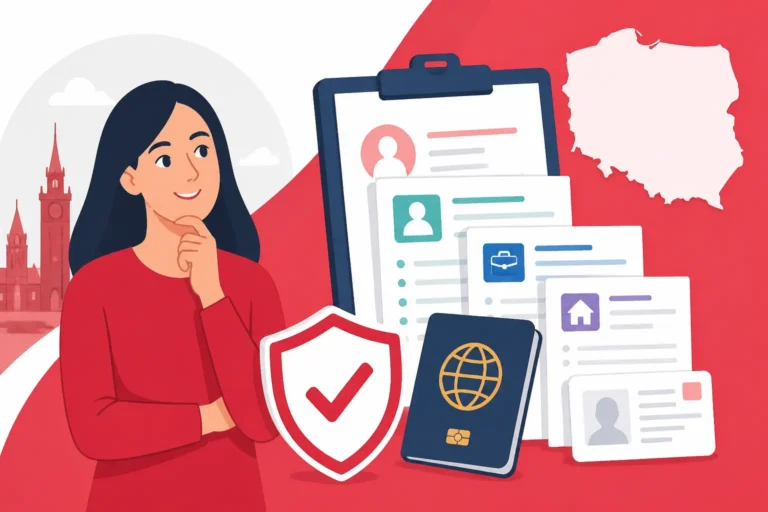
This is where the real work begins, and it's essential to be meticulous. The official application form (Wniosek o udzielenie zezwolenia na pobyt czasowy i pracę) is the starting point, but it's just the tip of the iceberg. You'll need copies of all pages of your valid passport, especially those with stamps and visas, along with several current biometric photographs. Your employer will provide a crucial declaration of intent to employ you, often including details about your position, salary, and working conditions. If required, the Labour Market Test result (information from the Starosta) is also vital.
Proof of accommodation, such as a rental agreement, is mandatory. Don't forget your health insurance documentation. While some employers will confirm your NFZ registration directly, having proof of private insurance like a Cigna Global plan for the initial period can sometimes expedite things or provide a safety net. You'll also need proof of sufficient funds – usually bank statements – and a receipt for the application fee. Remember, many documents, especially those not issued in Poland or English, will need to be officially translated by a sworn translator (tłumacz przysięgły) and potentially apostilled or legalised. It’s a lot, and getting it all perfectly can feel like a full-time job. For a more detailed breakdown, check out How to Prepare Documents for a Karta Pobytu Application.
Submitting Your Application and Biometrics
Once your mountain of documents is ready, the next step is to submit them. This usually involves booking an appointment at the Department for Foreigners (Wydział Spraw Cudzoziemców) at your local Urząd Wojewódzki. Depending on the city, this can be a competitive sport, with online booking systems (like cudzoziemcy.mazowieckie.pl for Warsaw) often filling up weeks or months in advance. Many expats rely on repeatedly checking the portal or even calling hotlines to snag a slot. It's a frustrating aspect, but persistence is key. You can find more tips on this process in How to Book an Appointment at the Urząd Wojewódzki for Immigration.
At your appointment, you'll hand over your application and documents. Be prepared for a detailed review by the official, who might ask for additional explanations or missing papers. This is also the stage where your fingerprints will be taken for the biometric residence card (Karta Pobytu). Once everything is submitted and accepted, you'll usually receive a stamp in your passport, which confirms your legal stay in Poland while your application is processed. This stamp is incredibly important, especially if you plan to travel internationally, as it replaces a visa.
Waiting, Decisions, and the Residence Card Issuance
Now, for the waiting game. This is perhaps the most challenging part for many, as processing times can be notoriously long, ranging from a few months to well over a year, depending on the Urząd Wojewódzki and the complexity of your case. It's a common source of expat frustration, and patience is definitely a virtue here. The authorities may contact you for further documents or clarification, so ensure your contact details are current.
Eventually, you'll receive a decision: either positive or negative. If it's positive, congratulations! You'll be invited to collect your Karta Pobytu, your physical residence card, which is usually valid for one to three years. This card is your official ID in Poland and your travel document within the Schengen Area. If the decision is negative, you have the right to appeal within a specific timeframe, usually 14 days, providing additional arguments or documentation. Understanding the intricacies of these timelines and potential issues is key, as highlighted in What Is the Processing Time for a Karta Pobytu in Poland?.
Benefits, Limitations, and Important Considerations
The Single Permit is undoubtedly a game-changer for many, offering a smoother path to living and working in Poland. However, like all immigration documents, it comes with its own set of rules, advantages, and restrictions that every expat needs to understand. It's not a golden ticket to do whatever you please; it's a specific authorization with defined boundaries.
The Advantages of Holding a Single Permit
The most apparent benefit is the administrative simplification. Instead of separate applications and two sets of paperwork, you tackle it all at once. This saves a significant amount of time, effort, and stress. With a Single Permit, you gain legal status to both reside and work in Poland for its validity period, providing stability and peace of mind. You no longer have to worry about the precarious balance between a work permit and a residence permit.
Furthermore, holding a Polish Karta Pobytu as a Single Permit holder grants you the privilege of visa-free travel within the entire Schengen Area for short stays (up to 90 days in any 180-day period). This is fantastic for weekend trips or business travel to other European countries. Many expats find this freedom invaluable. The permit also serves as your official ID within Poland, useful for everything from opening a bank account to registering for a How to Get Your PESEL Number and Why It Matters for Healthcare. Beyond immediate benefits, consistent legal residence with a Single Permit is also a crucial step on the path to longer-term residence options, such as Permanent Residence in Poland: The Complete Pathway (2027) or EU Long-Term Resident Status, after several years of continuous stay.
Restrictions and What to Watch Out For
While beneficial, the Single Permit is not without its limitations. Crucially, it is tied to a specific employer and often a specific position. This means if you decide to change jobs, you must apply for a modification of your existing permit or, in some cases, a brand new permit. This isn't just a formality; failing to do so can invalidate your permit and lead to legal issues. It's a significant point of concern for many expats who might wish to explore new career opportunities in Poland. The processing time for these modifications can also be substantial, leading to periods of uncertainty.
The permit is issued for a specific duration, typically one to three years. You'll need to start thinking about renewing it well in advance of its expiration date, as the application process for renewal can be just as lengthy as the initial application. You can learn more about this in How Do I Renew My Polish Residence Card?. Moreover, if you lose your job, your permit could be revoked. You usually have a grace period (often 30 days) to find new employment and notify the Urząd Wojewódzki, but it's a stressful situation. Also, prolonged absences from Poland (e.g., more than 6 months at a time, or longer cumulative periods) can affect your ability to renew your permit or apply for long-term residency.
Beyond the Single Permit: Future Pathways
For many, the Single Permit is just the first step in a longer journey in Poland. As you approach the expiration of your initial permit, you'll need to decide whether to extend it or explore other options. If you continue employment with the same company under similar terms, extending your Single Permit is usually the most straightforward route. The application process for extension is very similar to the initial one, requiring updated employer declarations, proof of continued employment, and current financial and accommodation documents.
After a certain period of continuous legal residence, typically five years, you may become eligible to apply for Permanent Residence in Poland: The Complete Pathway (2027) or the EU Long-Term Resident Status. These statuses offer far greater stability, often removing the tie to a specific employer and providing more robust rights. However, they usually come with additional requirements, such as proving Polish language proficiency, demonstrating higher income stability, and maintaining an unbroken period of residence. The Single Permit is a solid foundation, but it’s worth understanding the long-term immigration landscape from the outset.
Here's a quick comparison of the Single Permit versus the traditional separate permits:
| Feature | Single Permit (Jednolite Zezwolenie) | Separate Work Permit + Residence Permit (Older System/Specific Cases) |
|---|---|---|
| Application Process | One application for both work and stay | Two separate applications (work permit first, then residence) |
| Issuing Authority | Urząd Wojewódzki (Provincial Office) | Work permit: Urząd Wojewódzki or Starosta; Residence: Urząd Wojewódzki |
| Documents Required | Combined set, often less duplication | Separate sets, potential for more duplication and coordination |
| Processing Time | Can be long, but only one decision point | Can be long for both, requiring coordination |
| Flexibility (Job Change) | Requires permit modification or new application | Requires new work permit application, then residence permit modification/new application |
| Status in Poland | Legal work and stay with one document | Legal work and stay with two interconnected documents |
| Schengen Travel | Yes, with Karta Pobytu (Residence Card) | Yes, with Karta Pobytu (Residence Card) |
| Primary Beneficiaries | Non-EU/EEA/Swiss citizens employed in Poland | Specific cases, e.g., certain types of self-employment, detached workers |
Disclaimer
Please remember that immigration laws and procedures in Poland can change frequently. While I strive to provide the most accurate and up-to-date information, this guide is for informational purposes only and does not constitute legal advice. It is always recommended to consult with an immigration lawyer or the official Urząd Wojewódzki website for the most current regulations and advice tailored to your specific situation.