How to Set Up an Internetowe Konto Pacjenta (IKP) Patient Account
Setting up an Internetowe Konto Pacjenta (IKP) is the single most important administrative task for an expat in Poland, right after getting a PESEL. This guide walks you through the step-by-step process of digitalizing your healthcare, ensuring you never lose a prescription or referral again while navigating the often confusing, paper-heavy traditional routes of the Polish medical system.
Understanding the Internetowe Konto Pacjenta (IKP)
If you have spent more than a week in Poland, you have likely realized that the country is caught in a fascinating tug-of-war between old-school bureaucracy and cutting-edge digitalization. The Internetowe Konto Pacjenta, or Online Patient Account, is a shining example of the latter. It is a free, web-based application provided by the Ministry of Health that centralizes your entire medical history within the public system. When I first moved here, I spent months carrying around crumpled pieces of paper with stamps on them, terrified I would lose a specialist referral. The IKP changes all of that by moving everything to the cloud.
The Digital Backbone of Polish Healthcare
The IKP is essentially a digital vault that stores every interaction you have with the National Health Fund (NFZ). Whether it is a visit to a local clinic, a stay in a public hospital, or a prescription filled at a neighborhood pharmacy, it all gets logged here. For expats, this is a lifesaver because it eliminates the "lost in translation" moment at the doctor’s office. You can simply show your history on your phone rather than trying to explain your previous treatments in broken Polish.
Furthermore, the system is designed to be highly secure. It uses your national identity data to ensure that only you and authorized medical personnel can see your records. This is particularly relevant when Navigating the Polish Healthcare System: An Expat's Roadmap (2027) because it gives you a sense of control over a system that can otherwise feel quite opaque. Having your records in one place also helps doctors avoid prescribing medications that might have adverse interactions with something you are already taking.
Why Every Expat Needs an IKP Account
The most practical reason to get your IKP set up immediately is the e-prescription system. In Poland, paper prescriptions are largely a thing of the past. When a doctor issues an e-prescription (e-recepta), you receive a four-digit code. If you have an IKP account, that code is sent directly to your phone via SMS or email. Without the account, you have to rely on the doctor printing out an information sheet, which is just one more thing to lose. I once had to track down a busy GP just because a piece of paper fell out of my pocket on the tram; with IKP, that stress is gone.
Another major benefit is the ability to track your insurance status. The system will clearly show if the NFZ recognizes you as insured. This is crucial for those working on various contracts who need to verify Understanding ZUS Health Contributions (Składka Zdrowotna) in Poland. If there is a gap in your coverage, the IKP is usually the first place it will show up. While you are waiting for your public insurance to kick in, many expats choose to carry a secondary plan like SafetyWing to ensure they aren't left high and dry during administrative processing lags.
Essential Prerequisites for Setting Up Your Account
Before you can dive into the portal, there are a few "keys" you need to have in your hand. You cannot simply sign up with an email address and a password like you would for a social media account. The Polish government requires a high level of identity verification to protect your sensitive medical data. This often feels like a hurdle, but once these pieces are in place, the rest of your Polish administrative life becomes significantly easier.
The Role of the PESEL Number
Your PESEL is your eleven-digit universal electronic system for registration of the population. It is your unique ID in Poland. Without a PESEL, the IKP simply cannot exist for you because there is no "hook" to attach your medical records to. Getting this number should be your priority upon arrival. If you are struggling with the registration process, you might want to look into How to Get Your PESEL Number and Why It Matters for Healthcare to see how the local municipal office (Urząd Miasta) handles these requests.
Once you have your PESEL, it acts as your login ID for almost every government portal in Poland. In the context of healthcare, it is what pharmacies use to pull up your prescriptions. When you walk into an "Apteka," you give them your PESEL and the code from your IKP, and they immediately see exactly what has been prescribed for you. It is a seamless process that makes the old days of deciphering a doctor’s handwriting feel like the Stone Age.
Profil Zaufany: Your Digital Key
The second prerequisite is the Profil Zaufany (Trusted Profile). This is a digital signature that confirms your identity to the government. Most expats find the easiest way to set this up is through their Polish bank account. If you have an account with a major bank like PKO BP, mBank, or ING, you can usually create a Profil Zaufany in about five minutes through your banking app. This "signs" your identity using your bank's verification.
If you don't have a Polish bank account yet, you will have to visit a government office in person to "confirm" your profile. This is the more tedious route, involving appointments and waiting lines. However, once you have it, you can log into the IKP, file your taxes, and even check your penalty points on your driving license. It is the ultimate tool for Understanding mObywatel and e-Government Services in Poland and is the only way to gain full access to your medical records online.
Step-by-Step Guide to Activating Your IKP
Once you have your PESEL and your Profil Zaufany ready, the actual activation of the Internetowe Konto Pacjenta is surprisingly quick. The interface has improved significantly over the last few years, and while the primary language is Polish, many sections are now available in English, making it much more accessible for the international community.
Logging in for the First Time
To start, navigate to the official website (pacjent.gov.pl). You will see a large button that says "Zaloguj się" (Log in). From here, you will be redirected to the national login gateway (Krajowy Węzeł Identyfikacji Elektronicznej). Choose the "Profil Zaufany" option. If you are using your bank to log in, select your bank’s logo, and it will take you to your banking login page. Once you authenticate there, you will be bounced back to the IKP portal, fully logged in.
Upon your first login, the system will ask you to provide your contact information. Do not skip this! This is where you enter your phone number and email address to receive those vital e-prescription codes. I highly recommend checking both SMS and email notifications. In my experience, there have been times when the cellular network was spotty, but the email came through instantly. This setup is a one-time task that ensures you are always connected to Emergency Medical Care in Poland: What Every Expat Know.
Navigating the Dashboard and Settings
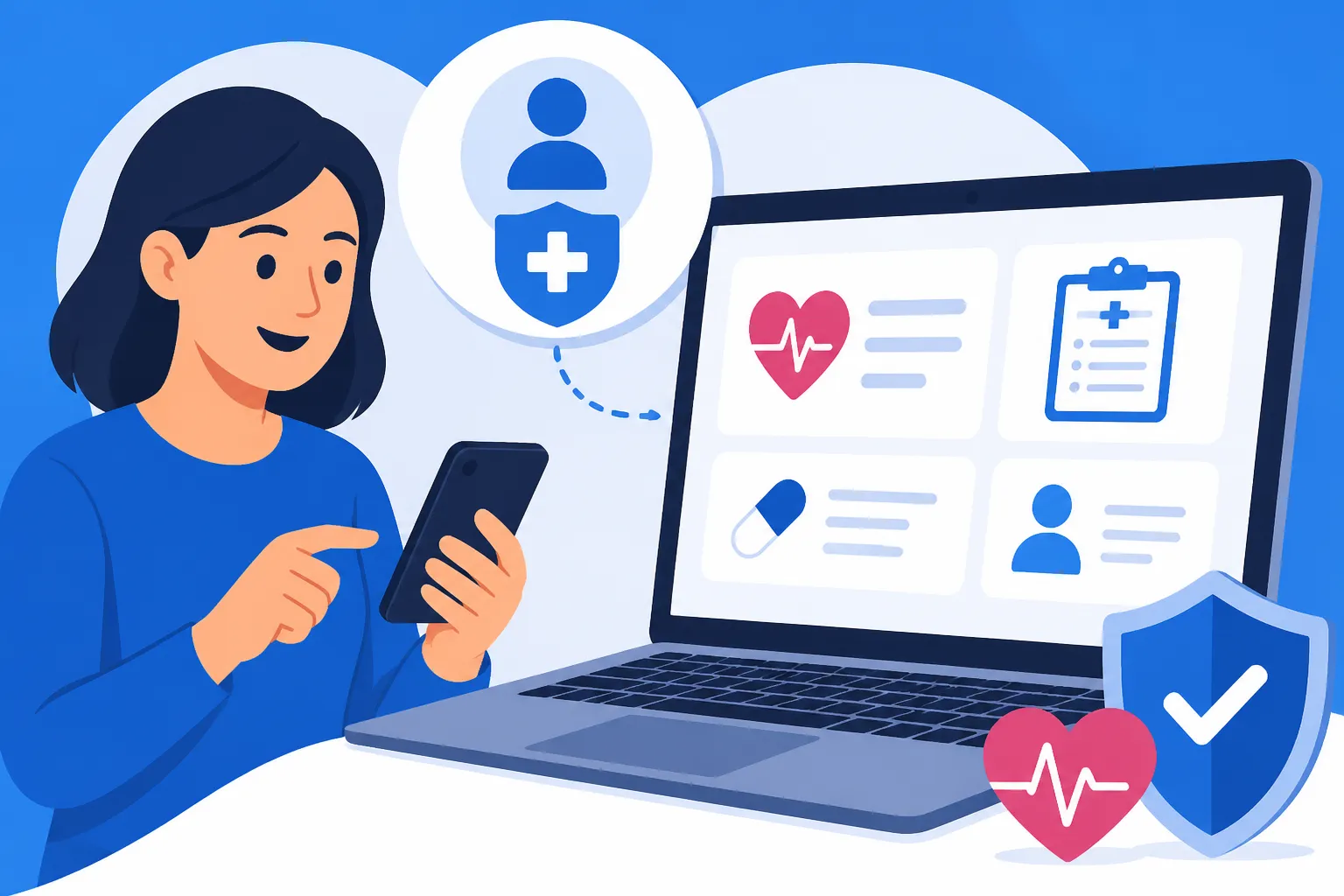
The dashboard is divided into several clear sections: "Recepty" (Prescriptions), "Skierowania" (Referrals), "Zdarzenia medyczne" (Medical events), and "Uprawnienia" (Entitlements). Spend some time clicking through these. If you have already seen a doctor in Poland, you might be surprised to see your visits already listed there. The "Uprawnienia" tab is particularly useful as it confirms your insurance status with the NFZ.
In the settings, you can also authorize other people to view your records. This is a common practice for families. For instance, you can authorize your spouse to see your prescriptions so they can pick up medication for you if you are too ill to leave the house. This level of granular control is part of Understanding the Role of the Przychodnia (Clinic) in Poland as it allows for better coordination of care between you, your family, and your local clinic.
Key Features and How to Use Them
The IKP is far more than just a list of past doctor visits. It is an active tool that you will use frequently. Understanding the specific functionalities can save you hours of phone calls and unnecessary trips to the clinic.
Managing e-Recepta and e-Skierowanie
The "Recepty" tab is where the magic happens. Every time a doctor issues an e-recepta, it appears here. You can see the dosage instructions, which is incredibly helpful if the doctor explained it quickly in Polish and you forgot. You can also see the "Valid Until" date. Some prescriptions for chronic conditions are valid for 365 days, while antibiotics might only be valid for 7 days. If you find your public coverage is in limbo, remember that SafetyWing can often help with medical costs, but you will still need these digital records for any pharmacy in Poland to legally dispense medication.
Similarly, "e-Skierowanie" covers referrals to specialists, hospitals, or diagnostic tests like MRIs. In the old system, if you lost your paper referral, you lost your spot in the queue. Now, the referral is digital. When you call a specialist to book an appointment, you simply give them the code from your IKP. This integration is vital for Understanding How e-Skierowanie (E-Referrals) Work for Specialists in Poland, as it ensures your data moves with you from your family doctor to the specialist.
Choosing Your Primary Care Physician (POZ)
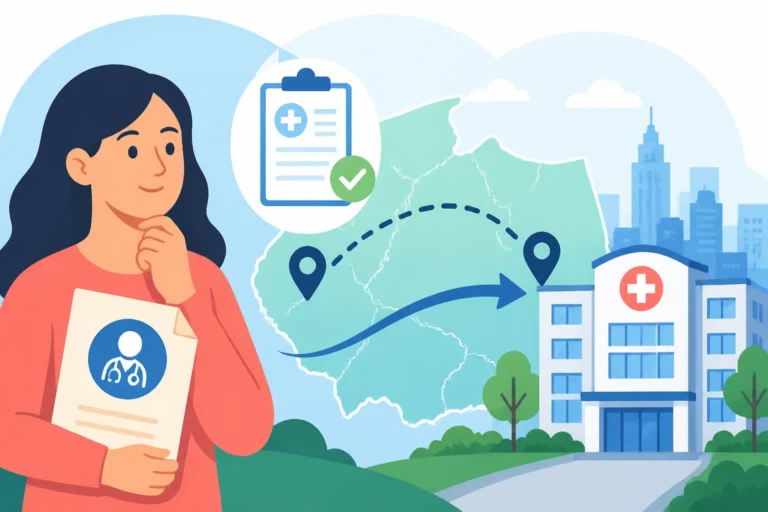
One of the most powerful features for a new expat is the ability to submit a "Deklaracja" (Declaration) for a primary care doctor (Lekarz POZ), nurse, and midwife. Usually, people do this by filling out a paper form at a clinic, but you can actually do it directly in the IKP. You can search for clinics near your home and submit your choice digitally.
This is a game-changer because it allows you to research clinics beforehand. If you are looking for specific advice on How to Choose and Register with a GP (Lekarz POZ) in Poland, using the IKP to make your selection ensures that your registration is processed correctly in the central system. It also makes it much easier to switch doctors if you move to a different neighborhood or find a doctor who speaks better English.
| Feature | Description | Action Required |
|---|---|---|
| e-Recepta | Digital prescriptions sent via SMS/Email | Show 4-digit code + PESEL at pharmacy |
| e-Skierowanie | Digital referrals for specialists/tests | Provide code when booking specialist |
| POZ Declaration | Register with a primary care doctor | Submit digital form via IKP dashboard |
| Medical History | Record of all NFZ-funded treatments | View/Download PDF summaries |
| EHIC (EKUZ) | Apply for European Health Insurance Card | Request card via "Uprawnienia" tab |
Mobile Accessibility: The mojeIKP App
While the web portal is great for deep dives into your history, the mobile app, "mojeIKP," is what you will use in your daily life. It is available for both Android and iOS and is surprisingly well-designed. I use it more often than the website because it allows for quick biometric login (fingerprint or face ID), which is much faster than going through the bank login every time.
Features of the Mobile Application
The mojeIKP app has a very intuitive interface. On the home screen, you see your most recent prescriptions and referrals. One of the best features is the "Drug Scanner." You can scan the barcode on a box of medication, and the app will give you the dosage instructions and the leaflet in a readable format. For expats struggling with Polish medical terminology, this is an absolute godsend.
Additionally, the app includes a "First Aid" section with step-by-step instructions for various emergencies. It also allows you to order a "repeat prescription" for certain chronic medications without having to visit the doctor in person—provided your doctor has enabled this for you. This functionality is a key part of Understanding the e-Recepta (E-Prescription) System in Poland and how it aims to reduce the load on physical clinics.
Why You Should Enable Notifications
Enabling push notifications on mojeIKP ensures that the second a doctor hits "save" on your file, your phone pings. This is particularly useful if you have had blood work done. Rather than calling the lab every morning to ask if your results are in, the app will notify you when the results are uploaded to your account.
I once had a specialist referral issued by a doctor I saw via a video consultation. Within thirty seconds, the notification popped up on my phone, and I was able to call the specialist’s office to book the follow-up while I was still on the train home. This level of efficiency makes Navigating the Polish Healthcare System: An Expat's Roadmap (2027) feel significantly less daunting. Even if you are using SafetyWing for your travel-related health needs, having the local Polish system at your fingertips is essential for long-term residency.
Comparing Public and Private Integration
A common question among foreigners is whether the IKP shows visits to private clinics like LUX MED or Medicover. The answer is: "It depends." While the IKP is primarily for the NFZ (public) system, there is an ongoing push to integrate private providers. Currently, most private clinics will upload your e-prescriptions and referrals to the IKP, but your detailed consultation notes might remain only in the private provider's own app.
How IKP Works with NFZ vs. Private Providers
If you see a private doctor, they are still legally required to issue an e-recepta via the national system. This means that even if you pay out of pocket for a visit at a fancy private clinic in Warsaw, that prescription will still show up in your IKP account. This is vital because it ensures all your medications are tracked in one central location, regardless of who prescribed them.
However, for things like surgery or specialized hospital stays, the IKP is much more comprehensive for public (NFZ) events. If you are trying to decide between the two systems, reading up on Public vs Private Healthcare in Poland: Which Should Expats Choose? can help you understand where the IKP fits into your overall healthcare strategy. Generally, expats use both: private for speed and comfort, and the IKP/NFZ for long-term records and major medical events.
Managing Your Family’s Health Records
One of the most empathetic features of the IKP is how it handles children. If you have registered your children under your insurance, their accounts are automatically linked to yours. By switching profiles within the app, you can see your child's vaccination records, prescriptions, and referrals.
This takes the stress out of How to Register Family Members for Health Insurance in Poland. No more hunting for the "Książeczka Zdrowia Dziecka" (Child’s Health Booklet) every time you go to the pediatrician. Everything is there, from their birth weight to their last flu shot. For parents, this centralization is perhaps the most valuable aspect of the entire system, providing peace of mind in a country where the medical system can feel like a maze.
Summary of the IKP Setup Process
To wrap this up, the IKP is not just another government portal; it is your digital identity within the Polish health landscape. The setup might require a bit of patience—getting that PESEL and the Profil Zaufany is the "final boss" of Polish admin—but once you are in, the system works for you. You gain transparency, portability of your medical records, and a level of convenience that many other European countries are still trying to achieve.
Remember that while the IKP manages your local Polish health data, it doesn't replace the need for comprehensive coverage, especially if you travel frequently. For the gaps that NFZ doesn't cover, or for that initial period before your Polish bureaucracy is finalized, a plan like SafetyWing provides the necessary safety net. Once you are fully integrated, with your IKP active and your GP chosen, you will find that the Polish healthcare system is one of the most technologically advanced and efficient parts of living in this beautiful country.
Medical Disclaimer
The information provided in this guide is for informational purposes only and does not constitute medical or legal advice. Healthcare regulations and digital systems in Poland are subject to change. Always consult with a qualified medical professional or official government sources regarding your specific health situation and insurance obligations. For up-to-date administrative procedures, refer to the official pacjent.gov.pl website.