How Do I Enrol My Child in School in Poland?
Moving your family to a new country like Poland brings a whirlwind of administrative tasks, and honestly, figuring out the school system for your kids can feel like one of the most confusing parts. It’s not just about finding a good school; it’s about understanding a completely different set of rules, deadlines, and expectations, often in a language that’s not your own. This guide is here to cut through that noise and give you a clear, empathetic roadmap for enrolling your child in school in Poland, whether they're tiny tots or approaching high school.
Understanding the Polish Education System
Before you even start looking at specific schools, it helps immensely to grasp the general structure of education in Poland. It’s quite different from many Western systems, with its own specific age groups and terms that you’ll need to familiarize yourself with. Don't worry, it gets clearer once you know the basics!
Public School Structure
Poland’s public education system is generally well-regarded and free for residents, including expats who are legally living and working here. The quality can vary, of course, but many Polish public schools offer excellent education.
It typically starts with pre-school education, though it's not compulsory. Kids can attend żłobek (nursery for ages 1-3) or przedszkole (kindergarten for ages 3-6). The last year of przedszkole (age 6) is known as "zerówka" and is mandatory as it prepares children for primary school. This zerówka year can be either in a przedszkole or in a primary school itself.
The main compulsory stage is szkoła podstawowa (primary school), which lasts for eight years, typically from age 7 to 15. This is divided into two stages: grades 1-3 (early education with one main teacher) and grades 4-8 (subject-based teaching with different teachers for each subject). After completing primary school, students receive a certificate and then move on to secondary education.
Secondary education offers a few paths:
- Liceum Ogólnokształcące (General Lyceum): This is a four-year program (ages 15-19) that prepares students for the Matura exam, Poland's high school leaving exam, which is essential for university admission.
- Technikum (Technical Secondary School): A five-year program that combines general education with vocational training, also leading to the Matura and a professional qualification.
- Branżowa Szkoła I Stopnia (First-Degree Vocational School): A three-year program focusing on practical skills and vocational training, not leading to the Matura, but allowing entry into the job market or further vocational education.
For expats, the public system is often the first choice due to its cost-effectiveness, but the language barrier can be significant. While some schools in larger cities might have experience with foreign students or offer Polish as a second language support, it's not guaranteed everywhere. Your child will likely be immersed, which is great for language acquisition, but can be tough initially.
Private and International Schools: An Alternative
If the thought of your child diving straight into a Polish-speaking classroom fills you with dread, or if you prefer a curriculum aligned with your home country, private and international schools are a popular choice among expats. These schools typically teach in English (or another foreign language) and often follow international curricula like the International Baccalaureate (IB), British, or American systems.
These institutions range from small, independent schools to larger, well-established ones with excellent facilities. They often cater specifically to the expat community, understanding the challenges of relocation and offering support for children transitioning from different educational backgrounds. Brands like the British School Warsaw, the American School of Warsaw, or the International School of Krakow are well-known examples that spring to mind when expats talk about international options.
The main drawback, as you might expect, is the cost. Tuition fees can be substantial, often ranging from several thousand to over ten thousand euros per year, sometimes even more for older students. However, if your employer offers a relocation package, it might cover these costs, making it a viable option. When weighing your options, consider not just the curriculum and language, but also the school's location, class sizes, and extracurricular activities. You can find out more about these options by looking into Understanding International Schools and Their Costs in Poland.
The Enrollment Process: Step-by-Step
Alright, so you’ve got a handle on the system. Now, let’s talk brass tacks: how do you actually get your child into one of these schools? This is where the Polish bureaucracy can sometimes feel like a labyrinth, but with a bit of patience and preparation, it's totally manageable.
Required Documents and Deadlines
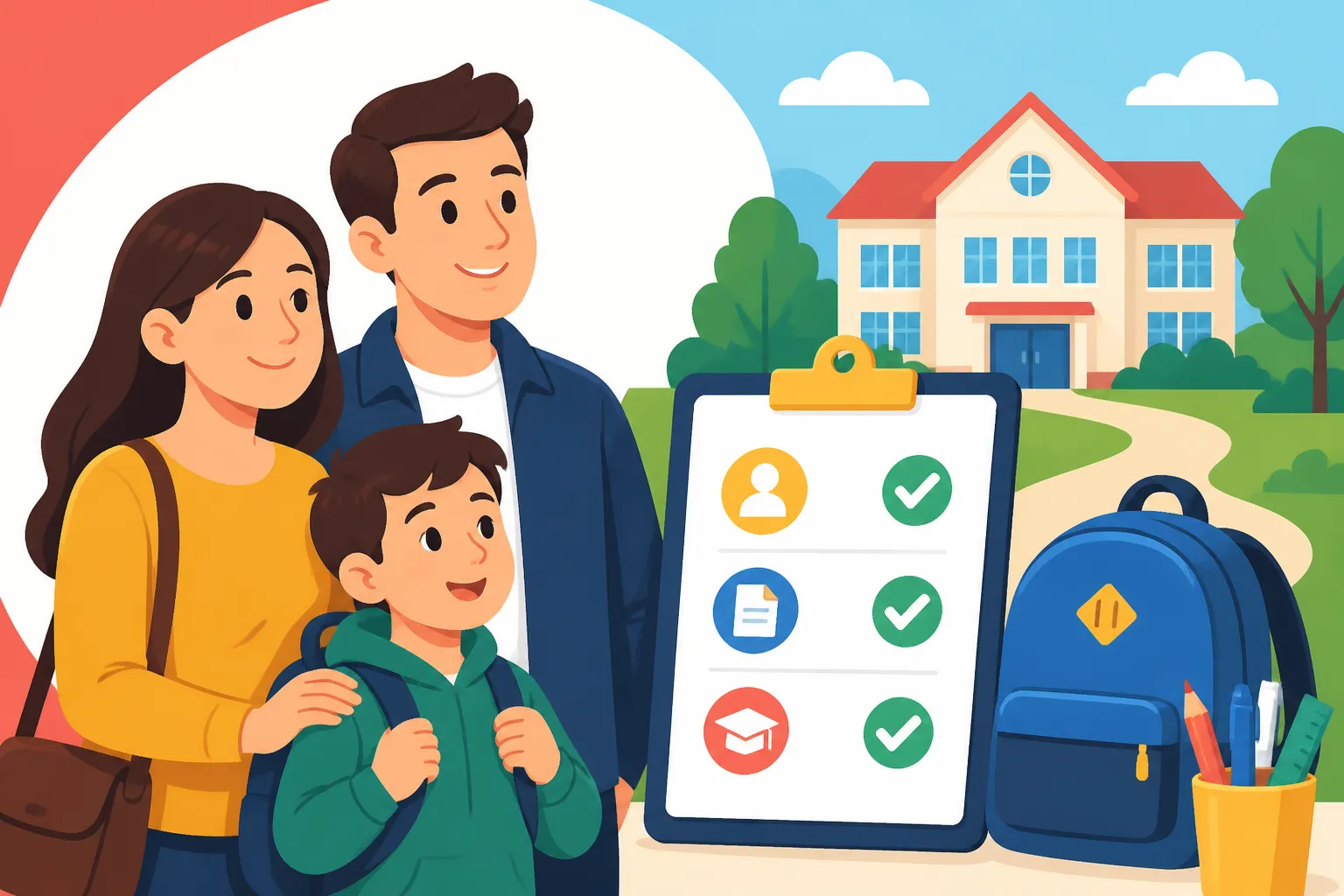
This is arguably the most crucial step, because without the right paperwork, you're not going anywhere. The exact list can vary slightly depending on the school and municipality, but here’s a general rundown of what you’ll almost certainly need:
- Your Child’s Birth Certificate: An original and a certified translation into Polish. This is non-negotiable.
- Your Child’s Passport/ID: For identification.
- Your (Parents') Passports/IDs and Residence Permits (Karta Pobytu): To prove your legal right to reside in Poland. If you’re still in the process of getting your Karta Pobytu, speak to the school directly about temporary solutions, though it's often a prerequisite. We have a comprehensive guide on How to Apply for a Temporary Residence Permit Karta Pobytu in Poland that might be helpful here.
- PESEL Number: This is Poland's national identification number, and it's absolutely essential for almost everything, including school enrollment. Your child will need one. If you haven't got one for yourself or your child yet, check out How to Get Your PESEL Number and Why It Matters for Healthcare.
- Proof of Address (Zameldowanie): You’ll need to prove that you live within the school's catchment area if you're applying for a public school. This usually means your zameldowanie certificate. This often causes confusion for expats, but it's a critical piece of the puzzle. Our guide on How to Register Your Residence Zameldowanie at the Urząd in Poland can help you sort this out.
- School Records/Transcripts: From your child’s previous school, detailing their academic history, grades, and potentially any special educational needs. Again, certified translations will be required.
- Medical Records/Vaccination Card: Polish schools require specific vaccinations. You'll need to provide proof and potentially arrange for any missing vaccinations to be administered in Poland. A visit to a local przychodnia (clinic) might be in order.
- Application Form: Provided by the school itself.
- Photos: Passport-sized photos of your child.
Deadlines are incredibly important in Poland. For public schools, the rekrutacja (recruitment) period usually opens in March or April for the following academic year (starting September). These periods are often strict, and missing them can mean your child won't get a spot in your preferred school. For international schools, the deadlines can be more flexible, but it's always best to apply as early as possible, especially as popular schools can have long waiting lists. Some schools might have rolling admissions, but don't count on it. Always check the specific school’s website or contact their admissions office directly.
Navigating Applications and Admissions
Once you have your documents in order, the application process itself typically involves a few steps.
For public schools, the process is largely centralized at the municipal level, overseen by the local Kuratorium Oświaty (Educational Superintendent). You’ll likely apply through an online portal during the rekrutacja period. You’ll list your preferred schools (usually up to three) in order of priority. The system then allocates places based on proximity, siblings already attending the school, and other criteria. Children residing in the school district have priority. If your child doesn't get into their top choice, they might be offered a spot in a lower-priority school or one with available spaces.
Submitting the application means uploading scanned documents or submitting physical copies to your first-choice school. This is where patience is key. It's not uncommon to need several visits to the school secretariat to clarify details or submit additional papers. Don’t be shy about asking for help; while English speakers aren't always guaranteed, many school staff are used to assisting foreign families.
For private and international schools, the process is usually more bespoke. You'll typically contact the admissions office directly. They will guide you through their specific application form, required documents, and assessment process. This might include:
- Entrance Exams: For older students, especially those entering middle or high school, academic assessments in subjects like English, Math, and sometimes Polish might be required.
- Interviews: Both the child and parents might be interviewed to gauge suitability and discuss expectations.
- Trial Days: Some schools offer trial days where your child can spend time in a classroom to see if it’s a good fit.
Once accepted, you'll receive an enrollment offer and usually have a short period to confirm and pay any registration fees. Be prepared for a much more hands-on and personalized approach with these schools, which can be a welcome change from the public system's bureaucracy.
Practical Tips and Common Hurdles for Expats
As an expat who’s been through the Polish system myself, I can tell you there are always little things that catch you off guard. Anticipating these and having a plan can save you a lot of stress.
Language Barrier and Support
The language barrier is, without a doubt, the biggest hurdle for many expat children, especially those entering public schools without prior Polish exposure. It’s tough, both academically and socially. Children are incredibly resilient, and many pick up Polish remarkably quickly through immersion, but it's rarely a smooth ride.
- Initial Struggle: Expect a period of adjustment. Your child might feel isolated or frustrated. Encourage them, acknowledge their feelings, and celebrate small victories.
- School Support: Some public schools, especially in larger, more expat-dense cities like Warsaw, Krakow, or Gdańsk, may have teachers or programs designed to support non-Polish speaking students. This could involve extra Polish lessons (język polski jako obcy) or peer support. Don’t assume it’s available; ask specific questions during the enrollment process.
- External Help: Consider private Polish tutors if the school doesn't offer enough support, or if your child is struggling significantly. Even a few hours a week can make a huge difference in building confidence.
- Maintaining Home Language: While immersion is great, don’t neglect your child's native language. Continue speaking it at home, reading books, and using resources to maintain proficiency. This is crucial for their long-term cognitive development and connection to your cultural heritage.
- Parent-Teacher Communication: You, as a parent, will also face a language barrier. Ask if the school has English-speaking staff or if they can recommend a translator for parent-teacher meetings. Google Translate can be your best friend for quick messages, but for important discussions, professional help is invaluable.
Settling In and Adapting
Beyond the academic side, helping your child settle emotionally and socially is paramount. Poland is a fantastic place for kids, but moving is still a big change.
- Cultural Differences: Be prepared for differences in teaching styles and classroom dynamics. Polish schools can sometimes be more formal than what your child is used to. Homework might be abundant, and discipline approaches might differ. Talk to your child about these differences and help them understand rather than resist.
- Social Integration: Encourage participation in extracurricular activities. Whether it's a sports club, art classes, or scout groups, these can be brilliant ways for your child to make friends outside the classroom and practice their Polish in a low-pressure environment. Many local domy kultury (community centers) offer a huge range of affordable activities.
- Parental Involvement: Try to get involved with the school community, even if the language is a hurdle. Attend school events, volunteer if possible, and connect with other parents. This shows your child you’re invested and can help you build your own support network.
- Home Environment: Create a stable and supportive home environment. Moving is stressful for the whole family. Keep routines, ensure they have a comfortable space to study and relax, and make sure they feel heard and understood.
- Leverage Technology: Stay connected with friends and family back home. Tools like video calls can help ease feelings of homesickness. For older kids, having reliable mobile connectivity, perhaps through an eSIM from Airalo, can be a small comfort and a way to stay in touch with their new friends. After the big move with companies like Sirelo, getting the kids settled is often the next logistical hurdle, and connectivity plays a huge role.
Remember, every child is different, and their adjustment period will vary. Some might thrive immediately, while others might need more time and support. Be patient, be present, and don't hesitate to seek advice from other expat parents who have navigated this journey before you. There are many expat groups online and in cities that can offer invaluable peer support.
Comparing Public vs. Private/International Schools
To help you make an informed decision, let's put some of the key differences between the main school types into a table. This isn't exhaustive, of course, but it highlights the most common considerations for expat families.
| Feature | Public Schools (Szkoła Podstawowa, Liceum) | Private/International Schools |
|---|---|---|
| Cost | Free (tuition-free, may have small voluntary contributions) | High (significant tuition fees, registration fees, uniforms) |
| Language of Instr. | Primarily Polish | Primarily English (or other foreign language) |
| Curriculum | Polish National Curriculum | International (IB, British, American), or adapted foreign |
| Admissions Process | Online rekrutacja, district-based priority, strict deadlines | Direct application to school, entrance exams, interviews, rolling admissions possible |
| Documents | PESEL, Zameldowanie, birth certificate, translations, medical | Passport, previous school records, translations, medical |
| Support for Expats | Varies, limited dedicated Polish as a Second Language (PSL) support, more immersion | Dedicated ESL/PSL support, counselors experienced with expat transitions |
| Class Size | Can be larger, especially in popular city schools | Generally smaller |
| Facilities | Standard, often functional; can vary greatly by municipality | Often modern, purpose-built with extensive sports, arts facilities |
| Social Integration | Full immersion into Polish culture, easier access to local activities | International community, diverse student body; may have expat 'bubble' |
| Academic Focus | Strong academic foundation, preparing for Matura | Holistic development, critical thinking, global perspectives |
| Parental Access | Requires Polish, less formal communication infrastructure for foreigners | Often excellent English communication, formal parent-teacher conferences |
Choosing the right school for your child is a deeply personal decision, and there's no one-size-fits-all answer. Some families thrive with the immersion of public schools, finding that their children pick up Polish incredibly fast and integrate fully into local life. Others find the international school environment provides a smoother transition and a familiar academic framework. Consider your child's personality, their age, previous school experience, and your family's budget and long-term plans in Poland. It’s also worth noting that some families combine strategies, perhaps starting with an international przedszkole and then transitioning to a public szkoła podstawowa once the child's Polish is strong.
Ultimately, remember that you're not alone in this journey. Thousands of expat families have navigated the Polish school system before you, and many resources, both official and informal, are available to help. Good luck!
Disclaimer
The information provided in this guide is intended for general informational purposes only and does not constitute legal, financial, or educational advice. While we strive to provide accurate and up-to-date information, regulations and procedures in Poland can change frequently. Readers are strongly advised to consult with relevant Polish authorities, school admissions offices, legal professionals, or educational consultants for advice specific to their individual circumstances. We cannot be held responsible for any inaccuracies or omissions, or for any actions taken based on the information provided herein.