How Do I Set Up a Mobile Plan with Orange or Play in Poland?
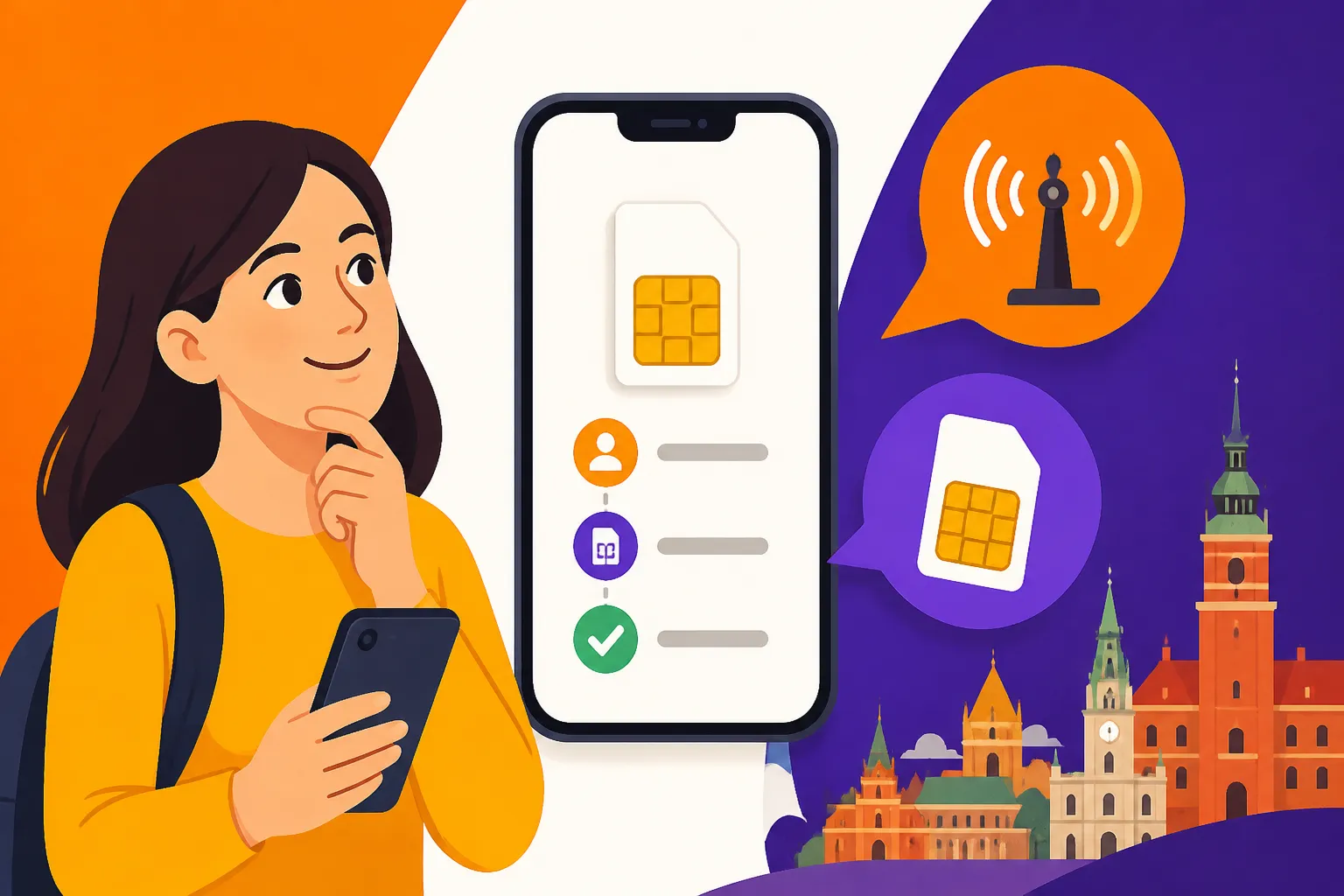
Stepping off the plane in Poland, one of the first things you realize, right after the immediate need for a strong coffee, is that you desperately need a functioning phone. That little piece of plastic connecting you to the world suddenly feels like a lifeline, especially when you're trying to navigate new streets, translate a menu, or simply tell your family you've arrived safely. But trying to figure out the local mobile phone market, with its various providers and bewildering options, can feel like trying to decipher a secret code. This guide is here to walk you through the ins and outs of setting up a mobile plan with two of Poland's biggest players, Orange and Play, making sure you stay connected without losing your sanity.
Why a Polish Mobile Plan is Absolutely Essential for Expats
Trust me, I've been there. You arrive, perhaps you're using your home country's roaming plan for a few days, or maybe you've got a temporary eSIM from a provider like Airalo just to get by. But very quickly, you'll find that a proper Polish mobile number isn't just a convenience; it's a fundamental step in truly settling in. It's not just about making calls or scrolling Instagram, although those are certainly important for staying in touch with friends and family, and sometimes even a crucial part of managing your new life abroad.
Integrating into the Polish System
Having a local Polish number streamlines so many aspects of expat life that you might not even consider initially. For starters, think about all the times you'll be asked for a phone number: signing up for a gym, registering for a loyalty card at your favourite grocery store, ordering food delivery, or even just setting up an appointment with a doctor. While your foreign number might work, it often leads to complications, extra charges for SMS confirmations, or simply a blank stare from the Polish person on the other end of the line. They expect a Polish number, plain and simple.
Beyond the everyday conveniences, a local number becomes surprisingly critical for official business. When you start diving into the bureaucratic jungle of getting your PESEL number, which is practically your lifeblood here, or trying to open a bank account at a Polish bank as a foreigner, a Polish phone number is almost always a mandatory field on application forms. Banks, especially, often require it for two-factor authentication for online banking. Without it, you could find yourself hitting roadblocks that make even simple transactions feel like an epic quest. It really helps you feel more grounded, less like a tourist and more like a resident.
The PESEL Predicament and Contract Plans
Speaking of the PESEL, this unique identification number plays a significant role in what kind of mobile plan you can access. While you can certainly get a prepaid SIM without a PESEL, many of the more attractive, long-term contract offers from providers like Orange and Play will require it. This is where the frustration can really set in for new arrivals. You need a phone to get a PESEL, but to get the best phone deals, you often need a PESEL! It's a classic expat catch-22 that many of us have faced.
This often means starting with a prepaid option, which is perfectly fine for your first few weeks or months, and then upgrading to a contract plan once you're more settled and have your documents in order. Don't worry, many companies understand this expat journey and offer relatively smooth transitions. The most important thing is to get some local number as quickly as possible. This step, along with things like registering your residence (zameldowanie) in Poland, are key to a smoother transition into your new life here.
Prepaid vs. Postpaid: Understanding Your Options
Navigating the world of mobile phone plans in Poland boils down to two main categories: prepaid (na kartę) and postpaid (abonament). Both have their merits and drawbacks, especially for expats. Understanding these differences is crucial for choosing the plan that best suits your current situation and future needs.
Prepaid (Na Kartę): Flexibility for the Unsettled
Prepaid plans are often the first port of call for new expats, and for good reason. They offer incredible flexibility, requiring minimal documentation to get started. You simply buy a SIM card, top it up with credit (usually called "doładowanie"), and then activate a package (pakiet) that includes data, minutes, and SMS.
- Pros for Expats:
- Ease of Access: You can purchase a prepaid SIM card at almost any newsagent (Ruch, Kolporter), grocery store, electronics shop (like Media Expert, RTV Euro AGD), or official provider store (Orange, Play, T-Mobile, Plus). Just present your passport or ID for registration, as Polish law requires all SIM cards to be registered to a specific person. This is often the quickest way to get a local number.
- No Contract, No Commitment: This is a huge relief when you're still figuring out your long-term plans in Poland. There's no credit check, no long-term commitment, and you're not tied down to monthly payments.
- Cost Control: You only pay for what you use or for the packages you activate. This can be great for budgeting, as there are no surprise bills.
- Cons for Expats:
- Less Value for Money: Generally, prepaid packages offer less data or fewer minutes for the same price compared to postpaid options.
- Manual Topping Up: You have to remember to top up your account and activate new packages regularly, which can be a nuisance if you're not used to it. Most providers offer auto-renewal if you link a bank card, but you'll still need enough balance.
- Limited Perks: Postpaid plans often come with additional benefits like free roaming in the EU/EEA, access to streaming services, or discounted phone upgrades, which are less common with prepaid.
Postpaid (Abonament): Stability for the Settled
Postpaid plans, or contracts, are what most residents opt for once they're more established. These plans involve signing an agreement, usually for 12 or 24 months, with a fixed monthly fee (abonament) for a set amount of data, calls, and SMS.
- Pros for Expats:
- Better Value: You typically get more data, minutes, and SMS for your money compared to prepaid plans.
- Convenience: Automatic monthly payments mean you don't have to worry about topping up.
- Additional Perks: Contract plans often include benefits like EU roaming, cheaper international calls, or the option to get a new phone at a subsidized price.
- Professional Image: Having a contract can sometimes be seen as a sign of stability, which can be useful in certain contexts, though less critical than your PESEL.
- Cons for Expats:
- Documentation Heavy: This is the biggest hurdle. You'll almost certainly need a PESEL number, a Polish bank account, and sometimes even proof of employment or residency to sign a contract. This can be challenging for new arrivals.
- Credit Checks: Providers may conduct credit checks, which can be difficult for foreigners with no Polish credit history.
- Long-Term Commitment: You're locked into a contract, and breaking it usually involves penalties. If your plans change (e.g., you move abroad temporarily or for good), it can be a hassle. However, some providers offer shorter 6-month or even no-commitment rolling contracts, though these might be slightly more expensive.
- Language Barrier: While major providers have English-speaking staff in bigger cities, navigating contract terms and conditions in Polish can be daunting.
Many expats find that starting with a prepaid SIM is the easiest solution for their first few months, offering a quick way to get connected, then transitioning to a postpaid contract once they have secured their PESEL, opened a local bank account, and perhaps even started working.
Deep Dive into Orange Mobile Plans for Expats
Orange is one of Poland's largest and most established telecommunications providers, offering a wide range of services including mobile, internet, and TV. For expats, Orange presents a solid option with various plans, though understanding their nuances is key.
Orange Prepaid (Orange Free na kartę)
Orange's prepaid offering, often called "Orange Free na kartę," is very popular. The beauty of it lies in its flexibility and the generous data bonuses you can accumulate.
- Getting Started: You can pick up an Orange SIM card at pretty much any kiosk, postal office, or Orange store. Just make sure to bring your passport or Polish ID (if you have one) for registration. Without registration, the SIM won't work due to Polish law. The initial cost for the SIM itself is usually minimal, often just a few złoty, and sometimes comes with a small amount of pre-loaded credit.
- Topping Up and Packages: Once you have the SIM, you'll need to top it up. You can do this online via Orange's website (they often have an English version), through their mobile app, at bank ATMs, or in person at shops and kiosks. Once topped up, you can activate various packages. For example, a common package might give you unlimited calls and SMS within Poland, plus a certain amount of data (e.g., 20 GB or 30 GB) for 25-30 PLN for 30 days.
- Data Bonuses: Orange is known for its "gigabytes for topping up" promotions. The more you top up, the more bonus data you get, which can accumulate significantly over time. This can be a huge advantage for data-hungry users.
- EU Roaming: Within the EU/EEA, you can use a portion of your Polish data allowance for roaming at no extra cost, as per EU regulations. This is usually clearly stated in the package details.
- Customer Service: Orange generally has good customer service. In larger cities like Warsaw, Krakow, or Wrocław, you'll often find English-speaking staff in their main stores. Their helpline might also offer English support, but it's not always guaranteed. Using their mobile app (Mój Orange) can also help manage your account in English.
Orange Postpaid (Abonament): Requirements and Options
If you're planning a longer stay and have your PESEL number and a stable income, an Orange postpaid plan could offer better value.
- Documentation: To sign a contract with Orange, you'll typically need:
- Your PESEL number.
- A valid passport or Polish ID/residence permit.
- Proof of address in Poland (e.g., a rental agreement, utility bill with your name).
- Proof of income or a Polish bank account for direct debit payments. Some stores might be more flexible than others, but generally, expect these requirements.
- Plan Tiers: Orange offers various contract plans, often tiered by data allowance (e.g., S, M, L, XL). A typical plan might include unlimited calls/SMS in Poland and a substantial amount of data (e.g., 50 GB to unlimited) for anywhere between 40 PLN to 80 PLN+ per month, depending on the data cap and contract length.
- Device Options: Many postpaid plans come with the option to get a new smartphone at a subsidized monthly cost, spreading the device payment over the contract term. This can be appealing if you're due for an upgrade.
- Bundling: Orange also offers bundles (Orange Love) where you can combine mobile, home internet, and TV services, often at a reduced overall price. This can be a great option for those looking to simplify their utility setup.
- English Support: While Orange's website and app offer some English language options, be prepared that the contract itself will be in Polish. It’s always a good idea to bring a Polish-speaking friend or use a translation app when signing anything official.
For those just starting their journey in Poland, remember that Orange prepaid is a fantastic interim solution. You can always switch to a contract later once you've gone through the process of getting your PESEL and a local bank account. If you're looking for broader relocation advice, services like Sirelo can often help with the bigger picture of moving, including utility setup.
Exploring Play Mobile Plans for Expats
Play (P4 Sp. z o.o.) is another major telecommunications provider in Poland, known for its competitive pricing, especially in the data department, and its modern approach to services. Many expats find Play to be a very attractive option due to its strong focus on digital services and often more generous data packages.
Play Prepaid (Play na kartę)
Play's prepaid offers are straightforward and often appeal to users who consume a lot of mobile data.
- Ease of Purchase and Registration: Similar to Orange, you can buy a Play SIM card at kiosks, grocery stores, electronics retailers, or any Play store. Remember your passport for mandatory registration, which is a quick process in-store. Often, the SIM itself is very cheap, sometimes even free with a small amount of initial credit.
- Package Simplicity: Play often has very clear, competitive packages. For instance, you might find offers for unlimited calls, SMS, and a large chunk of data (e.g., 20 GB, 30 GB, or even more) for a monthly fee of around 25-30 PLN. They frequently run promotions where these data allowances are significantly boosted.
- "Unlimited" Options: Play is particularly known for its "unlimited" data options, even on prepaid. While these aren't truly unlimited at maximum speed (they usually come with a fair usage policy or a speed cap after a certain threshold), they often provide enough data for most users.
- EU Roaming: Just like Orange, Play adheres to EU regulations, allowing you to use a portion of your domestic data allowance for roaming in other EU/EEA countries at no extra charge. This is a huge benefit for anyone planning trips around Europe.
- Digital Management: Play has a very user-friendly mobile app (Play24) which allows you to top up, activate packages, check your usage, and manage your account in a digital-first way. It's often available in English, making it easier for non-Polish speakers.
- Network Coverage: Play has its own modern network, and where it doesn't have native coverage, it utilizes roaming agreements with other major Polish providers (like Orange, Plus, T-Mobile) to ensure broad coverage across the country, which is a big plus for reliability.
Play Postpaid (Abonament): Contractual Considerations
Play's contract plans are also highly competitive, often appealing to those looking for high data volumes at reasonable prices.
- Documentation hurdles: As with any contract in Poland, you'll need more documentation than for a prepaid SIM. Expect to provide your PESEL number, a valid residence permit or passport, proof of address, and potentially proof of income or a Polish bank account to set up direct debits. Each Play store might have slightly different requirements or flexibilities, especially for new expats.
- Data-Centric Plans: Play's postpaid offerings are usually very strong on data. You can often find plans with very high data caps or even truly unlimited data (though typically with speed reductions after a high threshold) for monthly fees comparable to Orange, usually ranging from 40 PLN to 90 PLN+.
- Contract Lengths: Play offers various contract lengths, commonly 12 or 24 months. Sometimes they have promotional offers for shorter commitments or "no-commitment" rolling contracts that renew monthly, providing more flexibility but perhaps at a slightly higher price point.
- Bundles and Promotions: Play often has attractive promotions that include discounted devices or additional services. They also offer "Play Family" plans, allowing multiple lines under one contract, which can be cost-effective for families.
- Customer Support: Play also offers customer support through their stores and a helpline. In major cities, it's increasingly common to find English-speaking staff, but having some basic Polish phrases or a translator app handy is always recommended when dealing with contract specifics. The Play24 app is your best friend here for managing your account independently.
Both Orange and Play offer robust services, and the choice often comes down to specific plan details at the time of purchase, personal preference for app interface, or specific coverage needs in your particular area of Poland. Don't be afraid to visit both stores to compare current offers.
Making the Right Choice and Activation Tips
Deciding between Orange and Play, and between prepaid and postpaid, can seem daunting, but it doesn't have to be. Here's how to simplify your decision and some crucial tips for activation.
Comparing Your Options
Let's break down the key differences in a simple table to help you visualize:
| Feature | Orange (Prepaid) | Orange (Postpaid) | Play (Prepaid) | Play (Postpaid) |
|---|---|---|---|---|
| Initial Documentation | Passport/ID for registration | PESEL, Passport/ID, proof of address/income | Passport/ID for registration | PESEL, Passport/ID, proof of address/income |
| Commitment | None, pay-as-you-go | 12-24 month contract (often) | None, pay-as-you-go | 12-24 month contract (often) |
| Data Offers (Typical) | Good, often with top-up bonuses | Very good, higher caps, sometimes unlimited | Very good, strong data packages, "unlimited" | Excellent, often very high/unlimited data |
| EU Roaming | Included (portion of domestic allowance) | Generous inclusion, sometimes full allowance | Included (portion of domestic allowance) | Generous inclusion, sometimes full allowance |
| Pricing (Monthly) | ~25-35 PLN (for solid package) | ~40-80+ PLN (depending on data/perks) | ~25-35 PLN (for solid package) | ~40-90+ PLN (depending on data/perks) |
| English Support | Available in major stores/apps, variable | Available in major stores/apps, variable | Available in major stores/apps, good app | Available in major stores/apps, good app |
| Key Advantage | Strong network, loyalty bonuses | Comprehensive services, bundling options | Competitive data, flexible plans | Best for data-hungry users, modern offers |
Ultimately, for initial setup, a prepaid plan from either Orange or Play will be your quickest and easiest route to getting connected. Once you're more settled and have your PESEL, you can revisit the postpaid options for better value.
Step-by-Step Activation and Essential Tips
No matter which provider you choose, here's a general walkthrough and some invaluable tips:
- Purchase Your SIM: Head to an official Orange or Play store if possible. While kiosks are convenient, stores have staff who can assist with registration and package activation directly.
- Registration is Key: Remember the legal requirement to register your SIM card with your personal details. This means presenting your passport (or Polish ID/residence permit if you have one). The store staff will handle this electronically. This is crucial; an unregistered SIM will not work.
- Choose a Starter Package: Once registered, ask the staff to help you activate an initial package. Explain your needs (e.g., "I need a lot of internet," or "unlimited calls"). They can usually recommend the best current offer.
- Top Up Your Balance (Prepaid): If you went prepaid, you'll need to top up. Doładowanie (topping up) can be done in-store, at an ATM, online via the provider's website, or through their mobile app. You can often buy vouchers at supermarkets too.
- Download the App: Both Orange (Mój Orange) and Play (Play24) have excellent mobile apps. Download them immediately. They often have English options and allow you to manage your account, check usage, activate packages, and top up credit independently. This reduces reliance on customer service or Polish language skills.
- Check EU Roaming: If you plan to travel within the EU/EEA, confirm the specifics of your EU roaming allowance. It's usually a portion of your domestic data, but it's good to know the exact limits to avoid unexpected charges.
- Keep Documents Handy: Even after registration, keep copies of your passport and SIM registration confirmation somewhere safe. You might need them for future customer service interactions or if any issues arise.
- Ask for English: Don't be shy about asking if someone speaks English in the store. In larger cities, it's usually not a problem, but a polite "Czy ktoś mówi po angielsku?" (Does anyone speak English?) can open doors.
Setting up a mobile plan is a fundamental step in navigating life in Poland. While it might seem like just another administrative hurdle at first, having a reliable local number from providers like Orange or Play will quickly become an indispensable tool in your expat kit, helping you connect with the world and integrate into your new home.
Disclaimer
Please note that the information provided in this guide is for general informational purposes only and is subject to change. Mobile plan specifics, pricing, and terms and conditions can vary and are often updated by providers. While we strive to keep our content accurate and up-to-date, we recommend verifying all details directly with Orange, Play, or any other mobile service provider before making any decisions. This guide does not constitute professional advice.