Can I Drive in Poland with a Foreign Licence?
One of the trickiest parts about settling into life in Poland, or even just visiting for an extended period, is navigating the rules around driving. It’s not always straightforward figuring out if your home country’s licence is valid here, when you need to exchange it, or what happens if you overstay a grace period. This guide is here to untangle the bureaucratic knots and give you a realistic roadmap for driving in Poland with a foreign licence, helping you avoid unnecessary stress and fines.
The Foundations: Understanding Foreign Driving Licences in Poland
Driving in Poland can feel like a maze even with a Polish licence, let alone when you're trying to figure out if your existing one holds up. The rules aren't uniform for everyone; they largely depend on where your licence was issued and your residency status in Poland. Let's break down the essential distinctions.
Initial Grace Periods and International Driving Permits (IDP)
For many expats from outside the European Union or European Economic Area, the initial period of driving in Poland comes with a specific grace period. Generally, if you're a tourist or a temporary resident, you can use your foreign driving licence for up to six months from the date you entered Poland. This six-month window starts from your arrival, not from when you begin driving. This is a critical detail that often catches people out. After this period, your foreign licence alone is no longer considered valid for driving here.
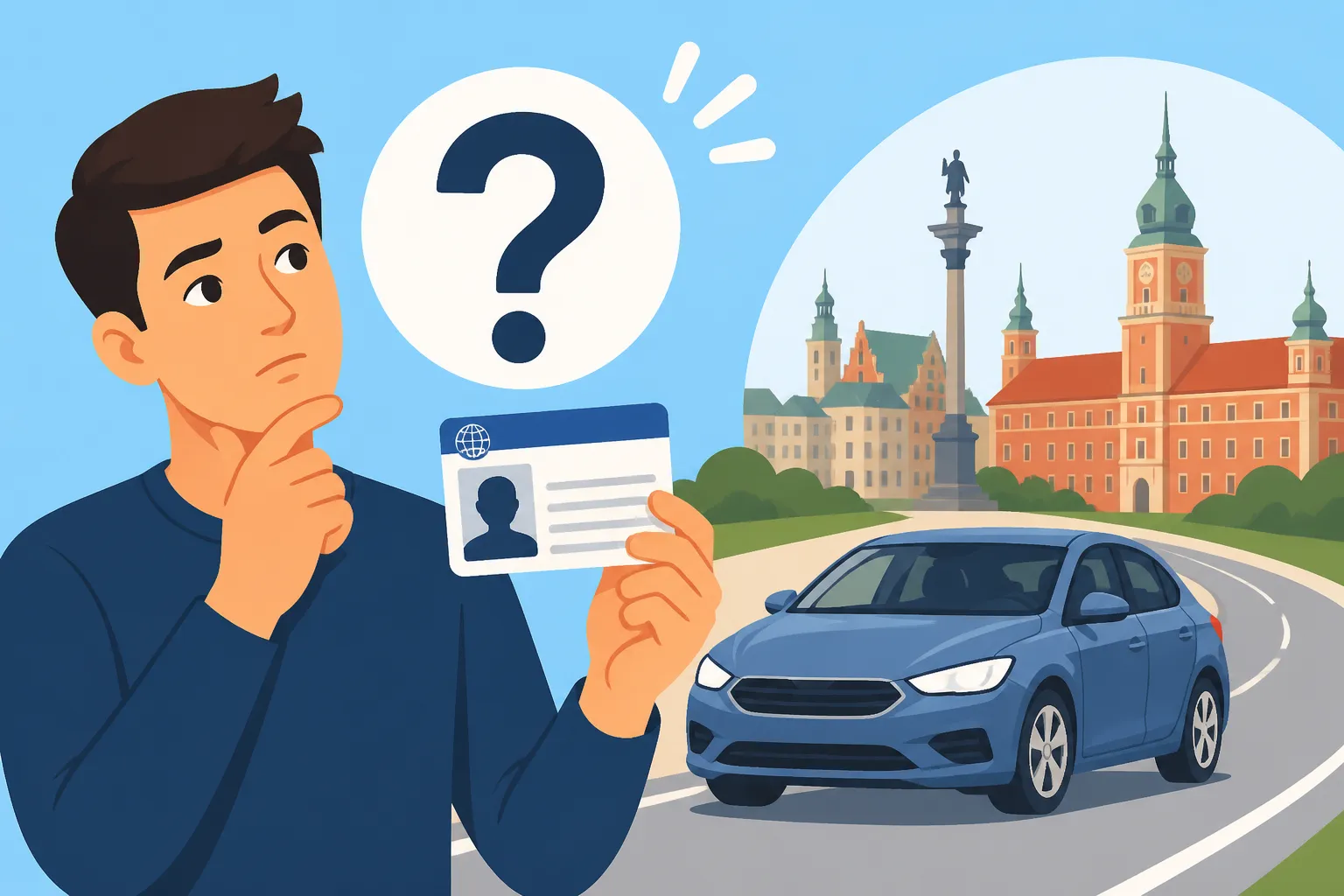
Now, for those outside the EU/EEA, an International Driving Permit (IDP) often comes into play. An IDP is essentially a multi-language translation of your domestic driving licence. It's not a standalone document; it must always be presented alongside your original, valid foreign driving licence. There are two main international conventions governing IDPs: the 1949 Geneva Convention and the 1968 Vienna Convention. Poland is a signatory to the 1968 Vienna Convention. While an IDP from either convention is generally accepted for short-term visits, having one issued under the Vienna Convention can sometimes make things smoother. The IDP makes it easier for Polish authorities to understand your licence details if your original one isn't in Polish, or even English. Think of it as a helpful companion, especially if you ever find yourself pulled over or involved in a minor incident. However, remember the six-month rule: an IDP doesn't extend the validity of your foreign licence beyond that initial residency period for non-EU citizens.
EU/EEA Licences: Smooth Sailing (Mostly)
If you're lucky enough to hold a driving licence issued by an EU or EEA member state, you've hit the jackpot, relatively speaking. Your licence is generally recognised and valid in Poland until its expiry date, without any need for an immediate exchange. This is fantastic news for EU expats, offering a seamless transition when it comes to driving. You can simply use your existing licence, provided it's valid and you meet the age and health requirements of both your issuing country and Poland.
However, even with an EU/EEA licence, there are a couple of nuances. While not mandatory, you can choose to register your EU/EEA licence with the Polish authorities (specifically the local Urząd Miasta or Urząd Dzielnicy in the Communication Department, known as Wydział Komunikacji). This isn't an exchange, but rather an official acknowledgment of your foreign licence by the Polish system. It can sometimes be useful for administrative purposes, like if you lose your licence and need a replacement while in Poland, or if you simply prefer all your documents to be locally recognised. The authorities will note your EU licence in their registry. You would simply apply for a "Polish" licence when your original one expires. At that point, the process is usually a straightforward administrative exchange, not a full driving test. Keep in mind that some insurance companies might prefer you to register it, or at least they might want confirmation of your residency here, but generally, your EU licence works perfectly fine.
The PESEL and Driving: A Key Connection
You’ll hear about the PESEL number constantly in Poland, and for good reason. It's your personal identification number, similar to a social security number or national ID, and it's absolutely fundamental for almost any official transaction here, including matters related to your driving licence. While you might be able to drive for a short period without one (especially as a tourist), if you plan to reside in Poland and need to exchange your licence, register a vehicle, or deal with any motor vehicle administration, a PESEL is virtually indispensable.
Without a PESEL, you're essentially an unknown entity in the Polish administrative system, and most offices simply won't process your application. You'll need it for the licence exchange process, for Registering Your Residence (Zameldowanie) in Poland: The Complete Guide, and for any official car registration procedures. Even something as basic as How to Register a Vehicle (Rejestracja Pojazdu) in Poland requires you to have this unique identifier. If you haven't sorted this out yet, make it a priority. It truly is the gateway to unlocking pretty much all administrative necessities for expats. Knowing How to Get Your PESEL Number and Why It Matters for Healthcare will save you a lot of headaches across various aspects of your life here, not just driving.
When You Must Exchange Your Foreign Licence for a Polish One
This is where the rubber meets the road, so to speak. While the grace periods and EU regulations offer some flexibility, there comes a point for most non-EU expats when exchanging your foreign licence for a Polish one becomes a legal necessity. Ignoring this could lead to significant problems down the line, including fines or issues with insurance.
The Six-Month Rule for Non-EU/EEA Residents
As mentioned earlier, if you're a non-EU/EEA citizen and you've established residency in Poland, your foreign driving licence is only valid for the first six months from your date of entry. This means that if you're here on a work visa, a student visa, or any other long-term residency permit, you must initiate the process of exchanging your licence within that six-month window, or at least before its expiry.
After those six months, if you haven't exchanged your licence, you are legally considered to be driving without a valid permit in Poland. This isn't a minor infraction. If you're stopped by the police, you could face hefty fines, have your car impounded, and even potentially face legal proceedings. More importantly, in the event of an accident, your insurance company might refuse to cover damages, leaving you financially liable for everything. Believe me, you do not want to be in that situation here. It's a bureaucratic hurdle, yes, but a vital one to clear to ensure your legal standing and peace of mind on Polish roads.
Expired Licences and Lost Licences
What happens if your foreign licence expires while you're living in Poland, and you haven't exchanged it yet? This can create a bit of a tricky situation. Generally, Polish authorities require your original foreign licence to be valid at the time of exchange. If it has expired, they might not proceed with the exchange directly. In such cases, you might first need to renew your licence in your home country (which can be complicated if you're already abroad), or, in some scenarios, you might be required to undergo the full Polish driving test process, including theoretical and practical exams, as if you were applying for a licence for the first time. This is why it’s always best to initiate the exchange process well before your current licence expires.
Losing your foreign licence while residing in Poland presents another set of challenges. If you lose an EU/EEA licence, you'd typically apply for a replacement in your home country. For non-EU/EEA licences, if you're past the six-month grace period and haven't exchanged it, you're in a difficult spot. If you haven't yet applied for the exchange, you'll need to obtain a duplicate from your home country's issuing authority first. The Polish authorities will need to see proof of your valid licence, usually directly from the issuing country, before they can process an exchange or issue a Polish equivalent. Always report a lost or stolen licence to the local police immediately to get an official report, which might be helpful for insurance or future applications.
How to Exchange Your Licence: A Step-by-Step Walkthrough
Exchanging your foreign driving licence for a Polish one can be a test of patience, but it's a well-trodden path. Here’s a detailed breakdown of what to expect:
-
Where to Go: Your first port of call is the Wydział Komunikacji (Communication Department) at your local Urząd Miasta (City Hall) or Urząd Dzielnicy (District Office) if you're in a larger city like Warsaw or Krakow. Make sure it's the one corresponding to your official Registering Your Residence (Zameldowanie) in Poland: The Complete Guide. It’s always a good idea to check their specific opening hours and if they require appointments, as these offices can be notoriously busy.
-
Required Documents: Gather everything meticulously. You'll typically need:
- Application Form: Usually available at the Urząd or downloadable from their website.
- Original Foreign Driving Licence: Must be valid.
- Sworn Translation of Your Licence: If your licence is not in Polish, you'll need a tłumaczenie przysięgłe (sworn translation) by a certified Polish sworn translator. Do not underestimate this step; a regular translation won't cut it.
- Copy of Your Passport/ID and Visa/Residence Permit: Proof of your identity and legal residency in Poland.
- Proof of Zameldowanie: Your official residence registration document.
- PESEL Number: As discussed, absolutely essential.
- Medical Certificate: You'll need to undergo a medical examination by a certified doctor in Poland, who will issue a certificate confirming your fitness to drive. This typically costs around PLN 200-300.
- One Current Biometric Photo: Standard passport photo size (35×45 mm).
- Proof of Payment of Fees: There's a fee for the licence exchange (around PLN 100). You'll usually pay this at the Urząd cashier or via bank transfer, so make sure you have How to Set Up Online Banking and BLIK Payments in Poland sorted for convenience.
-
The Application Process:
- Submission: Present all your documents. The official will review them, often with a fine-tooth comb. Be prepared for questions and possibly requests for additional documents. Patience is key!
- Verification: The Polish authorities will then send your foreign licence to your home country's issuing authority for verification of its authenticity. This step is often the longest and most unpredictable part of the process, as it depends entirely on how quickly your home country responds. It can take anywhere from a few weeks to several months. During this verification period, you'll typically receive a temporary permit (sometimes just a stamp in your application) allowing you to drive within Poland. Clarify this with the Urząd.
- Collection: Once verification is complete and your new Polish licence is ready, you'll be notified to pick it up. You'll usually surrender your foreign licence at this point (they keep it, or sometimes stamp it "invalid for Poland" and return it, depending on the country).
The entire process, from application to receiving your Polish licence, can be quite lengthy. Don't plan any international trips where you'd need your original licence for driving during this waiting period, as it might be held by the Urząd.
Here’s a helpful table summarising licence validity and exchange requirements:
| Licence Origin | Residency Status | Initial Validity in Poland | Required Action After Grace Period / Upon Expiry | Notes |
|---|---|---|---|---|
| EU/EEA Member State | Tourist/Resident (short/long-term) | Valid until its expiry date, no exchange required. | Upon expiry, exchange for a Polish licence (administrative process). | No mandatory registration, but can be done optionally at Wydział Komunikacji. |
| Non-EU/EEA | Tourist (short-term) | Valid for 6 months from entry date, usually with an International Driving Permit (IDP). | Not applicable; if still a tourist, licence validity depends on home country. No Polish residency means no exchange possible. | IDP is a translation, not a standalone licence. Always carry original licence. |
| Non-EU/EEA | Resident (long-term) | Valid for 6 months from entry date (with IDP recommended). | Mandatory Exchange: Must exchange for a Polish licence at Wydział Komunikacji before the 6-month period ends or your foreign licence expires (whichever comes first). | Your foreign licence will be sent for verification to your home country. This process can be lengthy. Drive with temporary permit if issued. If your licence expires before exchange, you might need to take Polish driving exams. |
| International | Any | Not a standalone licence. | Always carry with original licence. Does not extend grace periods. | Useful for translation purposes for licences not in Polish/English. |
Practical Driving Considerations for Expats in Poland
Getting your licence sorted is just one piece of the puzzle. Driving in Poland involves understanding local laws, customs, and preparing for the unexpected.
Car Registration and Insurance: Beyond the Licence
Even if you have your driving licence in hand, you can't just hit the road with any car. If you plan to own and drive a car in Poland, it needs to be properly registered. This involves a separate, often equally bureaucratic process at the same Wydział Komunikacji office. You'll need documents proving ownership, proof of origin if imported, and payment of various taxes and fees. Just like your licence, a PESEL is crucial for How to Register a Vehicle (Rejestracja Pojazdu) in Poland.
Mandatory third-party liability insurance (OC – Odpowiedzialność Cywilna) is non-negotiable in Poland. Driving without it is illegal and incredibly risky. If you're involved in an accident and don't have OC, you'll be personally liable for all damages, which can be astronomical. While OC covers damages to other vehicles and persons, you might also consider additional insurance like AC (Auto Casco) for damages to your own vehicle. Don't forget the Understanding the Annual Vehicle Inspection (Przegląd Techniczny) in Poland, which is mandatory annually for all vehicles over three years old.
Polish Road Rules and Customs: What's Different?
Driving in Poland can be an adjustment. Poles drive on the right, which for many expats is a fundamental change. Speed limits are generally 50 km/h in urban areas (from 5 AM to 11 PM, 60 km/h from 11 PM to 5 AM), 90 km/h outside urban areas, 100 km/h on single carriageway expressways and dual carriageways, 120 km/h on dual carriageway expressways, and 140 km/h on motorways (autostrady). These are often strictly enforced, sometimes by unmarked cars.
Watch out for trams in cities; they always have right of way. Pedestrians also have significant priority at crossings, and drivers must yield. Headlights are mandatory 24/7, year-round. Winter tires are not legally required but highly recommended during colder months. Keep an eye out for bicycle paths; cycling is very popular, and interactions between cars and bikes require extra caution. Finally, many motorways operate on a toll system, with the electronic Understanding Motorway Tolls (e-Toll) and the Road System in Poland system now common. Familiarise yourself with it before your first long journey.
Navigating Communication and Emergencies
Imagine this: you're driving along, perhaps using your phone for GPS (with a great data plan from a provider like Airalo, ensuring you never miss a turn!), and suddenly you're involved in a minor fender bender. Your first thought, after checking everyone is okay, is usually, "How do I explain this?" The language barrier can be a real issue, especially if you haven't mastered Polish yet.
It's wise to have a few phrases memorized for common scenarios, or at least a translation app on your phone. If you're in an accident, call 112 (the general European emergency number) for police and paramedics. Having a Polish-speaking friend or colleague on speed dial can be incredibly helpful. Always carry your documents: original driving licence (and IDP if you have one), car registration, and insurance papers. The police will ask for them. If a medical emergency arises, knowing about Emergency Medical Care in Poland: What Every Expat Needs to Know can be vital. Good mobile connectivity, perhaps with an eSIM from Airalo, is invaluable for navigation and emergencies. For any bigger moves, services like Sirelo can help with general relocation, making sure all your household goods arrive safely, so you can focus on the driving aspects once you're settled.
Common Pitfalls and Troubleshooting
The Polish administrative system is infamous for its bureaucracy, and driving licence exchange is no exception. Knowing what to expect can help manage expectations and reduce stress.
The Waiting Game: Bureaucracy and Timelines
Polish administrative offices, or Urzędy, are not known for their lightning-fast service. The processing times for licence exchanges can be lengthy, often stretching into several weeks or even months, primarily due to the verification process with your home country. It’s not uncommon to be told "it will take up to 30 days," only for it to take significantly longer.
My advice? Be prepared for delays. Submit your application as early as possible. Don't make concrete plans that rely on having your new licence by a specific date. Always keep a copy of your application and any temporary permits issued. If you haven't heard back within the stated timeframe, don't be afraid to follow up, though always politely. A little bit of persistence, combined with a smile, can sometimes work wonders.
Language Barriers and Document Translation
As touched upon, the language barrier is a significant hurdle. Many officials at the Urząd might not speak English, especially outside of major expat hubs. This means that having your documents perfectly in order and correctly translated is paramount. A tłumacz przysięgły (sworn translator) is a must for your driving licence. These are certified professionals whose translations are legally recognised by Polish authorities. You can usually find a list of sworn translators on the Polish Ministry of Justice website or through online search engines.
It’s often helpful to bring a Polish-speaking friend or colleague with you to the Urząd, especially for your initial application. They can help clarify any questions or nuances that might arise. This isn't just about understanding; it’s about ensuring that your application is processed correctly the first time, saving you repeat visits. When choosing a new mobile provider, consider one that offers good customer support in English, as knowing How to Choose a Mobile and Internet Provider in Poland with good service can make life much easier.
What If You Get Pulled Over?
Even with a valid Polish licence or during your grace period, being pulled over by the police can be intimidating. Remain calm, polite, and cooperative. Have your documents readily accessible: your driving licence (original + IDP if applicable), vehicle registration document (dowód rejestracyjny), and proof of insurance (polisa OC).
If you don't speak Polish, you can state, "Nie mówię po polsku. Czy pan mówi po angielsku?" (I don't speak Polish. Do you speak English?). The police might speak some English, or they might try to communicate through gestures. Follow their instructions carefully. If you receive a fine (mandat), ensure you understand why before accepting and signing it. You have the right to refuse a fine if you believe it's unjust, but this will usually lead to a court hearing, which can be a complex process. It’s generally easier to pay a valid fine and avoid further complications, but always understand what you're signing.
Disclaimer
The information provided in this guide is for general informational purposes only and does not constitute legal advice. Driving regulations and administrative procedures in Poland can change, and individual circumstances may vary. It is always recommended to consult with the relevant Polish authorities (e.g., your local Urząd Miasta/Dzielnicy) or a legal professional for the most current and specific advice pertaining to your situation.