Understanding the Role of the Przychodnia (Clinic) in Poland
Standing in front of a sign that says "Przychodnia" while feeling under the weather can be a daunting experience for any expat in Poland. You’re likely wondering if you can just walk in, how much it costs, or if anyone speaks English. This guide breaks down the essential role of the Polish clinic, the gatekeeper to your health and well-being.
The Przychodnia as the Foundation of Polish Healthcare
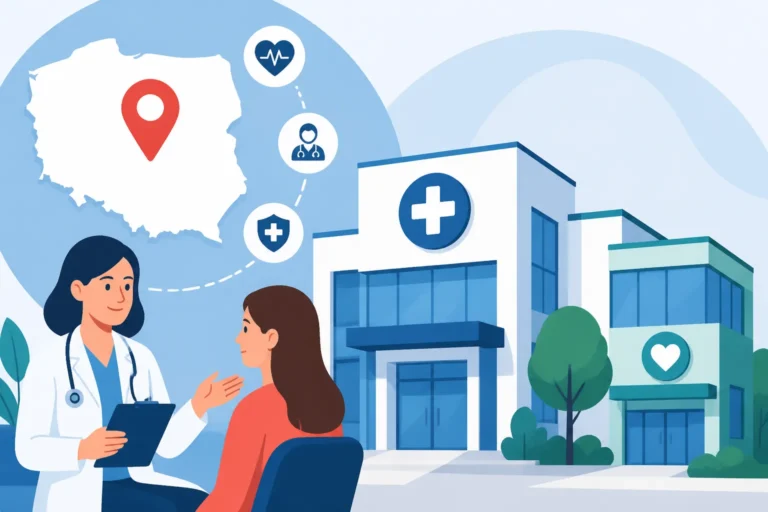
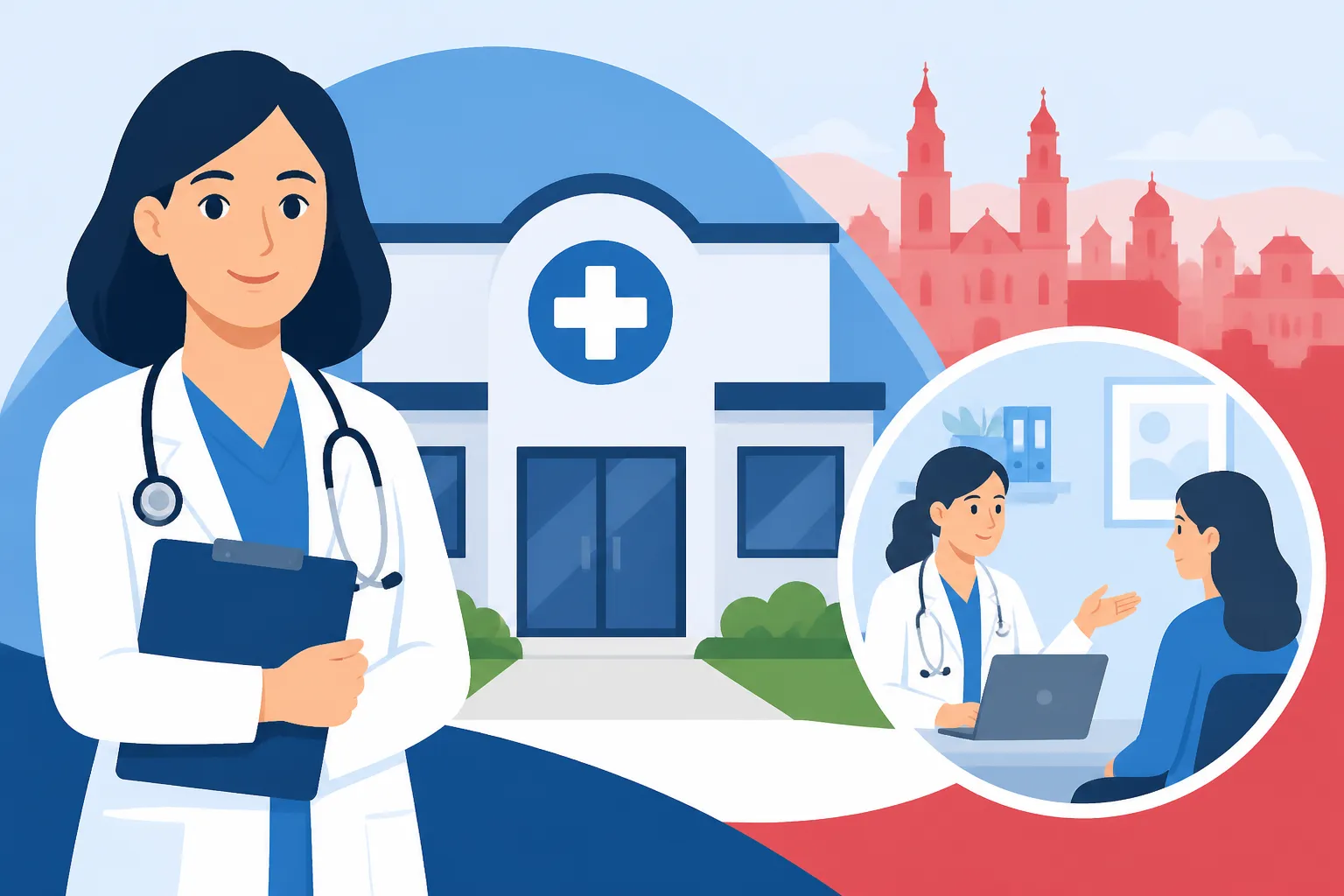
The word "przychodnia" literally translates to "clinic" or "outpatient dispensary," but for anyone living in Poland, it represents much more. It is the primary point of contact for the National Health Fund (NFZ). In the Polish system, you cannot simply walk into a hospital for a minor ailment or book a specialist like a neurologist on a whim if you want the state to cover it. The przychodnia is the home of your Podstawowa Opieka Zdrowotna (POZ), or Primary Health Care. This is where your journey starts for everything from a common cold to a long-term referral for surgery.
Within the walls of a typical przychodnia, you will find a team consisting of family doctors (internists), pediatricians, and nurses. For many expats, the first shock is the bureaucracy. Unlike some private systems where you are a "customer," in the public przychodnia, you are a "patient" within a structured administrative framework. Understanding Public vs Private Healthcare in Poland: Which Should Expats Choose? is vital here, as the public przychodnia is funded by your ZUS contributions, whereas private clinics operate on monthly subscriptions.
The role of the przychodnia is to manage your "medical path." Your family doctor acts as a gatekeeper. If you need a blood test, the doctor at the przychodnia orders it. If you need a specialist, they issue an electronic referral. This centralized approach is designed to prevent hospitals from being overwhelmed with cases that could be handled at a local level. While it can feel restrictive, it ensures that your primary doctor has a holistic view of your health history, provided you stay with the same clinic long enough.
Navigating the Registration and "Zapisy" Process
If you have just arrived in Poland, you don't automatically have a clinic. You must actively choose one and register. This process, known as "zapisy," involves filling out a declaration form (deklaracja wyboru). You will choose your primary care physician (Lekarz POZ), your primary care nurse, and, if applicable, a midwife. You are allowed to change your clinic or doctor twice a year for free; any subsequent changes usually incur a small fee unless you have moved house.
To register, you typically need your PESEL number and proof of insurance. If you are employed by a Polish company, your ZUS registration is your proof. However, for those in the "gap period" between arriving and getting their first paycheck or PESEL, things can get tricky. This is where services like SafetyWing can be a lifesaver, providing travel medical insurance that covers you globally while you are still navigating the local administrative hurdles. Many expats find that having SafetyWing gives them peace of mind during those first few months when the local "rejestracja" (registration desk) might turn them away for lack of a PESEL. Knowing How to Get Your PESEL Number and Why It Matters for Healthcare is a crucial step before you even approach the clinic.
When you walk into the przychodnia for the first time, head straight to the desk labeled "Rejestracja." Be prepared for a bit of a linguistic challenge. While many doctors speak English, the administrative staff at public clinics often do not. It is helpful to have your documents ready and perhaps a translation app on your phone. Once your declaration is processed, you are officially "on the books," and you can start making appointments. This registration is what links you to the How to Choose and Register with a GP (Lekarz POZ) in Poland process effectively.
Booking Appointments and the Infamous 7:00 AM Rule
One of the most persistent cultural tropes in Poland is the "morning battle" for doctor appointments. In many public clinics, the "rejestracja" opens at 7:00 or 8:00 AM. If you want a same-day appointment for an acute illness, you often need to call precisely at that moment. The phone lines will be jammed, and if you wait until 9:00 AM, the slots for the day might already be gone. Some old-school clinics still have people queuing physically outside the door before the sun comes up, though this is thankfully becoming rarer in larger cities like Warsaw or Krakow.
Modernization is slowly winning, however. Most clinics now allow for online booking through their own portals or through the national How to Set Up an Internetowe Konto Pacjenta (IKP) Patient Account system. The IKP is a revolutionary tool for expats. It allows you to see your prescriptions, referrals, and even book visits in some cases without having to survive a stressful phone call in Polish. Understanding What Is the IKP and How Do I Use It in Poland? will save you hours of frustration and is highly recommended as one of your first "digital" moves in the country.
There is also the concept of "teleporada" (tele-consultation), which became the norm during the pandemic and has remained a staple. For things like a simple cold, a prescription renewal, or a sick note for work, a teleporada is often much faster. You book a time, the doctor calls you, and within five minutes, your "e-recepta" (e-prescription) is sent to your phone as a SMS code. It’s incredibly efficient once you are in the system, but it lacks the personal touch of an in-person visit if you are genuinely worried about a physical symptom.
Referrals, Specialists, and Diagnostic Tests
The przychodnia is the place where the "skierowanie" (referral) is born. In the Polish public system, you cannot see a specialist like a cardiologist or an ophthalmologist without a referral from your GP at the przychodnia (with a few exceptions like oncologists, psychiatrists, and dentists). Once your GP issues an e-skierowanie, it is logged in the central system, and you can then book a visit at any specialist clinic that has a contract with the NFZ. You can learn more about this in the guide on How e-Skierowanie (E-Referrals) Work for Specialists in Poland.
Diagnostic testing also flows through the clinic. If your doctor suspects an issue, they will print out a list of lab tests. Most przychodnie have a small laboratory or a "punkt pobrań" (blood collection point) on-site, usually open only in the morning hours (e.g., 7:00 AM to 10:00 AM). You take your paper, stand in the queue, get your blood drawn, and the results usually show up automatically in your IKP account within 24 to 48 hours. This integration is actually one of the highlights of the Polish system—no more waiting for a phone call from a nurse to hear your results.
However, waiting times for specialists and advanced diagnostics (like MRIs) through the NFZ can be long—sometimes months or even years for non-urgent cases. This is why many expats choose to supplement their care. While Understanding ZUS Health Contributions (Składka Zdrowotna) in Poland covers your basic rights, having a private subscription or a flexible plan like SafetyWing can allow you to bypass these queues by seeing a private doctor for a consultation while still using the przychodnia for your basic needs and official sick notes.
Cultural Nuances and Survival Tips for Expats
Walking into a Polish przychodnia for the first time can feel like stepping back in time or entering a very specific social ecosystem. There are unwritten rules. For instance, if you see a crowd of people sitting in a hallway without a clear queue, the standard procedure is to ask, "Kto z Państwa jest ostatni?" (Who among you is last?). Someone will nod or raise their hand, and you are now "after" them. Even in clinics with digital number systems, people sometimes still rely on this verbal confirmation.
Communication with the "Pani z rejestracji" (the lady at the registration desk) is another hurdle. These staff members are often overworked and underpaid, and they have little patience for ambiguity. Be direct, have your PESEL ready, and if you don't speak Polish, try to bring a Polish-speaking friend or have your requests written down. It is also important to note that the przychodnia is for non-emergencies. If you are experiencing a life-threatening situation, the clinic is the wrong place; you need a SOR (Szpitalny Oddział Ratunkowy) or to call 112. Refer to Emergency Medical Care in Poland: What Every Expat Needs to Know for those critical moments.
Finally, remember that the doctor at your local przychodnia is your ally. If you find one who speaks your language and understands your health history, hold on to them. A good relationship with a "lekarz rodzinny" can make the difference between a frustrating bureaucratic experience and a smooth healthcare journey. If you are struggling to find someone, check our tips on How to Find an English-Speaking Doctor in Poland to help narrow down your search in your specific city.
Comparison Table: Public vs. Private Clinic Experience
| Feature | Public Przychodnia (NFZ) | Private Medical Center (e.g., LUX MED) |
|---|---|---|
| Cost | Free (Covered by ZUS) | Monthly subscription or pay-per-visit |
| Booking | Often 7:00 AM phone call / IKP | App-based booking / 24/7 Call Center |
| Referrals | Required for all specialists | Usually not required for basic specialists |
| Waiting Time | Can be long (weeks/months) | Usually short (days) |
| English Level | Hit or miss at reception; okay with doctors | High at both reception and with doctors |
| Sick Notes (L4) | Issued and sent to ZUS automatically | Issued and sent to ZUS automatically |
| Prescriptions | E-prescriptions sent to phone | E-prescriptions sent to phone |
Finding Your Way in the Polish System
The Polish healthcare system is a hybrid of tradition and high-tech digital solutions. While the physical buildings of some public przychodnie might look a bit grey, the backend technology—like e-prescriptions and the IKP—is often more advanced than what you find in Western Europe or North America. The key to "winning" at the przychodnia is preparation. Get your PESEL, set up your IKP, and understand the registration rules before you actually get sick.
For those who are digital nomads or constantly on the move, relying solely on the local przychodnia might not be enough. This is where SafetyWing shines, as it offers a global safety net that complements your local coverage. Whether you are waiting for your residence permit or just want the freedom to see a doctor anywhere in the world, having that extra layer of protection is invaluable. If you ever find yourself needing care outside of normal hours, don't forget there are specific clinics for that, which you can read about in How to See a Doctor Outside of Business Hours in Poland. With a bit of patience and the right information, you'll find that the Polish przychodnia is a reliable, if sometimes quirky, cornerstone of your life abroad.
Disclaimer
The information provided in this guide is for informational purposes only and does not constitute professional medical or legal advice. Healthcare regulations and procedures in Poland can change frequently. Always consult with the official National Health Fund (NFZ) website or a qualified legal professional regarding your specific residency and insurance status. SafetyWing is a third-party insurance provider; please review their specific policy terms to ensure they meet your individual needs.