Understanding the e-Recepta (E-Prescription) System in Poland
Moving to a new country like Poland often throws you into a whirlwind of new systems, and let's be honest, the healthcare side of things can feel like a labyrinth at the best of times. One of the biggest head-scratchers for many expats is figuring out how to get and fill prescriptions. If you've ever wrestled with trying to understand a doctor's handwritten notes or worried about misplacing a crucial piece of paper, you'll appreciate what this guide is all about: navigating the e-Recepta (e-Prescription) system in Poland with confidence and a lot less stress.
What Exactly is e-Recepta and Why Does it Matter?
For those of us who've been around Poland for a while, the shift to digital in so many aspects of life has been noticeable, and healthcare is no exception. The e-Recepta system, introduced widely a few years ago, is Poland's answer to modernizing the prescription process, moving away from those sometimes-illegible paper slips.
The Digital Shift in Polish Healthcare
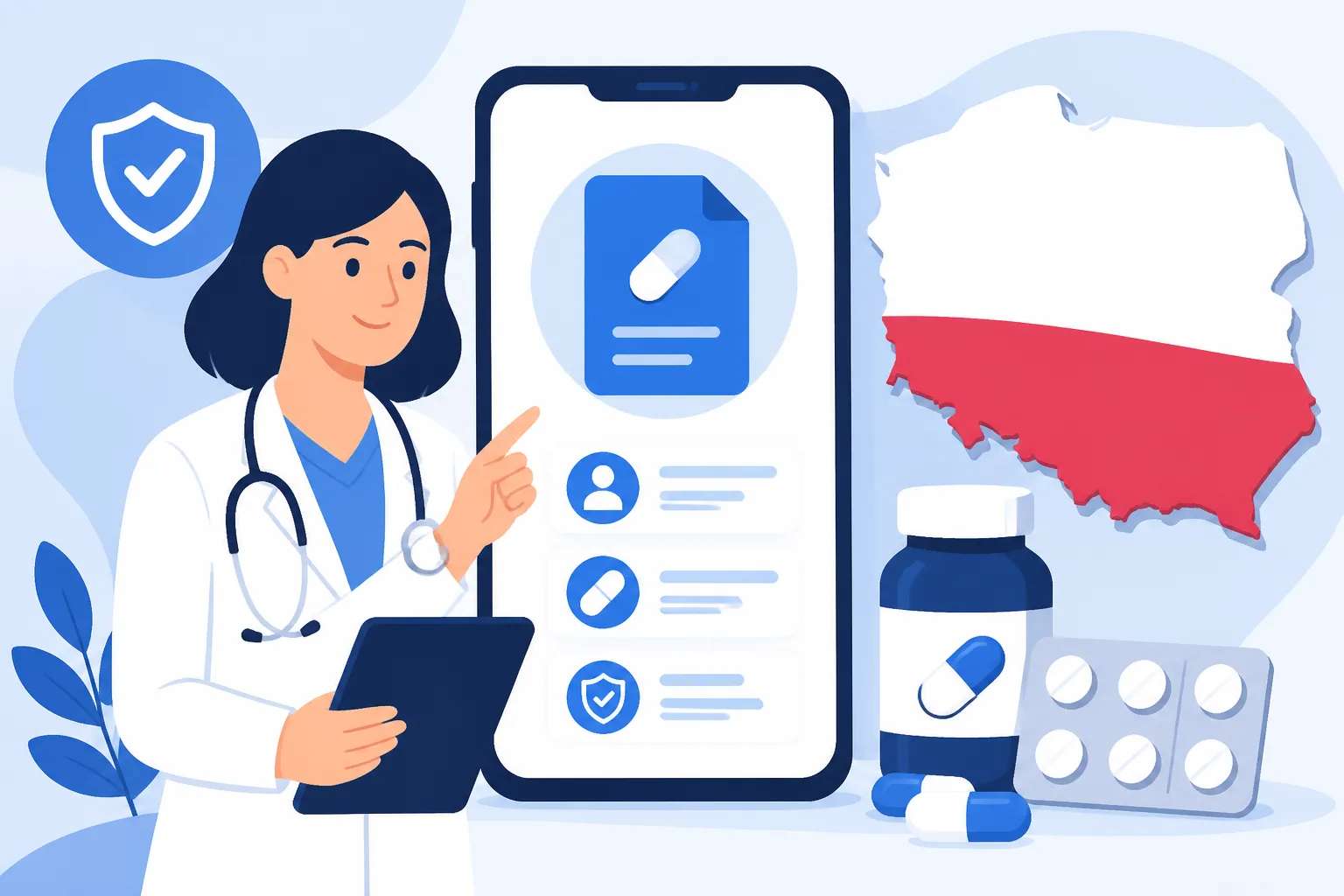
Gone are the days when a doctor would hand you a small, often scribbled piece of paper that you then had to decipher and hope the pharmacist understood. The e-Recepta is essentially a digital prescription, issued electronically by your doctor and sent directly to a central system. This means fewer errors, greater legibility, and a much smoother process all around. Think of it as a significant upgrade designed to make things more efficient for everyone involved – patients, doctors, and pharmacists alike. It's part of a broader push towards a more integrated digital healthcare infrastructure, which includes things like How e-Skierowanie (E-Referrals) Work for Specialists in Poland and the online patient account system.
The beauty of this digital transformation is that it standardizes the information. Every e-Recepta contains the same core data: your personal details, the prescribed medication, dosage, and how it should be used. This dramatically reduces the chances of misunderstandings at the pharmacy, which, let's face it, is a huge relief when you're trying to communicate in a language that might not be your native tongue. It also allows for easier tracking of your medication history, which can be invaluable for your healthcare providers.
Key Benefits for Expats
As an expat, the e-Recepta system is truly a game-changer, even if it adds another digital hurdle to learn initially. First and foremost, it largely eliminates the language barrier when filling a prescription. Instead of trying to explain a medication name or dosage, you simply provide a 4-digit code and your PESEL number, and the pharmacist accesses all the necessary details directly from the system. This alone can save a lot of anxiety, especially when you're not feeling well.
Another massive benefit, particularly for those with chronic conditions or busy schedules, is the ability to renew prescriptions remotely. Many clinics now offer teleconsultations where a doctor can issue an e-Recepta without you needing to physically visit the przychodnia (clinic). This flexibility means less time spent commuting and waiting, and more time focusing on what matters. For instance, if you're traveling and suddenly realize you're low on a crucial medication, a quick teleconsultation can often sort you out, as long as you have access to a Polish doctor. This convenience is a huge plus, ensuring continuity of care, even when life as an expat throws unexpected twists and turns.
How to Get Your First e-Recepta in Poland
Getting your first e-Recepta might seem a little daunting at first, but once you understand the flow, it's quite straightforward. It all begins, as most things in healthcare do, with a visit to the doctor.
Doctor's Visit and Issuance
Whether you're seeing your family doctor (Lekarz Rodzinny) at your registered clinic – and if you haven't got one yet, you should definitely check out The Expat Guide to Finding a Family Doctor (Lekarz Rodzinny) in Poland – or a specialist, the process for getting an e-Recepta is largely the same. During your consultation, after assessing your condition, the doctor will determine if medication is needed. Instead of writing a paper prescription, they will electronically generate an e-Recepta. This digital prescription is then immediately sent to the central e-health system.
Once the e-Recepta is issued, you won't walk out with a physical piece of paper, at least not necessarily. What you'll receive is either an SMS with a 4-digit access code, an email with a PDF attachment of the prescription, or a printed information sheet from the doctor containing the same 4-digit code and a barcode. The most common and convenient method is the SMS or email, especially if you have your Internetowe Konto Pacjenta (IKP) set up, which we'll talk about later. Ensure your doctor has your correct phone number and email address registered in the system so you don't miss out on these notifications.
Understanding Your e-Recepta Codes
The core of the e-Recepta system revolves around a unique 4-digit access code. This code, combined with your PESEL number (which is absolutely crucial for almost all administrative tasks in Poland, including healthcare – see How to Get Your PESEL Number and Why It Matters for Healthcare), is what the pharmacist uses to retrieve your prescription from the central system. It’s like a digital key that unlocks your medication information.
If you have an IKP account, you'll find all your active e-Recepty listed there, along with their respective 4-digit codes. This is incredibly helpful for keeping track of your medications. If you don't have IKP, or prefer a physical backup, you can ask your doctor for a printout. This printout will include the 4-digit code, a barcode, and all the details of your prescription. It's a good idea to keep this safe, just in case your phone battery dies or you have network issues when you're at the pharmacy. Remember, you can also often forward the SMS or email to a trusted friend or family member if they are picking up medication on your behalf, but they will still need your PESEL number.
Filling Your e-Recepta at the Pharmacy (Apteka)
Once you have your e-Recepta code, the next step is to head to an apteka, which is what pharmacies are called in Poland. This part of the process is generally quite smooth, thanks to the digital system.
The Pharmacy Experience for Expats
Walking into a Polish apteka might feel different from what you're used to back home. Many operate with a counter service, where you speak to a pharmacist directly. When it's your turn, simply present your 4-digit e-Recepta code and provide your PESEL number. If you have the printout, you can hand that over too, or just show the SMS on your phone. The pharmacist will enter these details into their system, which then securely retrieves your prescription.
One of the greatest reliefs for expats is how much this system mitigates language barriers. Instead of a conversation, it becomes a simple transaction of numbers. The pharmacist will see exactly what the doctor prescribed, the dosage, and the quantity. They can then inform you of the cost, any available substitutes (often generic versions that are cheaper, which they'll usually ask you about), and provide any necessary instructions. You can learn more about finding pharmacies and understanding medication in Prescription Medications and Pharmacies in Poland: The Complete Guide. Even if your health insurance is through an international provider like SafetyWing, you'll still use the e-Recepta system to get your medication, though you'd pay the full price upfront if it's not covered by the NFZ.
Partial Fills and Multiple Medications
Sometimes, an e-Recepta might contain several different medications, or you might only need a portion of a larger prescription right away. The e-Recepta system is designed to handle this flexibility. If your e-Recepta includes multiple items, the pharmacist can dispense them all at once, or you can choose to pick up only specific items. Each medication on an e-Recepta has its own unique identifier within the system, allowing for partial fulfillment.
Similarly, if you're prescribed a large quantity of a medication, such as a three-month supply, you might not want to buy it all at once for financial reasons. You can usually fill part of the prescription, for example, a one-month supply. The remaining portion of the prescription stays active in the system, and you can return to any apteka (not necessarily the same one) at a later date, again providing your 4-digit code and PESEL, to collect the rest. Most e-Recepty are valid for 30 days from the date of issue, though some specific medications, like antibiotics, have shorter validity periods (typically 7 days), and certain long-term medications can be valid for up to 365 days, though the pharmacist will usually dispense no more than a 180-day supply at one time. Always confirm the validity period with your doctor or pharmacist if you're unsure.
Managing Your Prescriptions with Internetowe Konto Pacjenta (IKP)
The Internetowe Konto Pacjenta (IKP), or Online Patient Account, is truly the central hub for managing your healthcare in Poland. For prescriptions, it’s an invaluable tool that can save you a lot of hassle.
Activating and Navigating Your IKP
If you haven't already, setting up your IKP account is one of the first things I'd recommend doing once you're settled in Poland. It connects to your PESEL number and is the digital gateway to your public health records. You can activate it using your trusted profile (Profil Zaufany), an e-dowód (electronic ID card), or through online banking with certain Polish banks. For a detailed walkthrough, take a look at How to Set Up an Internetowe Konto Pacjenta (IKP) Patient Account.
Once activated, IKP allows you to view all your e-Recepty, past and present. You can see which medications you've been prescribed, when they were issued, and which ones are still active and available to be filled. This is incredibly useful for keeping track of your health history, especially if you see different doctors or need to remember dosage instructions. Beyond prescriptions, IKP also gives you access to your e-Skierowanie (e-referrals), vaccination history, and even allows you to grant access to your medical information to family members or healthcare professionals.
Renewing Prescriptions and Remote Consultations
One of the standout features of IKP, particularly for expats with chronic conditions, is the streamlined process for prescription renewals. If your doctor has previously prescribed a medication for a long-term condition, and they deem it appropriate without a new physical examination, you can often request a renewal directly through your IKP. Some clinics integrate this feature, allowing you to send a message requesting a new e-Recepta for existing medication.
Even if you can't directly request it through IKP, many Polish clinics offer telemedicine services where you can book a remote consultation (teleporada). During this call, the doctor can review your medical history, discuss your condition, and if suitable, issue a new e-Recepta, which will then appear in your IKP and be sent via SMS/email. This significantly reduces the burden of frequent doctor visits, making managing your health alongside your busy expat life much easier. Whether you're covered by the NFZ or relying on private health insurance, or even a travel insurance policy like SafetyWing which might cover unexpected medical needs, understanding and utilizing IKP for renewals can save you immense time and effort.
Common Challenges and Troubleshooting for Expats
While the e-Recepta system is designed for convenience, it's not without its potential hiccups, especially for foreigners navigating a new system. Understanding these common challenges can help you be better prepared.
Language Barriers and PESEL Issues
Despite the digital nature of e-Recepta, you'll still interact with people. If you encounter a pharmacist who doesn't speak English, and you're struggling with Polish, it can still be a bit stressful. Having the 4-digit code and your PESEL ready is key, as it minimizes the need for verbal communication about the medication itself. However, if there are questions about substitutes or instructions, a language barrier can resurface. Google Translate can be your best friend here, or, if possible, have a Polish-speaking friend on standby via phone.
A more critical issue can arise if your PESEL number isn't correctly registered in the system or if you haven't obtained one yet. Without a valid PESEL, it's significantly harder to get an e-Recepta processed, as it's the primary identifier linking you to your health records. If you're a new arrival and haven't secured your PESEL, you might still get a paper prescription, but this is becoming increasingly rare. Ensure your PESEL is always accurate in your doctor's records. Sometimes, if your PESEL isn't immediately available, a doctor might try to use another form of identification, but this is not standard for e-Recepta.
What If You Don't Have an IKP?
Many expats, especially those who are newly arrived or plan shorter stays, might not get around to activating their IKP immediately. Don't worry, you can still get your e-Recepta. As mentioned, the doctor can provide the 4-digit code via SMS or email, or give you a printed information sheet. These methods are perfectly valid for filling your prescription at any apteka.
However, not having an IKP does mean you miss out on the convenience of having all your prescriptions in one online portal, making renewals and tracking a bit more cumbersome. It also means you won't easily access other digital features like e-skierowanie (e-referrals for specialists). While it's not strictly mandatory, I strongly encourage you to activate your IKP as soon as possible, as it truly is the most efficient way to manage your healthcare information in Poland. It's part of Navigating the Polish Healthcare System: An Expat's Roadmap (2027) that can significantly ease your journey.
Special Cases: Foreign Prescriptions and Private Clinics
It’s important to understand that generally, foreign prescriptions from outside the EU/EEA are not valid for direct fulfillment in Polish pharmacies. Even within the EU, while the legal framework exists, practical implementation can sometimes be tricky. If you arrive in Poland with a prescription from your home country, you will almost certainly need to see a Polish doctor to get an equivalent e-Recepta issued. This ensures that the medication prescribed meets Polish standards and regulations.
When it comes to private clinics, the e-Recepta system works identically to the public system. Doctors in private facilities, like those part of Medicover or LUX MED (which are popular options for Understanding Private Medical Subscriptions (Medicover, LUX MED) in Poland), also issue e-Recepty digitally. The only difference is who covers the cost of the medication – if you're not covered by NFZ, or if your private insurance doesn't cover pharmaceuticals, you will pay the full price at the pharmacy. Even for those with robust travel insurance like SafetyWing, which typically covers emergency medical costs, routine or pre-existing condition medications will likely be out-of-pocket, though the e-Recepta system itself is universal for how the prescription is issued and filled.
Here's a quick comparison of the old paper system versus the new e-Recepta system:
| Feature | Old Paper Prescription | e-Recepta System |
|---|---|---|
| Issuance | Handwritten by doctor | Digitally issued by doctor |
| Legibility | Often poor, prone to misinterpretation | Clear, standardized, no handwriting errors |
| Access | Physical paper only | SMS, email, IKP, or printout |
| Filling | Present paper at pharmacy | Provide 4-digit code + PESEL at any pharmacy |
| Tracking | Manual record-keeping | Automatically recorded in IKP |
| Renewals | Required new doctor's visit/paper | Often possible via teleconsultation or IKP request |
| Partial Fills | Often required pharmacy to cross out/note | System tracks remaining medication automatically |
| Language Barrier | Significant potential for misunderstandings | Minimized by digital access, codes instead of complex verbal exchange |
| Security | Risk of loss, forgery | Enhanced security, reduced fraud |
Future Developments and the Bigger Picture of Digital Healthcare in Poland
The e-Recepta system isn't just a standalone improvement; it's a vital component of Poland's ambitious drive towards a fully integrated digital healthcare ecosystem. This broader vision aims to make healthcare more accessible, efficient, and user-friendly for everyone, including the growing expat community.
Integration with e-Skierowanie and Telemedicine
The beauty of e-Recepta truly shines when you consider its integration with other digital services, especially e-Skierowanie (e-referrals). Just like e-Recepta, e-referrals for specialists are now issued digitally, appearing in your IKP and sent via SMS/email. This means fewer paper documents to juggle, a more organized approach to your specialist appointments, and a clearer overview of your entire treatment pathway. You can delve deeper into this at How e-Skierowanie (E-Referrals) Work for Specialists in Poland.
The rise of telemedicine, spurred by recent global events, has further cemented these digital systems. Teleconsultations have become a standard offering in both public and private clinics, and they rely heavily on the e-Recepta and e-Skierowanie infrastructure. This trend is particularly beneficial for expats, as it often provides quicker access to medical advice and prescriptions, sometimes even with English-speaking doctors, without the need to navigate public transport or take time off work for a physical visit. It’s a testament to how Poland's healthcare system is evolving to meet modern demands.
The Evolving Role of Health Insurance
Understanding how your health insurance interacts with these digital systems is also crucial. Whether you're covered by the National Health Fund (NFZ) through employment, are voluntarily insured, or rely solely on private health insurance, the e-Recepta system remains the standard for obtaining and filling your prescriptions. Your insurance determines the cost you pay. With NFZ coverage, many medications are partially reimbursed or free, depending on the drug and your condition. With private insurance, you might pay the full price at the pharmacy and then seek reimbursement from your insurer, depending on your policy. For a comprehensive look at your options, check out Health Insurance in Poland: Mandatory, Private and Subscription Options Explained and also consider the distinctions outlined in Public vs Private Healthcare in Poland: Which Should Expats Choose?.
Even for those who rely on international health or travel insurance, like many digital nomads might opt for a flexible plan from SafetyWing, the e-Recepta system is the functional layer for getting your medication. While SafetyWing might cover the cost of a doctor's visit and the prescribed medication if it's related to an eligible illness or injury covered by your policy, the physical act of getting that prescription in Poland will always go through the e-Recepta system. So, while your payment method might differ based on your insurance, the underlying digital process for the prescription itself is universal. This constant evolution aims to ensure that no matter your insurance status, the process of accessing necessary medications is as streamlined and transparent as possible.
Disclaimer
The information provided in this guide is intended for general informational purposes only and does not constitute medical or legal advice. While we strive to keep the information up-to-date and accurate, healthcare regulations and procedures in Poland can change. Always consult with qualified medical professionals or legal advisors for specific advice regarding your personal situation.