Understanding Health Insurance Waiting Periods for New Residents in Poland
One of the most stressful realizations for new arrivals in Poland is discovering that healthcare coverage isn't always instantaneous. Many expats land in Warsaw or Krakow assuming their residency application or job contract provides immediate protection, only to find themselves in a "coverage gap" where an unexpected ER visit could cost thousands. This guide explains exactly how health insurance waiting periods work in Poland and how to protect yourself during the transition.
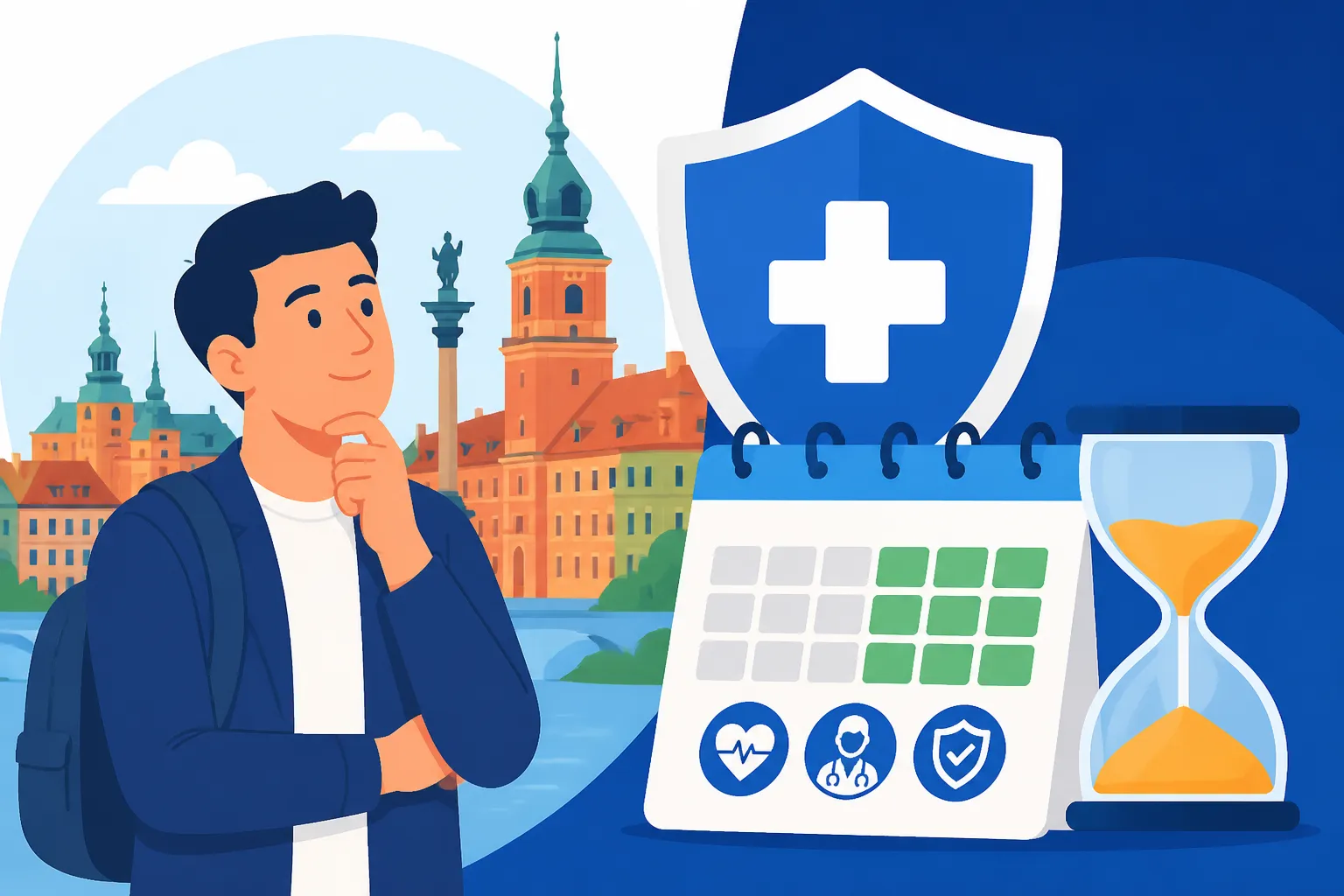
The Reality of the Coverage Gap: Why Waiting Periods Exist in Poland
When you first move to Poland, there is a distinct disconnect between the day you physically arrive and the day the state-run system, the Narodowy Fundusz Zdrowia (NFZ), recognizes you as a "covered" individual. This isn't necessarily a malicious waiting period designed to keep you out, but rather a byproduct of the way the Polish administrative machine processes data between your employer, the Social Insurance Institution (ZUS), and the healthcare providers. I remember my first week in Wroclaw; I had my contract signed, but my HR manager told me it would take at least a week for the system to "see" me. That week feels like a lifetime when you’re navigating a new city.
Bureaucracy Meets Healthcare Logistics
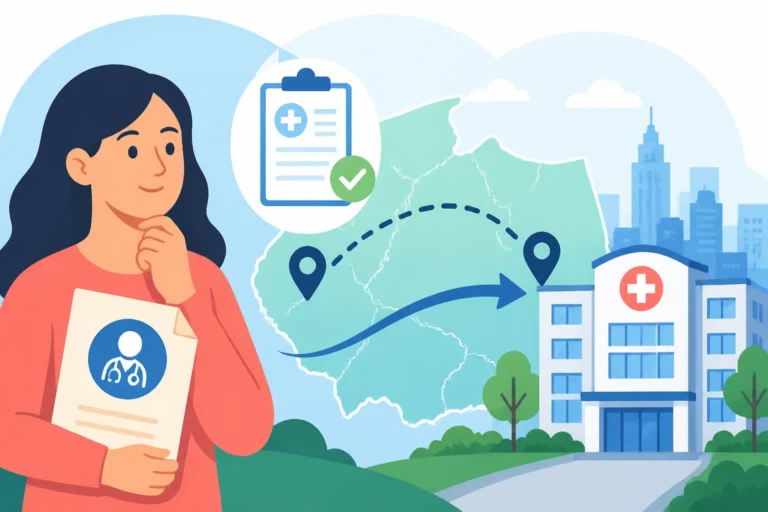
The Polish system relies heavily on the transfer of data between various government silos. Even if you are legally employed on your first day, your employer has up to seven days to register you with ZUS. Until that registration is processed and reflected in the central electronic system (known as eWUŚ), a hospital or clinic might see your status as "uninsured." This delay is the most common "waiting period" for employees. Understanding How Poland's National Health Fund (NFZ) Works: A Full Overview is the first step in realizing that the system is digital but not always real-time.
For those coming from countries with centralized, instant-access healthcare, this lag can be terrifying. If you walk into a public clinic before your PESEL is linked to an active ZUS contribution, the receptionist might ask you to sign a declaration of insurance or pay upfront. While you can usually get reimbursed later once the system updates, the immediate financial hit and the stress of the situation are burdens most expats want to avoid. This is why having a temporary fallback like SafetyWing is so common among the digital nomad and expat community during those first few shaky weeks of relocation.
The Mandatory NFZ Registration Timeline
The timeline for mandatory insurance depends entirely on your legal basis for staying in Poland. If you are here on a standard employment contract (Umowa o Pracę), the waiting period is technically zero, but the administrative lag is real. However, if you are a student or a researcher, the process of Registering with the NFZ in Poland: The Complete Expat Guide (2027) involves manual steps at an NFZ branch office. You have to physically go there, sign a contract, and then wait for the first contribution to be paid before you are truly "in the system."
In my experience, the longest waiting periods apply to those who are "voluntarily" insuring themselves. If you have had a gap in insurance coverage for more than three months before joining the NFZ, you might even be hit with a "registration fee" or a mandatory waiting period before full benefits kick in. This is designed to prevent people from only joining the public system the moment they get sick. It’s a bit of a "carrot and stick" approach that penalizes long-term lapses in coverage.
Understanding the NFZ Karencja (Waiting Period) Rules
In Polish insurance terminology, "karencja" refers to the waiting period during which you pay premiums but cannot yet access certain benefits. While the public NFZ system generally doesn't have a traditional insurance-style "karencja" for emergency care once you are registered, the rules around voluntary insurance and self-employment can be tricky. It is vital to distinguish between being "registered" and being "eligible" for specific types of treatment.
Voluntary vs. Compulsory Insurance Scenarios
If you are employed, you fall under compulsory insurance. Your coverage begins the moment your employment starts, provided the registration happens within that seven-day window. However, many expats move here as freelancers or retirees and choose to pay into the system themselves. In this voluntary scenario, the "waiting period" is often defined by how quickly you can get your paperwork through the NFZ office. You aren't covered from the moment you decide to join; you are covered from the date specifically written on the contract you sign with the NFZ.
If you are transitioning between jobs, you actually have a grace period. Under Polish law, you remain covered for 30 days after your employment contract ends. This is a life-saver for expats who are "job hopping" or waiting for a new residency permit. However, if that 30-day window closes and you haven't started a new job or registered voluntarily, you enter the dangerous "uninsured zone." During this time, using a flexible travel or expat insurance like SafetyWing provides a much-needed safety net while you sort out your local ZUS status.
Breaking Down the Back-Payment Rules
One of the most confusing aspects of the Polish system is the "entry fee" for voluntary insurance if you've been uninsured for a long time. If your gap in insurance is between 3 months and a year, you might have to pay a one-time fee (approximately 20% of the basis for the contribution) to skip the waiting period. If you’ve been out of any system for over 10 years, that fee can jump to 200% of the basis.
This is essentially the Polish government’s way of saying, "You can't just ignore the system for years and then join the day you need surgery." For most expats, this won't apply if they’ve been covered by a foreign system recently (like an EU national with an EHIC card), but for those coming from outside the EU, proving prior coverage is essential to avoid these "waiting" penalties. This is another reason why Public vs Private Healthcare in Poland: Which Should Expats Choose? is such a critical debate for newcomers to engage with early on.
Bridging the Gap: Private Insurance and Subscriptions
Because the public system has these administrative lags and potential penalties, almost every veteran expat I know uses a "dual-layer" approach. We use the NFZ for the big things (hospitalizations, major surgeries) and private solutions to bypass the waiting periods and the long queues of the public system.
Short-Term Expat Insurance and Digital Nomad Solutions
For the first 30 to 90 days of your life in Poland, you are in a state of flux. You might not have your PESEL yet, and your residency card might be months away. During this period, you cannot rely on the NFZ. This is where dedicated expat insurance like SafetyWing becomes an essential tool. It’s designed exactly for this "limbo" period—providing global health coverage that works in Poland while you wait for the Polish state bureaucracy to process your local registration.
The beauty of such products is that they don't have the same administrative "lag" as the NFZ. You can sign up in minutes, and your coverage begins almost immediately. This is particularly helpful for those who arrive on a Type D visa and need to show proof of insurance but haven't yet secured a Polish employer. Having this bridge ensures that a simple broken leg or a bout of appendicitis during your first month in Warsaw doesn't result in a medical debt that ruins your relocation budget.
Private Medical Subscriptions (LuxMed and Medicover)
Once you are settled, you'll hear everyone talking about "the big two": LuxMed and Medicover. These are not "insurance" in the traditional sense, but medical subscriptions. When you join one of these through your employer, there is usually no waiting period for basic consultations. You can often see a GP or a specialist the same week you start your job. Understanding Private Medical Subscriptions (Medicover, LUX MED) in Poland will help you understand that these are your go-to for daily health needs.
However, be warned: even private subscriptions have waiting periods for specific services. For example, if you buy a private plan individually (rather than through a company), there might be a 3-month to 6-month wait for pregnancy care or certain advanced diagnostics like MRIs. They do this to prevent people from buying a one-month subscription just to get an expensive scan. Always read the fine print of your private contract to see if there's a "karencja" for the specific treatment you anticipate needing.
Scenario Analysis: When Does Your Coverage Actually Start?
To make this practical, let's look at how the timing works for different types of expats. The "waiting period" is rarely a fixed number of days; it’s a series of milestones.
| Expat Type | Legal Basis | Admin Lag / Waiting Period | Coverage Start Milestone |
|---|---|---|---|
| Full-time Employee | Umowa o Pracę | 1-7 Days | Date on Employment Contract |
| Contractor (B2B) | JDG (Sole Trader) | 7-14 Days | Date of ZUS ZZA/ZUA Submission |
| Student (Non-EU) | Voluntary NFZ | 14-30 Days | Date NFZ Contract is Signed |
| Digital Nomad | Overseas Income | N/A (No NFZ Access) | Instant (via private providers) |
| Unemployed Spouse | Family Member Reg | 7-14 Days | Date Spouse Reports to Employer |
The Employment Contract Scenario
If you are moving for a corporate job, your HR department is your best friend. In the eyes of the law, your coverage is retroactive to the first day of your contract. If you get into an accident on day two, and your employer hasn't yet clicked "submit" on the ZUS portal, you are still technically covered. You might just have to provide the hospital with a copy of your signed contract to prove your eligibility. This is the "gold standard" for expat healthcare in Poland because it offers the most legal protection with the least amount of "waiting."
The Self-Employed (JDG) Scenario
If you are setting up your own business, the clock starts when you register with the CEIDG (the business registry). You then have seven days to notify ZUS of your insurance status. If you are a foreigner, this process can be delayed if you don't yet have a PESEL. I’ve seen cases where Understanding Health Coverage for the Self-Employed (JDG) in Poland becomes a month-long saga because of missing ID numbers. For a JDG, your coverage is active from the date you list as the start of your business, but the "system" won't recognize you until your first Understanding ZUS Health Contributions (Składka Zdrowotna) in Poland are paid and processed.
The Student and Researcher Scenario
International students often face the most paperwork. Unless you are from the EU and have an EHIC card, you must visit the NFZ office in person. You'll need your passport, student ID, and proof of address. The waiting period here is the time it takes to get an appointment and for the staff to process your contract. During this window, you are effectively uninsured locally. Many universities actually require you to show proof of a private policy (like SafetyWing or a local equivalent) just to enroll, precisely because they know the NFZ registration isn't instant.
Managing Risks During the Waiting Period
What happens if the worst occurs while you are in the "gap"? This is the question that keeps many expats up at night. Poland’s emergency services (Ratownictwo Medyczne) will never turn you away in a life-threatening situation, but they will send you a bill later if they can't find you in the system.
Emergency Care Without Coverage
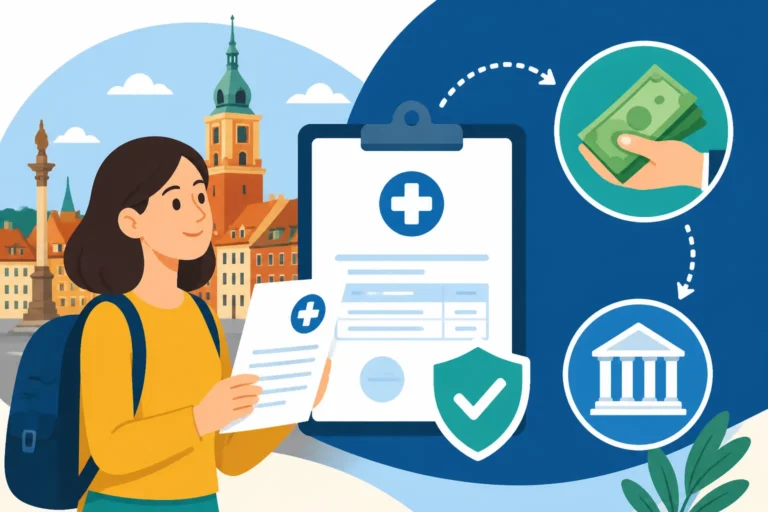
If you end up in a State Hospital (Szpital) before your NFZ status is active, you are considered a "private patient." A single night in a ward can cost 1,000 PLN or more, and specialized surgeries can quickly reach five figures. If your insurance is merely "lagging" (i.e., you have a job but ZUS hasn't updated), you can usually resolve the bill later by proving your employment status. However, if you truly have no local coverage, that bill is yours to pay.
This is why we always recommend keeping your "home country" insurance or a global policy like SafetyWing active until you have physically seen your status as "Green" (insured) in the Polish e-WUŚ system or on your How to Set Up an Internetowe Konto Pacjenta (IKP) Patient Account. Having that digital confirmation is the only way to be 100% sure the waiting period is over.
Handling Pre-existing Conditions
One major difference between the public NFZ and private insurance is how they handle pre-existing conditions. The NFZ cannot deny you coverage or impose a waiting period for a pre-existing condition once you are legally registered. This is a massive advantage of the public system. If you have a chronic illness, your priority should be getting into the NFZ system as fast as possible.
Private providers, however, are a different story. If you try to buy a private expat policy to cover the gap, they will likely exclude your pre-existing conditions. Private medical subscriptions like LuxMed might allow you to see a doctor for a pre-existing condition, but they won't cover major surgeries related to it. This highlights the importance of The Expat Guide to Finding a Family Doctor (Lekarz Rodzinny) in Poland who can help you navigate the transition of your medical records from your home country to the Polish system.
Practical Steps to Expedite Your Enrollment
You don't have to be a passive victim of the bureaucracy. There are several ways to speed up the process and minimize the time you spend in the "uninsured" zone.
The PESEL Number Shortcut
In Poland, your PESEL (national identification number) is the key to everything. While it is technically possible to be insured without one (using your passport number), it often causes errors in the e-WUŚ system. Getting your PESEL as soon as you arrive—often via the "zameldowanie" (residency registration) process—is the single best thing you can do to shorten your healthcare waiting period. Once your PESEL is in the system, it’s much easier for ZUS and the NFZ to "link" your contributions to your medical file. You can learn more about this in our guide on How to Get Your PESEL Number and Why It Matters for Healthcare.
Navigating the IKP (Internetowe Konto Pacjenta)
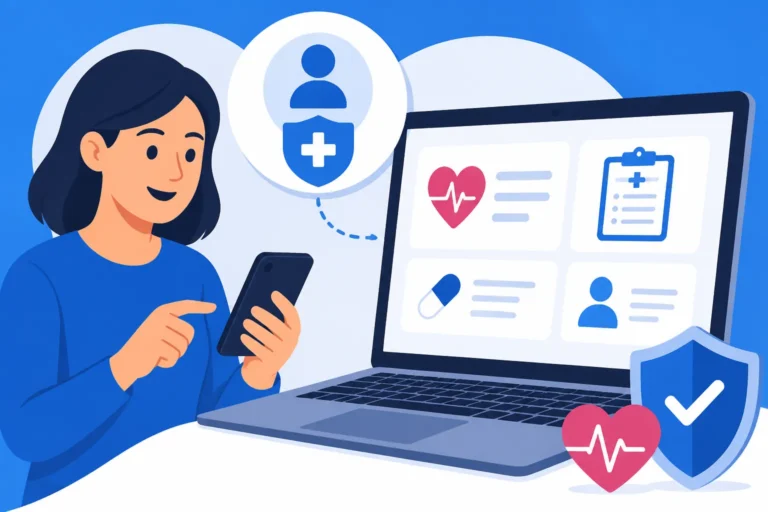
The IKP is a digital portal where you can see your prescriptions, referrals, and most importantly, your insurance status. One of the first things you should do after getting your PESEL and a "Trusted Profile" (Profil Zaufany) is log into the IKP. If you see a green checkmark next to your name, the waiting period is officially over. If it's red, you know you need to talk to your HR department or the NFZ office immediately. This portal is the ultimate source of truth for your healthcare status in Poland.
Important Disclaimer
The information provided in this guide is for informational purposes only and does not constitute legal, financial, or medical advice. Polish immigration and healthcare laws are subject to frequent change. While we strive to keep this information up to date for 2026, you should always consult with official government sources, your employer's HR department, or a qualified legal professional regarding your specific residency and insurance situation. Neither the author nor the website assumes any liability for actions taken based on the content of this article. Always ensure you have valid insurance coverage that meets the legal requirements of your visa or residence permit.