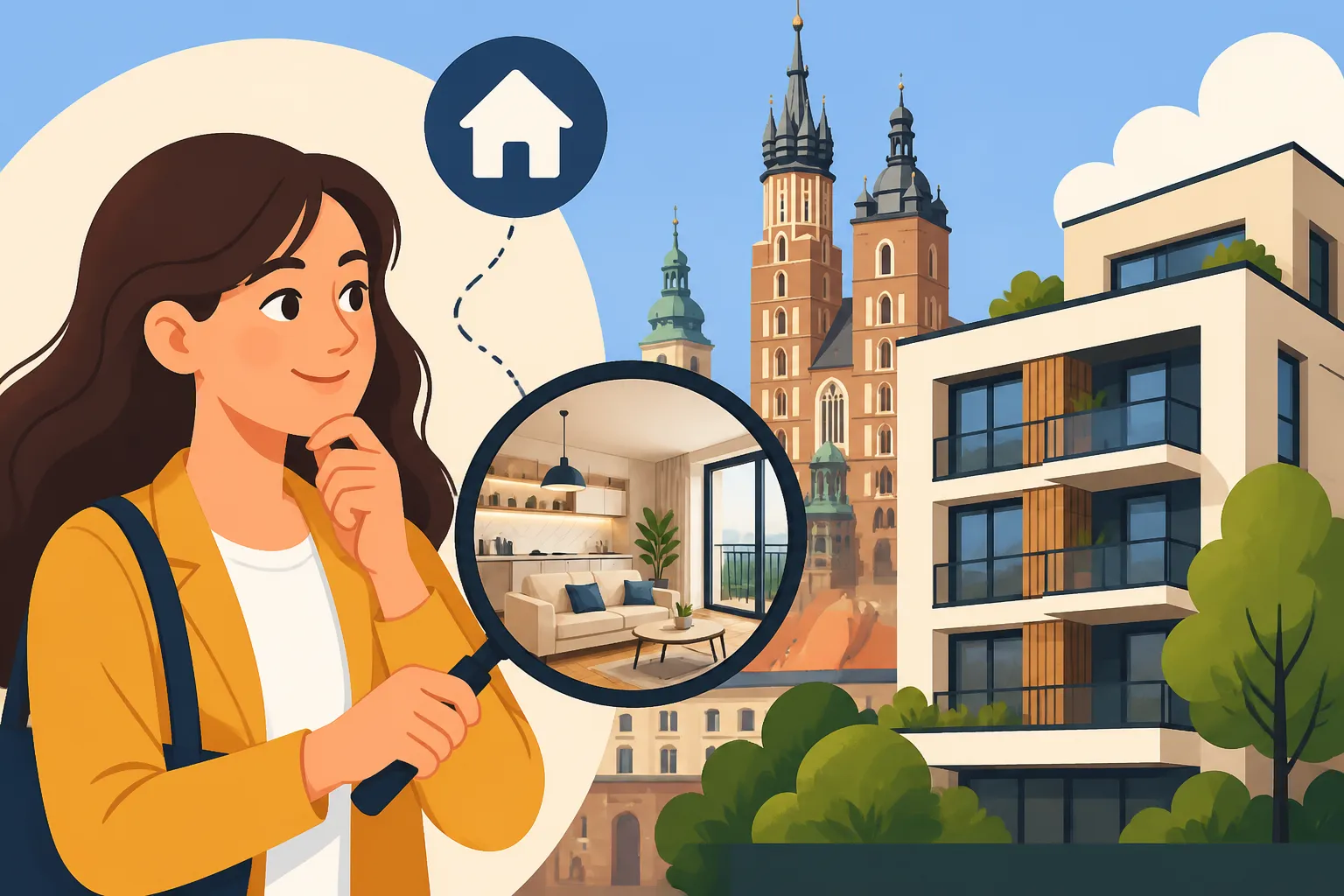
How Do I Find an Apartment to Buy in Krakow?
The dream of owning a piece of Krakow, with its rich history, vibrant culture, and stunning architecture, is one many expats cherish. However, turning that dream into a reality can feel like trying to navigate a medieval labyrinth blindfolded, especially when you factor in language barriers, unique legal processes, and a rapidly evolving market. This guide will walk you through the often-complex journey of finding and securing an apartment to buy in Krakow, offering a clear roadmap and some much-needed expat wisdom.
Understanding Krakow's Property Market Landscape
Before you even start looking, it's crucial to get a lay of the land, metaphorically speaking. Krakow's property market is dynamic, reflecting its popularity as both a tourist destination and a growing business hub. Understanding the different types of properties, price points, and popular districts will save you a lot of time and potential heartache.
Types of Properties and What to Expect
Krakow offers a diverse range of apartment types, each with its own charm, quirks, and price tag. You're not just buying four walls; you're buying into a lifestyle and a piece of history, or a slice of modern convenience.
One of the most iconic options is an apartment in a kamienica, a traditional tenement building, often found in the Old Town, Kazimierz, or Kleparz. These buildings date back centuries, boasting high ceilings, intricate architectural details, and a real sense of character. However, they often come with their own set of challenges: older infrastructure, shared courtyards that might not be pristine, and the potential for costly renovations to bring them up to modern standards of insulation or heating. On the other hand, a beautifully renovated kamienica flat can be an absolute showstopper, blending historical charm with contemporary comforts. Be prepared for less natural light in some units due to the compact nature of city planning in the past.
Then you have the wave of modern developer flats, mieszkania deweloperskie, which are springing up all over the city and in the burgeoning districts surrounding the center. These are typically found in gated communities or contemporary apartment blocks, offering amenities like underground parking, balconies, and often, a higher standard of communal area maintenance. You'll find a lot of these in districts like Grzegórzki, Zabłocie, or areas further out like Bronowice and Prądnik Czerwony. The biggest pro here is often the efficiency and lack of immediate renovation needs, but the con can be smaller room sizes, less character, and a potentially higher price per square meter for the "new build" premium. Sometimes you buy "shell and core," meaning you're responsible for all interior finishing, which is a big undertaking.
Finally, there are the apartments in communist-era blocks, often called bloki. These are typically more affordable and offer practical, albeit sometimes aesthetically uninspiring, living spaces. They are found in almost every district, including areas like Nowa Huta or the further reaches of Podgórze. While they might not have the grandeur of a kamienica or the sleekness of a new build, they often come with established infrastructure, good public transport links, and a sense of community. The trade-off is often dated common areas, sometimes questionable insulation, and smaller, less flexible layouts.
Popular Districts and Price Considerations
Krakow's districts each have their own personality and price bracket. Understanding these can help narrow down your search and set realistic expectations.
The Old Town (Stare Miasto) and Kazimierz are undeniably charming but also the most expensive. Here, you're primarily looking at kamienica apartments, often with a premium for location and historical significance. Expect high prices, sometimes small living spaces for the cost, and a constant buzz of tourists outside your door. It's a fantastic investment for rental potential, but perhaps less so for quiet family living.
Moving slightly outwards, districts like Grzegórzki and Zabłocie (just across the Vistula from Kazimierz) have undergone significant revitalization. Zabłocie, once an industrial area, is now home to trendy cafes, art galleries (like MOCAK), and sleek new apartment blocks. Grzegórzki offers a mix of older residential buildings and new developments, with good access to the train station and shopping centers. These areas offer a good balance of modern living, decent prices compared to the center, and proximity to amenities.
For those seeking more green space or a slightly quieter pace, Podgórze (especially the more residential parts beyond Zabłocie), Dębniki, or even Bronowice offer good options. Podgórze has a distinct historic charm and incredible views, with a range of older and newer properties. Dębniki, on the opposite side of the Vistula, offers more suburban vibes with parks and family-friendly amenities. Bronowice, further to the west, is more residential, with good connections to the city center and motorways, often featuring larger apartments or houses.
It's wise to spend some time exploring these areas on foot, getting a feel for the local atmosphere, checking out public transport links, and noting the proximity to shops, schools, or parks that are important to you. The prices can vary wildly, even within the same district, depending on the building's age, condition, and specific location. Before diving too deep, it's also helpful to look into the broader picture of costs for purchasing a home by checking out resources like The Complete Guide to Cost of Living in Poland for Expats (2026).
Navigating the Search: Where and How to Look
Once you have an idea of what and where you're looking, it's time to get down to the actual search. This can be exhilarating but also overwhelming, with countless listings and various platforms.
Online Property Portals and Direct Developer Sales
In Poland, the vast majority of property searches begin online. Popular portals are your first port of call. Websites like Otodom.pl and Gumtree.pl are the undisputed kings for both new and secondary market properties across Poland. You'll find everything from direct owner listings to those posted by real estate agents. Gratka.pl and Morizon.pl are also widely used and worth checking.
When using these portals, be prepared for a mix of Polish and English (if you're lucky). Many listings will be in Polish, so having a translation tool handy or a Polish-speaking friend will be invaluable. Pay close attention to the details: square footage (metraż), number of rooms (liczba pokoi), heating type (ogrzewanie – centralne, miejskie, gazowe), and building type (blok, kamienica, deweloperskie). Don't just look at the photos; read the descriptions carefully for hidden gems or potential red flags.
For brand-new apartments, going directly to developers' websites can also be an excellent strategy. Krakow has numerous developers constructing new residential complexes. Looking at their dedicated project sites will often give you access to floor plans, virtual tours, and detailed information about available units before they even hit the general market. This can sometimes allow for better negotiation on price or finishing options. Just be mindful that buying a developer flat off-plan can mean long waiting times and potential construction delays. You'll also need to consider your financial readiness; understanding things like Understanding Private Health Insurance Plans in Poland or other financial commitments is vital before committing to such a large purchase.
The Role of Real Estate Agents
While it's possible to find properties directly, especially with new developments, a good real estate agent (pośrednik nieruchomości) can be an absolute lifesaver for expats, particularly when navigating the secondary market.
A local agent will have an intimate knowledge of Krakow's districts, current market trends, and often, access to listings before they go public. Their most valuable asset, however, is their ability to bridge the language and cultural gap. They can translate intricate legal jargon, communicate effectively with sellers, and explain Polish property norms that might seem alien to you. Many agents in larger cities like Krakow specialize in working with expats and will advertise their English-speaking services.
When choosing an agent, don't just pick the first one you find. Interview a few. Ask about their experience working with foreigners, their knowledge of your target areas, and their fee structure. Agent commissions are typically paid by the buyer in Poland, usually a percentage of the purchase price (often 2-3% + VAT). Ensure this is clear upfront. A good agent will:
- Help you define your search criteria.
- Filter through listings and arrange viewings.
- Provide advice on realistic pricing.
- Assist with negotiation.
- Guide you through the paperwork, often coordinating with lawyers and notaries.
While it's an added cost, the peace of mind and expertise they provide can be invaluable, especially if you're new to the Polish system. For a smooth move to your new apartment, you might also consider services like Sirelo for comparing moving companies, making the relocation of your belongings much less stressful.
The Practicalities of Property Viewings and Making an Offer
You've done your research, found some promising leads, and now it's time for the exciting part: seeing these potential homes in person. This phase requires a keen eye and a strategic approach.
What to Look For During Property Viewings
Visiting an apartment is more than just glancing at the rooms; it's about seeing beyond the staging and imagining your life there. Here's a checklist of things to pay close attention to:
- Natural Light: Polish winters can be grey. How much sunlight does the apartment get, especially in the main living areas? Check which direction the windows face. South-facing usually means more light.
- Layout and Functionality: Does the layout make sense? Are the rooms spacious enough? Consider the flow of the apartment and if it fits your lifestyle. Are there enough storage options?
- Condition of the Building and Common Areas: Don't just look at the apartment itself. Inspect the stairwell, elevator, and building facade. Are they well-maintained? This often indicates the overall health of the building's Wspólnota Mieszkaniowa (Housing Community) and its financial management. Look for signs of dampness, cracks, or general neglect.
- Windows and Balcony: Are the windows modern and well-sealed (plastic frames are common)? Old, wooden windows can be a source of heat loss and noise. If there's a balcony, assess its size, view, and condition.
- Heating System: This is crucial. Many apartments in Krakow are connected to ogrzewanie miejskie (city heating), which is generally efficient and hassle-free. Gas heating (ogrzewanie gazowe) means you'll have your own boiler, giving you more control but also maintenance responsibility. Electric heating (ogrzewanie elektryczne) can be very expensive, especially in older, poorly insulated buildings.
- Noise Levels: Visit at different times of day if possible. Is it noisy from traffic, neighbors, or nearby businesses? A quiet street during the day might become a bustling hub at night.
- Neighborhood Amenities: How close are shops, public transport stops, parks, and schools? Walk around the block to get a real feel for the immediate surroundings.
- Renovation Needs: Be realistic about what needs to be done. Cosmetic changes are one thing, but major structural or plumbing work can quickly escalate costs. Get quotes if you suspect big repairs are needed.
Don't be afraid to ask questions, even if it requires your agent to translate. Ask about utility costs, maintenance fees (czynsz), the age of the building, and any planned renovations for the building itself.
Making an Offer and Initial Negotiations
Once you've found an apartment you love, it's time to make an offer. In Poland, this usually involves a reservation agreement (umowa rezerwacyjna) and a preliminary agreement (umowa przedwstępna).
Your initial offer will typically be verbal, conveyed through your agent to the seller. Be prepared for some back-and-forth negotiation. It's often standard to offer slightly below the asking price, especially if the property has been on the market for a while or if you've identified legitimate reasons for a discount (e.g., needed repairs, outdated fixtures).
If your offer is accepted, the next step is typically signing a umowa rezerwacyjna, often accompanied by a small reservation fee. This isn't legally binding for the purchase itself but confirms your serious intent and takes the property off the market for a short period. This is when you'll want to move quickly to the more substantial preliminary agreement. For these early stages, having easy access to communication is key. Consider getting a local eSIM from a provider like Airalo to ensure you're always connected without breaking the bank on roaming charges.
The preliminary agreement (umowa przedwstępna) is a critical step. This document, ideally in the form of a notarial deed (akt notarialny), outlines the terms of the sale, including the final price, payment schedule, property details, and the deadline for signing the final sales agreement. At this stage, you will typically pay a down payment (zaliczka or zadatek). A zadatek is more common and acts as a penalty: if the buyer backs out, they lose the zadatek; if the seller backs out, they usually have to pay back double the zadatek. A zaliczka is simply a partial payment and is returned if the sale falls through, regardless of fault. Make sure you understand the difference and what you're agreeing to.
This preliminary agreement is where your chosen lawyer (more on that below) becomes essential. They will review every clause to protect your interests. This is also the point where you would finalize your mortgage application if you're taking one out.
Legal and Financial Steps: From Offer to Ownership
The administrative hurdles in Poland can be considerable for foreigners. It's not uncommon to feel overwhelmed by the sheer volume of paperwork and the official procedures. Having a trusted team in your corner is crucial.
Engaging Legal and Notarial Support
This cannot be stressed enough: do not attempt to buy property in Poland without a lawyer and a notary. Their roles are distinct but equally vital.
- Property Lawyer (Radca Prawny or Adwokat): Your lawyer is your advocate. They will conduct due diligence on the property, checking the Land and Mortgage Register (Księga Wieczysta) for any encumbrances, debts, or third-party claims. This is absolutely critical to ensure you're buying a property with a "clean title." They will also review all contracts, including the preliminary and final sales agreements, to ensure they protect your interests and comply with Polish law. If you don't speak fluent Polish, an English-speaking lawyer is a non-negotiable expense. They can explain complex legal terms in plain English and advise you on potential risks. This step is as important as understanding How to Get Your PESEL Number and Why It Matters for Healthcare for your general life in Poland.
- Notary Public (Notariusz): The notary's role is to ensure the legality of the transaction. In Poland, all property sales must be conducted in the form of a notarial deed. The notary is a public official who verifies identities, confirms the legal standing of both parties, and ensures the deed is properly executed and registered. They are impartial, acting for the state, not for either buyer or seller. Their fees are regulated by law and depend on the value of the property, though there's usually a maximum cap. The notary will also handle the filing of the new ownership in the Land and Mortgage Register.
Both the lawyer and notary will require specific documents from you, including your passport, PESEL number (if you have one), and potentially proof of funds or mortgage pre-approval. They will explain exactly what's needed for the final sales contract (umowa sprzedaży).
Understanding Mortgage Options and Associated Costs
For most people, buying property involves a mortgage. While Polish banks are generally open to lending to foreigners, the process can be more stringent.
-
Mortgage Application: You'll typically need a steady income (ideally in Poland), a good credit history (if transferable, otherwise you build one here), and a down payment (usually 10-20% of the property value, but 20% is more common for foreigners). Banks will assess your creditworthiness, income stability, and the property's value. Documentation will include proof of income, employment contracts, and often your temporary or permanent residence permit. Major Polish banks like PKO BP, ING, or Santander offer mortgages, and some have English-speaking advisors. It's often advisable to secure a mortgage pre-approval before you start making offers, as this strengthens your negotiating position. Knowing the intricacies of Banking in Poland: A Complete Guide for Foreigners (2027) will significantly help you navigate this process.
-
Associated Costs: Beyond the purchase price, several significant costs are involved in buying property in Poland:
- PCC Tax (Podatek od Czynności Cywilnoprawnych): This is a 2% tax on the purchase value of the property, paid by the buyer, unless it's a brand new apartment from a developer (in which case VAT is included in the price). You can learn more about this by reading Understanding the Tax on Civil Law Transactions (PCC) in Poland.
- Notary Fees: As mentioned, these are regulated and depend on the property value, with upper limits.
- Land and Mortgage Register Fees: Small fees for registering your ownership in the Księga Wieczysta.
- Real Estate Agent Commission: Typically 2-3% + VAT of the purchase price, paid by the buyer.
- Lawyer Fees: Negotiated with your chosen legal representative.
- Bank Fees: For mortgage arrangement, valuation, etc.
- Insurance: Property insurance is mandatory for mortgages.
As you can see, these additional costs can easily add up to 5-10% of the property value, so always factor them into your budget. Being well-informed about How to Buy Property in Poland as a Foreigner: The Full Guide (2027) will give you a detailed understanding of these expenses.
| Expense Type | Estimated Cost (as % of property value) | Who Pays? | Notes |
|---|---|---|---|
| PCC Tax | 2% | Buyer | Applies to secondary market properties. For new builds from developers, VAT is already included. |
| Notary Fees | 0.5% – 2% (capped, sliding scale) | Buyer | Decreases proportionally with higher property values. Max fees are regulated. |
| Land & Mortgage Register Fees | ~200 – 600 PLN | Buyer | Fixed fees for registering ownership and mortgage entry. |
| Real Estate Agent Commission | 2% – 3% + VAT | Buyer | Typically, the buyer pays the commission in Poland. Confirm with your agent. |
| Legal Fees | Negotiable (flat fee or hourly) | Buyer | Highly recommended for due diligence and contract review, especially for foreigners. |
| Mortgage-Related Fees | 0.5% – 2% | Buyer | Includes appraisal fees, bank commission, and potentially mortgage insurance. |
| Total Additional Costs | ~5% – 10% | Buyer | This is a significant sum, so budget carefully. |
Finalizing the Purchase and Post-Purchase Essentials
The big day arrives! You've reviewed all the documents, transferred funds, and are ready to become a homeowner in Krakow.
Signing the Final Sales Agreement
This takes place at the notary's office. Both buyer and seller (or their authorized representatives) must be present. The notary will read out the entire notarial deed, in Polish. If you don't understand Polish, an official sworn translator (tłumacz przysięgły) is mandatory. The translator will translate the document aloud, ensuring you fully comprehend every clause before signing. This is not the time to be shy or embarrassed about asking for clarification.
Once everyone signs, the transfer of ownership is legally complete. The notary will then submit the relevant documents to the Land and Mortgage Register court to update the ownership details. You will be given an original copy of the notarial deed. Keep this document safe – it's your proof of ownership!
Registering Utilities and Home Insurance
With the apartment officially yours, the next step is to get all the utilities transferred into your name. This includes electricity, gas (if applicable), water, and potentially district heating. You'll need your notarial deed and often your PESEL number to set up new contracts.
- Electricity: Companies like TAURON are common providers in Krakow. You'll need to contact them to sign a new contract.
- Gas: If you have gas heating or a gas stove, you'll contact your local gas provider.
- Water: Usually handled by the building's administration (zarządca) or Wspólnota Mieszkaniowa, but you might need to register meters or transfer billing.
- Internet and TV: You'll have various providers to choose from, like UPC, Orange, or Play. It's usually best to research current offers once you know your address. You can get more detailed information by exploring How to Set Up Home Internet and TV in Poland.
Don't forget home and contents insurance. While not legally mandatory unless you have a mortgage, it's highly recommended. This will protect your investment against unforeseen events like fire, theft, or flood. Your bank might offer insurance as part of your mortgage package, or you can shop around for independent providers.
Finally, while the property is now yours, remember that you'll still need to factor in ongoing costs like monthly czynsz (building administration fees), property tax (Understanding Property Tax Podatek od Nieruchomości in Poland), and utility bills. Owning an apartment in Krakow is a significant achievement and a wonderful way to plant roots in this beautiful country. Just remember to breathe, ask questions, and lean on the experts to guide you through the process.
Disclaimer
Please remember that this guide provides general information based on common expat experiences in Poland. Property laws and market conditions can change, and individual situations vary greatly. It is always recommended to seek personalized advice from qualified legal, financial, and real estate professionals before making any property decisions.