Can EU Citizens Work in Poland Without a Permit?
One of the most common questions I get from fellow expats – particularly those coming from within the European Union – is about the whole "work permit" labyrinth in Poland. It’s a completely valid concern, because let’s be honest, bureaucracy in any new country can feel like trying to solve a Rubik's Cube blindfolded, and you just want a straightforward answer on whether you can legally earn a living here without jumping through a million hoops. Well, this guide is here to untangle that particular puzzle, specifically for EU citizens looking to work in Poland, covering the steps you absolutely need to take even without a traditional work permit.
The Simple Answer: Freedom of Movement (and Why It Matters)
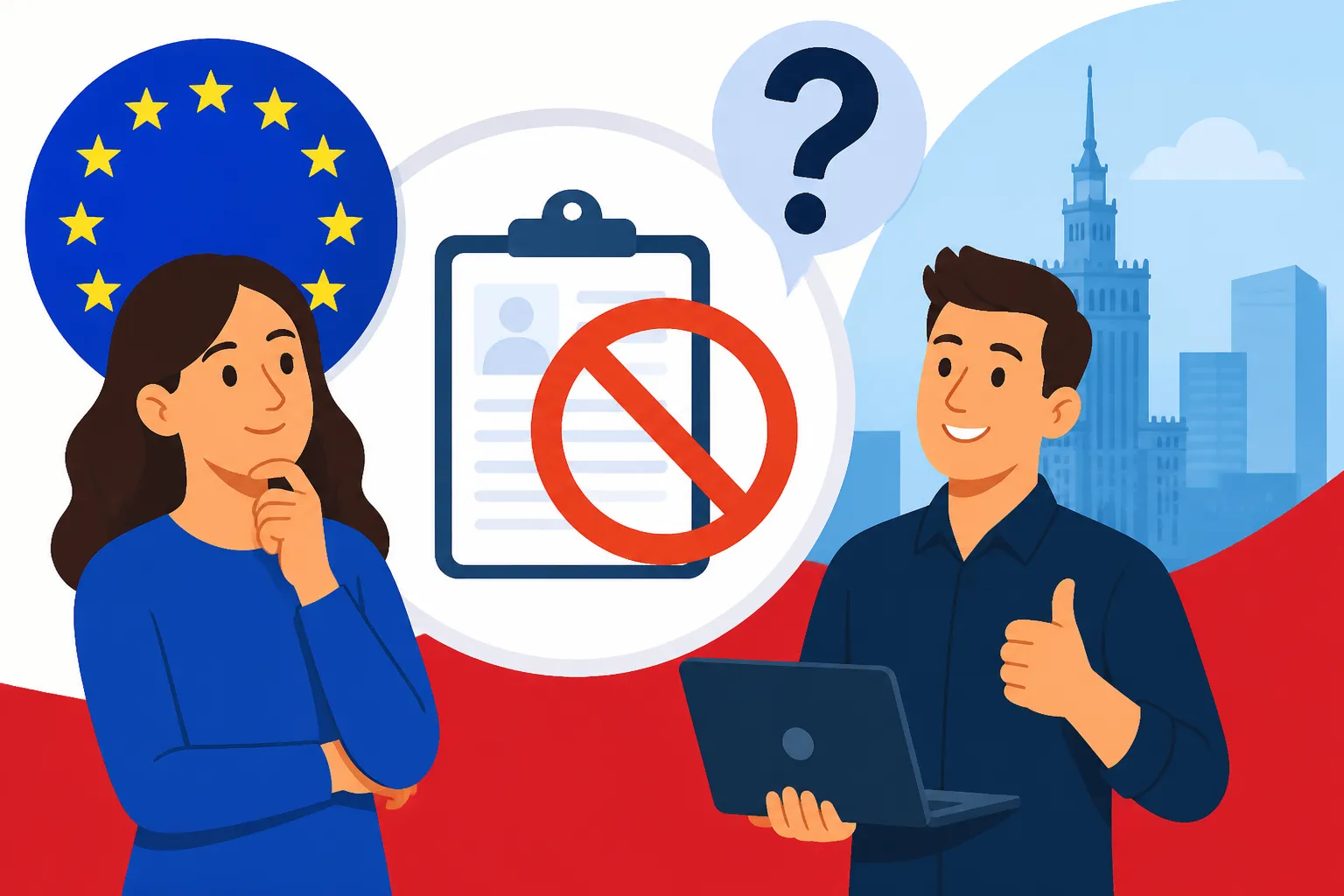
Let's cut right to the chase because, after all these years navigating the Polish system, I know how much we all appreciate clarity. If you're a citizen of an EU member state, the European Economic Area (EEA), or Switzerland, the really good news is that you generally do not need a work permit to be employed in Poland. This isn't just a friendly gesture from Poland; it's a fundamental principle of the European Union: the freedom of movement for workers.
EU/EEA/Switzerland – A Special Status
When we talk about the freedom of movement, it's a big deal. It means that citizens from any of the 27 EU member states, plus Iceland, Liechtenstein, Norway (the EEA countries), and Switzerland, have the right to seek employment, work, and reside in another member state under the same conditions as that state's own citizens. For us expats, this is a massive advantage compared to those coming from outside this zone, who often face complex visa and work permit application processes that can take months, if not years. Your passport is essentially your golden ticket to the Polish job market.
This special status is designed to integrate economies and societies across Europe, making it easier for people to move where opportunities are, fill skill gaps, and experience different cultures. So, if you're Polish-speaking or English-speaking, an IT specialist, a teacher, or working in any other sector, your EU/EEA/Swiss citizenship means the main hurdle of permission to work simply doesn't exist for you. You are on equal footing with a Polish national when it comes to eligibility for a job.
What "No Work Permit" Really Means
While the "no work permit" rule is incredibly liberating, it doesn't mean you can just waltz into Poland, start a job, and ignore all local regulations. Think of it like this: you don't need a special permission slip from the Polish government to work, but you still need to follow the same administrative steps as any Polish citizen would for living and working in the country. This includes things like registering your address, sorting out your social security and healthcare, and, of course, dealing with taxes.
The distinction is crucial. Non-EU citizens often need to obtain a work permit first, then use that to apply for a visa or residence permit. For you, the EU citizen, the right to work is inherent, and your focus shifts immediately to becoming a legally registered resident and taxpayer. This streamlines the process significantly, allowing you to focus on settling in, finding an apartment, and getting your daily life sorted, rather than battling with immigration queues just to get the initial green light for employment.
Essential Formalities Even for EU Citizens
Okay, so no work permit – fantastic! But remember, "no permit" doesn't mean "no paperwork." Just like any country, Poland has its systems to ensure everyone living and working here is accounted for, especially when it comes to things like healthcare and taxes. These formalities are often where new EU expats get a bit tripped up because they assume complete freedom means zero admin. Not so much.
The PESEL Number: Your Key to Everything
If there's one single piece of advice I could give any expat moving to Poland, it's this: get your PESEL number as soon as humanly possible. What is a PESEL? It's your universal identification number, similar to a National Insurance number in the UK or a Social Security number in the US. You'll need it for practically everything that involves any kind of official interaction in Poland.
From opening a bank account (which you'll definitely need for your salary) to registering with the National Health Fund (NFZ), signing up for a phone contract, paying your taxes, or even just setting up an Internetowe Konto Pacjenta (IKP) patient account, the PESEL is your indispensable key. Many employers will even require it before they can officially process your employment contract and start paying your social security contributions. You can typically apply for your PESEL when you register your address (more on that below) at your local Urząd Gminy or Urząd Miasta, or in some cases, your employer might assist you. Trust me, life here without a PESEL is a constant uphill battle. It's truly essential for your life here, tying into everything from How to Get Your PESEL Number and Why It Matters for Healthcare to financial activities.
Registering Your Stay Beyond 3 Months
As an EU citizen, you have the right to stay in Poland for up to three months without any formal registration. It's a bit like an extended tourist stay. However, if you plan to stay longer than three months – which you absolutely will if you're taking up employment – you are legally required to register your stay. This isn't a complex visa application; it's more like informing the authorities of your presence and intent to reside here.
You do this by applying for "registration of residence" (often referred to as zarejestrowanie pobytu obywatela UE) at the local Voivodeship Office (Urząd Wojewódzki) corresponding to your place of residence. You'll need documents proving your identity (your passport or ID card), your address in Poland (like a rental agreement), and critically, proof of your purpose for staying. For employees, this will typically be your employment contract. The process usually results in a certificate confirming your right of permanent residence, which solidifies your legal status in Poland. Don't put this off, as it impacts everything from healthcare access to longer-term residency goals.
Healthcare and Social Security: ZUS Contributions
When you start working in Poland, whether for a Polish company or as a self-employed individual, you become part of the Polish social security system, known as ZUS (Zakład Ubezpieczeń Społecznych). This isn't optional; it's mandatory. Your employer will automatically deduct ZUS contributions from your gross salary and pay them on your behalf. These contributions cover several crucial areas: pension insurance, disability insurance, sickness insurance, and, importantly for us, health insurance.
The health insurance component, often called składka zdrowotna, is what grants you access to Poland's public healthcare system, managed by the National Health Fund (NFZ). This means you'll be able to visit doctors, specialists (with a referral from your GP), and receive emergency care largely free of charge at NFZ-contracted facilities, just like Polish citizens. It's a huge relief to know you're covered once you're officially employed. Understanding these contributions is vital, as covered in detail in our article, Understanding ZUS Health Contributions (Składka Zdrowotna) in Poland. For those who prefer a deeper dive into all healthcare options, Public vs Private Healthcare in Poland: Which Should Expats Choose? might be a helpful read.
Here's a quick overview of the essential steps for EU citizens:
| Step | Description | Required Documents (Typical) | Where to Go / How |
|---|---|---|---|
| 1. Get a PESEL Number | Your universal ID number for all official matters (banking, healthcare, taxes). | Passport/ID, Rental agreement, Application form | Local Urząd Gminy/Miasta (during address registration) |
| 2. Register Your Stay (>3 months) | Inform the authorities of your long-term residence, securing your legal status. | Passport/ID, Rental agreement, Employment contract, Application form | Local Urząd Wojewódzki (Voivodeship Office) |
| 3. Begin ZUS Contributions | Your employer automatically enrolls you in the social security system for healthcare, pension, etc. | Employer handles based on your contract | Employer (deducted from salary) |
| 4. Open a Bank Account | Essential for receiving your salary and managing finances. | PESEL, Passport/ID, Proof of address, Employment contract (sometimes) | Any Polish bank (e.g., PKO BP, Santander, mBank) |
| 5. Understand Tax Obligations | Know how your income is taxed and your responsibilities for annual tax declarations. | PESEL, NIP (if self-employed), Proof of income | Urząd Skarbowy (Tax Office), Online via e-Urząd Skarbowy |
Navigating the Polish Job Market as an EU Citizen
Having the legal right to work is one thing; actually securing a job and understanding the local employment landscape is another. While you won't need a work permit, you'll still need to navigate the job market just like anyone else, and there are a few things that are particularly helpful for expats.
Finding Work and Understanding Contracts
Poland's job market is quite dynamic, especially in major cities like Warsaw, Krakow, Wrocław, and Gdańsk, with strong sectors in IT, BPO (Business Process Outsourcing), finance, and shared service centers. Many international companies operate here, meaning English-speaking roles are plentiful, though competition can be high for some positions. Your EU citizenship makes you an attractive candidate because employers don't have to deal with the complexities of permits.
When you're looking for work, make sure your CV is tailored to Polish standards – typically concise, highlighting relevant experience and skills. LinkedIn is a very popular platform here, as are local job boards like Pracuj.pl or even services like EURES for pan-European job hunting. Don't be shy about networking; it's often how great opportunities arise.
Once you land a job, you'll encounter different types of employment contracts. The most common and stable is the umowa o pracę (employment contract), which offers full social benefits, paid leave, and strong labor protections. Other contract types like umowa zlecenie (mandate contract) or umowa o dzieło (contract for specific work) are more flexible but offer fewer employee rights. It’s crucial to understand these distinctions because they impact your rights and obligations, which our guide Understanding Polish Employment Contracts and Worker Rights (2027) delves into in detail. Always read your contract carefully and don't hesitate to seek advice if anything is unclear – an ounce of prevention is worth a pound of cure!
Language Skills: An Advantage, Not a Requirement
While your EU passport means you don't need Polish language skills to work here, I can tell you from personal experience that speaking at least some Polish makes a monumental difference to your daily life, your career prospects, and your integration into society. Many international companies operate entirely in English, especially in the IT and business services sectors. So, for professional life, you might get by perfectly fine.
However, outside the office walls, Polish is the language of daily life. Dealing with landlords, shopping at local markets, navigating public transport, or simply making friends with locals becomes infinitely easier and more rewarding if you can communicate in Polish. Moreover, even within English-speaking companies, proficiency in Polish can give you an edge for promotions or roles that require more interaction with local clients or authorities. There are plenty of resources available to help you learn, from formal language schools to online platforms like iTalki, where you can find tutors for one-on-one lessons. Trust me, putting in the effort will pay dividends in your overall expat experience. If you're keen to start, Learning Polish: A Complete Guide to Language Courses and Levels offers some great starting points.
Tax Obligations and Financial Life in Poland
You're earning money in Poland, so naturally, the Polish tax authorities will be interested! This is another area where, despite your EU citizenship, you're subject to the same rules and regulations as Polish nationals. Getting your head around the tax system is crucial for a smooth financial life here.
Understanding Polish Income Tax (PIT)
Poland operates a progressive income tax system (PIT – Podatek Dochodowy od Osób Fizycznych). This means the more you earn, the higher percentage of tax you pay, up to a certain point. As an employee, your employer will automatically deduct income tax advances from your salary each month and remit them to the tax office on your behalf. This is a huge relief as it means you're unlikely to face a massive tax bill at the end of the year if you're solely employed.
However, every year you will need to file an annual tax return (PIT declaration). This might sound intimidating, but for most employees, it's quite straightforward, especially with the introduction of the "Twój e-PIT" service, where the tax office pre-fills your return for you, and you just need to review and accept it online. For those with more complex financial situations (e.g., self-employment, foreign income, property sales), it gets a bit trickier, and you might consider consulting with a tax advisor, perhaps one specializing in expatriate taxation like "Taxes for Expats", to ensure full compliance. Our comprehensive guide, The Complete Guide to Taxes in Poland for Expats (2027), is an excellent resource, and Filing Your Annual Tax Return (PIT) in Poland: The Complete Walkthrough (2027) provides step-by-step instructions.
Banking and Managing Your Money
Once you start receiving a salary in złoty, you'll need a way to manage it. Opening a Polish bank account is not just convenient; it's practically essential. While you might be able to use international services like Revolut or Wise for some transactions, for receiving your salary, paying bills (like rent and utilities), and setting up direct debits, a local bank account will be your best friend.
Most major Polish banks, such as PKO BP, Santander, mBank, and ING, are very expat-friendly and offer services in English. You'll typically need your PESEL number, your ID or passport, and proof of address to open an account. Some banks might also ask for your employment contract. Setting up online banking and mobile apps is usually straightforward, giving you control over your finances. Many banks also offer the BLIK mobile payment system, which is incredibly popular and convenient for everyday transactions in Poland. If you're wondering where to start, How to Open a Bank Account at a Polish Bank as a Foreigner offers practical guidance.
Disclaimer
The information provided in this article is intended for general guidance only and does not constitute legal, financial, or immigration advice. While every effort has been made to ensure accuracy, regulations and procedures in Poland can change. It is always recommended to consult with official government sources or qualified professionals for advice tailored to your specific situation.