What Pharmacies Are Open 24 Hours in Warsaw?
Finding yourself in the middle of a health crisis at 3:00 AM is a universal fear for expats, but in a city as large as Warsaw, the challenge isn't just finding a doctor—it is finding a place to actually get your medication. Whether it is a sudden fever, an allergic reaction, or a forgotten prescription, knowing exactly which pharmacies remain open 24/7 can save you from a night of panicked wandering. This guide provides a detailed map and tactical advice for navigating Warsaw’s late-night apothecary system.
Understanding the System of 24-Hour Pharmacies in Warsaw
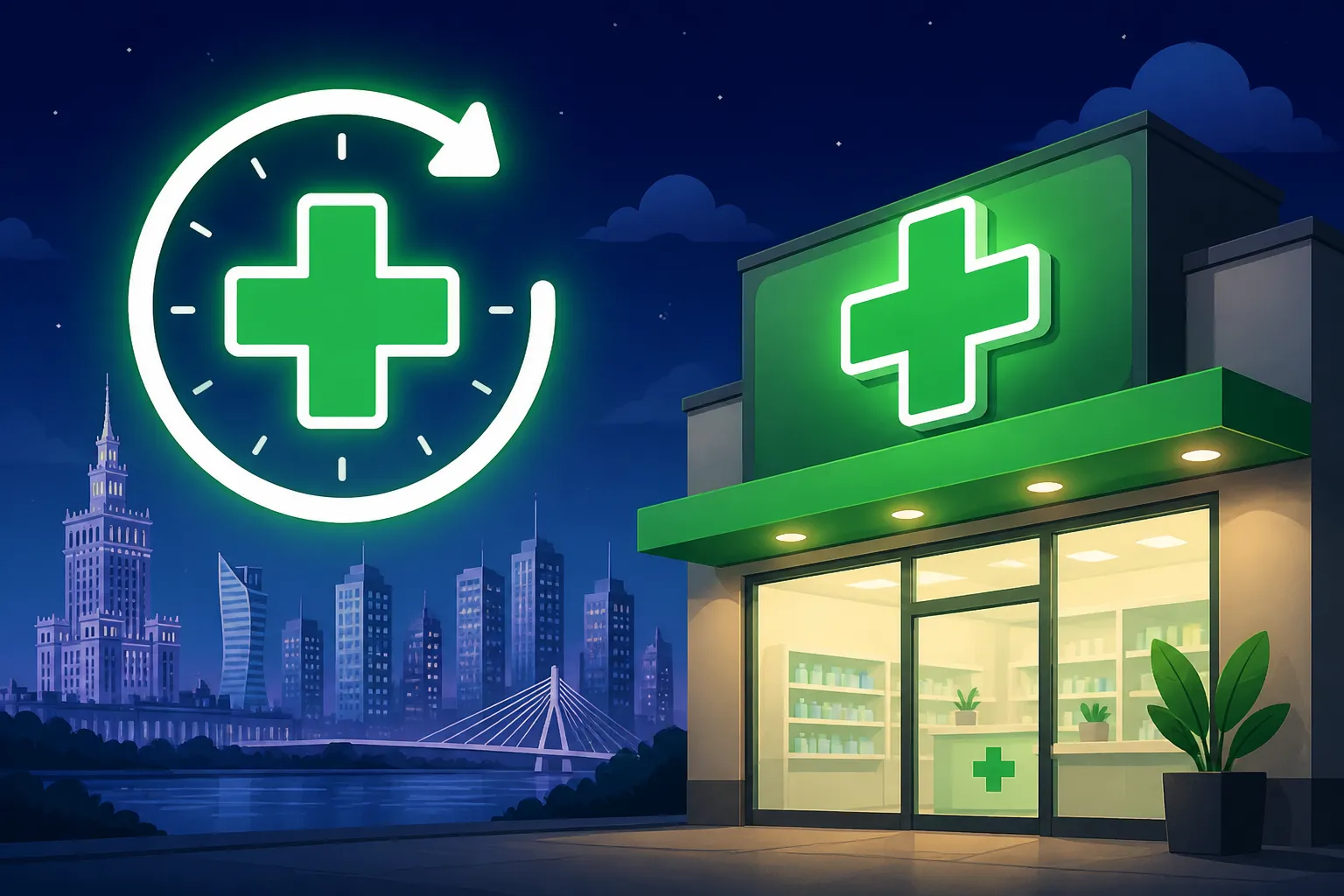
When you first arrive in Poland, you might notice that most local neighborhood pharmacies (apteki) close their doors by 8:00 PM or 9:00 PM, and many do not open at all on Sundays. However, Warsaw operates a dedicated network of "Apteki Całodobowe" (24-hour pharmacies) and "Apteki Dyżurne" (on-duty pharmacies). The difference is subtle but important for your sanity. A 24-hour pharmacy is a permanent fixture that never closes its doors, regardless of holidays or weekends. An on-duty pharmacy, common in smaller districts, might only be open late on specific nights according to a rotating schedule.
Navigating this can be incredibly frustrating if you are unwell and your Polish is limited. You might see a sign on a closed pharmacy door listing "Apteki Dyżurne," but if you cannot read the street names or understand the dates, that list is useless. For most expats living in the capital, it is far more reliable to memorize the handful of permanent 24/7 locations in the city center and major districts. These locations are the backbone of the city's medical infrastructure, and they are usually equipped to handle high volumes of late-night patients.
If you are a digital nomad or a traveler who hasn't yet registered with the local National Health Fund, having reliable travel medical insurance like SafetyWing can provide an extra layer of security. While SafetyWing primarily handles larger medical expenses and emergencies, having that financial safety net allows you to focus on the immediate task of getting your medicine without worrying about the broader costs of a potential hospital visit if the symptoms worsen. It is also worth checking Understanding the Polish Pharmacy (Apteka) System and Opening Hours to get a better grip on how the general retail side of medicine works here.
The Concept of the Night Window (Okienko Nocne)
One of the most jarring experiences for a newcomer is arriving at a 24-hour pharmacy at 2:00 AM and finding the front doors locked. This does not mean they are closed. In Poland, for security reasons, most pharmacies operate through a "night window" (okienko nocne) or a small hatch in the door after a certain hour (usually 10:00 PM or 11:00 PM). You will typically find a doorbell or a buzzer near the window. You press it, wait for the pharmacist to appear behind the glass, and conduct your business through a small sliding drawer.
The interaction through the night window can be impersonal and a bit cold, especially if the wind is biting. It is helpful to have your prescription or the name of the over-the-counter (OTC) medication written down on your phone. Pharmacists in these central 24-hour locations are quite used to foreigners, but their English proficiency can vary. If you are using a plan like SafetyWing while waiting for your local residency to process, keep your receipts; although OTC meds aren't typically covered, the documentation is vital if you later need to prove the timeline of an illness to a doctor or for a larger claim.
The Night Surcharge (Opłata Nocna)
Another quirk of the Polish system is the "night fee." By law, pharmacies are allowed to add a small surcharge to every transaction made during night hours or on public holidays. This fee is usually very small—typically around 3 to 5 PLN—but it can be a surprise if you are counting your coins. This fee applies even if you are just buying a box of paracetamol. It is a small price to pay for the convenience of midnight access, but it is a detail often left out of tourist brochures.
Understanding these small administrative details is part of the broader journey of Navigating the Polish Healthcare System: An Expat's Roadmap (2027). Knowing when to expect a surcharge or how to ring a buzzer prevents that feeling of "nothing works here," which often hits expats when they are tired and sick.
Top 24-Hour Pharmacy Locations in Warsaw
Warsaw is divided by the Vistula River, and while the left bank (Centrum, Mokotów, Wola) has the highest density of services, the right bank (Praga) is also well-served. Knowing the specific "anchor" pharmacies in these areas is crucial. You don't want to be searching for "pharmacy near me" only to find a shop that closed three hours ago.
| Neighborhood | Pharmacy Name | Address | Key Landmark |
|---|---|---|---|
| Śródmieście (Centrum) | Apteka Cefarm | Al. Jana Pawła II 13 | Near Rondo ONZ |
| Śródmieście (Centrum) | Apteka przy Złotych Tarasach | ul. Widok 19 | Near Palace of Culture |
| Mokotów | Apteka Euro-Apteka | ul. Puławska 39 | Near Morskie Oko Park |
| Praga-Południe | Apteka Całodobowa | ul. Grochowska 234/240 | Near Rondo Wiatraczna |
| Wola | Apteka Codzienna | Al. Solidarności 149 | Near Sąd Najwyższy |
| Ursynów | Apteka na Rezerwacie | ul. Przy Bażantarni 11 | Near Kabaty Metro |
Śródmieście: The Central Hubs
The most famous 24-hour pharmacy in Warsaw is likely the Cefarm on Aleja Jana Pawła II 13. It is centrally located, easily accessible by night buses, and almost always has a pharmacist on duty who speaks at least basic English. Because of its location near major business centers and hotels, it is the most reliable "Plan A" for any expat. If you are staying in a central hotel or apartment and need urgent supplies, this should be your first stop.
Another critical location is on ul. Widok 19. This is tucked just behind the main busy streets near the Centrum metro station. It is a smaller pharmacy than the Cefarm giant, but it is incredibly useful if you are in the heart of the city. For those still navigating the initial hurdles of moving, The Complete Guide to Moving to Poland: Your First 90 Days (2027) can help you map out these essential services in your specific neighborhood before an emergency strikes.
Mokotów and Southern Warsaw
If you live in the residential stretches of Mokotów, heading all the way to Centrum at night is a chore. The pharmacy at Puławska 39 is a staple for the local expat community. Puławska is a main artery, meaning taxis and Bolts are always available to drop you right in front. This location is particularly well-stocked with infant care products, which is a lifesaver for parents facing a midnight diaper rash or fever crisis.
For those even further south in Ursynów, the pharmacy at Przy Bażantarni 11 near the Kabaty metro station is the go-to spot. Ursynów is a massive "bedroom district," and having a 24-hour location near the end of the Metro M1 line is essential for the thousands of families living there. It beats a 20-minute drive into the city center when you're already exhausted.
Praga and the Right Bank
Expats living in Praga-Północ or Praga-Południe often feel forgotten by city-center guides, but the pharmacy at ul. Grochowska 234/240 is an institution. Located near the bustling Rondo Wiatraczna, it serves a massive portion of the right bank. Praga can feel a bit daunting at night if you aren't used to it, but the pharmacy area is well-lit and generally safe.
If you are a traveler exploring the grittier, artistic side of Praga and find yourself needing medical supplies, remember that your SafetyWing policy covers you city-wide. Whether you are on the "posh" side of the river or the "authentic" side, having that backup means you can take a taxi directly to the best-stocked pharmacy without worrying about the logistics of the cost.
Dealing with Prescriptions at Night
Finding the pharmacy is only half the battle; you also need to ensure you can actually get the medication you need. Poland has transitioned almost entirely to the Understanding the e-Recepta (E-Prescription) System in Poland format. This is actually a blessing for expats. Instead of a handwritten scrawl you can't read, you receive a 4-digit code via SMS or email (if you have a PESEL and an IKP account).
When you arrive at the 24-hour pharmacy, you simply provide the 4-digit code and your PESEL number. If you do not have a PESEL yet, the process is slightly different, and the pharmacist may need to see your passport or ID to match the prescription. If you're wondering about the ID requirements, you might want to check How to Get Your PESEL Number and Why It Matters for Healthcare to see how it smoothens these late-night interactions.
The Challenge of Foreign Prescriptions
If you are a tourist or a new arrival carrying a prescription from your home country, the night pharmacist may be more hesitant. Polish law is strict about what constitutes a valid prescription. Generally, a prescription from another EU country is easier to fill, but it must contain specific information: the patient's full details, the generic name of the drug, and the prescriber's credentials.
For non-EU citizens (Americans, British, etc.), it is much harder. Many 24-hour pharmacists will refuse to fill a non-EU prescription at 3:00 AM because they cannot easily verify its authenticity. In these cases, you may need to visit a 24-hour private clinic first to get a Polish e-prescription. You can find more details on this in Can I Use a Foreign Prescription at a Polish Pharmacy?. If you are in this situation, having SafetyWing is helpful because it can help cover the costs of that initial doctor's visit required to get the local prescription.
Using the IKP (Internetowe Konto Pacjenta)
For long-term expats, the Internet Patient Account (IKP) is your best friend. If you wake up and realize you've run out of chronic medication, you can sometimes request a refill through your IKP portal from your family doctor without an in-person visit. The code is then sent to your phone.
Before you head out into the cold Warsaw night, it is a good idea to know How Do I Fill an e-Recepta at a Pharmacy in Poland? so you don't fumbled at the window. The pharmacists at 24-hour spots are often under pressure from a long queue of people, and being prepared with your code and PESEL makes the process much smoother for everyone involved.
Practical Tips for Late-Night Emergencies
Beyond just the address, there are tactical things you should know to make a midnight pharmacy run less stressful. Warsaw is a safe city, but the logistics of public transport and stock availability can be tricky after dark.
- Check Stock Online: Some major chains like Ziko or DOZ allow you to check stock online. While it is not 100% real-time, it can prevent a wasted trip.
- Night Buses: Warsaw has an excellent night bus system (lines starting with 'N'). Most 24-hour pharmacies are located near major N-bus stops.
- The "Dzwonek" (Bell): Don't be shy about pressing the buzzer. The pharmacist is often in the back room or resting between customers. Press it once and wait at least 60 seconds before pressing again.
- Payment Methods: Virtually all 24-hour pharmacies in Warsaw accept cards, contactless payments, and BLIK. You rarely need cash, except perhaps for that small night surcharge if their card terminal is acting up (though this is rare).
If your situation is more serious than a simple pharmacy run, do not hesitate to seek actual medical intervention. Knowing Emergency Medical Care in Poland: What Every Expat Needs to Know is vital. A pharmacy cannot give you stitches, and they cannot give you strong antibiotics without a prescription. If you are in significant pain, the SOR (Szpitalny Oddział Ratunkowy) or an emergency clinic is the correct destination.
When the Pharmacy Isn't Enough
Sometimes, you might find that the 24-hour pharmacy doesn't have the specific drug you need. In Poland, pharmacists are often allowed to offer "zamienniki" (substitutes). These are generic versions of the same active ingredient. Do not be afraid of these; they are strictly regulated and significantly cheaper. If you are on a budget or your insurance (like SafetyWing) only covers specific types of claims, these substitutes are a great way to save money while getting the same clinical result.
For those who are not yet covered by the NFZ (Polish public health), you should read Health Insurance in Poland: Mandatory, Private and Subscription Options Explained. Being uninsured in Poland is a massive risk, and while a pharmacy visit is cheap, a night in a Warsaw hospital without insurance can be a financial disaster.
Summary Table of 24-Hour Contact Points
If you are in a rush, here are the most vital points to remember:
| Service | Detail |
|---|---|
| Primary 24h Pharmacy | Cefarm, Al. Jana Pawła II 13 |
| Emergency Number | 112 (Universal) or 999 (Ambulance) |
| Night Doctor Search | Search for "Nocna i świąteczna opieka zdrowotna" |
| Prescription Code | 4 digits + PESEL number |
| Insurance Backup | SafetyWing (for travelers/uninsured expats) |
Navigating Warsaw at night while unwell is never fun, but the city is better equipped than many other European capitals. By keeping a few addresses in your phone and understanding the night-window etiquette, you can handle these administrative hurdles with the grace of a veteran expat. Always remember to keep your receipts, stay calm at the night window, and ensure you have a baseline of insurance like SafetyWing to catch you if a simple pharmacy trip turns into something more complex.
Disclaimer
This guide is for informational purposes only and does not constitute professional medical or legal advice. Opening hours and locations of pharmacies can change due to local regulations or business decisions. Always verify the current status of a pharmacy before traveling long distances at night. For medical emergencies, always dial 112 or visit the nearest emergency room (SOR).