How Do I Find an Orthodontist for My Child in Poland?
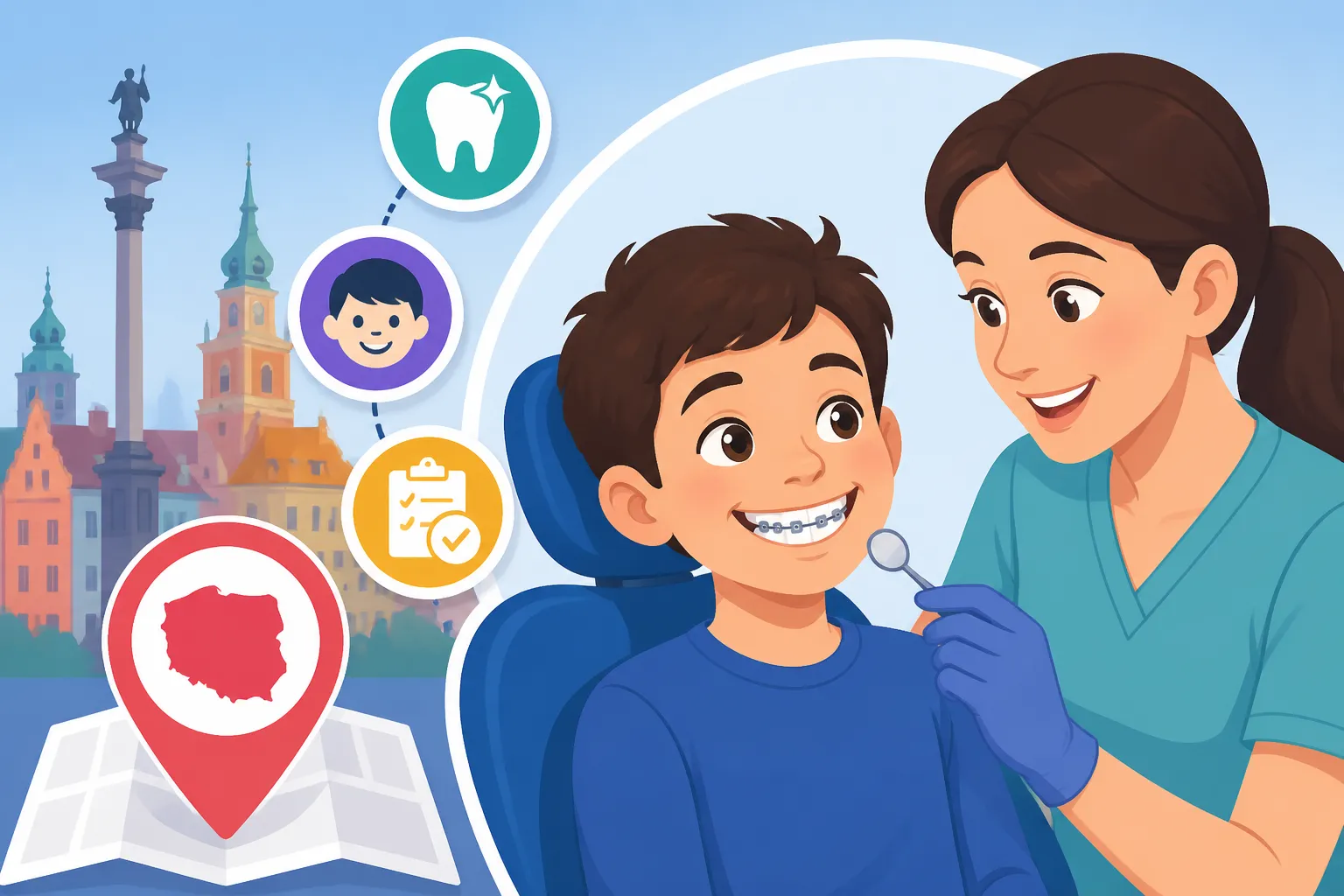
Moving to a new country involves a steep learning curve, but few things are as stressful as realizing your child needs specialized medical care in a system you don’t yet understand. Navigating pediatric orthodontics in Poland can be a maze of long waiting lists and confusing price points. This guide explains how to find the right specialist, manage costs, and navigate the Polish dental landscape.
Understanding the Pediatric Orthodontic Landscape in Poland
When you first arrive in Poland, the healthcare system can feel like it is split into two entirely different worlds: the public system (NFZ) and the private sector. For something as specific as orthodontics (ortodoncja), this distinction is even more pronounced. In the Polish medical culture, dental health is highly prioritized, and you will find that the standard of care is exceptionally high, often rivaling or exceeding what you might find in Western Europe or North America. However, the path to accessing that care depends heavily on your residency status and your budget.
Most expats find themselves leaning toward private clinics because the public system has very specific limitations regarding orthodontic treatment. For example, the National Health Fund generally only covers orthodontic "movable" appliances for children up to the age of 12. If your child is older or requires fixed braces, you will almost certainly be looking at private care. Understanding these nuances early on can save you months of waiting for appointments that might not even provide the solution you need.
How Poland's National Health Fund (NFZ) Works: A Full Overview is a vital resource if you are planning to rely on state healthcare, but for orthodontics, the reality is that the "ortodonta dziecięcy" (pediatric orthodontist) usually operates in the private sphere. This is where most international families find the best results, especially when looking for English-speaking specialists who can explain the complexities of a treatment plan that might span several years.
How to Search for a Specialist in Your City
Finding a doctor in Poland has moved almost entirely online. The most popular platform by far is ZnanyLekarz (the Polish version of DocPlanner). This site is an absolute lifesaver for expats. You can filter by specialty, city, and, most importantly, the languages the doctor speaks. When searching, use the term "ortodonta" or "ortodoncja dziecięca."
Beyond online portals, I highly recommend joining local expat communities on social media. Groups like "Expats in Warsaw" or "Krakow Moms" are goldmines for personal recommendations. A recommendation from another parent who has navigated the "przychodnia" (clinic) system is often worth more than a dozen five-star reviews on a corporate website. You want to know if the doctor is patient with non-Polish speaking children and if the clinic's administration is organized.
When searching for a provider, keep in mind that your family's overall health security is paramount. While companies like SafetyWing provide excellent travel and medical coverage for the transition period of your move, specialized orthodontic work is typically a planned private expense. However, having a reliable health plan like SafetyWing ensures that if an emergency dental issue arises—such as an injury to the mouth while your child is wearing their new braces—the urgent care aspects are handled while you focus on the long-term orthodontic adjustments.
The Expat Guide to Finding a Family Doctor (Lekarz Rodzinny) in Poland can also be a helpful starting point, as your general practitioner can sometimes provide referrals or suggest reputable local clinics that specialize in children's dental health.
The Initial Consultation and Diagnostic Process
Once you have shortlisted a few clinics, the first step is the "konsultacja ortodontyczna." Do not expect to get braces on the first day. The Polish approach to orthodontics is very methodical and data-driven. The first appointment is usually a visual assessment where the doctor will discuss the general bite issues and potential treatment paths.
Following the consultation, the doctor will request a diagnostic package. This usually includes a panoramic X-ray (RTG pantomograficzne), a cephalometric X-ray, and digital or plaster impressions of the teeth (wyciski). Some modern clinics in cities like Wroclaw or Gdansk now use 3D intraoral scanners, which are much more comfortable for children than the old-fashioned goopy molds. You will then return for a second appointment where the "plan leczenia" (treatment plan) is presented. This document is crucial; it outlines the duration of treatment, the type of appliances used, and a full breakdown of the costs.
It is worth noting that you should have your child's documentation in order before these visits. How to Get Your PESEL Number and Why It Matters for Healthcare is an important read because even private clinics will often ask for a PESEL to register your child in their system and link them to the Internetowe Konto Pacjenta (IKP) where prescriptions and referrals are tracked.
Comparing Costs: NFZ vs. Private Orthodontics
The cost of orthodontic treatment in Poland is generally lower than in the US or UK, but for many expats, it still represents a significant investment. If you are eligible for NFZ care, some of the early-stage interceptive treatments for younger children (under 12) might be free. However, for fixed braces (the metal or ceramic ones that stay on the teeth), the costs are almost entirely out-of-pocket.
In the private sector, you are paying for the quality of materials, the expertise of the specialist, and the convenience of shorter wait times. Most clinics allow you to pay in stages: a large initial fee for the appliance and then smaller monthly fees for "wizyty kontrolne" (adjustment visits).
| Service Type | NFZ (Public) | Private Clinic (Estimated) |
|---|---|---|
| Initial Consultation | Free (with long wait) | 200 – 450 PLN |
| Diagnostic X-rays | Free (with referral) | 150 – 300 PLN |
| Removable Appliance | Free (up to age 12) | 800 – 1,800 PLN |
| Fixed Metal Braces | Not Covered | 2,500 – 4,000 PLN (per arch) |
| Aesthetic (Clear) Braces | Not Covered | 4,000 – 6,000 PLN (per arch) |
| Monthly Adjustment Visit | Free (if eligible) | 200 – 450 PLN |
For those managing a budget, The Cost of Healthcare in Poland: A Complete Breakdown for Foreigners (2026) provides more context on how these dental costs fit into your overall living expenses. While you might use a global health solution like SafetyWing for your family's general medical needs, setting aside a specific "dental fund" in Polish Złoty is a smart move for long-term orthodontic plans.
Navigating the Language Barrier in Clinics
One of the biggest fears for expat parents is the language barrier. In major hubs like Warsaw, Krakow, or Poznan, many orthodontists have studied abroad or attend international conferences, so their English is often excellent. However, the reception staff at a smaller "przychodnia" might only speak Polish.
When you call to make an appointment, don't be afraid to ask, "Czy lekarz mówi po angielsku?" (Does the doctor speak English?). If the answer is no, and your Polish is still in the "Dzień dobry" stage, you might want to look for a larger medical center like Medicover or LUX MED, which often employ multi-lingual staff. Understanding Private Medical Subscriptions (Medicover, LUX MED) in Poland can help you decide if joining one of these networks is worth it for your family, as they often have specialized dental departments.
Even if the doctor speaks English, the "e-recepta" (electronic prescription) or "e-skierowanie" (referral) system will produce documents in Polish. Familiarizing yourself with Understanding the e-Recepta (E-Prescription) System in Poland will help you understand what to do if your child is prescribed a specific mouthwash or pain relief after their braces are tightened.
Practical Tips for the Long-Term Treatment Journey
Orthodontic treatment is a marathon, not a sprint. You will be visiting the clinic every 4 to 8 weeks for several years. Therefore, location is everything. If you live in Wilanów in Warsaw, don't pick an orthodontist in Białołęka, even if they are slightly cheaper. The traffic in Polish cities can turn a 20-minute adjustment into a three-hour ordeal.
Furthermore, make sure you understand the "Zwolnienie lekarskie" system. If your child needs to miss school for an appointment, the orthodontist can provide a note. While not a formal Understanding Sick Leave (Zwolnienie Lekarskie L4) in Poland document used for adult employment, a "zaświadczenie" from the doctor is standard for school absences and is universally accepted by Polish schools.
Finally, keep a digital folder of all your child's progress. If you move again—either back home or to another country—having the digital scans and the original "plan leczenia" will be vital for the next orthodontist to pick up where the Polish specialist left off. If you are using a global health insurance like SafetyWing during your travels, keep their contact info handy just in case an appliance break leads to a minor mouth infection while you are away on a family holiday.
Managing Dental Emergencies During Treatment
When a child has braces, emergencies are bound to happen. A wire might poke into their cheek, or a bracket might pop off while they are eating. In Poland, most private orthodontic clinics will try to squeeze you in for an emergency fix, but they may charge a small fee if it’s outside of a regular adjustment window.
If an emergency happens at night or on a weekend, you need to look for a "stomatologia 24h" (24-hour dental clinic). These are private emergency centers. If the emergency is more severe—such as a trauma that affects the jaw or causes significant bleeding—you should head to a "Szpital" (hospital) with a maxillofacial department. Emergency Medical Care in Poland: What Every Expat Needs to Know is an essential guide for these high-stress situations.
Always check if your primary health insurance or your SafetyWing policy covers the emergency room visit costs associated with dental trauma. While the "tightening" of braces isn't an emergency, the injury resulting from a fall while wearing them certainly is. Knowing exactly where the nearest "ostry dyżur" (ER) is located can make all the difference.
Finalizing Your Choice and Starting Treatment
Before you sign the contract for treatment, take a moment to look at the clinic's overall atmosphere. Is it child-friendly? Do they have experience with international patients? Poland has some truly world-class facilities, such as the specialized dental centers in the Royal Wilanów area of Warsaw or the modern clinics near the Main Square in Krakow.
Don't be afraid to get a second opinion. Because private orthodontics is a competitive market in Poland, many parents visit two or three specialists before committing. Public vs Private Healthcare in Poland: Which Should Expats Choose? is a debate many of us have, but for your child's smile, the precision and communication found in the private sector are usually the deciding factors.
Once the braces are on, the journey begins. With the high standard of Polish dental education, you can rest assured that your child is in good hands. Just remember to keep their What Is the IKP and How Do I Use It in Poland? account updated, and stay on top of the regular check-ups. A beautiful smile is one of the best gifts you can give your child, and the Polish system—once understood—is an excellent place to make that happen.
Disclaimer
This guide is for informational purposes only and does not constitute medical or legal advice. Healthcare regulations and costs in Poland are subject to change. Always consult with a qualified medical professional and verify current insurance coverage with your provider before beginning any long-term medical treatment.