Where Can I Get a Routine Health Check-Up in Poland?
Moving to Poland often means dealing with a massive mountain of paperwork, but one thing foreigners tend to push to the back burner is their physical health. Navigating a new medical system while healthy is confusing, and doing it while sick is a nightmare. This guide solves that by explaining exactly where to get a routine health check-up in Poland.
The Landscape of Preventative Medicine in Poland
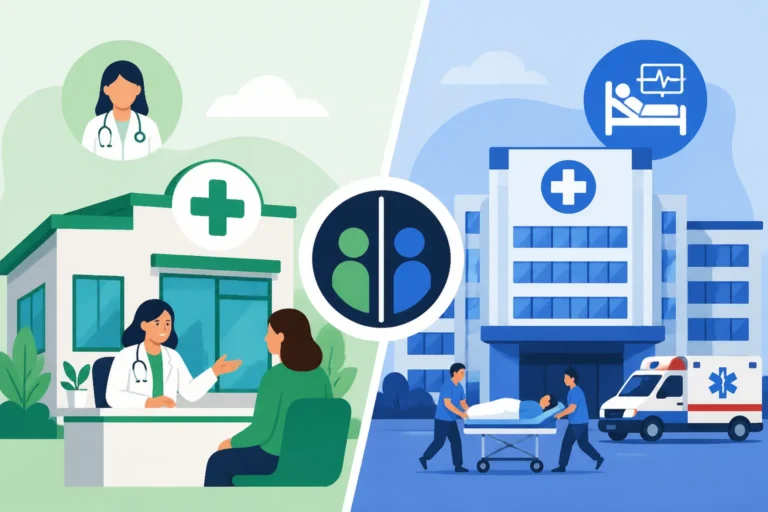
When you first arrive in Poland, the medical system can feel like a labyrinth of acronyms and cold waiting rooms. You will quickly realize that healthcare here is divided into two distinct worlds: the public system, managed by the National Health Fund (NFZ), and the private sector, dominated by large medical groups. For a veteran expat, the biggest cultural shock isn't the language, but the realization that "preventative care" is often something you have to initiate yourself. Unlike some countries where your doctor sends you a yearly reminder, in Poland, you are the project manager of your own health.
Understanding the difference between these two systems is crucial for your peace of mind. Public healthcare is technically "free" for those who work here and pay social security, but it involves a specific set of rules and sometimes long wait times. On the other hand, the private system is sleek, efficient, and often English-friendly, but it comes at a premium or requires a specific subscription. If you are a digital nomad or a new arrival who hasn't yet navigated the bureaucracy of residency, you might find yourself in a transitional period without local coverage. In these instances, having travel medical insurance like SafetyWing can provide a much-needed safety net for unexpected issues while you get your local routine care sorted.
Before you book anything, you need to decide which path you are taking. Are you looking for a standard set of blood tests covered by your taxes, or are you willing to pay for a comprehensive "Executive Health Screening" at a private clinic? Both have their merits, and often, expats end up using a hybrid model—using public care for basic things and private care for specialists and routine screenings to save time. You can read more about this in Public vs Private Healthcare in Poland: Which Should Expats Choose? to see which fits your budget and lifestyle best.
Where to Go for Publicly Funded Check-Ups
If you are legally employed or self-employed in Poland, you are likely paying into the NFZ. This entitles you to free preventative screenings, but you must follow the correct protocol to access them. The starting point for everything in the public system is your local clinic, known as a przychodnia. This is where your primary care physician, or lekarz rodzinny, operates.
The Role of the Przychodnia
The przychodnia is the backbone of Polish healthcare. When you first move to a neighborhood, one of your first tasks should be to find a clinic and sign a "declaration" to a specific doctor. This is essential because, without this registration, you cannot simply walk in for a routine check-up. You can find deep-dive details on this process in Understanding the Role of the Przychodnia (Clinic) in Poland. Once you are registered, you can schedule a visit for a general consultation.
During this visit, you can ask for a "referral" (skierowanie) for basic diagnostic tests. In Poland, routine check-ups typically revolve around blood morphology, urine analysis, and glucose levels. Your doctor will write these referrals, and you can usually have the tests done in the same building or at a nearby affiliated lab. The downside? Public clinics can be hit-or-miss with English-speaking staff, and the bureaucracy can be frustrating if you don't have all your documents in order. Ensure you have your ID and proof of insurance ready. If you are still in the process of getting your paperwork, you should check What Documents Do I Need to Get a PESEL in Poland? since a PESEL number is often the key to unlocking these public services.
National Screening Programs
Poland occasionally runs national health programs that don't require a specific referral from a GP. One famous example is the "Profilaktyka 40 Plus" program, aimed at citizens and residents over 40. These programs are designed to catch chronic illnesses like hypertension or diabetes early. To participate, you usually need to generate an "e-referral" through your online patient portal. While these programs are excellent, they are sometimes limited to specific age groups or timeframes, so keeping an eye on government health announcements is wise.
For many expats, especially those working for international corporations, the public system is a backup. However, if you are a freelancer or working on a specific type of contract, you might need to handle your own registration. For a step-by-step on how to do this, see Registering with the NFZ in Poland: The Complete Expat Guide (2027). Even if you plan to go private, having your NFZ status active is a critical safety measure for emergencies.
Private Medical Centers and Diagnostic Labs
For the majority of the expat community in cities like Warsaw, Krakow, and Wroclaw, the "go-to" for a routine health check-up is a private medical center. Brands like LUX MED, Medicover, and Enel-med have become household names. The experience here is much closer to what you might expect in the US or UK: shiny lobbies, online booking apps, and a high probability of finding a doctor who speaks excellent English.
Private Medical Subscriptions
Most people access these centers through a medical subscription, often provided by their employer. If your job offers this, take it. These plans allow you to book a "General Practitioner" (GP) visit within days, rather than weeks. Many of these centers even offer specific "Check-up Packages" that include a battery of tests, an EKG, and a follow-up consultation to review the results. If you are a freelancer or your company doesn't provide this, you can buy these subscriptions individually. It is worth investigating Understanding Private Medical Subscriptions (Medicover, LUX MED) in Poland to understand the different tiers of care available.
For those who are just passing through or working remotely for a company back home, a subscription might not make sense. You can still use these private clinics on a "pay-per-visit" basis. While it is more expensive than the public route, the convenience is often worth it. For digital nomads who aren't tied to a specific Polish contract, having a policy from SafetyWing ensures that if a routine check-up uncovers a more serious, acute issue, you aren't left holding a massive bill for specialized treatment.
Independent Diagnostic Laboratories
If you already know what tests you want—perhaps you want to check your Vitamin D levels after a long Polish winter or monitor your cholesterol—you don't actually need a doctor's referral to get blood work done in Poland. You can walk into an independent diagnostic lab like Alab Laboratoria or Diagnostyka.
These labs are everywhere, often tucked into residential buildings or shopping centers. You simply walk in (or book online), choose the tests you want from a menu, pay at the counter, and have your blood drawn. Results are usually available online within 24 hours. This is an incredibly efficient way to handle routine monitoring without the need for a consultation fee. However, remember that these labs won't interpret the results for you; you will still need to see a doctor for that. To find someone to help you read those results, look into The Expat Guide to Finding a Family Doctor (Lekarz Rodzinny) in Poland.
| Feature | Public (NFZ) | Private (Subscription/Pay) | Independent Lab |
|---|---|---|---|
| Cost | Free (if insured) | Subscription or ~200-500 PLN | Per test (~30-300 PLN) |
| Wait Time | Days to weeks | Hours to days | Walk-in / Immediate |
| English Level | Low to Moderate | High | Moderate (staff may vary) |
| Referral Needed | Yes, always | Often yes, for packages | No |
| Convenience | Low (Specific clinic) | High (Multiple locations) | Very High (Everywhere) |
Specialized Screenings and Occupational Health
In Poland, there is a very specific type of "routine check-up" that every employee must undergo, and it is called Medycyna Pracy (Occupational Medicine). It is important not to confuse this with a personal health check-up, although many expats do.
Medycyna Pracy: The Mandatory Check
By law, before you start a new job and at regular intervals during your employment, you must see an occupational health doctor. The employer pays for this and provides a specific form detailing the conditions of your work (e.g., "works at a computer," "drives a company car"). The doctor will check your vision, hearing, and general health to certify you are fit for the role. While this involves some routine tests, it is quite superficial. It is not designed to catch long-term health trends or address your personal health concerns. If you want a deep dive into your wellness, you should schedule a separate visit with your GP.
Gender-Specific and Age-Specific Screenings
For routine screenings like mammograms, pap smears, or prostate exams, the private route is highly recommended due to the availability of modern equipment and faster results. However, the NFZ does run very good preventative programs for these specific areas. For example, the "Cytologia" (Pap smear) program for women is widely accessible and free at participating clinics. If you are looking for specific reproductive health services, you can find guidance on finding the right specialist in How Do I Find a Gynaecologist (Ginekolog) in Krakow? or similar city-specific guides.
For those traveling frequently between Poland and other countries, it is also worth considering how your health data travels with you. For residents, this is handled through a digital system that makes life significantly easier once you are set up.
How to Navigate the Booking Process
The "secret weapon" for any expat living in Poland is the IKP (Internetowe Konto Pacjenta). This is your online patient account, managed by the government. Once you have a PESEL and a Trusted Profile (Profil Zaufany), you can log in to see all your prescriptions, referrals, and lab results in one place.
Using the IKP for Check-Ups
The IKP allows you to see "e-referrals" sent by your doctor. If a doctor in the public system refers you for a routine ultrasound or blood test, it will appear here as a four-digit code. You take this code and your PESEL to the lab or specialist, and they pull up the referral instantly. This eliminates the old-school paper trail that used to plague the Polish system. Setting this up should be your number one priority after getting your residency sorted. You can follow the steps in How to Set Up an Internetowe Konto Pacjenta (IKP) Patient Account to get started.
Booking Private Appointments
If you are going the private route, you won't use the IKP for booking. Instead, you will use the specific app of your provider (like the LUX MED or Medicover app). These apps are generally very user-friendly and allow you to filter doctors by language. If you don't have a subscription and just want a one-off visit, portals like ZnanyLekarz (the Polish version of DocPlanner) are invaluable. You can read reviews, see the doctor's price list, and book an appointment in minutes.
Regardless of whether you go public or private, the most important thing is to be proactive. The Polish system rewards those who know how to navigate the digital tools and who don't wait for the system to come to them. If you are currently uninsured or waiting for your NFZ registration to process, consider a temporary solution like SafetyWing to cover any acute needs, but make the effort to establish yourself in a local clinic as soon as possible. Comprehensive healthcare is one of the pillars of a successful life abroad, and getting your routine check-up is the first step toward long-term stability in Poland. For more on the broader medical landscape, check out The Complete Guide to Healthcare in Poland for Expats (2027).
Medical Disclaimer
The information provided in this guide is for informational purposes only and does not constitute professional medical advice, diagnosis, or treatment. Always seek the advice of your physician or another qualified health provider with any questions you may have regarding a medical condition. Do not disregard professional medical advice or delay in seeking it because of something you have read in this article. Healthcare regulations and NFZ policies in Poland are subject to change, and you should always verify the latest requirements with official government sources or your medical provider.