How Much Does an MRI Scan Cost Privately in Poland?
If you have ever sat in a Polish doctor’s office and heard the word "MRI" (or Rezonans Magnetyczny), your first instinct might be to worry about the results. However, for most expats, the second worry is the timeline. Navigating the public system for specialized imaging can mean waiting months for an appointment, which is why many of us turn to the private sector. This guide breaks down exactly how much an MRI scan costs privately in Poland, how to book one, and the logistical hurdles you might face along the way.
Why Expats Opt for Private MRI Scans in Poland
The Polish healthcare system is a bit of a "choose your own adventure" experience. On one hand, you have the NFZ (National Health Fund), which is technically free if you are employed or insured. On the other hand, the waiting lists for specialized diagnostics like MRI or CT scans can be legendary—and not in a good way. I have known people who were told they would have to wait six to nine months for a non-urgent knee scan in the public system. When you are in pain or anxious about a diagnosis, that is simply not an option.
This is where the private sector shines. In cities like Warsaw, Krakow, or Wroclaw, you can often secure an MRI appointment within 24 to 72 hours if you are paying out of pocket. The equipment is usually top-tier, often featuring 3T (three Tesla) scanners which provide much higher resolution than the older 1.5T units found in some older public hospitals. Choosing private care is often about buying time and peace of mind. For those still weighing their options between the two systems, it is worth reading about Public vs Private Healthcare in Poland: Which Should Expats Choose? to understand the broader context of your care.
Furthermore, private clinics are much more likely to have English-speaking staff. While the technician might not be fluent, the administrative process, the consent forms, and the final results are frequently available in English or can be easily translated. If you are still in your first few months in the country and haven't mastered the language, the private route removes a significant layer of stress. If you are just starting your journey here, you might also be looking into The Cost of Healthcare in Poland: A Complete Breakdown for Foreigners (2026) to see how these diagnostic costs fit into your monthly budget.
Average Costs of Private MRI Scans in Poland
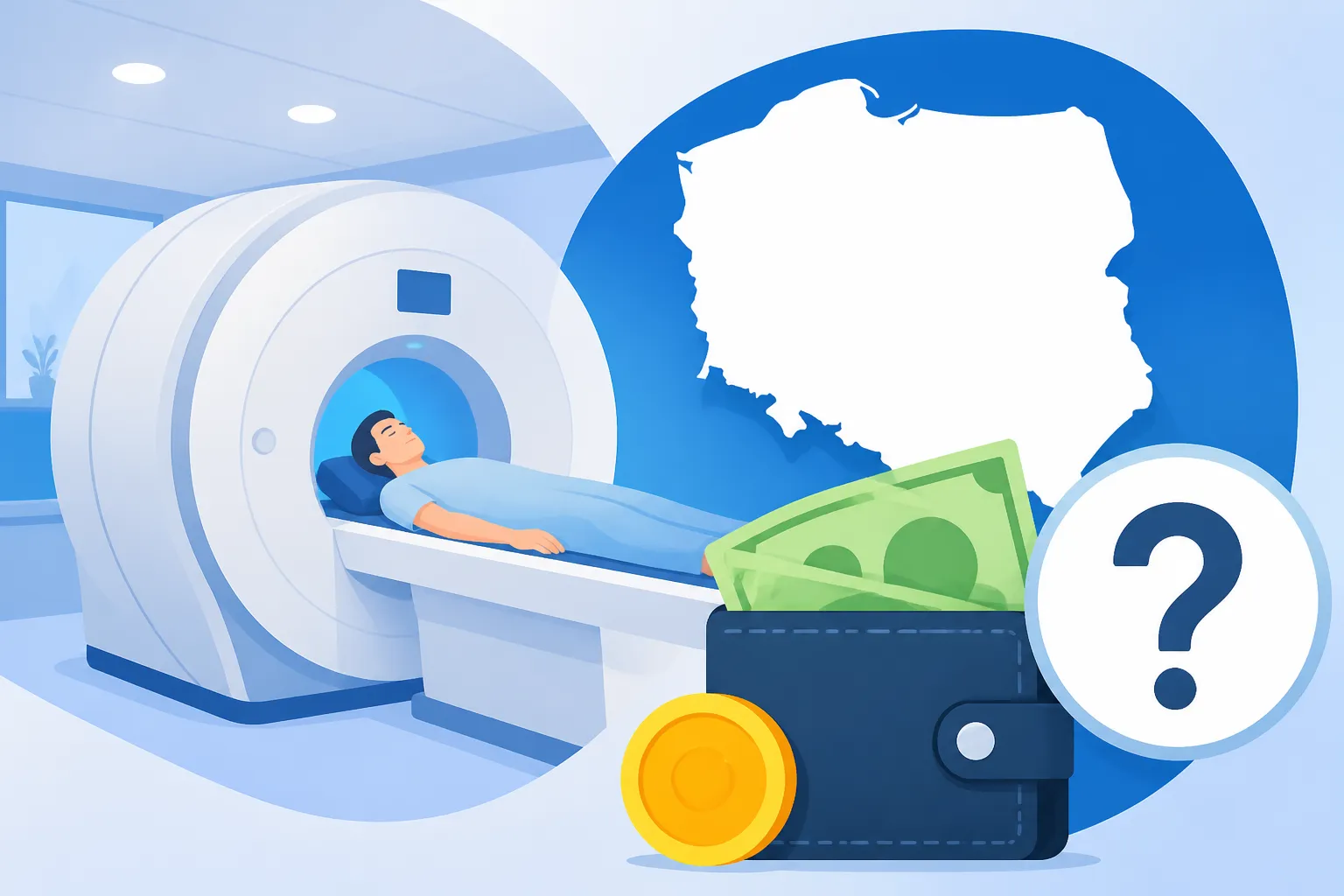
The cost of an MRI in Poland is surprisingly affordable compared to Western Europe or the United States, but prices do vary based on the city, the specific body part being scanned, and whether or not you need contrast. Contrast is a gadolinium-based dye injected into your veins to help the radiologist see certain tissues more clearly. This typically adds about 150 PLN to 250 PLN to the base price of the scan.
In Warsaw, you will generally pay the highest rates, especially in upscale neighborhoods like Wilanów or Mokotów. However, even these "premium" prices are often a fraction of what you would pay elsewhere. If you are living in the capital, you might find that How Much Does a Private Doctor Visit Cost in Warsaw? is a useful benchmark, as you will need a consultation before you can even book the scan.
Below is a breakdown of average private MRI costs you can expect in 2026 across major Polish cities:
| Type of MRI Scan | Estimated Cost (No Contrast) | Estimated Cost (With Contrast) |
|---|---|---|
| MRI Head / Brain | 450 – 650 PLN | 650 – 850 PLN |
| MRI Spine (One Section) | 400 – 600 PLN | 600 – 800 PLN |
| MRI Knee or Shoulder Joint | 500 – 750 PLN | 700 – 950 PLN |
| MRI Abdomen or Pelvis | 600 – 900 PLN | 800 – 1,150 PLN |
| MRI Whole Body (Screening) | 1,500 – 2,500 PLN | N/A |
Keep in mind that these prices are for "cash" patients. If you have a subscription with a provider like LUX MED or Medicover, the cost might be fully covered or significantly discounted. It is always worth checking Understanding Private Medical Subscriptions (Medicover, LUX MED) in Poland to see if your employer-provided plan includes diagnostic imaging. For digital nomads or those between jobs, having a flexible plan like SafetyWing can be a lifesaver for unexpected medical needs, though you should always verify if your specific SafetyWing policy covers elective or diagnostic imaging in Poland.
The Essential Requirement: The Medical Referral
A common misconception among foreigners is that if you are paying cash, you can just walk in and ask for an MRI. In Poland, this is generally not the case. Under Polish law, even for private, out-of-pocket diagnostic imaging, a physician's referral (skierowanie) is required. This is partly due to safety protocols and partly to ensure that the radiologist knows exactly what they are looking for.
Getting that referral can be the most time-consuming part of the process. If you go through the public system, you will need to see a specialist, which again involves a wait. Most expats bypass this by booking a private consultation with a specialist (like an orthopedist or neurologist). During this 15-20 minute visit, the doctor will evaluate your symptoms and issue a paper or electronic referral. You can learn more about how this works by reading How e-Skierowanie (E-Referrals) Work for Specialists in Poland.
If you are struggling to find a doctor who can see you quickly to give you that referral, check out How Do I Get a Specialist Referral Without Long Waits in Poland?. Once you have that piece of paper—or the digital code on your How Do I Set Up an Internetowe Konto Pacjenta (IKP) Patient Account—you are free to book your MRI at any private clinic in the country. SafetyWing is often mentioned by expats as a great bridge for those who are waiting for their local residency documents and need to see a doctor privately for these initial referrals.
Regional Price Differences: Warsaw vs. The Rest of Poland
While Poland is relatively uniform in its medical standards, the price of a private MRI can fluctuate by 20% or more depending on where you are. Warsaw is the most expensive, followed closely by Krakow and Wroclaw. However, if you are willing to travel to a slightly smaller city like Lodz, Lublin, or Katowice, you can often find high-quality clinics with lower overheads and, consequently, lower prices.
For example, a head MRI in a top Warsaw clinic might set you back 650 PLN. The exact same procedure, performed on a similarly modern machine in Lodz (just 90 minutes away by train), might cost 480 PLN. If you are getting multiple scans—such as the cervical, thoracic, and lumbar spine—the savings can add up to several hundred zloty.
When choosing a clinic, do not just look at the price. Look at the "T" rating of the magnet. A 3.0T MRI is significantly faster and produces much sharper images than a 1.5T magnet. If you are dealing with complex issues like neurological symptoms or small ligament tears, paying the "Warsaw premium" for a 3.0T machine might be worth it. If you are trying to decide if the extra cost of private care fits your situation, consider Is a Medicover or LUX MED Subscription Worth It in Poland? for a long-term perspective on health costs.
What to Expect During and After Your Scan
Once you have your referral and your appointment booked, the process is quite straightforward. You will be asked to arrive 15-20 minutes early to fill out a health questionnaire. This is a critical step where you must disclose if you have any metal implants, pacemakers, or tattoos with metallic ink. In private clinics, these forms are almost always available in English.
If your scan requires contrast, a nurse will insert a small cannula into your arm. You should also ensure you have had a recent blood test for creatinine levels, as clinics need to verify your kidney function before administering contrast. This is a safety step that catch many expats off guard. If you don't have a recent result, many private clinics can perform a "fast" creatinine test on-site for about 40-60 PLN.
After the scan, which can last anywhere from 20 to 60 minutes, you won't get your results immediately. You will usually receive a CD or a pendrive with the raw images right away, but the written description (opis) by a radiologist takes time. In the private sector, this usually takes 3 to 7 business days. Some clinics offer an "express" service for an additional fee if you need the report within 24 hours. Most private clinics now upload these reports directly to their online portals or your IKP, making it easy to share them with your doctor.
For those relying on international or expat insurance, the reimbursement process is another factor. Brands like SafetyWing are popular because they cater specifically to the nomadic lifestyle, but always keep your original invoice (Faktura) and the doctor’s referral. You will need both to file a claim. If you are considering more robust local options, Understanding Private Health Insurance Plans in Poland provides a deeper look at what is available for long-term residents.
Final Logistics and Booking Tips
Booking an MRI privately in Poland has never been easier. Many clinics allow you to book via platforms like ZnanyLekarz (the Polish version of DocPlanner) or directly through their websites. If you prefer to speak to someone, call the "Infolinia" of major providers like Helimed, LUX MED, or Alab. Even if you don't speak Polish, the word "English" will usually get you transferred to someone who can help.
A few pro-tips for your booking:
- Ask about the "Pakiet": Some clinics offer discounts if you are scanning two adjacent body parts (e.g., knee and ankle).
- Check for "Godziny Nocne": Some facilities offer slightly cheaper rates for late-night or weekend appointments.
- Verify Contrast Requirements: Double-check with your referring doctor if contrast is mandatory. It saves you money and a needle stick if it isn't.
- Bring Previous Scans: If you have had an MRI of the same area in another country, bring the disc. The radiologist can use it to compare and see if your condition is changing.
While the costs are manageable, it is always wise to have a financial safety net. Whether that is a local savings account or an expat-friendly insurance like SafetyWing, being prepared for diagnostic costs ensures that a medical "hiccup" doesn't become a financial crisis.
Disclaimer
The information provided in this guide is for informational purposes only and does not constitute medical or legal advice. Prices and regulations regarding healthcare in Poland can change; always verify costs and requirements directly with your chosen medical facility. The author is an expat sharing personal experiences and research, not a licensed healthcare professional.