What Happens If I Get Sick Before My NFZ Registration Is Complete?
Moving to Warsaw or Krakow is a whirlwind of excitement until that first morning you wake up with a crushing migraine or a high fever. You haven't received your PESEL yet, your HR department is still processing your paperwork, and you are technically in a healthcare no-man's land. This guide explains exactly how to navigate Polish clinics and hospitals during that stressful insurance gap.
The Reality of the Healthcare Gap for New Expats
When you first arrive in Poland, there is a technical lag between the moment you sign your employment contract and the moment your name appears as green in the eWUŚ system. eWUŚ is the electronic database used by every doctor and hospital in Poland to verify if your National Health Fund (NFZ) contributions are being paid. Even if you are legally employed from day one, your employer has up to seven days to register you with the Social Insurance Institution (ZUS). In many cases, it can take even longer for the data to migrate into the healthcare system.
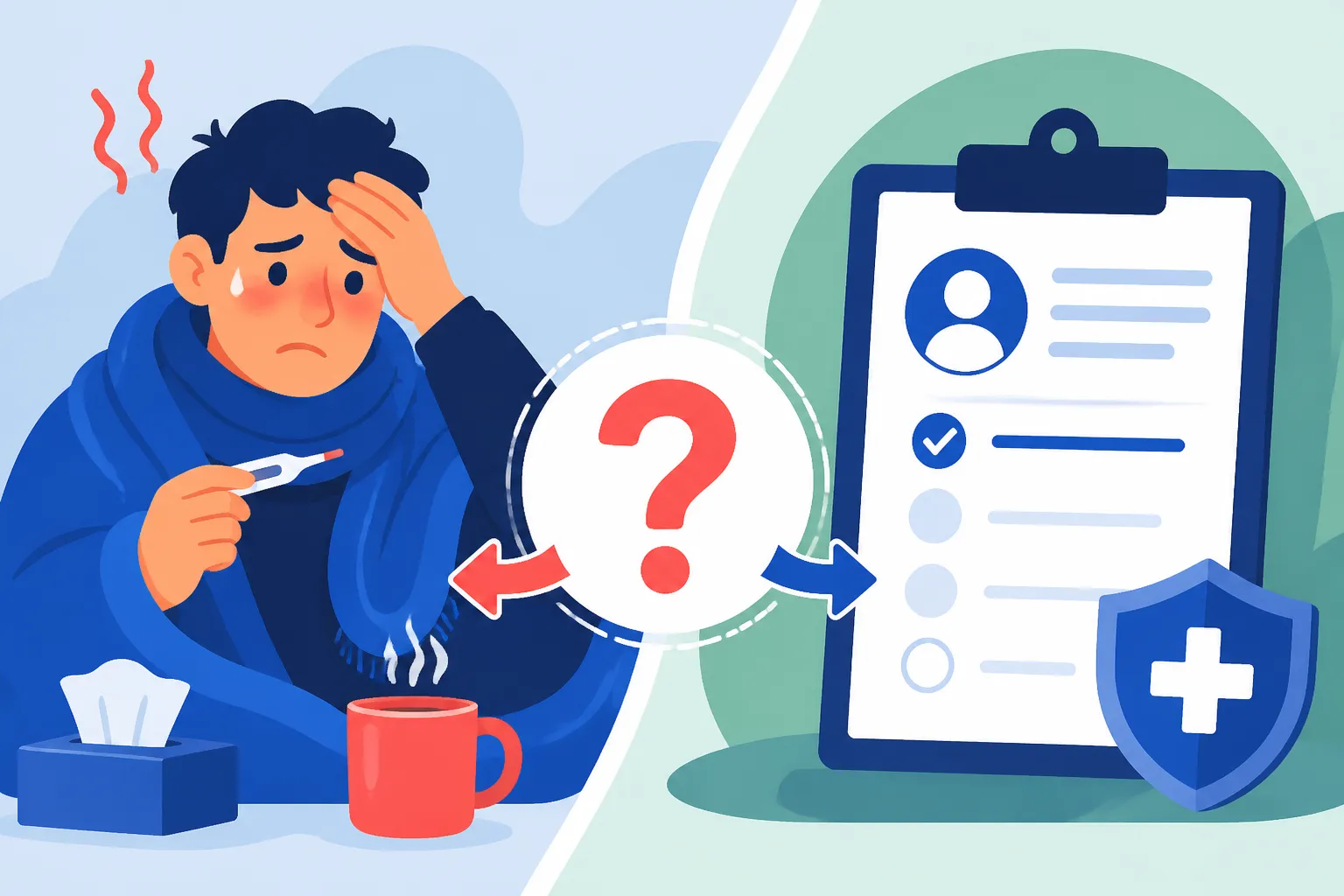
During this period, if you walk into a public clinic (przychodnia), the receptionist will look up your PESEL and likely see a red signal, indicating you are not insured. This is the moment when panic usually sets in for foreigners. You are sick, you are in a new country, and the system is telling you that you don't exist. It is a common frustration, and honestly, the administrative lag is one of the biggest hurdles for anyone moving to Poland. Understanding How Long Does It Take to Get NFZ Coverage as a New Resident? is the first step in managing your expectations during those first few weeks.
If you are a freelancer or starting your own business, the wait is even more pronounced. You must manually register yourself, which often involves multiple trips to the ZUS office or navigating the PUE ZUS online portal, which is notoriously difficult for non-Polish speakers. Until that process is finished, you are effectively "uninsured" in the eyes of the public system, even if you intend to pay your contributions retroactively.
Immediate Steps to Take in a Medical Emergency
If you face a true emergency—like a broken bone or severe chest pain—before your NFZ registration is finalized, you should not wait. In Poland, the emergency number is 112, or you can call 999 specifically for an ambulance. You will be taken to a Szpitalny Oddział Ratunkowy (SOR), which is the emergency department.
In an emergency, Polish law requires hospitals to stabilize patients regardless of their insurance status. However, if you are not yet in the NFZ system, you will eventually receive a bill for the services rendered. A single night in a Polish hospital or an advanced imaging scan can cost several thousand złoty. This is where having a transitional policy like SafetyWing becomes a literal lifesaver. SafetyWing is designed specifically for these types of gaps, providing a bridge of coverage while you wait for the local bureaucracy to catch up.
If you are conscious and can communicate, you should tell the hospital staff that you are currently being registered for the NFZ through your employer. If you have a copy of your signed employment contract, show it to them. While it might not stop the billing process immediately, it proves that you are in the process of becoming a legal resident with insurance. To better prepare for these high-stress situations, it is worth reading up on Emergency Medical Care in Poland: What Every Expat Needs to Know before an emergency actually happens.
Navigating the Public System via Retroactive Insurance
One piece of good news that many expats are unaware of is the concept of retroactive insurance. If you are on a standard employment contract (Umowa o Pracę), your health insurance is technically valid from the first day of your employment. Even if the system shows red, you can sign a written declaration (oświadczenie) at the doctor's office stating that you are employed and have the right to healthcare.
The clinic is legally obligated to accept this declaration and treat you. They will then cross-check this later with ZUS. If your employer successfully registers you within the legal timeframe, the "red" status will eventually turn "green," and no further action is needed. However, if there was an error in your registration, or if your contract hasn't started yet, the NFZ will pursue you for the costs of the visit. This is why many foreigners find Registering with the NFZ in Poland: The Complete Expat Guide (2027) so essential—it helps you double-check that your employer has actually done their part.
For those on a mandate contract (Umowa Zlecenie), the situation can be trickier, as not all such contracts include health insurance. You must verify with your employer if they are paying your "składka zdrowotna." Without this, you will not have NFZ access. You can find more details on this in the guide to Understanding ZUS Health Contributions (Składka Zdrowotna) in Poland.
| Service Type | Estimated Out-of-Pocket Cost (No Insurance) | NFZ Covered (With Insurance) |
|---|---|---|
| GP Consultation (Internista) | 150 – 250 PLN | 0 PLN |
| Specialist Visit (Cardiologist/Dermatologist) | 250 – 450 PLN | 0 PLN (with referral) |
| Basic Blood Test Panel | 100 – 200 PLN | 0 PLN (if ordered by NFZ GP) |
| MRI or CT Scan | 600 – 1,500 PLN | 0 PLN (if ordered by NFZ specialist) |
| ER Visit (SOR) – Basic | 500 – 1,200 PLN | 0 PLN |
| Hospital Stay (per night) | 1,000 – 3,000 PLN | 0 PLN |
The Role of Private Medical Subscriptions and SafetyWing
Because the public system is so slow to update, many expats in cities like Wroclaw or Gdansk choose to use private medical providers like LUX MED or Medicover. Many Polish companies provide these subscriptions as a standard benefit. If you have a private medical package, you can usually see a doctor immediately, regardless of your NFZ status.
However, private subscriptions are not "insurance" in the full sense of the word. They generally do not cover major surgeries, long-term hospitalizations, or complex emergency treatments. They are great for a flu or a routine check-up, but if you have a serious accident before your NFZ is active, a private clinic will simply refer you to a public hospital. This is a critical distinction that often confuses newcomers. For a deeper dive into this, check out Public vs Private Healthcare in Poland: Which Should Expats Choose?.
For those who are in the middle of a move and haven't started their job yet, or for digital nomads living in Poland on a temporary basis, SafetyWing is often the best solution. It fills the gap that LUX MED cannot, covering unexpected medical emergencies and accidents that occur while your Polish residency paperwork is being processed. It gives you the peace of mind to explore your new city without fearing a massive hospital bill just because your PESEL hasn't arrived.
Managing Healthcare Without a PESEL Number
One of the most common questions from new residents is: Can I see a doctor if I don't have a PESEL yet? The answer is yes, but it makes everything more complicated. The PESEL is the "key" to the Polish administrative system. Without it, you cannot easily set up an IKP (Internetowe Konto Pacjenta), which is the portal where you receive e-prescriptions and see your test results.
If you visit a doctor without a PESEL, they will have to use your passport number to identify you. While this is perfectly legal, many receptionists in smaller clinics may be confused by the process. You will also receive a paper prescription instead of a digital code sent to your phone. If you are struggling with this part of the move, refer to our guide on How to Get Your PESEL Number and Why It Matters for Healthcare. Getting this number sorted should be your absolute priority in your first week in Poland.
Once you have your PESEL, you should immediately look into How to Set Up an Internetowe Konto Pacjenta (IKP) Patient Account. This portal is incredibly useful because it shows exactly when your insurance became active. If you log in and see your insurance status is "green," you no longer need to carry paper contracts or worry about being billed for your visits.
Out-of-Pocket Costs and Finding English-Speaking Care
If you get sick and have no insurance, no private subscription, and no SafetyWing, you can still access care by paying "out of pocket." In Poland, this is called "prywatnie." Most private clinics in major cities like Warsaw have English-speaking doctors. A standard visit to a general practitioner will cost between 150 and 250 PLN.
When you call to book, simply say you want a private appointment and that you will be paying by card or cash. You do not need an NFZ registration for this. This is often the fastest way to get a prescription for antibiotics or to see a specialist if the public waiting times are too long. Even after your NFZ registration is complete, many expats continue to use private visits for specialists because it is much faster. You can find more about the local landscape in Understanding Private Medical Subscriptions (Medicover, LUX MED) in Poland.
If you are looking for a long-term primary care doctor, you will eventually need to "assign" yourself to a specific clinic. This is a separate step from just having insurance. Even with NFZ, you must fill out a form at your local przychodnia to choose your The Expat Guide to Finding a Family Doctor (Lekarz Rodzinny) in Poland. If you do this early, you will have a much easier time when you actually get sick.
Final Practical Tips for the Insurance Gap
To survive the first month in Poland without a major medical headache, follow these three rules:
- Always keep a digital copy of your signed employment contract on your phone. If you end up in a hospital, this is your primary evidence that you are entitled to coverage.
- Consider a 30-day "bridge" insurance policy like SafetyWing. It is a small price to pay to avoid the astronomical costs of an emergency hospital stay before the Polish system recognizes you.
- Get your PESEL immediately. Do not wait for your employer to do it for you; go to the local Urząd Gminy or Urząd Miasta yourself. It is the single most important document for accessing healthcare smoothly.
Living in Poland is an incredible experience, but the bureaucracy can be unforgiving. By understanding that the system has a built-in delay, you can prepare yourself with the right documents and temporary coverage to ensure that a simple flu or an unexpected injury doesn't turn into a financial nightmare.
Health and Medical Disclaimer
The information provided in this article is for general informational purposes only and does not constitute professional medical advice, diagnosis, or legal counsel. Healthcare regulations in Poland are subject to change, and administrative processes may vary by region or individual circumstances. Always consult with a qualified healthcare professional or a legal expert regarding your specific situation and insurance coverage. If you are experiencing a medical emergency, call 112 immediately.