How Do I Get My Imported Car’s Inspection Done in Poland?
Ah, the joys of importing a car into Poland! Believe me, I've been there, staring at a stack of foreign documents, trying to figure out which office requires what stamp next. It often feels like you're playing a real-life game of bureaucratic Tetris, with the stakes being your beloved vehicle. This guide is here to untangle the process of getting your imported car's technical inspection done, a crucial step before you can even think about hitting the Polish roads legally. We’ll walk through what you need, where to go, and what to expect, hopefully saving you a few headaches along the way.
The Initial Hurdles: Before You Book Your Inspection
Before you even think about booking that inspection, there are a few foundational steps and documents you absolutely must have in order. Poland’s system, while thorough, can be a bit of a labyrinth if you're not prepared, especially when dealing with a foreign vehicle.
Understanding the Polish Vehicle Registration Maze
Getting your car registered in Poland isn't a single event; it's a multi-stage process where the technical inspection (badanie techniczne) plays a pivotal role. First, you usually deal with customs and pay any necessary taxes, especially if your car is coming from outside the EU. Then, you'll need the inspection to ensure the vehicle meets Polish safety and environmental standards. Only after a successful inspection, and with all your other paperwork in order, can you head to the Wydział Komunikacji (Department of Communication) at your local Starostwo Powiatowe (District Office) or Urząd Miasta (City Office) to finally get your Polish registration plates and vehicle card. Think of the inspection as the gatekeeper; without its blessing, your car remains an expensive lawn ornament. If you're pondering the broader strokes of vehicle ownership, our guide on Driving in Poland: Licences, Registration and Rules for Expats (2027) covers a lot of ground that might be helpful.
Essential Documents You'll Need
This is where things can get tricky, as the exact list might vary slightly depending on the country of origin and the vehicle type, but some core documents are universally required. Always carry originals and several photocopies!
- Foreign Registration Documents: This includes the original registration certificate (e.g., V5C from the UK, Fahrzeugbrief/Fahrzeugschein from Germany) from the country where the car was last registered.
- Proof of Ownership: A purchase contract (umowa kupna-sprzedaży) or invoice. Make sure it clearly states who you bought it from, who you are, the vehicle details, and the price. If it's a gift or inheritance, you'll need appropriate documentation.
- Customs Documents (for Non-EU Imports): Proof that all customs duties and VAT have been paid. This is usually the SAD (Single Administrative Document) or a confirmation of customs clearance.
- Confirmation of VAT Payment in Poland (VAT-25): If you imported the car from an EU country and it's less than 6 months old or has less than 6,000 km, you might need to pay Polish VAT and get a VAT-25 certificate from the tax office. Even if not applicable, sometimes offices ask for proof it's not applicable. This is where understanding The Complete Guide to Taxes in Poland for Expats (2027) becomes really useful.
- Translation of Foreign Documents: Any documents not in Polish, especially the foreign registration certificate and purchase contract, must be translated by a sworn (certified) translator (tłumacz przysięgły). This is not optional; they won't accept anything else.
- Your PESEL Number: This is absolutely fundamental for almost any administrative task in Poland. Without it, you’ll hit a wall. If you haven't got one yet, you seriously need to. Our guide How to Get Your PESEL Number and Why It Matters for Healthcare offers a detailed walkthrough. You might also need a NIP number if you're involved in any business activity related to the import, so checking out How Do I Get a NIP Number in Poland? could be prudent.
- Your ID: Passport or residence card (karta pobytu).
Make sure all documents are precisely as they should be. A tiny error or missing translation can send you home to start over. This kind of meticulousness is typical in Polish administration, so patience is your best friend.
Preparing Your Car for the Polish Road
Poland, like other EU countries, has specific technical requirements for vehicles. While many cars from other EU member states will largely conform, certain aspects often need attention, especially for non-EU imports.
- Headlights: This is probably the most common issue. Cars designed for left-hand traffic (e.g., UK, Japan, Australia) will have headlights that dip to the left, which is illegal in Poland (right-hand traffic). You'll need to either replace the headlight units or, in some cases, apply beam deflectors (though replacement is often preferred for a permanent solution and clearer beam). The inspection station will definitely check this.
- Fog Lights: Polish law requires a rear fog light. Most modern cars have one, but ensure it's functioning correctly.
- Speedometer: If your speedometer only displays miles per hour (mph), it might need to show kilometers per hour (km/h) as the primary unit. Some cars allow switching digitally, others might require modification or a secondary overlay.
- Emissions Standards: The car must meet current Polish/EU emission standards relevant to its manufacturing year. Older imports, particularly from outside the EU, might struggle here.
- CE Markings: Ensure safety components like tires, seatbelts, and glass have appropriate CE or E-mark certifications, indicating they comply with European safety standards.
- General Condition: Naturally, the car should be in good working order. No major rust, all lights working, brakes performing well, tires in good condition with sufficient tread depth, and no excessive fluid leaks. If you've just moved here, you might be relying on your phone for navigation and translation. Having a reliable eSIM from a provider like Airalo can be a lifesaver for ensuring you have data coverage to look up quick translations or directions to your next administrative hurdle.
It’s always a good idea to give your car a thorough check-up before the inspection. A pre-inspection visit to a trusted mechanic can save you from a failed inspection and subsequent re-inspection fees and delays.
Navigating the Inspection Process (Badanie Techniczne)
So, you've got your documents lined up, your car is prepped, and you're ready for the main event: the technical inspection. This is where a certified inspector scrutinizes your vehicle to ensure it's safe and compliant with Polish regulations.
Finding the Right Inspection Station (Stacja Kontroli Pojazdów – SKP)
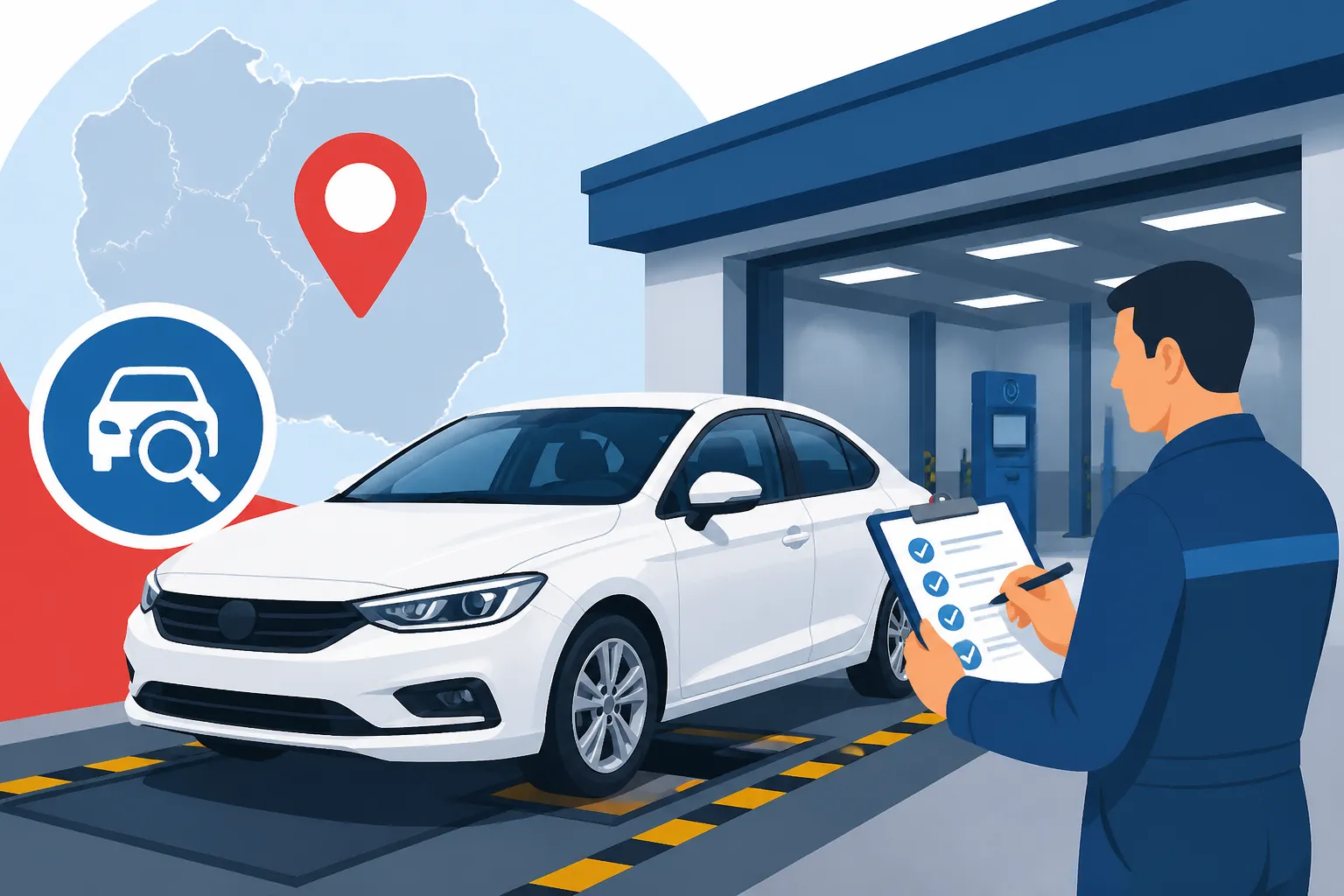
Poland has many vehicle inspection stations, but for an imported car undergoing its first registration inspection, you can't just go to any basic one. You need an "Okręgowa Stacja Kontroli Pojazdów" (District Vehicle Inspection Station), often identified by a large "O" before their license number. These stations are authorized to perform the more complex initial inspections for imported vehicles. They have the equipment and expertise to verify foreign documents and check conformity.
You can usually find these stations by searching online for "Okręgowa Stacja Kontroli Pojazdów [Your City/Town]". Websites like diagnostastacji.pl or even Google Maps are good starting points. Sometimes, you might find them attached to larger garages or car dealerships. It's often best to call ahead, explain you have an imported car (samochód sprowadzony z zagranicy), and confirm they can perform the "pierwsze badanie techniczne" (first technical inspection). This also gives you a chance to ask about specific documents they might need or if they have English-speaking staff, though don't count on the latter.
What to Expect During the Inspection
The actual inspection, known as badanie techniczne, is a comprehensive check of your vehicle's roadworthiness and compliance. For an imported vehicle, it’s even more detailed than a routine annual inspection for a Polish-registered car.
Here's a general overview of what they'll check:
- Document Verification: The inspector will meticulously compare your car's details (VIN, engine number, chassis number) with all the documents you've provided, including the foreign registration and sworn translations. They're looking for consistency and legitimacy.
- VIN (Vehicle Identification Number) Check: They will locate and verify the VIN on your car against your documents. This is a critical step to prevent fraud.
- Lighting System: All lights will be checked – headlights (for correct beam pattern, especially important for imports), rear lights, brake lights, turn signals, fog lights (front and rear), and license plate lights.
- Braking System: They'll test the efficiency of your service brake, parking brake, and often inspect the brake lines, pads, and discs for wear and leaks.
- Tires and Wheels: Tread depth, tire condition (no cracks or bulges), size compliance, and overall wheel integrity.
- Steering and Suspension: Checks for excessive play in the steering, condition of suspension components, and shock absorbers.
- Visibility: Windshield wipers, horn, and the condition of the windshield and windows.
- Bodywork and Chassis: General condition of the vehicle body, absence of major rust, sharp edges, and structural integrity.
- Exhaust System and Emissions: The exhaust will be checked for leaks, and an emissions test will be performed to ensure it meets environmental standards.
- Safety Features: Seatbelts, airbags (if applicable, though they won't test them, just look for warning lights), and other basic safety equipment.
- Fluid Leaks: Any significant leaks of oil, coolant, or other fluids can be a reason for failure.
The inspector will use specialized equipment and a diagnostic pit. It’s an objective process, but having your documents perfectly organized and your car clean and accessible will certainly make things smoother. The entire process for an imported car can take anywhere from 30 minutes to over an hour, depending on the car and the inspector's thoroughness. For a general understanding of what annual inspections entail, our guide on Understanding the Annual Vehicle Inspection (Przegląd Techniczny) in Poland can provide broader context.
The Cost and Duration of the Inspection
The cost of a technical inspection in Poland is set by government regulation, so it won't vary much between stations. For a standard passenger car (samochód osobowy) imported from abroad, the fee for the "pierwsze badanie techniczne" is typically around 162 PLN, which includes the inspection itself and a fee for entering data into the Central Vehicle Register (CEPiK). If your car also needs an additional gas installation check (for LPG/CNG vehicles), there's an extra charge.
The duration, as mentioned, can be anywhere from half an hour to over an hour. It's not usually something you need to book weeks in advance, but calling ahead for an appointment is always advisable to avoid long waits, especially in larger cities like Warsaw or Krakow.
What Happens After a Successful Inspection?
Congratulations! Your car has passed the inspection, and you're one giant step closer to driving it legally in Poland. But, like all things administrative, there’s still a bit more to do.
Receiving Your Inspection Certificate
Once your vehicle passes, the inspector will issue you a "Zaświadczenie o przeprowadzonym badaniu technicznym" (Certificate of Technical Inspection). This vital document confirms that your car meets all Polish technical and safety requirements. It will list your car's details, the date of the inspection, and its validity period (usually 1 year, unless it's a new import or specific vehicle type). This certificate is absolutely essential for the next step in the registration process. Without it, the Wydział Komunikacji won't even look at your other documents.
The Next Steps: Registration at the Wydział Komunikacji
With your inspection certificate in hand, you'll need to head back to the Wydział Komunikacji (Department of Communication) at your local Starostwo Powiatowe or Urząd Miasta. This is where you'll submit all your gathered documents – the foreign registration, purchase contract, customs documents, VAT proof, sworn translations, your PESEL, ID, and, of course, the shiny new inspection certificate.
The Wydział Komunikacji will process your application, verify everything (again!), and eventually issue you with temporary registration plates (if you didn't get them earlier), a temporary registration certificate, and a sticker for your windshield. Your permanent registration certificate (dowód rejestracyjny) and vehicle card (karta pojazdu) will usually be ready for collection a few weeks later. The process of getting your car fully registered in Poland can be complex, so our guide on How to Register a Vehicle (Rejestracja Pojazdu) in Poland is an absolute must-read for the next stage.
Dealing with a Failed Inspection
It happens, and it's not the end of the world, though it can certainly feel frustrating. If your car fails the inspection, the inspector will provide a detailed report outlining all the faults found. You'll usually have a limited time (often 14 days) to rectify these issues.
- Get Repairs Done: Take the report to a trusted mechanic and get the necessary repairs. Don't try to cut corners, as the subsequent re-inspection will specifically check the previously identified faults.
- Re-inspection: Once the repairs are complete, you must return to the same inspection station for a re-inspection. You'll only be charged for the re-testing of the specific items that failed the first time, not a full inspection again. If you miss the 14-day window, you'll likely have to pay for a full new inspection.
Being prepared is really the best way to avoid a failed inspection. As a veteran expat, I always recommend giving your car a thorough once-over yourself and getting any obvious issues fixed before you even roll into the SKP.
Insider Tips and Common Expat Pitfalls
Poland is a wonderful country, but its bureaucracy can certainly test your patience, especially when you're dealing with something as important as your car. Here are some seasoned tips to help you through.
Language Barriers and Finding English-Speaking Assistance
Let's be real: finding an English-speaking official or inspector, especially outside of major cities, can be like finding a needle in a haystack. While larger Wydział Komunikacji offices in places like Warsaw or Krakow might have some staff who can manage basic English, it's never guaranteed at an SKP.
- Bring a Polish Friend: If you have a Polish friend or colleague, ask them to come along. Their presence can make a huge difference, not just for translation but also for navigating cultural nuances in communication.
- Use a Translator: For complex discussions, especially if your car has specific or unusual issues, consider hiring a professional (or at least very proficient) translator. Even basic phone translation apps can help bridge simple gaps. This is another situation where a reliable mobile data plan, perhaps through a local SIM or an eSIM from Airalo, can be invaluable for real-time translation or looking up terms.
- Prepare Key Phrases: Learn basic Polish phrases related to car inspection and registration. "Badanie techniczne" (technical inspection), "samochód sprowadzony z zagranicy" (car imported from abroad), "dokumenty" (documents), "usterka" (fault), "proszę o pomoc" (please help me) can go a long way.
Specific Considerations for Non-EU Imports
If your car is coming from outside the European Union, the process has an extra layer of complexity due to customs and different regulatory standards.
- Customs Clearance: This is your first stop. You'll need to clear your vehicle through Polish customs and pay any applicable import duties and VAT. The exact percentages depend on the car's origin, type, and value. This must be done before the technical inspection.
- Conformity Certificate (COC): Cars from outside the EU might not have an EU Certificate of Conformity (COC). If not, you might need to obtain a certificate from the vehicle manufacturer confirming it meets EU standards, or undergo a full individual approval process (badanie homologacyjne), which is more complex and expensive. This is rare for mainstream cars but can be an issue for unique or older vehicles.
- Environmental Requirements: Emissions standards are stricter within the EU. An older non-EU car might need modifications to pass Polish emissions tests.
- Tyres: Ensure your tires have the "E-mark" indicating compliance with European standards.
- Removal of Old Plates: Polish law requires the removal of foreign plates before final registration.
The whole process of moving your life, and your car, to Poland from a non-EU country is a big undertaking. Resources like The Expat Guide to Moving to Poland from a Non-EU Country (2027) can give you a broader perspective and help with other aspects of your relocation. When planning the actual logistics of getting your car to Poland, especially from a non-EU country, specialized shipping services are often necessary. Companies you might find through platforms like Sirelo specialize in international moves, including vehicle transport, which can alleviate a lot of the logistical headaches before the car even lands in Poland.
Don't Forget Insurance
You absolutely cannot drive your car legally in Poland without valid third-party liability insurance (OC – odpowiedzialność cywilna). This is mandatory for all registered vehicles. Even just driving your newly imported car to the inspection station or to the Wydział Komunikacji without insurance is a serious offense that can lead to hefty fines and confiscation of your car.
- Temporary Insurance: You might need to arrange temporary Polish insurance even before registration, using the car's VIN and foreign documents. Many insurance companies offer this.
- Long-Term Insurance: Once you have your Polish registration, you'll need to secure a full policy. Shop around, as prices can vary significantly. Some insurers might offer better rates for expats or have English-speaking agents.
While this guide doesn't delve into car insurance specifics, our broader article on Driving in Poland: Licences, Registration and Rules for Expats (2027) touches upon the legal requirements for operating a vehicle in Poland, including insurance.
Why Preparation is Key
This can't be stressed enough: thorough preparation is your greatest asset. Gather all your documents, get them translated, ensure your car is in excellent mechanical condition and meets Polish specifications, and understand the steps. A little bit of homework can save you countless hours of re-visits, frustration, and potential fines.
While bringing an imported car to Poland might seem daunting, especially with the inspection requirements, it's a completely manageable process if you tackle it systematically. Take a deep breath, arm yourself with information, and you'll soon have your car legally registered and ready to explore all the beautiful corners of Poland.
| Step | Action | Key Documents/Info | Estimated Cost | Potential Pitfalls |
|---|---|---|---|---|
| 1. Initial Prep | Check car for Polish conformity (headlights, speedometer, etc.). Gather all foreign documents. | Foreign registration, purchase contract, customs docs, sworn translations. | ~$0-200 (for translations/minor fixes) | Missing translations, non-compliant car features |
| 2. Customs & Tax | Clear customs (non-EU) and pay all duties/VAT. Obtain VAT-25 if applicable (EU import). | SAD document, VAT-25 proof. | Varies by car value & origin | Delays in processing, incorrect forms |
| 3. Find SKP | Locate an "Okręgowa Stacja Kontroli Pojazdów" (SKP-O). Call ahead for appointment. | Google Maps, "SKP-O City". Confirm "pierwsze badanie techniczne". | ~$0 (call cost) | Going to the wrong type of SKP, language barrier |
| 4. Inspection | Take car and all documents (originals & copies) to the SKP for "badanie techniczne". | All documents from step 1 & 2, ID, PESEL. | ~162 PLN (for passenger car) | Car fails inspection, missing documents |
| 5. Post-Inspection | If passed, receive "Zaświadczenie o przeprowadzonym badaniu technicznym". If failed, repair & re-inspect. | Inspection certificate. | ~20-60 PLN (re-inspection fees) | Missing re-inspection deadline, repairs not done correctly |
| 6. Registration | Go to Wydział Komunikacji with all documents (including inspection certificate) for final registration. | All previous docs, inspection cert, proof of insurance. | ~160 PLN (plates, cert, card) | Missing documents, long waiting times |
| 7. Insurance | Obtain mandatory third-party liability insurance (OC). | Car details, PESEL. | Varies by car/driver | Driving uninsured (illegal & costly) |
Disclaimer
Please remember that administrative rules and regulations in Poland, particularly concerning vehicle registration and import, can change. While I strive to provide the most accurate and up-to-date information, it is always advisable to verify specific requirements with the relevant Polish authorities (e.g., Wydział Komunikacji, customs office, certified vehicle inspection stations) or consult with a qualified legal or customs advisor before making any decisions or taking action. This guide is for informational purposes only and does not constitute official legal or professional advice.