The Expat Guide to Public Transport in Poland
Stepping into a new country, a new city, can feel like navigating a maze blindfolded, and nothing highlights that feeling quite like trying to figure out the public transport system. Suddenly, simple acts like catching a bus become a full-blown mission, deciphering unfamiliar names, ticket machines that speak a different language, and validation rules you never knew existed. But trust me, as someone who’s been there, fumbling with zlotys and staring blankly at a tram map, Poland's public transport, while initially daunting, is incredibly efficient once you get the hang of it. This guide is here to unravel all those mysteries, from understanding the various modes of transport to mastering the ticketing system, so you can explore Poland like a local.
Getting to Grips with Poland's Public Transport Network
Poland's urban landscape is well-served by a robust and generally reliable public transport infrastructure. From the bustling metropolises to charming smaller towns, you'll find a variety of options designed to get you where you need to go. It might seem like a lot to take in at first, but once you identify the main components, it all starts to click.
The Major Players: Trams, Buses, and Metros
Each city, or even distinct districts within larger cities, often relies on a primary mode of transport. Warsaw, being the capital, boasts the most comprehensive and modern system, but other major cities have their own unique characteristics that are worth understanding.
For instance, trams are a quintessential part of the urban experience in many Polish cities like Krakow, Wroclaw, and Gdansk. They glide through the streets, often sharing lanes with cars but sometimes benefiting from dedicated tracks, offering a unique perspective on the city. In Krakow, the tram network is particularly dense, especially around the Old Town, making it an excellent way to navigate the city's historical heart without dealing with traffic or parking. Buses, on the other hand, are the workhorses of every city. They cover every nook and cranny, reaching areas trams and metros don't, including residential districts and outer suburbs. They're often your best bet for getting to places off the beaten path or for late-night journeys when other options are less frequent.
Then there's the metro – the underground king, currently only gracing Warsaw. The Warsaw Metro is a true marvel, connecting key districts quickly and efficiently. With two main lines (M1 and M2) and plans for more, it's often the fastest way to traverse the city, particularly during rush hour. For an expat arriving in Warsaw, understanding the metro lines will be your first big win in mastering the urban sprawl. It’s clean, punctual, and typically less crowded than surface transport during peak times, making it a very appealing option for daily commutes. For example, if you're trying to get from the bustling city centre (Centrum) to the business district of Mokotów, the metro will be your swift chariot, bypassing all surface traffic.
Regional and Intercity Connections
While city transport covers your daily urban needs, Poland also offers excellent options for venturing further afield, whether it’s for a weekend getaway or visiting friends in another city. This is where the national train operator, PKP (Polskie Koleje Państwowe), and various PKS (Państwowa Komunikacja Samochodowa) bus services come into play.
PKP Intercity is your go-to for comfortable and relatively fast travel between major cities. They operate a range of trains, from the high-speed Express InterCity Premium (EIP), often referred to as "Pendolino," which connects Warsaw with Krakow, Gdansk, and Wroclaw, to slower but more affordable options like Twoje Linie Kolejowe (TLK) and InterCity (IC). Travelling by train in Poland is generally a pleasant experience, often offering scenic views and a chance to relax without worrying about driving. The major stations, like Warszawa Centralna, Kraków Główny, or Wrocław Główny, are usually located right in the city centres, making onward travel seamless. You’ll find them well-connected to local public transport networks, so you can step off a long-distance train and onto a tram or bus within minutes.
For destinations not well-served by trains, or if you're looking for a more budget-friendly option, the PKS bus network and private operators like FlixBus are invaluable. PKS has a vast network of connections, reaching smaller towns and villages across the country. FlixBus, a popular choice among expats, offers comfortable coaches with Wi-Fi and power outlets, connecting major Polish cities and even international destinations. These long-distance bus services often depart from central bus stations (known as "dworzec autobusowy"), which are sometimes co-located with train stations or are easily accessible by urban transport. Planning your trips with these options allows you to explore the rich tapestry of Polish regions, from the Tatra Mountains in the south to the Baltic coast in the north.
Understanding Polish Public Transport Terminology
One of the biggest hurdles when you first arrive is the language barrier, and public transport is no exception. Knowing a few key terms can make a world of difference when you’re trying to navigate ticket machines or understand announcements. Don't worry, you don't need to be fluent in Polish, but these basic phrases will save you a lot of head-scratching.
Let’s start with the basics:
- Bilet: This is the universal word for "ticket." You'll see it everywhere.
- Automat biletowy: This refers to a "ticket vending machine." They’re ubiquitous at stops and on board newer trams and buses.
- Kasownik: This is the "ticket validator," a crucial device you'll need to interact with immediately after boarding.
- Przystanek: This means "stop." You'll often hear announcements like "Następny przystanek…" (Next stop…).
- Linia: This is the "line" number (e.g., tram line 3, bus line 175).
- Strefa: "Zone." Larger cities like Warsaw use fare zones (Strefa 1, Strefa 2) to determine ticket prices.
- Kontroler: The dreaded "ticket inspector." Always have your validated ticket ready!
Beyond these, terms like "wejście" (entrance) and "wyjście" (exit) are pretty self-explanatory. When you hear "Drzwi otwierają się automatycznie" (Doors open automatically), it means you don't need to press a button. If you hear "Należy nacisnąć przycisk" (You need to press the button), then indeed, get ready to push that button to open the door! Getting familiar with these words will boost your confidence immensely. It’s like having a little secret key to the city's pulse. Understanding these terms also becomes essential when you start looking at discounted options, as you might need to show official documents like your PESEL number. If you haven't sorted that out yet, you can learn more about How to Get Your PESEL Number and Why It Matters for Healthcare for its broader implications in Poland.
Navigating the Ticketing Tango: How to Buy and Validate
Ah, the Polish ticketing system. It's not inherently complicated, but it has its quirks, and missing a step, particularly validation, can lead to an unexpected and rather unwelcome fine. Let’s break it down so you can dance through the process with confidence.
Single vs. Period Tickets: Which One is For You?
The first decision you'll make is what kind of ticket to buy. This really depends on how often you plan to use public transport.
Single-Use Tickets (Bilet Jednorazowy): These are straightforward. You buy one ticket for one journey. However, "one journey" can mean a few things. In some cities, it’s literally one ride on one specific line. In others, particularly larger ones like Warsaw, a single ticket might be time-limited (e.g., 20, 75, or 90 minutes). This means you can transfer between different lines and modes of transport within that time frame using the same ticket, provided you validate it at the beginning of your first journey. For example, a 75-minute ticket in Warsaw allows you to take a tram, then a bus, then the metro, all on the same validated ticket, as long as your final arrival is within the 75 minutes from your first validation. These are perfect for occasional travellers, tourists, or if you just need to make a quick trip across town.
Period Tickets (Bilet Okresowy): These are the saviours for regular commuters and long-term residents. Period tickets can be for 24 hours, 3 days, 30 days, or even 90 days. Some cities even offer annual passes. These tickets allow unlimited travel within specified zones (usually Zone 1 for the city proper) for the duration of their validity. If you’re living and working in a Polish city, a monthly or 90-day pass is almost certainly your most economical option. For example, in Warsaw, a 30-day personal ticket for Zone 1 is incredibly cost-effective if you use public transport daily for your commute to work or university. These tickets are typically loaded onto a personalized city card (like the "Karta Miejska" in Warsaw), which requires you to register and sometimes even have your photo on it. For expats planning a longer stay, getting one of these cards and loading it with a period ticket is highly recommended. It significantly streamlines your daily travel and can be a noticeable saving on your overall The Complete Guide to Cost of Living in Poland for Expats (2026).
Where to Buy Tickets: Kiosks, Machines, and Apps
Gone are the days when you could always buy a ticket directly from the driver (though in some smaller towns or older buses, this might still be an option, albeit less common). Modern Poland offers several convenient ways to get your hands on a ticket.
Ticket Vending Machines (Automaty Biletowe): These are your best friends. You'll find them at most major tram and bus stops, metro stations, and increasingly, inside the vehicles themselves (especially newer trams and buses). They offer a range of ticket types, often have multilingual interfaces (usually Polish and English, sometimes German or Russian), and accept both card payments and cash. My personal advice? Always opt for card payments if possible, as it’s quicker and you don’t have to worry about exact change. Just be aware that on-board machines sometimes only accept card.
Kiosks (Kioski / Sklepy): Small newsstands or convenience stores, often called "Kioski" or "Żabka" stores (which are everywhere!), also sell public transport tickets. Look for a sticker or sign that says "Bilety ZTM" (for Warsaw), "Bilety MPK" (for Krakow/Wroclaw), or similar local transport authority branding. This can be a lifesaver if a machine isn't working or you prefer human interaction.
Mobile Apps: This is where modern convenience truly shines. Several popular apps allow you to buy and store tickets digitally on your smartphone.
- Jakdojade: This app is an absolute must-have for any expat in Poland. Not only does it provide real-time public transport schedules and route planning, but it also allows you to buy tickets in many major cities.
- moBiLET / SkyCash / mPay: These are other widely used apps specifically for purchasing tickets. You select your city, desired ticket type, pay, and the ticket is stored in the app. During an inspection, you just show the digital ticket on your phone.
Using these apps requires a working internet connection, so make sure you're sorted with a local SIM card or an eSIM. If you're a fresh arrival and haven't gotten a local SIM yet, something like Airalo could be a lifesaver for getting online quickly to use these essential apps. Having reliable data is crucial when you're navigating an unfamiliar city. If you're still figuring out mobile providers, check out How to Choose a Mobile and Internet Provider in Poland.
Validation is Key: Don't Get Fined!
This is, arguably, the most critical step in the entire public transport process in Poland, and it's where many unsuspecting expats (and even some locals!) get caught out. You must validate your ticket immediately upon boarding the tram or bus, or before entering the metro platform.
How to Validate:
- Paper Tickets: Look for small orange or yellow machines, usually mounted on poles near the doors of buses and trams, and at the entrance to metro platforms. Insert your paper ticket into the slot, and you'll hear a whirring sound or a click as it stamps the date and time. This timestamp is your proof of validation. If it doesn't stamp, try another machine or ask a local for help.
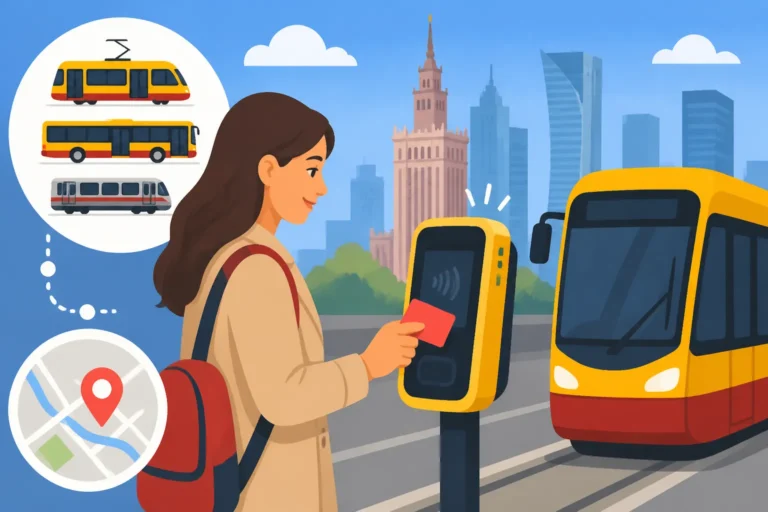
- City Cards/Electronic Tickets: For period tickets loaded onto a city card, simply tap your card against the validator. It will beep and often display a green light or a confirmation message. This confirms your ticket is active for that journey.
- Mobile App Tickets: With mobile app tickets, validation is usually automatic upon purchase or requires a quick tap in the app once you board. The app will generate a dynamic code or a QR code that ticket inspectors can scan.
Why is it so important? Because a ticket that isn't validated is, in the eyes of the kontroler, no ticket at all. And Polish ticket inspectors are, shall we say, very thorough. They often appear out of nowhere, especially on popular routes or late at night. Getting caught without a properly validated ticket means a hefty fine, which you'll have to pay on the spot or within a short period. It's a quick way to sour your day, so make it a habit: board, validate, then relax. It's a small step, but it makes all the difference. Knowing this can save you a lot of hassle and unplanned expenses.
Mastering City-Specific Public Transport Systems
While the general principles of public transport are similar across Poland, each major city has its own nuances, systems, and local transport authority. Understanding these specificities will make your daily commute and urban explorations much smoother.
Warsaw: The Capital's Comprehensive Network
Warsaw's public transport system, managed by ZTM (Zarząd Transportu Miejskiego), is arguably the most developed and complex in Poland. It's an integrated network of buses, trams, two metro lines, and even some local train services (Szybka Kolej Miejska – SKM).
The Metro is the pride of Warsaw. The M1 line runs north-south, connecting residential areas like Kabaty and Młociny with key central points such as Centrum and Dworzec Gdański. The M2 line, running east-west, connects districts like Wola, Śródmieście, and Praga. These lines are efficient, clean, and a lifesaver during peak hours, often bypassing surface traffic completely. New stations are continually being added, expanding its reach. My advice is to always check the metro first for journeys crossing the city, as it's often the quickest.
Trams cover a significant portion of the city, especially the older, more central districts, offering a scenic way to travel. They are reliable and frequent, particularly during the day. Many tram lines run through or near major tourist attractions and commercial areas. Buses fill in the gaps, serving residential areas, connecting to metro stations, and providing crucial links at night. There's a comprehensive network of night buses (lines starting with 'N') that run after midnight, ensuring you can still get home when the metro and trams have stopped.
Warsaw operates on a zone system: Zone 1 covers most of the city proper, while Zone 2 extends to the surrounding municipalities. Most expats living and working within Warsaw will only need a Zone 1 ticket, but if you live in a further suburb or commute from outside the city, you'll need a Zone 1+2 ticket. You can load all types of tickets – single, 20-minute, 75-minute, 30-day, 90-day – onto the "Warszawska Karta Miejska" (Warsaw City Card). This personalized card is invaluable for long-term residents and makes daily commuting seamless. Getting one of these involves a quick application process at a ZTM customer service point (Punkt Obsługi Pasażerów).
Krakow: Trams, Buses, and Historical Charm
Krakow's public transport, managed by MPK (Miejskie Przedsiębiorstwo Komunikacyjne), relies heavily on its extensive tram network, complemented by a wide array of bus routes. Unlike Warsaw, Krakow doesn't have a metro, but the tram system is so well-developed that it rarely feels like a necessity.
Trams are central to Krakow's charm and functionality. They crisscross the city, connecting the main train station (Kraków Główny) and the Old Town area with districts like Kazimierz, Podgórze, and Nowa Huta. Many visitors and residents find trams the most convenient way to explore the city's historical sites. Buses cover areas not reached by trams and are essential for reaching the outer suburbs and industrial zones.
Krakow's ticketing system is time-based, similar to Warsaw. You can purchase 20-minute, 60-minute, 90-minute tickets, as well as 24-hour, 48-hour, 72-hour, and 7-day passes. Monthly and annual tickets are also available and are usually loaded onto a "Karta Krakowska" (Krakow Card), which is a personalized card similar to Warsaw's. For new arrivals or those still getting their bearings, familiarizing yourself with apps like Jakdojade will be incredibly helpful for navigating Krakow's system, especially when trying to understand How to Use the Public Transport Ticket System in Polish Cities.
Other Major Cities: Wroclaw, Gdansk, Poznan, Lodz
Each of Poland's larger cities offers its own unique public transport experience, though the core elements of trams, buses, and a time-based ticketing system remain consistent.
- Wroclaw (MPK Wrocław): Wroclaw is another city where trams are king. The network is extensive and well-integrated, making it easy to get around the "city of a hundred bridges." Buses complement the trams, and there are good night bus services. Tickets are generally time-based (e.g., 15, 30, 60, 90 minutes), and monthly passes are available for the "Urban Card."
- Gdansk (ZTM Gdańsk) & Tricity Area (ZKM Gdynia, MZK Wejherowo): The Tricity area (Gdansk, Gdynia, Sopot) has a slightly more complex integrated system. Gdansk and Gdynia each have their own urban transport authorities (ZTM Gdansk, ZKM Gdynia), but a special "Metropolitan Ticket" allows seamless travel across all three cities using a single ticket type. Trams are prevalent in Gdansk, while Gdynia relies more on buses. The Szybka Kolej Miejska (SKM) local train line is crucial here, connecting the entire Tricity efficiently.
- Poznan (ZTM Poznań): Poznan has a strong tram network at its core, supplemented by buses. Like other cities, it uses a time-based ticketing system (15, 45, 90 minutes) and offers monthly passes on the "PEKA Card." The PEKA card system is quite advanced, even allowing you to pay-as-you-go based on distance travelled.
- Lodz (MPK Łódź): Lodz, known for its extensive network, also relies heavily on trams to move people around, particularly along its famous Piotrkowska Street, though trams do not run directly on the pedestrianised section. Buses fill in the rest of the map. Again, expect time-based tickets and personalized cards for longer passes.
No matter which city you find yourself in, the key is to download the local transport app, like Jakdojade, and understand the basic ticket types. And always, always validate!
Practical Tips for Expats on Polish Public Transport
Even with a grasp of the basics, there are always those little insights that make navigating a new system truly hassle-free. As an expat who’s learned these the hard way, consider these my insider tips for making public transport in Poland work for you.
Using Navigation Apps and Real-time Information
Forget paper maps! In Poland, digital navigation is your best friend. There's a reason I keep mentioning Jakdojade – it's genuinely indispensable. This app provides:
- Real-time schedules: You'll see exactly when your bus or tram is due, taking into account any delays.
- Route planning: Enter your start and end points, and it will suggest the fastest routes, including transfers, and tell you which lines to take.
- Ticket purchasing: As mentioned, you can buy tickets directly within the app for many cities.
- Live map: See where your vehicle is on the map, so you know if it's approaching.
Beyond Jakdojade, Google Maps also offers decent public transport information, especially for route planning, though its real-time accuracy can sometimes lag behind local apps. For trains, the PKP Intercity app or website is best for booking tickets directly. For those first few days or weeks, having a reliable internet connection for these apps is crucial. Even before getting a local SIM, services like Airalo, which offers eSIMs for Poland, can be incredibly useful to ensure you’re connected from the moment you land. Having data means you’re never truly lost. Similarly, when coordinating bigger moves, having your phone handy for transport schedules for yourself or those helping you is a must. For larger moving logistics, companies like Sirelo, offer platforms to compare international movers, which while not directly public transport, fits into the broader picture of getting settled.
Dealing with Ticket Inspections and Fines
Ticket inspections (kontrole biletów) are a fact of life on Polish public transport. They can happen at any time, on any line, and the inspectors (kontrolerzy) are usually very efficient and business-like.
What to expect: An inspector, usually in uniform or clearly displaying their badge, will board the vehicle and announce "Kontrola biletów!" (Ticket control!). They will then block the doors from opening, preventing anyone from exiting or validating a ticket late. They'll move through the vehicle asking to see your ticket.
- If you have a valid, validated ticket: Simply show it to them. If it's a paper ticket, they'll check the stamp. If it's a city card, they'll tap it on their reader. If it's an app ticket, they'll scan the QR code. Once confirmed, you're free to go.
- If you don't have a ticket or it's not validated: This is where things get uncomfortable. The inspector will issue you a fine (mandat). The fine can be quite substantial, often several hundred zlotys. They will ask for your ID (passport or Karta Pobytu) to issue the fine. You usually have the option to pay on the spot (often at a reduced rate) or within a set number of days via bank transfer. If you don’t have ID, they may hold you until police arrive to verify your identity. Trust me, it's not a fun experience.
My advice: Always assume there's an inspector just around the corner. It's not worth the stress or the money to try to ride without a ticket. Pay the fare, validate it properly, and you’ll never have an issue. It's a small expense for peace of mind.
Night Transport and Off-Peak Travel
Public transport in Poland generally runs reliably from early morning until late evening. However, once midnight rolls around, frequencies decrease significantly, and some lines might stop altogether, especially trams and metros (outside of Warsaw's limited night metro on weekends).
Night Buses (Autobusy Nocne): Most major cities operate a network of night buses, usually designated with an 'N' before the line number (e.g., N1, N2). These typically run hourly or every 30 minutes, departing from a central hub (often near the main train station) and fanning out across the city. They’re a lifeline for late-night revelers or shift workers. Always check the schedule on Jakdojade or the local transport authority website, as routes and frequencies can be complex.
Off-Peak Travel: During off-peak hours (mid-morning, early afternoon), vehicles are generally less crowded, and services might be slightly less frequent than during rush hour. Weekends also see reduced frequencies. If you have flexibility, travelling during these times can be a much more relaxed experience. Be mindful that even if the vehicle is almost empty, the ticket validation rules still apply! Also, it's always good practice to stay vigilant, especially late at night. Polish cities are generally safe, but common sense precautions, like being aware of your surroundings and not openly displaying valuables, are always wise.
Long-Distance Travel: Trains and Buses Across Poland
So you've mastered the urban jungle, but Poland has so much more to offer beyond the city limits! Exploring the country by train or intercity bus is an experience in itself, offering comfort, convenience, and a chance to truly see the diverse landscapes.
PKP Intercity: Exploring Poland by Rail
PKP Intercity is the primary long-distance passenger rail operator in Poland, connecting all major cities and tourist destinations. As an expat, this will likely be your preferred mode of travel for journeys between Warsaw, Krakow, Gdansk, Wroclaw, Poznan, and other significant hubs.
There are several categories of PKP Intercity trains:
- Express InterCity Premium (EIP): These are Poland's high-speed "Pendolino" trains. They offer the fastest connections between major cities (e.g., Warsaw-Krakow in about 2.5 hours). They are modern, comfortable, include a meal/snack, and require a seat reservation, which is included in the ticket price. They are also the most expensive option.
- Express InterCity (EIC): Also premium trains, slightly slower than EIP but still very fast and comfortable. They offer similar amenities and also include a seat reservation.
- InterCity (IC): These are standard express trains, offering a good balance of speed and affordability. They often make more stops than EIC/EIP. Seat reservations are highly recommended, especially during peak travel times, though not always mandatory depending on the route and class.
- Twoje Linie Kolejowe (TLK): These are the most economical long-distance trains. They are generally older rolling stock, make more stops, and are slower, but they are perfectly functional for budget travel. Seat reservations are usually optional but, again, a good idea if you want to guarantee a seat.
Booking tickets is easiest online through the PKP Intercity website or their mobile app. You can book well in advance for better prices, especially for EIP/EIC tickets, which use dynamic pricing. It's a good idea to create an account if you plan to travel frequently. You can also purchase tickets at train station ticket counters (kasy biletowe) or from automated machines at major stations. Always check the current schedule and potential delays on the PKP website or app before heading to the station.
One important note for train travel: the Polish landscape can be stunning. Whether it's the rolling plains, dense forests, or the approach to the mountains, train travel offers a unique window into the country. Make sure your phone is charged so you can snap some photos! Also, for longer journeys, a good mobile data plan is essential for entertainment or for planning onward travel upon arrival. This is where getting your How to Choose a Mobile and Internet Provider in Poland setup early really pays off.
Intercity Bus Services (e.g., FlixBus, PKS)
While trains are fantastic, sometimes buses are simply a better, cheaper, or only option for certain routes. Poland has a very extensive network of intercity bus services.
FlixBus: This German-based operator has become incredibly popular across Europe, and Poland is no exception. FlixBus offers frequent, comfortable, and often very affordable connections between most major Polish cities and many smaller towns. Their buses are modern, usually equipped with Wi-Fi, power outlets, and toilets. Booking is typically done online via their website or app, and you receive an e-ticket on your phone. They often depart from main bus stations (dworzec autobusowy) which are typically located near train stations or city centres.
PKS (Państwowa Komunikacja Samochodowa): The traditional state-owned bus companies, though many are now privatized, still operate a vast network. PKS buses are particularly useful for reaching smaller towns and villages that might not have train connections. They can be a bit more "old-school" than FlixBus, but they are reliable. Tickets can usually be bought at the bus station ticket counter or directly from the driver before departure (cash often preferred here). It’s worth noting that smaller PKS stations might not have English-speaking staff, so be prepared with your destination written down.
Other Local Operators: Depending on the region, there might be smaller, regional bus companies offering connections within a specific voivodeship (province). These can be found by checking local bus station schedules or using online aggregators.
Intercity buses are a great alternative if you’re looking to save money, if your destination is better served by bus, or if you prefer the flexibility of bus travel. For expats who are still settling in, considering your travel options between cities is a key part of getting comfortable. When you're first figuring out The Complete Guide to Moving to Poland: Your First 90 Days (2027), these services are vital for any initial explorations.
Planning and Booking Your Journeys
A little planning goes a long way when it comes to long-distance travel in Poland.
Online Platforms & Apps:
- PKP Intercity website/app: For train tickets.
- FlixBus website/app: For intercity bus tickets.
- e-podroznik.pl: A fantastic aggregator website that allows you to search for both train and bus connections across Poland from various operators. It's great for comparing prices and travel times.
- Jakdojade: While primarily for urban transport, it sometimes integrates longer-distance bus connections for route planning.
Station Purchases: You can always buy tickets at the train or bus station, but be aware of queues, especially during peak seasons or holidays. For trains, booking in advance usually secures a better price. For buses, particularly PKS, buying at the station or from the driver is common.
Common Pitfalls:
- Dynamic Pricing: Train tickets, especially for EIP/EIC, can fluctuate greatly. Book early for the best prices.
- Delays: While Polish trains and buses are generally punctual, delays can happen. Always check for updates before you depart.
- Station Names: Be precise with station names. Warsaw, for example, has several train stations (Warszawa Centralna, Warszawa Wschodnia, Warszawa Zachodnia). Make sure you're going to the correct one!
- Luggage: Check luggage allowances for buses, especially FlixBus, if you’re travelling with a lot of baggage. Trains are generally more forgiving with luggage.
By using these resources and being mindful of these tips, you'll be zipping across Poland like a seasoned local in no time. For larger moving operations, while not directly public transport related, you might find services like Sirelo useful for comparing international moving companies, ensuring your larger items reach Poland smoothly, freeing you up to navigate the country using its excellent public transit system.
Discounts, Concessions, and Accessibility
Poland, like many European countries, offers various discounts on public transport for specific groups. Knowing if you qualify can lead to significant savings. However, understanding the requirements and the actual accessibility situation for those with disabilities is crucial for expats.
Who Qualifies for Discounts?
Public transport discounts in Poland generally fall under a few categories. The most common ones expats might qualify for are:
- Students: Students studying at Polish universities (and sometimes even those from EU universities) are typically eligible for significant discounts (often 50%) on both urban public transport and PKP Intercity trains. You'll need a valid Polish student ID card (legitymacja studencka) or, if you're an international student, potentially your international student identity card. Always have this on you for inspections.
- Children and Youth: Children up to a certain age (e.g., 6 or 7 years old) often travel for free on urban transport. Schoolchildren and youth up to 26 may also qualify for reduced fares with a valid school ID or a specialized youth card.
- Seniors: Elderly individuals (often 60+ for women, 65+ for men, sometimes 70+) are entitled to reduced fares or even free travel on urban transport in many cities. For PKP, seniors often get a 30% discount. You'll need to show an ID that proves your age, like a passport or your Karta Pobytu, which also often requires you to have obtained your Registering Your Residence (Zameldowanie) in Poland: The Complete Guide to get the local benefits.
- Disabled Individuals: People with disabilities and often their accompanying caregivers are eligible for significant discounts or free travel. This usually requires a special disability certificate issued in Poland.
- Families: Some cities offer special "large family cards" (Karta Dużej Rodziny) that provide discounts, though these are primarily for Polish families with many children and might have specific residency requirements.
Crucial Point: If you're relying on a discount, always carry the appropriate documentation. Ticket inspectors will ask to see it, and if you can't produce it, your discounted ticket will be considered invalid, leading to a fine. Make sure your student ID is current, and if you're a senior, have your official ID ready. For long-term discount eligibility, especially for city cards, you'll likely need your PESEL number. If you're a student, understanding how to apply for your student ID is part of the broader administrative setup when you How to Apply to a Polish University as an International Student.
Accessibility for Persons with Disabilities and Families
Poland has made significant strides in improving accessibility in its public transport systems, but like many places, it’s still a work in progress.
- Newer Vehicles: Most modern trams and buses are low-floor, equipped with ramps (manual or automatic) and designated spaces for wheelchairs and prams. Warsaw's metro is fully accessible with elevators and ramps at all stations.
- Older Infrastructure: You'll still encounter older trams and buses, particularly in smaller cities or on less frequently used lines, which may not be fully accessible. Many tram and bus stops, especially older ones, might lack raised platforms, making boarding difficult.
- Train Stations: Major train stations are generally well-equipped with elevators and ramps, but smaller stations might still pose challenges. PKP Intercity offers assistance for passengers with reduced mobility if booked in advance.
- Families with Prams: For families with young children, the low-floor vehicles are a blessing. Dedicated spaces are usually marked with a pram icon. However, remember that during rush hour, these spaces can become very crowded, and navigating a pram can be a challenge. In such situations, public transport etiquette usually dictates giving priority to those with special needs.
While progress is evident, it's wise for individuals with mobility challenges or those travelling with very young children to research specific routes and vehicle types if possible, especially when visiting smaller towns or using older lines. Don't hesitate to ask for help; Poles are generally very willing to assist.
Public Transport Etiquette and Safety
Just like any other public space, there are unwritten rules of conduct and safety considerations to keep in mind.
- Give Up Your Seat: It's common courtesy (and often legally required) to offer your seat to the elderly, pregnant women, and those with young children or disabilities. Look for seats marked with special symbols indicating priority.
- Backpacks Off: If you're wearing a large backpack, especially during crowded times, take it off and hold it at your feet or in front of you. This prevents you from accidentally bumping into other passengers.
- Keep Noise Down: Be mindful of your fellow passengers. Keep phone conversations quiet, and if listening to music, use headphones.
- Move to the Middle: When the vehicle is crowded, try to move away from the doors to allow others to board and exit easily.
- Bell for Your Stop: On many buses and trams, you need to press a "STOP" button to signal to the driver that you want to get off at the next stop. If you don't, especially during off-peak hours, the driver might skip the stop.
- Pickpocketing: While Polish cities are generally safe, like any busy public transport system, pickpocketing can occur, particularly in crowded areas or on popular tourist routes. Keep your valuables secure, especially your wallet, phone, and passport. Front pockets or anti-theft bags are good ideas.
- Emergency Numbers: In case of an emergency on public transport, you can dial 112 (the general European emergency number) or contact the specific transport authority (details usually available at stops or on their websites). Knowing What Is the Emergency Phone Number in Poland? is vital for every expat.
By being aware of these simple rules and tips, you'll not only have a smoother journey but also contribute to a pleasant experience for everyone on board.
Integrating Public Transport with Expat Life in Poland
Public transport isn't just about getting from A to B; it’s an integral part of daily expat life in Poland. It influences everything from where you choose to live to how you connect with the city around you.
Public Transport as Part of Your Daily Commute
For many expats, public transport quickly becomes the backbone of their daily routine. Commuting by bus, tram, or metro in Poland offers several advantages over driving, particularly in larger cities.
- Cost-Effectiveness: Monthly passes are significantly cheaper than fuel, parking, insurance, and car maintenance. When you consider The Cost of Healthcare in Poland: A Complete Breakdown for Foreigners (2026) or other major expenses, saving on commuting can really add up.
- Environmental Benefits: Choosing public transport is a greener option, reducing your carbon footprint and contributing to cleaner urban air.
- Stress Reduction: Forget traffic jams, road rage, and the endless search for parking. On public transport, you can relax, read a book, catch up on emails, or simply observe the city life passing by. This is a huge benefit, especially if you’re commuting long distances to your workplace as part of your new The Expat Guide to Finding a Job in Poland (2027).
- City Connection: Public transport forces you to engage with the city more intimately. You see more, hear more, and get a better feel for local life than if you were shielded in a car.
Of course, it’s not without its downsides: occasional delays, crowded vehicles during rush hour, and the occasional need to stand. But for the vast majority, the benefits outweigh these minor inconveniences. When you're looking for a place to live, always consider its proximity to good public transport links. Being near a tram stop or metro station can significantly enhance your quality of life, which is something to think about when you How to Sign a Rental Contract (Umowa Najmu) in Poland.
The Joys (and Frustrations) of Navigating a New System
Let's be real, the initial phase of figuring out public transport in a foreign country can be a mix of small victories and utter frustrations. I remember missing my stop multiple times because I couldn't understand the announcement, or standing cluelessly at a ticket machine that seemed to mock my attempts.
The joys come from those moments when it all clicks: successfully navigating a complex transfer, buying a ticket in Polish, or arriving at your destination perfectly on time thanks to a well-planned route. These small triumphs build confidence and make you feel more at home. The frustration often stems from the language barrier, unexpected delays, or confusing signage. But embrace it! Every mistake is a learning opportunity. Don't be afraid to ask for help (most Poles, especially younger generations, speak at least some English), and always have your trusty Jakdojade app ready. Over time, you’ll not only learn the routes but also the rhythms of the city. Consider taking some Learning Polish: A Complete Guide to Language Courses and Levels to make these small daily interactions even smoother.
Essential Apps and Resources for Seamless Travel
To truly integrate public transport into your expat life, arm yourself with the right tools.
- Jakdojade: (I can't stress this enough!) Your primary app for schedules, route planning, and ticket purchasing. Download it immediately.
- Local Transport Authority Websites/Apps: Each city's ZTM/MPK has its own official website with detailed maps, schedules, and information on ticket types and prices. (e.g., ZTM Warszawa, MPK Kraków).
- PKP Intercity App/Website: For all your long-distance train travel needs.
- FlixBus App/Website: For intercity bus travel.
- Google Maps: A good backup for general navigation and walking directions, and it often integrates public transport options.
- Online Banking Apps: Essential for quickly buying tickets via mobile apps or for paying fines. Many expats find How to Set Up Online Banking and BLIK Payments in Poland to be one of the first things they do.
- Mobywatel: This government app is increasingly integrating more services and may eventually be useful for digital identity or transport-related functionalities, aligning with efforts to improve Understanding mObywatel and e-Government Services in Poland.
By equipping yourself with these apps and understanding the ins and outs of the Polish public transport system, you'll find that navigating your new home is not just manageable, but actually quite enjoyable. It’s a wonderful way to discover Poland, one journey at a time.
Public Transport Ticketing Options Comparison
Here's a quick comparison of the main ticketing options you'll encounter across Polish cities:
| Ticket Type | Best For | Pros | Cons | Where to Buy | Validation |
|---|---|---|---|---|---|
| Single-Use | Occasional trips, tourists | Simple, flexible, good for one-off journeys | Can be expensive for multiple daily trips | Machines, Kiosks, Apps, sometimes on board | Mandatory on board/before platform |
| Time-Limited | Multiple short trips, transfers | Allows transfers, good for short exploration | Expires quickly, not for full day | Machines, Kiosks, Apps, sometimes on board | Mandatory on first board/before platform |
| Daily (24h) | Intensive day of sightseeing | Unlimited travel for 24 hours | Not cost-effective for 2+ days | Machines, Kiosks, Apps | Mandatory on first board/before platform |
| 3-Day / 7-Day | Weekend trips, short visits | Good value for multi-day exploration | Less flexible than longer passes | Machines, Kiosks, Apps | Mandatory on first board/before platform |
| Monthly / 90-Day | Regular commuters, residents | Best value for daily travel, unlimited use | Requires city card, upfront cost | ZTM/MPK Customer Service Points, Machines | Tap card on board/before platform for each journey |
Disclaimer
The information provided in this guide is intended for general informational purposes only and may not reflect the most current regulations or specific situations. Public transport rules, ticket prices, and available services can change. While we strive to keep our content up-to-date, we recommend always checking the official websites of the relevant public transport authorities (e.g., ZTM for Warsaw, MPK for Krakow/Wroclaw, PKP Intercity for trains) or using reliable apps like Jakdojade for the most accurate and current information before making any travel plans. This guide does not constitute legal or professional advice.