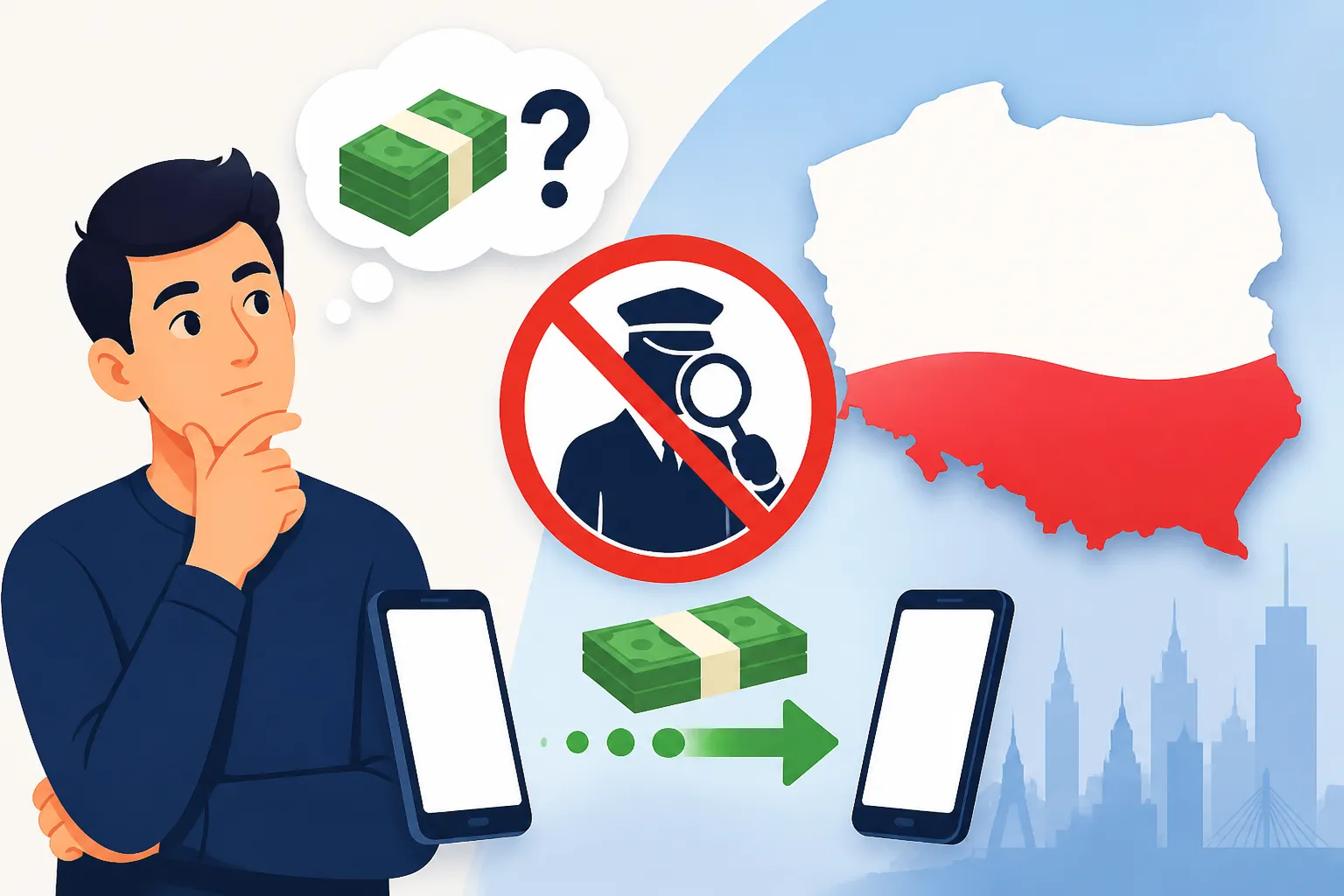
How Much Money Can I Transfer Without Declaring It in Poland?
Moving your hard-earned money across borders can feel like navigating a minefield, especially when you're an expat in Poland. You've heard whispers, perhaps seen vague warnings, and now you're wondering: "How much money can I transfer without some official somewhere flagging it?" It’s a completely valid concern, one that often brings a knot to the stomach of even the most seasoned foreign resident. This guide aims to demystify the rules around transferring funds into Poland, helping you understand the declarations, the thresholds, and most importantly, how to stay on the right side of the Polish authorities without unnecessary stress.
The €10,000 Cash Rule: What It Really Means for Expats
Let's cut right to the chase with the most commonly misunderstood rule: the €10,000 declaration threshold. Many expats mistakenly believe this applies to all money transfers, including bank wires. This is simply not the case, and understanding this distinction will save you a lot of headache.
Physical Cash vs. Banked Funds: Clarifying the Crucial Difference
The €10,000 rule (or its equivalent in other currencies) specifically applies to physical cash or bearer negotiable instruments (like traveller's cheques) that you are carrying across the border into or out of the European Union. If you're flying into Warsaw Chopin Airport with €12,000 in your wallet, you must declare it to the customs authorities. This isn't about the money being illegal or taxable at that moment; it's purely about transparency and preventing illegal activities like money laundering or terrorist financing. The amount refers to the total sum per person, so if two people travel together with €6,000 each, they are collectively carrying €12,000 and both would need to declare their individual portions.
However, if your funds are sitting comfortably in a bank account in your home country, and you initiate a wire transfer to your Polish bank account, this rule does not apply to you. The money isn't physically crossing a border in your possession. Your bank handles the transfer, and it's their responsibility to comply with reporting regulations, not yours, at the point of transfer. This is a huge relief for many, as the vast majority of expats move money through legitimate banking channels rather than carrying suitcases of cash.
Why This Rule Exists: The Fight Against Illicit Finances
This declaration requirement for physical cash isn't unique to Poland; it's a standard EU-wide measure stemming from regulations designed to combat money laundering, terrorist financing, and other serious crimes. By requiring individuals to declare large sums of cash, authorities gain visibility into potentially illicit financial flows. It's a preventative measure, allowing them to ask questions about the origin and intended use of the funds if suspicion arises. Without such rules, it would be far too easy for criminals to move large amounts of undeclared cash across borders, making it untraceable.
For expats, this means that while it might feel like an intrusion, it's a necessary step in maintaining financial security and integrity within the EU. It's not a personal affront, but a part of a larger system. Ignoring this rule can lead to severe penalties, including fines, seizure of funds, and even criminal charges, so if you ever do find yourself carrying a significant amount of cash, make sure you know the procedure.
How to Declare Cash at the Polish Border
Should you find yourself in the rare situation where you are indeed carrying more than €10,000 (or its equivalent) in physical cash when entering or exiting Poland from outside the EU, the process for declaration is relatively straightforward. You'll need to fill out a "Cash Declaration Form" (Deklaracja Środków Pieniężnych). These forms are usually available at customs offices at border crossings, airports, and seaports. It's a simple document asking for your personal details, the amount of cash, its currency, its origin, and its intended use.
Present the completed form to a customs officer. They might ask you a few questions, but as long as your answers are truthful and the funds are legitimate, you should face no issues. Remember, the declaration itself is not about taxing the money, but about transparency. Keep a copy of the declaration form for your records, as it serves as proof that you complied with the regulations. Getting caught with undeclared cash above the threshold can lead to substantial fines, which can easily erode a significant portion of the money you were trying to bring in.
Understanding Bank Transfers and Automatic Reporting in Poland
Now, let's talk about the more common scenario for expats: sending money through banks or financial service providers. This is where the landscape shifts from personal declarations at the border to automated reporting by financial institutions.
The Bank's Role: Beyond Your Personal Declaration
When you initiate a bank transfer from your account abroad to your account in Poland, or vice versa, the banks involved take on the primary responsibility for reporting. This is a crucial distinction. You, as an individual, generally don't "declare" a bank transfer in the same way you would physical cash at customs. Instead, the financial institutions themselves have obligations under anti-money laundering (AML) and counter-terrorist financing (CTF) regulations to monitor and, if necessary, report transactions.
Polish banks, like all banks in the EU, operate under strict legal frameworks. They are required to know their customers (KYC – Know Your Customer) and to monitor transactions for anything suspicious. This means that they keep records of all your transactions, and if a transfer is unusually large for your typical activity, or if it comes from a high-risk country, they might flag it for internal review or even report it to the Generalny Inspektor Informacji Finansowej (GIIF) – Poland's financial intelligence unit. For many of us who have set up a bank account at a Polish bank as a foreigner, this is a standard part of doing business.
Thresholds for Bank Reporting: When Banks Get Involved (Even If You Don't)
While there isn't a hard-and-fast public "declaration" threshold for your bank transfers in the same way there is for cash, financial institutions do have internal and regulatory thresholds for reporting. For example, EU regulations, which Poland adheres to, often require banks to report any single transaction, or series of linked transactions, exceeding €15,000 (or its equivalent) to their respective financial intelligence units if there are any suspicions of money laundering or terrorist financing. This is not an automatic report for every transaction over this amount, but rather a trigger for enhanced scrutiny.
Even for transactions below this €15,000 threshold, banks are constantly monitoring. They look for patterns, unusual activity, or transactions that don't fit your known financial profile. If you suddenly receive a transfer of €8,000 when your typical incoming transfers are €500, the bank might reach out to you for clarification on the source and purpose of the funds. This is part of their due diligence, and it's completely normal. The key is to be prepared to provide honest and clear answers, along with any supporting documentation if requested.
The Importance of Documentation: Proving the Source of Your Funds
This is perhaps the single most important piece of advice for any expat transferring money, regardless of the amount: always keep clear documentation of the source and purpose of your funds. Whether it's a large transfer for a property purchase, your life savings being moved over, or regular salary payments, having a paper trail is essential. Imagine this scenario: you've been living in Poland for a few years, and you bring over a substantial sum from the sale of an inherited property back home. If the Polish tax office or your bank asks about this money, you'll need to prove its legitimate origin.
Good documentation includes:
- Bank statements from the sending account showing the funds accumulating.
- Sale agreements for property, shares, or other assets.
- Inheritance documents (probate, will).
- Letters from employers or salary slips.
- Gift deeds (if the money was a gift).
This documentation not only helps your bank but also protects you in case the Polish tax authorities (Urząd Skarbowy) ever inquire about the origin of significant funds in your account. While you might not "declare" the transfer yourself, the bank's reporting, combined with Poland's overall tax regulations, means your money is certainly not invisible. This proactive approach can prevent a lot of headaches later on and ensures you comply with Polish financial regulations, which can sometimes be a labyrinth, as anyone dealing with Filing Your Annual Tax Return (PIT) in Poland: The Complete Walkthrough (2027) knows.
Navigating Tax Implications and Financial Transparency in Poland
Beyond border declarations and bank reporting, the ultimate question for many expats is often about taxes. Is a transfer considered income? Will I be taxed on money I already earned and paid tax on elsewhere?
When is a Transfer Considered Taxable Income?
This is where things can get tricky. Generally, transferring your own money – funds you've already earned, saved, or acquired legitimately and perhaps already paid tax on in another country – is not a taxable event in Poland. For instance, moving your life savings from a UK bank account to a Polish one doesn't make those savings new taxable income in Poland. The funds existed already.
However, if the money being transferred represents a new income stream or a gain, then it could be taxable. Examples include:
- Salary from a foreign employer: If you're a Polish tax resident working remotely for a company outside Poland, your foreign salary, when transferred, is generally subject to Polish income tax. You'll need to know How to Report Foreign Income to the Polish Tax Office.
- Rental income from abroad: If you own property in another country and receive rental payments, these funds, when transferred to Poland, might be taxable in Poland, depending on your tax residency status and double taxation agreements.
- Capital gains: If you sell shares, property, or other assets abroad and transfer the profits, these gains could be taxable in Poland.
The key here is your tax residency status in Poland. If you are considered a Polish tax resident, you are generally taxed on your worldwide income. This is a critical concept that many expats grapple with, and it's essential to understand Tax Residency in Poland: A Definitive Guide for Expats (2027). It’s less about the transfer itself and more about the nature of the funds being transferred.
Leveraging Double Taxation Treaties to Your Advantage
One of the biggest concerns for expats is the nightmare scenario of paying tax on the same income twice. Thankfully, Poland has an extensive network of double taxation treaties (DTTs) with many countries around the world. These agreements are designed to prevent situations where you're taxed on the same income in both Poland and your home country.
If you're a tax resident in Poland but have income sources abroad, these treaties determine which country has the primary right to tax certain types of income, or they provide mechanisms for relief, such as tax credits or exemptions. For example, if you paid tax on a pension in your home country, the DTT might stipulate that Poland cannot tax it again, or that you can claim a credit for the tax already paid. Understanding How Do I Avoid Double Taxation Between Poland and My Home Country? is vital for your financial planning here. Always check the specific DTT between Poland and your country of origin to understand your obligations and rights.
Choosing the Right Transfer Method: Efficiency and Compliance
When it comes to actually moving money, you have several options beyond traditional bank wire transfers, and some are much more expat-friendly. While traditional banks are reliable, they can often be slow and charge hefty fees, sometimes with unfavorable exchange rates. This is where modern financial technology companies shine.
Services like Wise (formerly TransferWise) have revolutionized international money transfers for expats. They often offer significantly better exchange rates and lower fees compared to traditional banks, making your money go further. More importantly, they operate under the same stringent financial regulations as banks, ensuring that your transfers are compliant and secure. When you transfer funds with Wise, they handle the necessary reporting to authorities based on the nature and amount of your transfer, just like a regular bank would. This means you get the benefit of efficiency without compromising on compliance.
Choosing a reputable service means you don't have to worry about "declaring" your transfer; the service provider handles the regulatory side while you focus on the best rates and speed. This is a far cry from the old days of figuring out complicated SWIFT codes and high charges for How to Transfer Money Internationally from a Polish Account.
Practical Advice for Expats: Staying Compliant and Stress-Free
Living in a new country brings enough challenges. Dealing with financial regulations shouldn't add to your stress. Here’s some actionable advice to help you manage your money transfers into Poland smoothly.
Keep Records, Always
This cannot be stressed enough. Whether it's a small monthly transfer or a significant lump sum, maintain a comprehensive record of all your international money transfers. This includes:
- Transaction confirmations: Screenshots, email confirmations, or bank statements showing the amount sent, date, sender, and recipient.
- Proof of origin of funds: As discussed earlier, documents showing where the money came from (salary slips, property sale documents, inheritance papers, gift deeds).
- Purpose of transfer: If it's for rent, save your rental contract. If it's for a car purchase, keep the sales agreement.
Having these documents readily accessible means you can quickly and confidently answer any questions from your bank or the Polish tax authorities. It's much easier to provide proof when you're asked than to try and dig up old documents months or years later. Think of it as your personal financial "zameldowanie" – official proof of your money's origin and destination. For more detailed insights into all things tax, The Complete Guide to Taxes in Poland for Expats (2027) is an invaluable resource.
Seek Professional Advice When in Doubt
Polish financial and tax regulations can be complex, and they do change. What was true last year might have been altered by the latest 'Polski Ład' reforms. If you're dealing with significant sums, unusual income streams, or complex financial situations (like owning multiple properties abroad or running a business that generates international income), it is always, always worth investing in professional advice.
Consulting with a tax advisor or an accountant specializing in international taxation for expats in Poland can save you a fortune in potential fines or overpayments. They can clarify your specific tax residency status, advise on the implications of double taxation treaties, and ensure you're compliant with all Polish laws. This is particularly crucial if you're exploring complex financial scenarios, or if you're a sole trader needing to understand your ZUS and tax obligations for self-employment income, as outlined in guides like How Much Tax Does a JDG Owner Pay in Total Each Year in Poland?. Companies like Taxes for Expats specialize in this area and can provide tailored advice that generic online guides cannot.
Don't Fall for Misinformation
The internet is a wonderful place, but it's also rife with outdated or incorrect information, especially when it comes to legal and financial matters in different countries. Be wary of advice from unofficial forums or well-meaning but ill-informed acquaintances. Always verify information from official Polish government sources (like the Ministry of Finance or your local Urząd Skarbowy), reputable financial institutions, or certified professionals.
Remember that regulations are dynamic. What might have been true for your friend five years ago could be completely different today. Always seek the most current and authoritative information, especially when it concerns your finances and legal standing in Poland. Getting a PESEL and NIP number in Poland is often your first step into the Polish administrative world, and it only gets more involved from there.
Quick Reference: Cash vs. Bank Transfers & Declarations
To help you distinguish between the different scenarios, here's a quick overview:
| Feature | Physical Cash ( > €10,000 equivalent) | Bank/Online Transfers (e.g., via Wise) |
|---|---|---|
| Who Declares? | You, the individual | Financial institution (bank, transfer service) |
| When/Where? | At the EU border (customs) | Automatically, as part of routine operations |
| Purpose of Declaration | Anti-money laundering, transparency | Regulatory compliance, suspicious activity reporting |
| Automatic Reporting Threshold (Approx.) | N/A (your personal declaration) | >€15,000 (often triggers enhanced scrutiny), or any suspicious amount |
| Required Action by You | Fill out a customs declaration form | Provide accurate info to your bank/service, keep source documentation |
| Primary Risk | Fines, seizure if undeclared | Inquiry about source of funds, potential tax liability on income |
Navigating the financial landscape in a new country can feel overwhelming, but by understanding the distinctions between physical cash declarations and bank reporting, and by always being ready to prove the legitimate source of your funds, you can manage your money transfers to Poland with confidence. Remember, transparency is your best friend when dealing with any financial authority.
Disclaimer
The information provided in this guide is for general informational purposes only and does not constitute financial, legal, or tax advice. While we strive to provide accurate and up-to-date information, laws and regulations in Poland, particularly those concerning finance and taxation, can change frequently. Expats are strongly advised to consult with a qualified Polish tax advisor or financial professional to obtain advice tailored to their specific circumstances. We do not accept responsibility for any loss arising from reliance on the information contained in this guide.