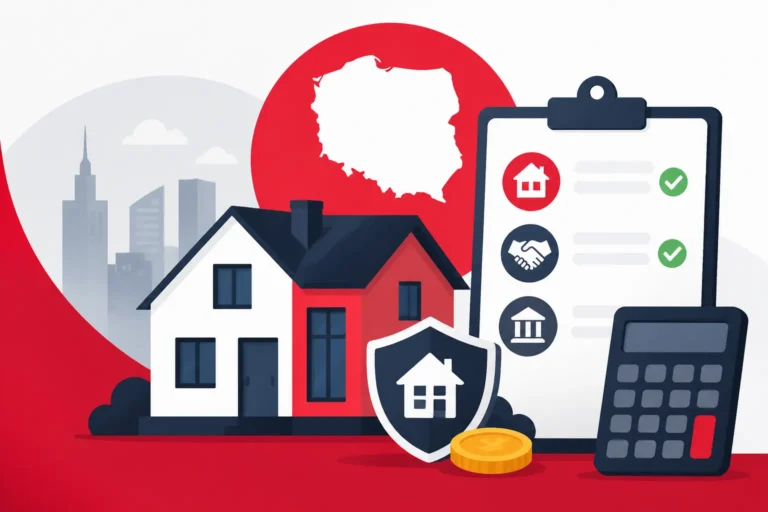
How Much Is the PCC Tax on a Used Car or Apartment in Poland?
Ah, the infamous PCC tax! If you've just moved to Poland and are eyeing up a second-hand car or perhaps dreaming of buying your own apartment from a previous owner, you're probably already feeling that familiar knot of dread in your stomach when the word "tax" comes up. Trust me, you're not alone. Navigating the labyrinthine world of Polish taxes can be incredibly frustrating, especially when it involves acronyms like PCC that don't immediately tell you what they are. This guide is here to shed some light on the Podatek od Czynności Cywilnoprawnych, or Civil Law Transaction Tax, specifically for used cars and apartments, so you can tackle it with confidence.
What Exactly is PCC Tax in Poland and Why Does It Exist?
Let's get this straight from the start: PCC tax is Poland's way of taxing certain civil law transactions, primarily those that aren't subject to VAT (Value Added Tax). It’s not just a random charge; it serves a specific purpose in the Polish tax system. For expats, it often feels like another hurdle, but understanding its role can make it a little less daunting.
The Purpose of PCC Tax: A Necessary Evil
Think of PCC as a transactional tax on specific civil agreements. When you buy something brand new from a business, you usually pay VAT, which is already built into the price. But what happens when you buy something from another individual, where no VAT is typically charged? That's where PCC steps in. It's meant to ensure that the state still collects revenue on certain high-value transactions that happen between private parties, or in specific scenarios where businesses are involved but VAT isn't applicable.
It feels like a necessary evil because it adds a cost on top of the purchase price, but it's a fundamental part of the legal and financial landscape here. As an expat, you might not have encountered a direct equivalent in your home country, which makes it particularly confusing. You might be thinking, "Haven't I paid enough already?" and it's a valid sentiment. This tax captures a wide range of agreements, from loan agreements to company formation, but for most individuals, it's property and vehicle purchases that sting the most. You'll find a more general overview of this tax in our guide to Understanding the Tax on Civil Law Transactions (PCC) in Poland.
When PCC Tax Applies and When It Doesn't
This is crucial because knowing the exemptions can save you a pretty penny and a lot of headaches. Generally, PCC applies to transactions that are not subject to VAT. This is the golden rule. So, if you're buying a brand-new car from a dealership, or a brand-new apartment from a developer, you're typically paying VAT (currently 23% in most cases for goods and services, or 8% for certain residential properties) and therefore, you are exempt from PCC. This is because the state doesn't want to double-dip on transactional taxes.
However, if you're buying a used car from another individual, or a resale apartment from someone who isn't a VAT payer (which is common for individuals selling their homes), then PCC tax will apply. There are also specific exemptions, for instance, if the value of the movable item (like a car) is below 1,000 PLN, or certain donations. For property, there are also specific rules: if the seller is a VAT payer and issues a VAT invoice for the property sale, then PCC is not due. This scenario usually occurs when a developer sells a property or when a company that is a VAT payer sells certain commercial or even residential real estate. Always clarify with the seller and, if buying property, with your notary.
Calculating PCC Tax on Your Used Car in Poland
Buying a car in Poland, especially a used one, can be an adventure. Once you've navigated the classifieds, test drives, and haggling, then comes the bureaucratic fun – including the PCC tax. It’s a definite "gotcha" moment for many foreigners who weren't expecting an additional charge after the sale price.
Understanding the Base Value for Vehicle PCC
The PCC tax rate for movable items like cars is 2%. Sounds simple enough, right? Not quite. The tax is calculated not on the price you agreed to pay, but on the market value of the vehicle. This is where it gets tricky and often feels unfair. The Polish tax office (Urząd Skarbowy) has its own ideas about what your car is worth, regardless of the deal you struck. They look at things like make, model, year of manufacture, mileage, condition, and equipment level.
Let’s say you found a fantastic deal, a real steal for 15,000 PLN. You might assume your PCC will be 2% of that, so 300 PLN. However, if the tax office assesses that car's market value to be 20,000 PLN, you'll be taxed on that higher amount, meaning 400 PLN. If they believe you undervalued the vehicle in your sales contract, they can challenge your declared value and demand the difference, sometimes with interest! It’s a pain point for many, as it feels like an arbitrary assessment. This is why when you fill out the PCC-3 form, you must enter a realistic market value, even if it differs slightly from your purchase price. Remember, the burden of proof is often on you to justify a lower-than-market price if challenged.
Step-by-Step Calculation and Payment Process for Cars
So, you've bought your dream (or simply functional) used car. Now for the tax.
- Determine the Market Value: As discussed, estimate the market value honestly. You can check prices on popular Polish classifieds websites like OtoMoto or OLX for similar cars to get a realistic range.
- Calculate the Tax: Multiply the market value by 2%. For example, if the market value is 25,000 PLN, your PCC tax will be 25,000 PLN * 0.02 = 500 PLN.
- Fill out the PCC-3 Form: This is the official tax declaration form. You can download it from the government's e-Urząd Skarbowy portal or pick one up at your local tax office. It needs to be filled out accurately with details of the buyer, seller, and vehicle. If there are multiple buyers, like a married couple, you might need to fill out a PCC-3/A attachment.
- Payment Deadline: You have 14 days from the date of the sales contract to declare and pay the PCC tax. This deadline is strict, and missing it can lead to penalties.
- Make the Payment: The payment is made to the specific bank account of your local tax office (Urząd Skarbowy). You'll need your NIP (Tax Identification Number) or PESEL (National Identification Number) to make the payment. If you don't have a PESEL yet, don't panic! Our guide on How to Get Your PESEL Number and Why It Matters for Healthcare offers more details, but for tax purposes, a NIP is often sufficient. Many expats use online banking or visit a post office to make the transfer. Services like Wise can be helpful for international transfers if your funds are still abroad, but for local tax payments, a Polish bank account is usually best.
- Keep Proof of Payment: Always, always keep a copy of the filled PCC-3 form and the payment confirmation. You might need it when you go to register the vehicle at the Starostwo Powiatowe (District Office). For a detailed walkthrough on that, check out How to Register a Vehicle (Rejestracja Pojazdu) in Poland.
Navigating PCC Tax on a Resale Apartment or Property in Poland
Buying an apartment is a huge step, and doing it in a foreign country adds layers of complexity. The PCC tax on property is a significant cost, and understanding it upfront is essential for budgeting and avoiding nasty surprises.
The 2% Rate: What It Means for Property Transactions
Just like cars, the PCC tax rate for real estate (apartments, houses, land) bought from a non-VAT payer is 2%. This 2% is applied to the market value of the property, not necessarily the agreed-upon sale price. Again, the tax authorities have the right to assess the market value, but with property, this process is usually less contentious than with used cars because a notary public is always involved.
When you're buying a resale apartment in Poland, virtually all transactions for residential properties between individuals will incur this 2% PCC. For example, if you buy an apartment from a private seller for 500,000 PLN, and that is deemed the fair market value, your PCC tax will be 10,000 PLN. This is a substantial amount, often overlooked by expats budgeting for their first property purchase. Remember to factor this into your overall costs, alongside notary fees, real estate agent commissions, and potential mortgage arrangement fees. Our guide on How to Buy Property in Poland as a Foreigner: The Full Guide (2027) delves into these costs in more detail.
The Role of the Notary in Property PCC Tax Payment
Here's a huge relief for property buyers: when you purchase real estate in Poland, the notary public (notariusz) handles the PCC tax for you. This is a massive simplification compared to buying a car, where you, the buyer, are solely responsible for calculating and paying the tax yourself.
During the signing of the preliminary agreement (umowa przedwstępna) and especially the final sales agreement (akt notarialny), the notary will calculate all the necessary fees and taxes, including the 2% PCC tax, and collect them from you directly. They then act as the tax remitter, paying the PCC to the appropriate tax office on your behalf. This is part of their legal obligation and ensures compliance.
This process offers a great deal of security and convenience for expats. The notary is a neutral party responsible for ensuring the legality of the transaction, and their role includes accurately determining the tax base (market value) and collecting the correct amount of PCC. This helps avoid issues with the tax office challenging your declared value because the notary's assessment is usually taken as authoritative. Make sure you understand the full breakdown of costs the notary presents, which will include their fees, court fees for updating the Understanding the Land and Mortgage Register (Księga Wieczysta) in Poland, and the PCC tax.
Practical Tips and Common Pitfalls for Expats
Navigating the PCC tax, whether for a car or an apartment, can feel like walking through a minefield. Many expats have tales of last-minute panic, unexpected costs, or even fines. Let's cover some crucial tips to help you avoid these common pitfalls.
Deadlines and Penalties: Don't Get Caught Out!
The 14-day deadline for PCC tax on movable assets (like cars) is incredibly strict. If you miss it, even by a day, you can be subject to penalties. These can start relatively small but grow with time. The tax office might also charge interest on the overdue amount.
Here’s where it gets interesting: if you realise you’ve missed the deadline before the tax office contacts you, you can file a "czynny żal" (active repentance) statement along with your overdue PCC-3 form and payment. This statement explains why you were late and expresses your willingness to rectify the situation. If accepted, it can often waive the penalty, though you might still have to pay interest. This is a lifesaver for many expats who are simply overwhelmed by the bureaucracy. Don't just ignore it; addressing the issue proactively is always better.
For property transactions, as mentioned, the notary handles everything, so missing the payment deadline isn't typically an issue for the buyer unless you fail to transfer the funds to the notary on time for the signing.
How to Declare and Pay Your PCC Tax Beyond the Notary
For property, the notary handles it. For a used car purchased from a private individual, the onus is entirely on you, the buyer. You will need to fill out the PCC-3 form. This can be done in a few ways:
- Paper Form: You can download the PCC-3 form, print it, fill it out by hand, and take it to your local Urząd Skarbowy. This is the most traditional method, but also the most prone to errors and requires a visit to the tax office, which can be intimidating if you don't speak Polish well.
- Online via e-Urząd Skarbowy: This is generally the most convenient method for those comfortable with online portals. The Polish tax authorities have made significant strides in digitisation. You can access the e-Urząd Skarbowy portal, log in using your PESEL, and find the PCC-3 form there. It guides you through the process, and you can submit it electronically. This also allows you to make the payment directly through the system or provides you with the bank details for a transfer. This requires you to have an Internetowe Konto Pacjenta (IKP) Patient Account or a trusted profile (profil zaufany) for identification.
- Assisted Payment: If you're really struggling, a tax advisor or an accountant (księgowy) specialising in Taxes in Poland for Expats can help you fill out and submit the form correctly. While it costs money, it can save you from costly mistakes and the stress of dealing with the tax office directly. Companies like Taxes for Expats often provide assistance with various Polish tax obligations.
Once the form is submitted, you need to make the payment. You'll usually get a unique payment identification number, or simply use your PESEL/NIP. When making the bank transfer, ensure all details are correct. The payment must be sent to the specific bank account of your local tax office, which can be found on their website or on the PCC-3 form itself.
Specific Scenarios: Gifts, Companies, and Exemptions
While the 2% rule for cars and apartments covers most individual transactions, there are nuances to PCC tax that are worth knowing.
- Gifts (Darowizna): Giving or receiving a gift in Poland is also subject to tax, but it's a separate "inheritance and gift tax" (podatek od spadków i darowizn), not PCC. The rates and exemptions depend heavily on the relationship between the giver and receiver. Direct family members usually have high tax-free thresholds.
- Company Purchases: If a company (e.g., a Sp. z o.o.) purchases a used car or property, the PCC implications can differ depending on whether the seller is a VAT payer and if the company itself is a VAT payer. Sometimes, certain transactions between companies can be VAT-exempt, bringing PCC back into play. This is a complex area, and professional tax advice is highly recommended for businesses.
- Other Exemptions: Beyond the general VAT exemption, some very specific scenarios might offer PCC relief. For instance, sometimes certain agricultural land purchases are exempt, or in limited cases, if you acquire an apartment through a cooperative right, though these are less common for typical expats. Always check the current regulations or consult with a specialist if you believe your situation might qualify for an exemption.
Understanding the PCC tax is another step in truly settling into life in Poland. It’s certainly not the most straightforward part of the bureaucracy, but with the right information and a bit of preparation, it’s entirely manageable. Don’t let the initial confusion deter you from making those big purchases; just be armed with the knowledge to navigate the Polish tax system successfully.
PCC Tax Rates at a Glance
To simplify things, here's a quick reference for common PCC tax rates:
| Transaction Type | PCC Tax Rate | Who Pays? | Payment Method | Deadline (from contract date) |
|---|---|---|---|---|
| Purchase of a Used Car (from private individual) | 2% | Buyer | PCC-3 form, direct bank transfer to tax office | 14 days |
| Purchase of a Resale Apartment (from individual) | 2% | Buyer (collected by notary) | Notary collects and remits | Handled by notary (at signing) |
| Purchase of a New Car (from dealer) | 0% (VAT applies) | N/A | N/A (VAT included in price) | N/A |
| Purchase of a New Apartment (from developer) | 0% (VAT applies) | N/A | N/A (VAT included in price) | N/A |
| Loan Agreements | 0.5% – 2% | Borrower | PCC-3 form, direct bank transfer to tax office | 14 days |
| Company Share Purchase | 1% | Buyer (company/individual acquiring shares) | PCC-3 form, direct bank transfer to tax office | 14 days |
Note: This table provides general rates. Specific exemptions or changes in law may apply. Always consult official sources or a tax advisor for your unique situation.
Disclaimer
The information provided in this guide is for general informational purposes only and does not constitute legal or tax advice. While we strive to keep the information up-to-date and accurate, Polish tax laws and regulations can change frequently. Expats are strongly advised to consult with a qualified Polish tax advisor or legal professional for advice tailored to their specific circumstances. We are not responsible for any actions taken or not taken based on the information presented herein.