How Do I Transfer Money from My Home Bank to Poland?
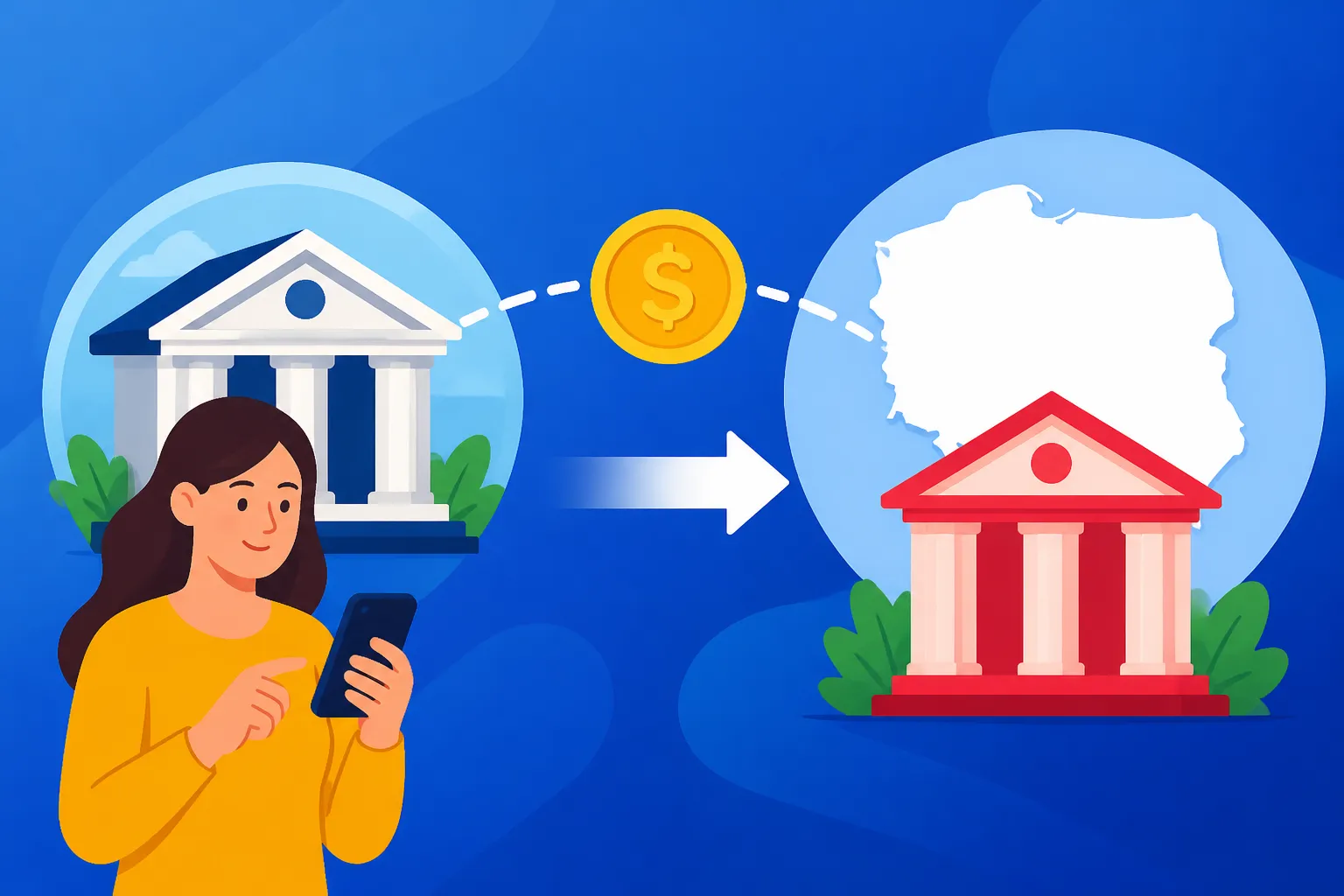
Ah, the age-old expat dilemma: you've finally landed in Poland, found your bearings, perhaps even snagged your first apartment, but now you need to get your hard-earned cash from your home country into your shiny new Polish bank account. Trust me, I've been there, staring blankly at forms asking for a SWIFT code and wondering why my money isn't just magically appearing. It can feel like navigating a bureaucratic maze, especially with differing currencies and banking systems. But don't you fret, this guide is here to unravel that mystery and help you choose the best, most cost-effective, and fastest way to transfer money to Poland.
Navigating Traditional Bank Transfers: The Old School Way
Let's start with the classic method: using your home country's bank to send money directly to your Polish bank account. This is often the first thought for many, simply because it feels familiar and secure. However, while it certainly is secure, it's not always the most efficient or economical route, especially when dealing with international transfers.
SWIFT Transfers: The Global Network for Non-Euro Currencies
If your home bank is outside the Eurozone (think US dollars, British pounds, Canadian dollars, etc.), your transfer will almost certainly go through the SWIFT (Society for Worldwide Interbank Financial Telecommunication) network. This is the grand old dame of international banking, a vast messaging system that allows banks globally to communicate and facilitate cross-border payments.
The process usually involves providing your Polish bank's SWIFT/BIC code, your IBAN (International Bank Account Number), your full name, and address. Your home bank then sends a payment instruction through the SWIFT network. Now, here's where it gets a bit tricky: SWIFT transfers often involve multiple intermediary banks along the way. Each of these banks can (and usually does) take a small cut, adding to the overall cost and slowing down the process. You might find fees levied by your sending bank, one or more correspondent banks, and even your receiving Polish bank. It's like a toll booth every few miles on a long journey, and each toll takes a piece of your money. Plus, the exchange rate offered by traditional banks for currency conversion can be significantly marked up, meaning you're losing money on two fronts. Expect these transfers to take anywhere from 3 to 5 business days, sometimes even longer if there are holidays or weekends involved. It's not uncommon for expats to see their money disappear for a week, only to reappear a little lighter than expected.
SEPA Transfers: The Eurozone's Speedy Solution
For those lucky enough to be transferring money from a bank within the EU or EEA (European Economic Area) and dealing in Euros, the Single Euro Payments Area (SEPA) is your saving grace. SEPA transfers are a game-changer because they treat cross-border Euro transactions like domestic ones. This means no intermediary bank fees, significantly faster processing times (often within one business day, sometimes even a few hours), and generally better transparency on costs.
To make a SEPA transfer, you'll still need your Polish bank's IBAN. You usually won't need a SWIFT/BIC code for SEPA transfers within the Eurozone, as the system is designed for streamlined Euro payments. If you're coming from a Euro country, like Germany or France, sending Euros to your Polish account that also accepts Euros (most major Polish banks do), this is usually the cheapest and quickest option. The main "cost" here might be the exchange rate if your Polish account ultimately needs to convert EUR to PLN, but your Polish bank's conversion rate is often more favorable than what your home bank might offer for a SWIFT transfer. If you're looking to open a Polish bank account to receive these funds, check out our guide on How to Open a Bank Account at a Polish Bank as a Foreigner.
Embracing Digital: Online Money Transfer Services
In recent years, a whole new breed of financial services has emerged, specifically designed to make international money transfers faster, cheaper, and more transparent. These online platforms have genuinely revolutionized how expats handle their finances abroad. If you're still relying solely on traditional banks for international transfers, you might be missing out on significant savings and convenience.
The Rise of FinTech: Why They're Often Superior
The core advantage of these digital money transfer services lies in their business model. Instead of relying on the slow, expensive SWIFT network, many operate on a system of local bank accounts. When you send money to Poland through a service like Wise, you're essentially sending money to their local bank account in your home country. Then, they use their local bank account in Poland to pay out the equivalent amount in PLN (or EUR) to your recipient. This clever workaround bypasses the international SWIFT fees and allows them to offer much more competitive exchange rates – often the mid-market rate, which is the "real" exchange rate you see on Google.
Beyond the cost savings, these platforms typically offer:
- Speed: Transfers can often be completed within minutes or hours, rather than days.
- Transparency: You see exactly how much you're sending, the exchange rate, and the total fee upfront. No hidden charges.
- Convenience: The entire process can be managed online or through a mobile app, often with 24/7 access.
Wise: A Closer Look at the Expat Favorite
Among the many online services available, Wise (formerly TransferWise) stands out as a consistently popular choice for expats in Poland, and for good reason. I've personally used them for years, and it's saved me a small fortune in fees and given me peace of mind about my money arriving quickly.
Here's how Wise typically works for sending money to Poland:
- Set up an account: It's a quick online process, usually requiring some basic ID verification, similar to opening a bank account. This is part of their regulatory compliance.
- Enter transfer details: You specify how much you want to send and the currency. Wise will immediately show you the exact exchange rate, the fee, and how much your recipient will receive in Polish Złoty (PLN) or Euros.
- Add recipient details: You'll need the recipient's name and their Polish bank account IBAN.
- Fund your transfer: You can pay for your transfer in various ways, such as a local bank transfer from your home account, debit card, or sometimes even Apple Pay/Google Pay.
- Track your transfer: Wise provides real-time updates, so you know exactly where your money is every step of the way.
What makes Wise particularly attractive is its commitment to the mid-market exchange rate. Unlike traditional banks that add a hidden margin to the exchange rate, Wise applies a small, transparent fee and uses the actual market rate. This often results in significantly more money reaching your Polish account. Whether you need to pay rent, cover daily expenses, or just top up your Polish savings, Wise offers a reliable and cost-effective solution. If you're wondering about other digital banking alternatives, you might find our article Can I Use Revolut or Wise Instead of a Polish Bank? quite insightful. For larger sums, they might require additional documentation, which is standard practice across financial institutions to comply with anti-money laundering regulations.
Other Digital Alternatives
While Wise is a strong contender, other services like Revolut also offer competitive international money transfers, often with multi-currency accounts that can be handy for expats. PayPal is another option, though it's generally more expensive for currency conversion and best suited for smaller, casual transfers rather than regular, larger remittances. Always compare fees and exchange rates across different platforms before making a transfer, as they can vary based on currency corridors and transfer amounts.
Key Considerations for Transferring Your Funds
Choosing the right method isn't just about picking the fastest or cheapest option; it's about understanding the nuances of international money transfers to ensure your funds arrive safely and predictably.
The Real Cost: Exchange Rates and Hidden Fees
This is arguably the most crucial factor. When comparing services, don't just look at the upfront transfer fee. The exchange rate can make a monumental difference. Banks are notorious for marking up exchange rates, effectively taking a hidden commission that can sometimes be more expensive than the stated transfer fee itself. For example, if the interbank rate (mid-market rate) is 1 USD = 4 PLN, a traditional bank might offer you 1 USD = 3.90 PLN. That 0.10 PLN difference per dollar adds up quickly when you're transferring hundreds or thousands.
Always compare the exchange rate offered by your bank versus what a service like Wise provides (which typically adheres very closely to the mid-market rate). Use an independent currency converter (like Google's) to find the mid-market rate and compare it to what you're being offered. This transparency is key to truly understanding the cost of your transfer.
Speed vs. Urgency: How Quickly Do You Need the Money?
Think about your needs. Are you setting up an initial transfer to cover your first month's rent and need it now? Or are you topping up your savings for a few weeks down the line?
- Instant/Same-day: Some digital services, especially for common corridors or within business hours, can offer near-instant transfers. If you're paying with a debit card, it's often faster but might incur a slightly higher fee.
- 1-2 Business Days: Many digital transfers and SEPA payments fall into this category.
- 3-5+ Business Days: This is the typical timeframe for SWIFT transfers, and sometimes even longer for less common currencies or if there are compliance checks for larger amounts.
For immediate needs, digital services or SEPA are your best bet. If you're not in a rush, a slightly slower option might offer a marginally better rate or lower fee, though the difference is often negligible with modern fintech.
Security and Regulatory Compliance
Any legitimate money transfer service, whether a bank or an online platform, must comply with strict financial regulations to protect consumers and prevent financial crime. In Poland, the primary regulatory body overseeing financial markets is the KNF (Polish Financial Supervision Authority). For international transfers, services are also often regulated by bodies in other jurisdictions, like the Financial Conduct Authority (FCA) in the UK for Wise.
Look for services that are transparent about their regulatory status. This ensures your money is handled securely and that you have recourse if something goes wrong. Always be wary of services that promise exceptionally high exchange rates or unusually low fees without any clear regulatory information. When you're ready to dive deeper into Poland's financial landscape, our article Understanding the KNF and Financial Markets Oversight in Poland provides excellent context.
Transfer Limits and Documentation Requirements
Banks and online services will have different limits on how much you can send in a single transaction or over a specific period. For very large sums, you might hit these limits, requiring you to split the transfer or use a more traditional bank service that is equipped for high-value transactions.
Additionally, for larger transfers, or sometimes even for initial setup, you'll be asked for documentation as part of "Know Your Customer" (KYC) and anti-money laundering (AML) regulations. This could include proof of identity (passport, residence permit), proof of address, and sometimes even proof of the source of funds. Don't be alarmed by this; it's standard procedure to ensure legitimate transactions. If you're just starting your expat journey, getting your PESEL number and having the right identification documents ready will make these processes much smoother, so consider checking out How Do I Get a PESEL and NIP Number in Poland to get ahead.
Choosing Your Path: A Comparative Look
To help you decide, here's a quick comparison of the common methods for transferring money from your home bank to Poland:
| Feature | Traditional Bank (SWIFT) | Traditional Bank (SEPA) | Online Money Transfer Service (e.g., Wise) |
|---|---|---|---|
| Origin Country | Non-EU/EEA, Non-Eurozone | EU/EEA, Eurozone (sending EUR) | Global (supports many currencies) |
| Fees | High (sending, intermediary, receiving banks) | Low to none (for EUR transfers) | Low, transparent (fixed fee + small percentage) |
| Exchange Rate | Marked up, non-transparent | Market rate (if EUR to EUR), bank rate for conversion | Mid-market rate (transparent, no hidden markup) |
| Speed | 3-5+ business days | 1 business day (often same day) | Minutes to hours (often same day), sometimes 1-2 days |
| Transparency | Low (hidden fees, unclear exchange rates) | High (for EUR), potential for conversion markup | High (all costs and rates shown upfront) |
| Ease of Use | Can be cumbersome (in-branch visits, complex forms) | Relatively easy (online banking) | Very easy (online/app, user-friendly interface) |
| Best For | Very large, infrequent transfers; complex banking needs | Regular EUR transfers within the EU | Frequent, smaller to medium transfers; best rates/speed |
This table clearly illustrates why online services like Wise have become such a lifeline for expats. They've streamlined the process, cut down costs, and brought transparency to a system that was historically opaque.
Practical Steps to Get Your Money Moving
So, you've decided on your method. Now, let's talk about the practicalities of making that transfer happen.
Setting Up Your Polish Bank Account
Before you can receive money, you absolutely need a local bank account. This is usually one of the first things expats do when they arrive. Major Polish banks like PKO BP, Santander, mBank, and ING Bank Śląski are all expat-friendly and offer accounts in PLN and often EUR. Many even have English-speaking staff and online banking interfaces. When opening your account, make sure you get your IBAN and the bank's SWIFT/BIC code. You'll definitely need these for any incoming international transfers. Our comprehensive guide on The Expat Guide to Opening a Bank Account in Poland will walk you through everything you need to know.
Gathering Recipient Information
For any transfer, you'll need precise recipient details. Double-check these before you initiate the transfer, as an incorrect digit can cause significant delays or even send your money to the wrong person (a headache you do not want).
- Full Name of Account Holder: This should match the name on the Polish bank account exactly.
- IBAN (International Bank Account Number): This is a unique identifier for your specific account in Poland. It typically starts with "PL" followed by 26 digits.
- Bank Name: The full name of your Polish bank (e.g., PKO Bank Polski, Santander Bank Polska).
- SWIFT/BIC Code: If transferring via SWIFT, this code identifies the bank itself. Each Polish bank has one. For example, PKO BP's SWIFT/BIC is BPKOPLPW.
You can usually find your IBAN and SWIFT/BIC code on your online banking portal, on your bank statements, or by simply asking your bank directly. If you're a bit confused about your IBAN, our article How Do I Get an IBAN for a Polish Bank Account? can help clarify things.
Initiating the Transfer
Once you have all your details, it's time to send the money:
- For Bank Transfers: Log into your home bank's online portal, navigate to international transfers, or visit a branch. You'll input all the recipient details. Confirm the fees and exchange rate before authorizing.
- For Online Services (e.g., Wise): Log into your Wise account or app. Follow the on-screen prompts to send money, enter the amount, select currencies, input recipient bank details, and choose your payment method. Review everything carefully before hitting send.
You'll usually receive a confirmation email or notification once the transfer is initiated. Keep an eye on your Polish bank account and the tracking provided by the service to confirm its arrival.
What to Do If Your Money Doesn't Arrive
It's rare for money to completely disappear with reputable services, but delays can happen.
- Check Tracking: Most online services provide tracking numbers or status updates.
- Contact Customer Support: If there's a delay, first contact the customer support of the service you used. They can usually trace the funds.
- Verify Details: Re-confirm that all the recipient details (IBAN, name, etc.) were entered correctly. A single typo is often the culprit for delays.
- Check for Compliance Issues: Very occasionally, a large transfer might be flagged for additional security checks, requiring further documentation from you. Don't worry, this is part of the process and your funds are usually safe.
Moving money across borders can feel like a big hurdle when you first arrive, but with the right information and tools, it quickly becomes just another routine. Welcome to Poland!
Disclaimer
Please remember that this article is intended for informational purposes only and does not constitute financial or legal advice. Regulations, fees, and services can change, so it's always best to verify information with the relevant financial institutions and consult with a professional advisor for your specific situation.