How Do I Set Up Waste Collection in My Apartment Building in Poland?
Ah, the wonderful world of waste management in Poland! It's one of those mundane, absolutely essential things that seems so simple back home, but once you land in a new country, it transforms into a bureaucratic maze, especially when you're trying to figure out how it all works in an apartment building. You just want to throw out your rubbish without causing an international incident or attracting the ire of your administracja, right? This guide is here to unravel the mysteries of setting up and managing waste collection in your Polish apartment building, making sure you know exactly what goes where, how it's paid for, and how to avoid those pesky fines.
Navigating the Basics of Polish Waste Management in Apartment Buildings
Let's start with the big picture. Unlike some countries where you might directly contract a waste collection company for your individual house, living in a Polish apartment building means you’re usually part of a larger, collective system. This system is designed to streamline things for multi-unit dwellings, but it can also feel a bit opaque if you don't know who's doing what.
The Municipal System and Local Responsibility
At its core, waste management in Poland falls under the purview of local municipalities (gminy). Each commune or city contracts with specific companies to handle waste collection, transport, and disposal for its residents. This means that the rules, collection schedules, and even the exact types of bins might vary slightly from one city to another, or even between different districts within the same city. For example, Warsaw will have its own system, while Krakow or Gdansk will have theirs. These municipal contracts dictate how often waste is collected, whether it's weekly, bi-weekly, or on a rotating schedule for different types of segregated waste.
Your apartment building, whether it's managed by a spółdzielnia (housing cooperative) or a wspólnota mieszkaniowa (homeowners' association), taps into this municipal framework. The building administration acts as the intermediary, ensuring that the collection points (those colourful bins downstairs or in a designated waste room) are in place and that the residents adhere to the local segregation rules. It’s a bit like a big, collective responsibility, where everyone in the building plays a part in keeping the system running smoothly.
Who is Responsible for Your Waste? Landlord, Administration, or You?
This is where many expats initially get confused. When you rent an apartment, your direct landlord is typically not the one directly managing your day-to-day waste collection. Instead, the responsibility for ensuring waste collection facilities are available and paid for usually rests with the building's administration. This administration is either the spółdzielnia (for older, often socialist-era blocks, which are common) or the wspólnota mieszkaniowa (more common for newer buildings or converted older ones).
As a tenant, your role is primarily to properly segregate your waste according to the building's and municipality's rules, and to dispose of it in the designated bins. You won't typically sign a separate contract for waste collection. Instead, the cost of waste collection is almost always bundled into your monthly czynsz – those building administration fees that you pay on top of your base rent. We'll delve deeper into Understanding Building and Administration Fees (Czynsz) in Poland later, but for now, just know that your contribution to waste management is usually part of that overall payment. The building administration then remits the collected fees to the municipal waste management company. So, while you're directly responsible for segregating, the logistics and financial overhead are handled centrally by the building.
Decoding Waste Segregation: The Polish Colour Code
The backbone of Poland's waste management system is segregation at the source. It’s not just a suggestion; it’s a legal requirement, and it comes with a colour-coded system that, once you get the hang of it, is actually quite logical. Gone are the days of just tossing everything into one bin! Getting this right is crucial, not just for the environment, but also to avoid potential issues with your building administration.
The Five Core Categories
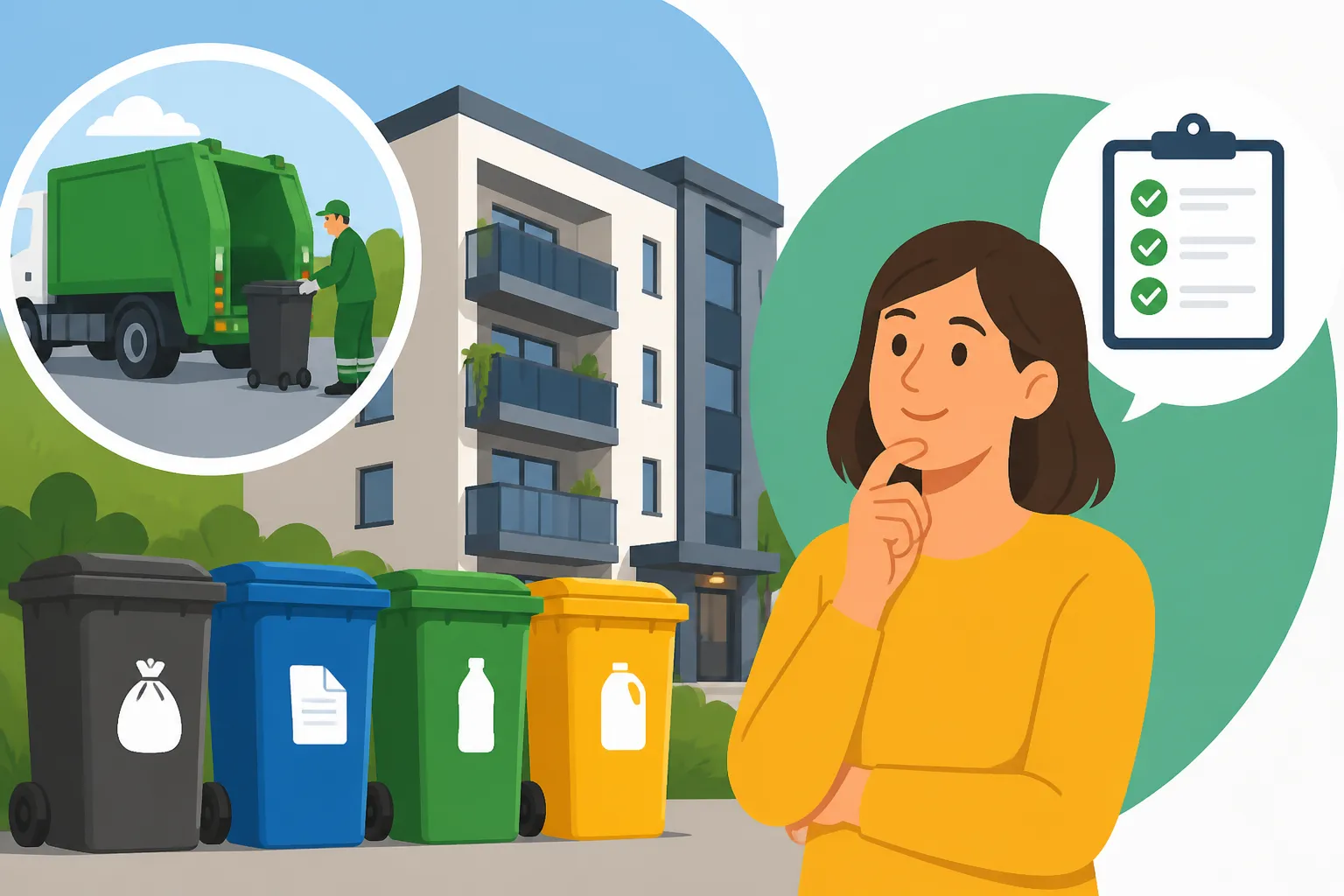
Poland uses a five-bin system, each with a distinct colour and purpose. You’ll usually find these bins grouped together in a dedicated waste area within your apartment building or just outside it.
-
Blue Bin: Paper (Papier)
- What goes in: Clean paper, cardboard packaging (flattened!), newspapers, magazines, brochures, notebooks, paper bags.
- What stays out: Greasy or dirty paper (like pizza boxes – unless they’re perfectly clean), used tissues, wet paper, composite cartons (like milk or juice cartons, which go in plastics), nappies.
- Common mistake: Putting in paper with plastic coatings or food residue. If it's got food on it, it usually belongs in the mixed waste.
-
Green Bin: Glass (Szkło)
- What goes in: Coloured and transparent glass bottles, jars (without lids – lids go into plastics/metals or mixed depending on material). Ensure they are empty.
- What stays out: Ceramic, porcelain, drinking glasses, mirrors, window panes, heat-resistant glass (like Pyrex), light bulbs, old medicines (take these to a pharmacy!), broken glass from windows. These items have different melting points or compositions and contaminate glass recycling.
- Important note: You generally don’t need to remove labels from bottles and jars, but give them a quick rinse.
-
Yellow Bin: Plastics & Metals (Metale i Tworzywa Sztuczne)
- What goes in: Plastic bottles (squashed!), plastic packaging, plastic bags, yogurt pots, plastic caps, empty beverage cartons (tetrapaks like milk/juice), metal cans (from food or drinks), aluminium foil.
- What stays out: Medical waste, dirty plastic packaging (e.g., heavily soiled cooking oil bottles), toys, batteries (special collection points), hazardous materials.
- This is often the largest bin for many households because so much of our daily consumption comes in plastic and metal packaging. A quick rinse helps but isn't always strictly required for lightly soiled items.
-
Brown Bin: Bio-Waste (Bioodpady)
- What goes in: Food scraps (peelings, fruit and vegetable waste), garden waste (if applicable to apartment residents, like cut flowers or small plant clippings), coffee grounds, tea bags.
- What stays out: Meat, bones, animal waste, dairy products, cooking oils, wood ashes. These items require different composting processes or are considered mixed waste.
- Smell control: Use compostable bags or dispose of bio-waste frequently to avoid odours, especially in warmer months.
-
Black/Grey Bin: Mixed/Residual Waste (Odpady Zmieszane)
- What goes in: Everything that doesn't fit into the other categories, and cannot be recycled. This includes used tissues, nappies, contaminated paper/plastic, broken ceramics, ash from wood-burning fireplaces (if allowed), animal litter, small bits of textiles.
- Think of this as your "last resort" bin. If you're unsure where something goes and it's not hazardous, it likely belongs here.
- The goal is to minimise the amount of waste in this bin through proper segregation of the other categories.
Beyond the Bins: Bulky Waste and Hazardous Materials
The five main bins cover your everyday household waste, but what about those trickier items? This is where things get a little more specific and often require a separate effort.
-
Bulky Waste (Odpady Wielkogabarytowe): This includes old furniture (sofas, tables, chairs), mattresses, bicycles, and large appliances that don't fit into regular bins. Municipalities usually organise periodic collection days for bulky waste, often once a month or quarterly. Your building administration will typically inform residents about these dates, or you can check your city's waste management website. Sometimes, you might need to call a special number to arrange a pick-up. If you're moving and have a lot of large items, consider hiring a specialised removal service. Companies like Sirelo can connect you with movers who might also offer disposal services, especially if you're dealing with a whole apartment's worth of stuff.
-
Electronics (WEEE – Waste Electrical and Electronic Equipment): Old TVs, fridges, washing machines, computers, phones, hair dryers – these cannot go into regular bins. Poland has designated collection points (Punkt Selektywnej Zbiórki Odpadów Komunalnych – PSZOKs) where you can drop off electronics. Larger electronics stores are also legally obliged to accept old appliances when you purchase a new one. Some municipalities also offer specific collection days for WEEE.
-
Hazardous Materials: This category includes paints, solvents, pesticides, engine oils, medicines, batteries, and certain chemicals.
- Batteries: Often have small collection boxes in shops, supermarkets, or at PSZOKs.
- Medicines: Expired or unused medicines should never be flushed down the toilet or thrown in the bin. Pharmacies in Poland are equipped with special bins for medicine disposal. You can simply walk into most Apteka (pharmacy) and drop them off. Check out our guide on Prescription Medications and Pharmacies in Poland: The Complete Guide for more details on this.
- Paints, Solvents, Chemicals: These must be taken to a PSZOK or specific hazardous waste collection points. Again, your local municipality's waste website will have the most accurate information.
Understanding these categories and their proper disposal methods is key to being a responsible resident in Poland. It can seem like a lot to remember at first, but with a little practice, it becomes second nature.
Here's a quick summary table to help you remember the main categories:
| Waste Category | Bin Colour | Common Items | Exclusions (Common Mistakes) |
|---|---|---|---|
| Paper (Papier) | Blue | Newspapers, magazines, cardboard boxes, paper bags, brochures, clean office paper | Greasy pizza boxes, used tissues, wet paper, composite cartons, nappies |
| Glass (Szkło) | Green | Glass bottles, jars (empty, rinsed, lids off) | Ceramics, porcelain, mirrors, window panes, light bulbs, heat-resistant glass, drinking glasses, medical glass |
| Plastics & Metals (Metale i Tworzywa Sztuczne) | Yellow | Plastic bottles, plastic packaging, bags, yogurt pots, metal cans, aluminium foil, beverage cartons | Heavily soiled plastics, medical waste, batteries, toys, hazardous chemicals |
| Bio-Waste (Bioodpady) | Brown | Food scraps, fruit & vegetable peelings, coffee grounds, tea bags, garden clippings | Meat, bones, animal waste, dairy, cooking oils, wood ash, fat |
| Mixed/Residual (Odpady Zmieszane) | Black/Grey | Used tissues, nappies, contaminated paper/plastic, broken ceramics, ash, animal litter | Anything that can be properly segregated into other coloured bins |
Setting Up and Maintaining Waste Collection in Your Apartment
Now that you understand the "what" of waste segregation, let's tackle the "how" – specifically, how it all gets set up and maintained when you live in an apartment building. The good news is, as an individual tenant, you rarely have to lift a finger to initiate services. The tricky part is ensuring you're compliant with the building's specific nuances.
Initial Setup: Usually Handled for You
When you move into an apartment in Poland, you generally don't need to worry about calling up the local waste management company to "set up" your service. This is a significant relief, as it's one less administrative hurdle to jump over when you're already trying to navigate things like setting up utilities or getting your [PESEL number]. For apartment buildings, waste collection is almost always an established service managed by the building administration (the spółdzielnia or wspólnota).
What does this mean for you? It means the bins are already there, the collection schedule is already fixed, and the contract with the municipal waste company is already in place. Your landlord, or the real estate agent assisting you, should be able to point you to the designated waste area (usually in the basement, courtyard, or a separate enclosure) and briefly explain the segregation rules. When you're first moving to Poland, it might feel like everything is a battle, so it’s good to know some things are taken care of. However, if you are looking for more general advice on settling in, our guide on The Complete Guide to Moving to Poland: Your First 90 Days (2027) covers many other aspects of getting started.
Understanding Your Building's Specific Rules
While the general five-category segregation system is universal across Poland, each spółdzielnia or wspólnota can have its own minor variations or specific instructions. These might include:
- Location of Bins: Where exactly are the bins? Is it a separate room, an outdoor enclosure, or an underground system? Knowing this from day one is essential.
- Access: Do you need a special key or code to access the waste room? If so, make sure you get this from your landlord or building manager.
- Collection Schedule: While the city dictates overall collection frequency, your building might have a detailed schedule posted for specific waste types. For example, bio-waste might be collected more frequently than glass.
- Bulk Waste Procedures: How does your specific building handle bulky waste or old electronics? Do they organize special collection days, or do you need to take them to a PSZOK yourself? This is crucial for larger items.
- Internal Regulations: Some buildings might have additional rules, like requiring specific types of bags for bio-waste or prohibiting certain items due to space constraints or past issues.
How to find this information:
- Ask your landlord or real estate agent: They should be your first point of contact. They live there too (or manage properties there), so they should know the drill.
- Check the building's notice board (tablica ogłoszeń): Polish building administrations love notice boards! You’ll often find detailed waste segregation instructions, collection schedules, and information about special collections posted here. They might be in Polish, so keep a translation app handy (and a good mobile data plan like one from Airalo can be a lifesaver for immediate translations).
- Contact the building administration directly: If your Polish is up to it, or if they have an English-speaking representative, this is the most reliable way to get precise information. Their contact details are usually on the notice board or in your rental contract.
- Look for information online: Many larger spółdzielnie or wspólnoty have websites where they post regulations and news, including waste management details.
It's really worth taking the time to understand these specific rules. Not only will it make your life easier, but it shows respect for your neighbours and the communal living arrangements.
Your Monthly Contribution: Woven into Your Czynsz
As mentioned earlier, you won't receive a separate bill for waste collection. Instead, the cost is embedded within your monthly czynsz – the administrative fees you pay to your landlord, who then passes it on to the building administration. This covers not just waste, but also common area maintenance, heating, water (sometimes), and other services.
How is the cost calculated?
The method for calculating your individual share of the waste collection fee can vary. Common methods include:
- Per person: This is very common. The fee is calculated based on the number of registered residents in your apartment. This is why it's crucial to correctly register your residence (known as zameldowanie) with the local authorities. Our guide on Registering Your Residence (Zameldowanie) in Poland: The Complete Guide can help you with this important process.
- Per apartment: Less common for waste, but sometimes applied for general building maintenance.
- Based on water usage: In some municipalities, the waste fee might be linked to your water consumption, assuming higher water usage correlates with more waste.
Your landlord should clearly outline how the czynsz is calculated in your rental agreement. If you have any doubts about what is included or how much you are paying for waste, don't hesitate to ask for a breakdown. Transparency is key here, and understanding your czynsz can significantly impact your overall The Complete Guide to Cost of Living in Poland for Expats (2026).
Common Challenges and Solutions for Expats in Polish Waste Management
Even with the best intentions, navigating Poland's waste management system can present a few head-scratchers for expats. From deciphering Polish signage to dealing with those odd-sized items, it’s rarely as straightforward as we’d like it to be. Let’s tackle some common pain points and offer some practical solutions.
Language Barriers and Information Overload
This is probably the biggest hurdle for new arrivals. The detailed instructions on the bins, the notices from the administracja, and the municipal websites are almost always exclusively in Polish. Trying to figure out if that particular plastic bottle goes into "tworzywa sztuczne" or if your old teacup is "szkło" (it's not, by the way, it's mixed waste!) can feel like an impossible task.
Solutions:
- Translation Apps: This is your best friend. Google Translate, DeepL, or other similar apps with camera translation features are invaluable. Just point your phone at the bin label or notice board, and get an instant (if sometimes imperfect) translation. This is where a reliable data connection, perhaps from a provider like Airalo, really comes in handy – you won't always have Wi-Fi in the waste room!
- Befriend a Local: If you have Polish neighbours who are friendly, don't be shy about asking for help. Most Poles are incredibly helpful when approached politely. A quick "Przepraszam, gdzie wyrzucam butelkę po jogurcie?" (Excuse me, where do I throw out a yogurt pot?) can save you a lot of confusion.
- Online Resources: Many city municipalities have basic information about waste segregation on their websites, and some may offer English versions. Search for "[City Name] odpady segregacja" (waste segregation) and see what you can find. Remember, consistency is key, so once you find a reliable source, stick to it.
Dealing with Bulky or Special Waste
You've moved in, you've unpacked, and now you have a mountain of cardboard boxes. Or maybe it's time to replace that old, uncomfortable sofa. What do you do with items that simply won't fit into the regular bins?
Solutions:
- Cardboard Overload: If you have a significant amount of cardboard from moving, flatten it thoroughly and place it in the blue paper bin. If there's too much for the bin, check with your administracja if they have a special collection or if you can take it to a local PSZOK. Sometimes, you can leave neatly bundled cardboard next to the paper bins, but always confirm first.
- Bulky Waste Days: As discussed earlier, keep an eye on your building's notice board for "gabaryty" (bulky waste) collection dates. If your city offers a service for scheduled bulky waste pickup, this is usually the most convenient option. You often need to leave items at a designated spot on a specific day.
- PSZOKs (Punkt Selektywnej Zbiórki Odpadów Komunalnych): These are municipal collection points for a wide range of segregated waste, including bulky items, electronics, garden waste, hazardous waste, and construction debris. You'll need to transport the items yourself. Find your nearest PSZOK by searching online for "[City Name] PSZOK".
- Private Disposal Services: For larger clearances, especially when you're moving out and have a lot of items that can't be taken to a PSZOK or donated, consider hiring a private company specializing in waste disposal. They will often collect from your apartment for a fee. If you've used a moving service like those found through Sirelo, they might also offer post-move clean-up or disposal as an add-on.
- Donation/Selling: For items still in good condition (furniture, electronics, clothes), consider donating them to charity shops (e.g., in major cities like Warsaw or Krakow) or selling them online via platforms like OLX or Facebook Marketplace. It’s better for the environment and might even get you a few złoty back!
The Dreaded "Incorrect Segregation" Fine
While Poland's waste segregation system is designed to be efficient, it does carry consequences for non-compliance. If your building (or specifically, your apartment's waste) is consistently found to be poorly segregated, the waste collection company can impose higher fees on the entire building. In such cases, the building administration might then pass on these increased costs to individual residents or even impose direct fines if they can identify the culprit.
Solutions to avoid issues:
- Learn the Rules: The best defence is a good offence. Invest time in learning the segregation rules. Use the table above, consult your administracja, and use translation apps.
- When in Doubt, Mixed Waste: If you are absolutely, genuinely unsure where something goes and cannot find any definitive information, it’s usually safest to put it in the black/grey mixed waste bin. While we want to minimise mixed waste, improper segregation is worse, as it can contaminate entire loads of recyclables.
- Communicate with Administracja: If you notice consistent problems in your building (e.g., a bin consistently overflowing, or people clearly not segregating), you can discreetly inform your building administration. They are ultimately responsible for enforcing the rules within the building.
- Storage at Home: Consider having small, clearly labelled bins in your kitchen or utility area for each category (paper, plastic/metal, bio, mixed). This makes daily segregation much easier and less prone to error than trying to sort everything at the main bins.
Setting up your home in Poland includes understanding how to properly manage your waste. It’s part of integrating into your community and contributing positively to your new environment. While it can be a bit of a learning curve, with patience and the right resources, you'll be a waste segregation pro in no time!
Disclaimer
The information provided in this guide is intended for general informational purposes only and does not constitute legal or professional advice. Waste management regulations, fees, and procedures in Poland can vary by municipality and may change over time. While we strive to keep this information accurate and up-to-date, it is always recommended to consult your local municipal office (Urząd Gminy or Urząd Miasta), your building administration (spółdzielnia or wspólnota mieszkaniowa), or official government websites for the most current and specific details applicable to your exact location. We cannot be held responsible for any errors or omissions, or for any actions taken based on the information provided herein.