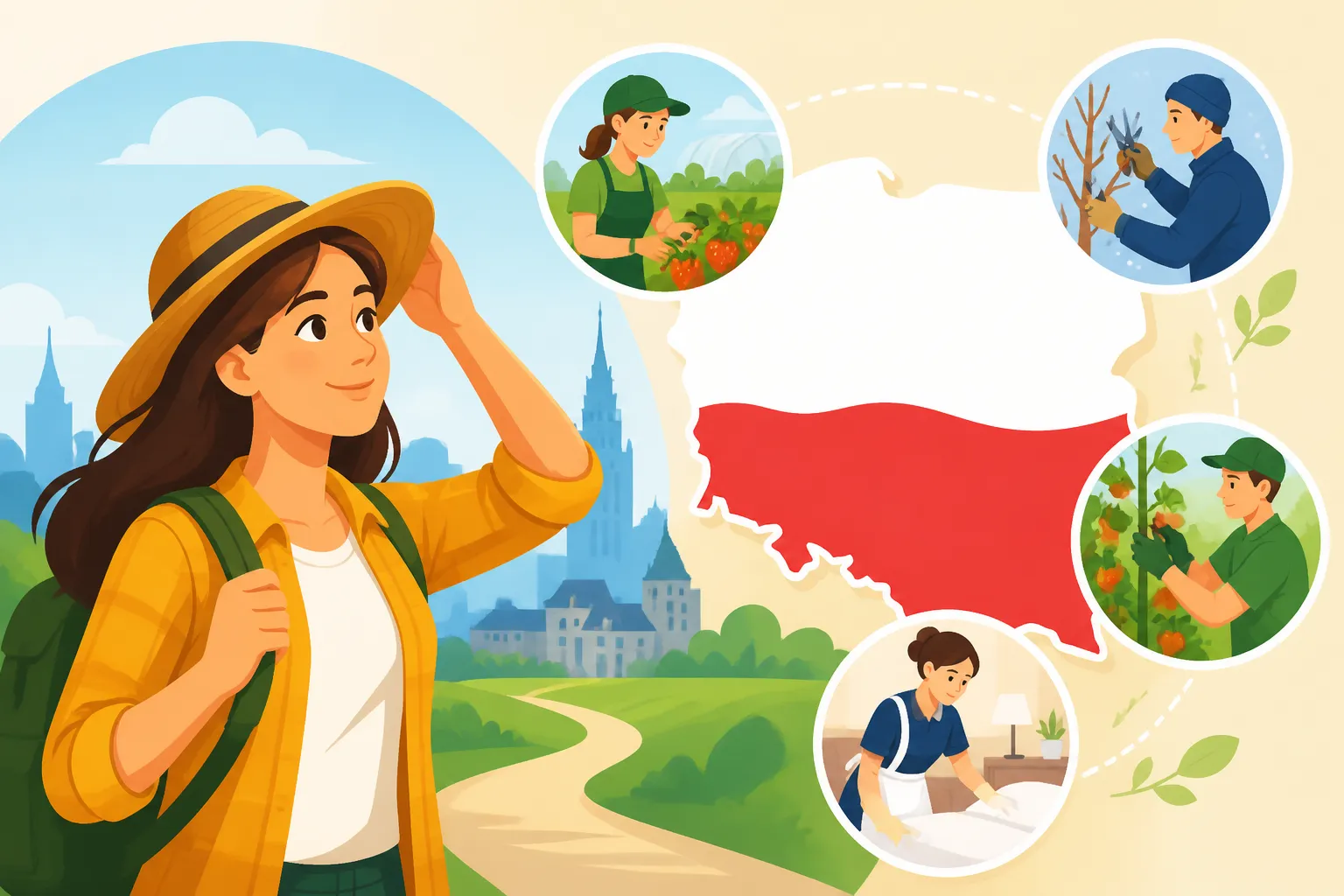
How Do I Find Seasonal Work in Poland?
Dreaming of spending a summer picking strawberries in the Polish countryside or hitting the slopes as a ski instructor in Zakopane? Seasonal work in Poland sounds idyllic, offering a chance to live abroad for a short period without the long-term commitment. But let me tell you, navigating the job hunt, understanding the local work culture, and especially dealing with the bureaucratic paperwork as a foreigner can feel like trekking through a deep, unfamiliar forest. This guide is here to shine a light on the path, helping you understand where to find these opportunities, what legal hoops you’ll need to jump through, and how to make the most of your temporary Polish adventure.
The Diverse Landscape of Seasonal Work in Poland
When we talk about "seasonal work" in Poland, it's not a single, monolithic entity. It's a broad category encompassing various sectors that experience fluctuations in demand tied directly to the time of year. For us expats, understanding these cycles is key to identifying viable opportunities. This isn't just about picking fruit; it's about tapping into the rhythms of Polish life and economy.
Agricultural Work: The Backbone of Rural Seasonal Employment
Poland has a robust agricultural sector, particularly known for its fruit and vegetable production. This is often the first thing that comes to mind when people think of seasonal work here, and for good reason. The demand for manual labour skyrockets during planting, tending, and harvesting seasons.
- Fruit Picking: Think strawberries, raspberries, currants, apples, and cherries. The strawberry season typically kicks off in late spring (May-June), followed by raspberries and other soft fruits through the summer, and apples into late summer and early autumn. These jobs are incredibly physical, demanding long hours, often under the sun or in challenging weather conditions. You’ll usually find these opportunities in regions known for their orchards and fields, such as Lubelszczyzna (around Lublin), Mazovia (especially south of Warsaw), and parts of Wielkopolska. Accommodation is often provided by the farmer, sometimes basic dormitories or shared houses, which can be a double-edged sword: it’s convenient, but conditions vary wildly, so be sure to clarify this upfront.
- Vegetable Harvesting: Potatoes, onions, cabbage, and root vegetables also require significant seasonal labour. While perhaps less romantic than fruit picking, these roles are just as vital and offer similar temporary employment during their respective seasons.
- Nurseries and Greenhouses: Beyond direct harvesting, nurseries and greenhouses also hire seasonal staff for planting, potting, and general maintenance. This can offer a slightly different environment than an open field.
The reality of agricultural work is tough. It’s physically exhausting, the pay is often minimum wage or slightly above, and you're typically paid per kilogram picked or per hour, meaning your income can fluctuate with your speed and the weather. Many foreigners, particularly from neighbouring countries, come to Poland for these jobs, so there can be competition.
Tourism and Hospitality: Serving the Seasonal Rush
Poland is a stunning country, drawing tourists year-round, but specific regions see massive influxes during peak seasons. This translates into a wealth of seasonal job opportunities, particularly for those with language skills.
- Summer Resorts: Along the Baltic Sea coast (think Gdańsk, Sopot, Gdynia, and smaller towns like Łeba or Międzyzdroje), the summer months (June-August) are bustling. Hotels, guesthouses, restaurants, cafes, and ice cream parlours are desperate for extra staff. Roles include waitstaff, bartenders, kitchen assistants, cleaners, receptionists, and animators for children. If you have any experience in hospitality, this is a prime area to look. Many establishments cater to German tourists, so German language skills can be a huge asset, alongside English.
- Winter Sports Destinations: Zakopane, Białka Tatrzańska, and other towns in the Tatra Mountains come alive in winter. Ski resorts need instructors, lift operators, equipment rental staff, and hospitality workers for the influx of skiers and snowboarders. The season typically runs from December to March, depending on snow conditions. Being able to speak English is highly valued, and if you can speak Polish, even better.
- City Tourism: Major cities like Krakow, Warsaw, and Wrocław experience increased tourism during school holidays (summer and winter breaks) and around major festivals. While not as purely seasonal as coastal or mountain resorts, there’s often a need for extra staff in museums, tour companies, and larger hotels during these periods. Think about roles like tour guides (if you have local knowledge and language skills), customer service, or event support.
- Festivals and Events: Throughout the year, especially in spring and summer, Poland hosts numerous festivals, concerts, and cultural events. These temporary gatherings often need staff for ticketing, security, vendor support, and logistics. Keep an eye on local city event calendars for these short-term gigs.
These roles often offer a more social environment than agricultural work and can be excellent for improving your language skills and meeting people. However, they can also involve irregular hours, including evenings and weekends.
Your Seasonal Job Hunt Toolkit
Finding seasonal work in Poland requires a proactive approach and knowing where to cast your net. It’s not always as straightforward as searching a generic job board, especially for shorter-term roles. You need to think like a local, or at least know where the locals go for these types of opportunities.
Online Job Portals and Social Media Groups
While many seasonal jobs are still found through word-of-mouth, online platforms are increasingly important, even for temporary roles.
- General Polish Job Boards: Start with the big players like Pracuj.pl, OLX.pl, and GoWork.pl. While these are primarily for long-term positions, many larger companies, especially in hospitality, will post their seasonal needs here. Use keywords like "praca sezonowa" (seasonal work), "pomocnik" (helper), "pracownik tymczasowy" (temporary worker), or specific roles like "kelner sezonowy" (seasonal waiter) or "pomoc kuchenna" (kitchen helper). Don't forget global aggregators like Indeed.com/pl and Jooble.org, which often scrape listings from smaller sites.
- Expat and Local Facebook Groups: Seriously, don't underestimate the power of Facebook. There are countless groups for expats in Polish cities (e.g., "Expats in Warsaw," "Krakow Expats") where people share job leads, tips, and even direct offers. Beyond expat groups, look for local community groups or groups dedicated to specific industries (e.g., "Praca w Zakopanem," "Sezonowa Praca Lubelskie"). People often post urgent needs for fruit pickers or last-minute hospitality staff directly in these groups.
- Specialized Tourism Portals: For roles in hotels and restaurants, some industry-specific job boards might exist, though they are less common than general ones. Your best bet is often to check the careers sections of major hotel chains directly, or portals listing hospitality vacancies in popular tourist regions.
Remember that competition can be fierce, especially for roles that offer better pay or are in attractive locations. Having a Polish-style CV, even for seasonal work, can give you an edge. You can find more detailed advice on this in our guide on How to Write a Polish-Style CV and Cover Letter.
Direct Applications and Local Networking
Sometimes, the best way to get a seasonal job is to go old school and directly approach employers or leverage local connections.
- "Walking In" Applications: This is particularly effective in smaller towns and tourist areas. During the lead-up to a season (e.g., May for summer, November for winter), print out your CV (in Polish and English if possible) and literally walk into hotels, restaurants, bars, and shops. Ask if they are hiring for the upcoming season. This shows initiative and allows them to put a face to a name immediately. Many smaller, family-run establishments prefer this personal touch.
- Local Employment Offices (Powiatowy Urząd Pracy): While primarily focused on Polish citizens and long-term employment, these offices can sometimes have listings for seasonal agricultural work, especially in rural areas. However, for non-EU citizens, the administrative hurdles can be significant, and it’s usually not the most efficient route. If you're an EU citizen, it might be worth checking, but don't expect a wealth of English-speaking assistance.
- Word-of-Mouth: Once you're in Poland, the fastest way to hear about opportunities is through people you meet. Talk to other expats, locals, and staff at places you frequent. Many seasonal jobs are filled informally, especially in agriculture, where farmers might ask current workers if they know anyone else who needs a job. This is where living in the target area before the season starts can be a massive advantage.
Timing is critical for direct applications. Start your search a few weeks to a month before the peak season begins to catch employers as they are ramping up their hiring.
The Not-So-Glamorous But Essential: Legalities and Paperwork
This is often where the dream of seasonal work bumps into the hard reality of bureaucracy. For any foreigner, understanding the legal framework around working in Poland is paramount, even for a short stint. Get this wrong, and your seasonal adventure could turn into a deportation nightmare. Poland takes its immigration and labour laws seriously, and ignorance is rarely an excuse.
Work Permits and Visas for Non-EU/EEA Citizens
If you're coming from outside the European Union or European Economic Area, you absolutely need to sort out your legal right to work before you even think about picking up a shovel or serving a pierogi. This is non-negotiable.
- Work Permit (Zezwolenie na Pracę): This is the fundamental document. Generally, your employer needs to apply for this on your behalf. There are different types, but for seasonal work, you'll most likely encounter a simplified procedure for seasonal agricultural and horticultural work (type S work permit), or a standard work permit if your job doesn't fall into the seasonal category. The process involves your employer demonstrating that they couldn't find a suitable Polish or EU candidate, often through a labour market test (though simplified for seasonal work). You can learn more about this in detail in our guide on How to Get a Work Permit (Zezwolenie na Pracę) in Poland.
- National Visa (Type D): Once you have a work permit (or a declaration of intent to employ, which can sometimes precede a permit for certain seasonal roles), you'll likely need a National Visa (Type D) to enter Poland and work legally. This is applied for at a Polish consulate or embassy in your home country. Remember, a Schengen tourist visa (Type C) does not allow you to work. Attempting to work on a tourist visa is illegal and carries severe consequences. For a deeper dive into this, check out How to Get a National (Type D) Visa for Poland.
- Residence Permits (Karta Pobytu): For genuinely short-term seasonal work (a few months), a work permit and national visa might suffice. However, if your seasonal work extends for more than 90 days in a 180-day period, or you plan to stay longer for other reasons, you might need to apply for a temporary residence permit (Karta Pobytu) which consolidates your right to stay and work. This is a more complex process usually applied for at the Urząd Wojewódzki (Provincial Office) in Poland. Our comprehensive guide on How to Get a Temporary Residence Permit (Karta Pobytu) in Poland (2027) covers this in detail.
- PESEL Number: While not directly a work permit, getting a PESEL number (Polish equivalent of a national identification number) is crucial for almost all aspects of life in Poland, including employment, banking, and healthcare. Your employer will almost certainly require it. We explain its importance in How to Get Your PESEL Number and Why It Matters for Healthcare.
The key takeaway here: start this process early. Work permit and visa applications can take weeks, sometimes months, to process. Don't wait until the last minute.
Understanding Employment Contracts
Even for seasonal roles, you’ll be entering into a formal agreement. In Poland, several types of contracts are common, each with different rights and obligations.
- Umowa o Pracę (Employment Contract): This is the most protective type of contract, offering full employee rights including paid leave, notice periods, and social security contributions. While less common for very short-term seasonal work (e.g., a few weeks of fruit picking), it is used for longer seasonal roles in hospitality or tourism, especially if the employer wants to secure your services for the entire season.
- Umowa Zlecenie (Mandate Contract): This is exceedingly common for seasonal and casual work in Poland. It's a civil law contract, not an employment contract, and offers fewer protections. You don't get paid vacation, and notice periods are typically shorter or non-existent. However, employers are still obligated to pay social security (ZUS) and health contributions (Składka Zdrowotna) if it's your only or primary source of income. This is a popular choice for seasonal agricultural workers and many short-term hospitality roles due to its flexibility.
- Umowa o Dzieło (Specific Work Contract): This contract is for a specific, defined "work result" (e.g., painting a mural, writing an article). It's generally not used for ongoing seasonal labour or service roles. If an employer offers this for a job that clearly isn't about a specific creative outcome, be wary, as it significantly reduces your rights and employer obligations.
It's vital to understand the contract you're signing. Always ask for a copy in English if your Polish isn't fluent, and don't be afraid to ask questions. Our guide on Understanding Polish Employment Contracts and Worker Rights (2027) can shed more light on these differences.
Taxes and Social Security Contributions
Even as a seasonal worker, you are subject to Polish tax laws. This often surprises newcomers, who think short-term work might be exempt. It's not.
- ZUS Contributions: Under an Umowa o Pracę or Umowa Zlecenie (if it's your primary income), your employer will deduct ZUS contributions (for social security and health insurance) from your gross salary. These contributions give you access to the public healthcare system (NFZ) and contribute to future pension rights (though for short-term work, the latter is usually minimal).
- Income Tax (PIT): Your employer will also deduct an advance payment for income tax (PIT) from your salary. At the end of the tax year, you'll need to file an annual tax return (PIT). This can be confusing, especially if you leave Poland before the filing deadline. For detailed insights into navigating the Polish tax system, especially as an expat, resources like Taxes for Expats can be incredibly helpful, or refer to our general guide on The Complete Guide to Taxes in Poland for Expats (2027).
It is absolutely crucial to be clear on your net pay (what you actually receive) versus your gross pay (before deductions) and to understand your obligations regarding taxes and social security. Always keep records of your contracts and payslips.
Practical Tips for Securing and Thriving in Seasonal Roles
Landing a seasonal job is just the first step. To truly make the most of your experience in Poland, there are a few practicalities and cultural nuances that can make all the difference.
The Language Barrier: A Bridge or a Wall?
Let's be real: Polish isn't the easiest language. While many younger Poles, especially in cities and tourist areas, speak excellent English, relying solely on it for seasonal work can limit your options and impact your experience.
- Basic Polish Goes a Long Way: Even learning a few essential phrases – greetings, numbers, directions, polite requests – can dramatically improve your prospects and daily life. Employers appreciate the effort, and locals will be much more receptive. For roles involving customer interaction, basic Polish is often a requirement, or at least a significant advantage. Consider taking some online lessons before you arrive; platforms like iTalki can connect you with Polish tutors for very practical, job-focused language learning. Even a few basic phrases can make a massive difference.
- Jobs Where English is Sufficient: In international hotel chains, larger city hostels, or companies catering specifically to foreign tourists, English might be enough. Some IT-related seasonal gigs or international event support might also be English-only. However, in agriculture or smaller, local establishments, Polish (or sometimes Ukrainian or Russian, given the large migrant worker populations) will be essential.
Don't let the language barrier deter you entirely, but be realistic about its impact on your job search and daily interactions. It's an opportunity to learn something new!
Accommodation and Transportation
Seasonal work often means being in specific locations, which can be remote or highly touristic. Thinking about where you'll lay your head and how you'll get around is paramount.
- Employer-Provided Accommodation: Many agricultural jobs and some hospitality roles, especially in remote resorts, offer accommodation as part of the package. This can range from basic shared rooms on a farm to more comfortable staff housing. Always clarify the conditions, cost (is it deducted from your pay?), and amenities before you commit. While convenient, it can also mean living with co-workers in close quarters, which isn't for everyone.
- Finding Your Own: If accommodation isn't provided, you'll need to factor this into your budget. Look for short-term rentals on local Facebook groups, OLX.pl, or even Airbnb for monthly stays. In tourist areas, prices can skyrocket during peak season, so booking well in advance is crucial. Consider shared apartments to cut costs.
- Public Transport: Poland has a decent public transport system in cities and between major towns (buses, trains). However, rural agricultural areas might have limited options. Assess your commute to work. Will you need to bike, walk, or rely on rides from colleagues? Our guide on The Expat Guide to Public Transport in Poland can help you understand the options. If you're looking at very rural farm work, reliable personal transport (or a kind employer) is often necessary.
Managing Expectations and Cultural Nuances
Poland is a fantastic country, but like any place, it has its quirks. Going into seasonal work with an open mind and realistic expectations will save you a lot of grief.
- Work Ethic: Poles are generally hard workers. Be prepared for demanding schedules, especially in agricultural and hospitality sectors during peak times. Long hours are not uncommon, and a "can-do" attitude is highly valued.
- Cultural Differences: While friendly, Poles can sometimes seem reserved at first. Politeness is important, and a good sense of humour (even if it takes a while to 'get' Polish jokes) can help. Don't be afraid to ask questions if you don't understand something; it's better than making assumptions.
- Cost of Living vs. Wages: While Poland is generally more affordable than Western Europe, seasonal wages might only just cover your living expenses, especially if you're earning minimum wage. Do your research on The Complete Guide to Cost of Living in Poland for Expats (2026) to ensure your expected income aligns with your anticipated costs. Don't come expecting to save a fortune, but rather for the experience and cultural immersion.
- Be Flexible: Seasonal work often involves adapting to changing circumstances, whether it's weather affecting harvests or unexpected rushes in a restaurant. The more flexible and adaptable you are, the more successful and enjoyable your experience will be.
Seasonal work in Poland offers a unique window into the country's culture, economy, and natural beauty. It’s an opportunity to meet new people, gain new skills, and create unforgettable memories. While there are definitely hurdles, with careful planning and a bit of determination, your temporary Polish adventure can be incredibly rewarding.
Disclaimer
The information provided in this guide is for general informational purposes only and does not constitute legal, financial, or immigration advice. While we strive to keep the information up-to-date and correct, laws and regulations in Poland, particularly concerning immigration and employment, can change frequently. It is essential to consult with relevant official sources, such as the Polish Ministry of Foreign Affairs, your local Polish embassy or consulate, or a qualified legal professional, for advice tailored to your specific situation before making any decisions related to seasonal work or residency in Poland.