Can I Get Citizenship Through a Polish Great-Grandparent?
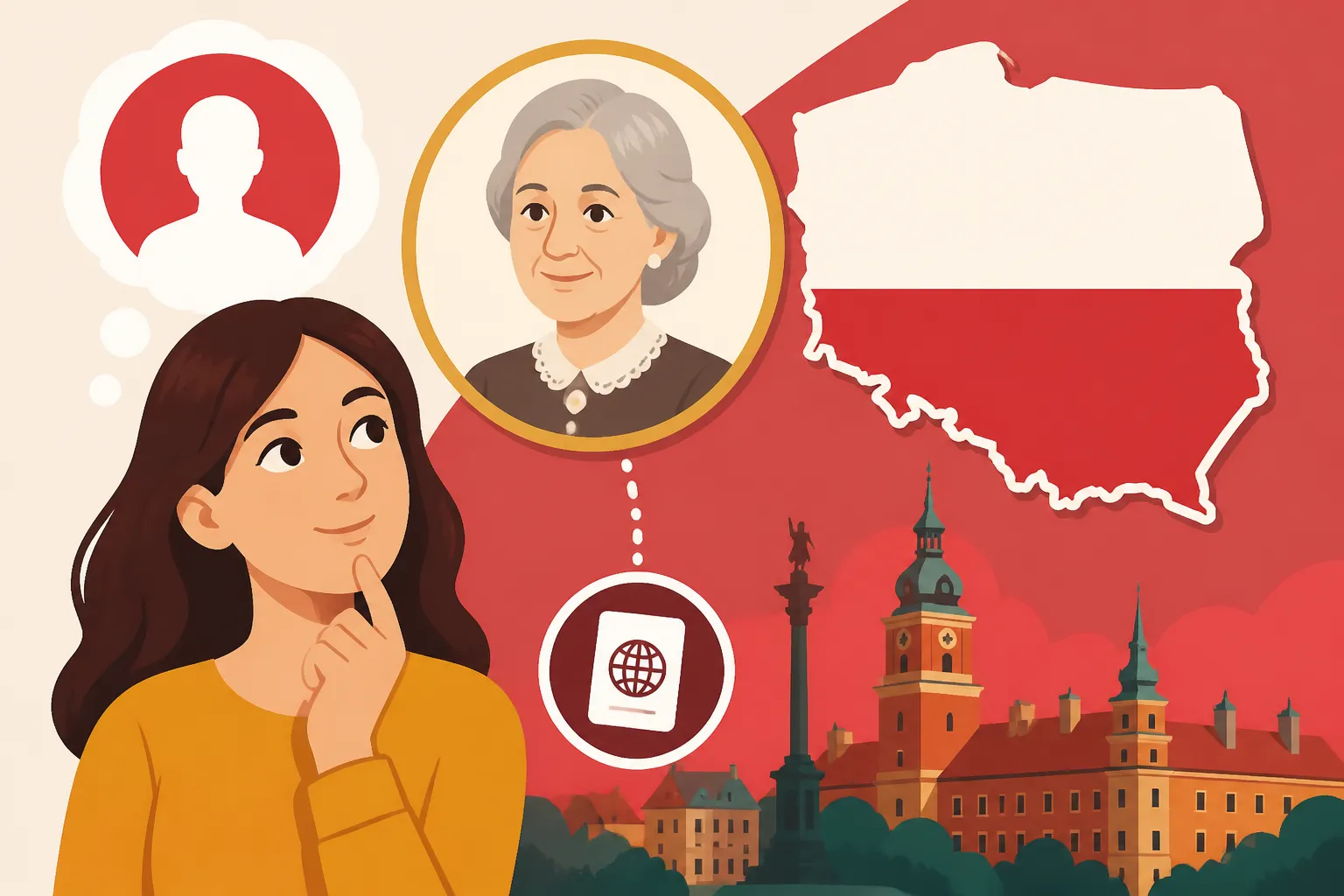
Oh, the age-old question that many expats and descendants of Poles abroad grapple with: "Can I get Polish citizenship through my great-grandparent?" It’s a completely understandable query, often born from a desire to connect with heritage, secure EU rights, or simply untangle a family mystery. The truth is, while it's certainly possible to claim Polish citizenship through ancestry, establishing that link back to a great-grandparent can be an incredibly complex and often frustrating journey. This guide will meticulously break down the intricate rules, historical caveats, and bureaucratic hurdles you'll face when trying to confirm your Polish citizenship through a connection that far back.
Understanding the Fundamentals: Polish Citizenship by Descent
Let's clear the air right away: Poland primarily operates on the principle of ius sanguinis, or "right of blood." This means citizenship is typically passed down through generations from parent to child, rather than by the place of birth (ius soli). So, if your ancestor was a Polish citizen, theoretically, that citizenship should have been passed down to their children, and then to their children's children, and so on, right down to you. The process you'll be undertaking is officially called "Confirmation of Polish Citizenship," not "granting" it, because the legal premise is that you already are a Polish citizen, but just need the government to formally acknowledge it.
Who Can Apply? The Direct Line Rule and Its Nuances
For the "right of blood" to hold, the citizenship must have been passed down in an unbroken chain from a direct ancestor who was unequivocally a Polish citizen. This means each successive generation—your great-grandparent, then your grandparent, then your parent—must have been a Polish citizen at the moment of the next generation's birth. If at any point in this lineage, an ancestor lost their Polish citizenship before having their child, the chain is broken, and you cannot claim citizenship by descent through that line.
This is where the great-grandparent connection becomes significantly more challenging than, say, claiming through a grandparent or parent. With each generation, the chances of the citizenship link being severed by historical events or legal changes multiply. For instance, if your great-grandparent was a Polish citizen when your grandparent was born, great! But then, if your grandparent subsequently lost their Polish citizenship before your parent was born, your parent was never Polish, and neither are you through that line. The path to Polish citizenship through descent, as outlined in guides like Polish Citizenship: Routes Through Residence, Descent and Naturalisation (2027), hinges on this unbroken lineage.
The Crucial Dates: When Polish Citizenship Could Have Been Lost
Polish citizenship law has undergone several significant changes throughout the 20th century, particularly influenced by the tumultuous history of Poland itself. Understanding these historical periods is absolutely paramount, as they define when and how an ancestor might have lost their Polish citizenship, often without even realizing it.
One of the most critical dates to remember is January 19, 1951. The "Act on Polish Citizenship" of 1951 codified various ways citizenship could be lost. Before this date, various regulations (or lack thereof) from the interwar period (1918-1939) and immediate post-war period dictated citizenship.
Here are the most common scenarios for citizenship loss that often affect claims through great-grandparents or grandparents:
- Acquisition of Foreign Citizenship Before January 19, 1951 (for men): If a male Polish citizen acquired citizenship of another country before January 19, 1951, he would have typically lost his Polish citizenship. This was particularly common for men who emigrated and naturalized in countries like the USA, Canada, or Australia. Wives and minor children (under 18) often followed the husband's citizenship status automatically.
- Military Service in a Foreign Army: If a Polish citizen voluntarily served in a foreign army (other than Allied armies during WWII, with specific exceptions) prior to 1951, they generally lost their Polish citizenship.
- Emigration and Lack of Registration: In some cases, particularly after World War II, Poles who settled permanently abroad and did not register with Polish authorities for an extended period could have been deemed to have lost their citizenship, though this is a more complex area and often debated.
- Naturalization after January 19, 1951: After January 19, 1951, acquiring foreign citizenship automatically resulted in the loss of Polish citizenship, unless special permission to retain Polish citizenship was granted by the Polish authorities (which was rare). However, this primarily impacts your parents or you, not typically your great-grandparents or grandparents who likely emigrated much earlier.
It's a bureaucratic maze, and many Poles who left the country generations ago simply lived their lives, started families, and didn't concern themselves with the intricacies of their Polish legal status. Therefore, the onus is on you to prove that the citizenship was never broken. This is the core challenge of pursuing your claim for confirmation of Polish citizenship, as detailed in guides like How Do I Apply for Polish Citizenship by Descent (Obywatelstwo).
Digging Deeper: The Great-Grandparent Connection and the Broken Link
When you’re tracing your lineage back to a great-grandparent, you’re dealing with historical periods where records are sparser, and the legal framework around citizenship was less clear-cut or subject to different interpretations. The sheer passage of time makes proving an unbroken chain exponentially harder.
The biggest hurdle is often the "broken link" – the point at which an ancestor inadvertently lost their Polish citizenship. Imagine your great-grandparents emigrated from Poland (then often partitioned territories) in the early 1900s. They settled in, say, the United States, and your grandparent was born there in 1925. If your great-grandparents naturalized as US citizens in 1920, then your grandparent, born five years later, was not born a Polish citizen. The chain is broken right there. It doesn't matter that your great-grandparents were originally Polish; their Polish citizenship ended before your grandparent was born, preventing the transmission of citizenship.
Similarly, if your great-grandparents were Polish citizens when your grandparent was born in 1925, but then your grandparent himself naturalized as a foreign citizen in 1940 (and was male), he would have lost his Polish citizenship. If your parent was then born in 1945, they would not have received Polish citizenship from your grandparent. This is why meticulous research into specific dates of birth, naturalization, and military service for every generation is absolutely non-negotiable.
What Documents Do You Need to Prove the Link?
Proving your Polish lineage is a monumental task, especially when you're looking for connections through a great-grandparent. You’ll need to assemble an arsenal of documents that meticulously trace your family’s history and legal status across generations. Think of it like building a legal case, where every piece of paper is evidence.
Here’s a breakdown of the essential documents:
- Your Documents: Your birth certificate, marriage certificate (if applicable), passport, and any other identity documents.
- Your Parents' Documents: Their birth certificates, marriage certificate, death certificates (if applicable), and any old passports or identity documents. Crucially, if they had any foreign naturalization documents, you'll need those to show when they might have acquired foreign citizenship.
- Your Grandparents' Documents: Their birth certificates, marriage certificate, death certificates (if applicable), and any old Polish identity documents, foreign naturalization certificates, or military records. This generation is often the pivotal one where the chain is either confirmed or broken, especially concerning the 1951 citizenship law.
- Your Great-Grandparents' Documents: Their birth certificates (ideally from Poland), marriage certificate, death certificates, and any evidence of their Polish citizenship. This could include old Polish passports, dowód osobisty (ID cards), military records from Poland, school records, or census records. Most critically, you need to prove they were Polish citizens at the time of your grandparent's birth, and that they did not lose it before that date. This also includes finding evidence (or lack thereof) of their naturalization in another country.
Every single one of these documents, if not originally in Polish, will need a certified translation by a sworn translator in Poland. This requirement for precise documentation is a recurring theme for anyone dealing with Polish bureaucracy, whether it's applying for a residence permit or confirming citizenship. For instance, even for something like a How to Prepare Documents for a Karta Pobytu Application, the detail required is intense.
The Challenge of Proof: Where to Find Records
Finding these historical documents can feel like a genealogical treasure hunt. It's rarely a straightforward process, and often requires patience, persistence, and a willingness to dig deep into archives and old records.
- Polish State Archives (Archiwa Państwowe): This is often your first and best bet for historical records from Poland. Depending on the region your ancestors came from, you'll need to identify the relevant regional archive. These archives hold birth, marriage, and death records, census data, military records, and various administrative documents that can prove your ancestors' presence and citizenship status in Poland. Many archives have digitized their collections, making remote research easier, but some records still require in-person visits or specific requests.
- Civil Registry Offices (Urzędy Stanu Cywilnego): For more recent records (generally post-1945), these local offices hold vital records. If your more immediate ancestors were born or married in Poland, this is where you'd find those certificates.
- Church Records: Before civil registration became widespread or reliable in certain areas, church records (parish registers) were often the primary source for births, marriages, and deaths. These can be particularly valuable for tracing lineage back to the 19th and early 20th centuries.
- Foreign Archives and Immigration Records: Don't forget to check records in the country your ancestors emigrated to. Naturalization records, passenger lists, and census records in your current country can provide crucial dates of arrival and when foreign citizenship was acquired. These are essential for proving when your great-grandparent or grandparent might have lost their Polish citizenship, or ideally, that they didn't before the next generation was born.
This research can be incredibly time-consuming, and dealing with foreign archives, language barriers, and differing record-keeping standards adds layers of complexity. It might even spark a desire to visit Poland to follow in your ancestors' footsteps, and if that leads to thoughts of a longer stay, knowing about The Complete Guide to Moving to Poland: Your First 90 Days (2027) could be a good starting point. If you ultimately get your citizenship and decide to make the move, services like Sirelo can assist with the logistics of international relocation.
The Application Process: Navigating the Urząd Wojewódzki
Once you've painstakingly gathered all your documents and are confident you have an unbroken chain of citizenship, it's time to submit your application. This is done through the relevant Voivodeship Office (Urząd Wojewódzki) in Poland, specifically the Department for Foreigners, or through a Polish Consulate abroad if you reside outside Poland.
The primary application form you’ll be completing is the "Wniosek o potwierdzenie posiadania obywatelstwa polskiego" (Application for Confirmation of Polish Citizenship). This form itself requires detailed information about your entire lineage, often going back multiple generations, and specific dates related to births, marriages, and naturalizations.
The Importance of Legal Assistance
Let me be brutally honest with you: attempting to confirm Polish citizenship through a great-grandparent without specialized legal assistance is akin to trying to build an IKEA wardrobe using only interpretive dance. It’s possible, but highly unlikely to end well, and you’ll probably be left with spare parts and a profound sense of despair.
Here's why a specialized lawyer or firm in Poland is almost essential:
- Complex Historical Laws: Polish citizenship law, particularly when dealing with pre-1951 events, is incredibly nuanced. A lawyer specializing in citizenship can interpret the historical acts, decrees, and international treaties that apply to your specific family's timeline, something almost impossible for an untrained individual to do accurately.
- Intricate Documentation Requirements: Lawyers know exactly what documents are required, where to find them, and how they need to be certified or translated. They can also often help facilitate document retrieval from Polish archives.
- Dealing with Bureaucracy: The Polish administrative system, particularly the Urząd Wojewódzki, is famous for its lengthy processing times and demands for additional documents. A lawyer fluent in Polish and experienced with the system can navigate these challenges, respond to requests efficiently, and advocate on your behalf. While booking an appointment for a Karta Pobytu at the Urząd Wojewódzki can be a trial in itself, imagine doing it for a multi-generational citizenship claim. You can get an idea of the bureaucracy involved by looking at resources like How Do I Book an Urząd Wojewódzki Appointment for My Karta Pobytu?.
- Challenging Adverse Decisions: If your application is initially denied, a lawyer can review the decision, identify grounds for appeal, and represent you in the administrative court system.
While it's an additional expense, the investment in legal counsel for such a complex case often saves immense time, stress, and ultimately, increases your chances of success.
What Happens After Confirmation?
If your application is successful – and congratulations, if it is, you've achieved something truly remarkable! – you will receive an official administrative decision confirming your Polish citizenship. This document is your golden ticket.
With this confirmation, you can then proceed to:
- Obtain a PESEL number: This is Poland's national identification number, essential for almost everything from banking to healthcare. Guides like How Do I Get a PESEL Number and Why It Matters for Healthcare explain its importance.
- Apply for a Polish Passport: Once you have your PESEL and confirmed citizenship, you can apply for a Polish passport, which also grants you full European Union citizenship rights.
- Exercise EU Rights: As an EU citizen, you have the right to live, work, and study anywhere within the European Union, including access to public healthcare systems in Poland (for example, through the NFZ) or other EU countries. However, even with access to public systems, many expats opt for comprehensive private health insurance. For instance, Cigna Global offers excellent international health insurance options that provide broad coverage, which can be a reassuring backup or primary choice depending on your needs. For those considering healthcare options in Poland, a deeper dive into Health Insurance in Poland: Mandatory, Private and Subscription Options Explained is always a good idea.
- Consider Dual Citizenship: Poland generally permits dual citizenship, so you typically won't have to renounce your existing citizenship. More details can be found in resources like Understanding Dual Citizenship Rules in Poland.
It's a long, arduous path, but for many, the connection to their heritage and the benefits of EU citizenship make it a worthwhile endeavor.
Key Historical Dates for Polish Citizenship & Potential Loss
To summarize the intricate timeline, here’s a table outlining some critical dates and their implications concerning Polish citizenship:
| Date/Period | Implication for Polish Citizenship |
|---|---|
| Before 1918 | Poland did not exist as an independent state. Citizenship was tied to the partitioning empires (Austro-Hungarian, German, Russian). Establishing "Polish" citizenship requires proving lineage to someone who would have become a Polish citizen under the 1920 Citizenship Act (e.g., residing in former Polish territories, having Polish ethnicity/language, no foreign citizenship at that time). |
| January 31, 1920 | Polish Citizenship Act of 1920 came into force. This is the foundational law. It defined who became a Polish citizen at independence and how citizenship could be acquired/lost. |
| 1920 – January 18, 1951 | During this period, a male Polish citizen generally lost his Polish citizenship upon acquiring foreign citizenship, unless there were specific exceptions (e.g., certain post-WWII agreements). Wives and minor children often followed the husband's status. |
| January 19, 1951 | Polish Citizenship Act of 1951 came into force. This act introduced stricter rules. Acquisition of foreign citizenship automatically resulted in the loss of Polish citizenship, unless permission to retain Polish citizenship was explicitly granted by Polish authorities. |
| Post-1951 | The principle of automatic loss upon acquiring foreign citizenship generally remained. The primary route for descent is proving an unbroken chain where no ancestor lost Polish citizenship before the next generation's birth. |
| February 15, 1962 | Polish Citizenship Act of 1962 (came into force on 1962-08-22). Replaced the 1951 Act. While it refined some aspects, the core principle of ius sanguinis and conditions for loss remained largely consistent, impacting newer generations. |
| August 15, 2012 | Polish Citizenship Act of 2012 (came into force 2012-08-15). The current primary law. This act consolidated previous laws and simplified some procedures but did not fundamentally alter the historical conditions for citizenship by descent or loss. |
This table underscores why dating your ancestors' movements and naturalizations is absolutely vital for your case.
Disclaimer
This article is for general informational purposes only and does not constitute professional advice. Laws, prices and regulations vary by location and change over time. Consult a qualified professional for guidance on your specific situation.