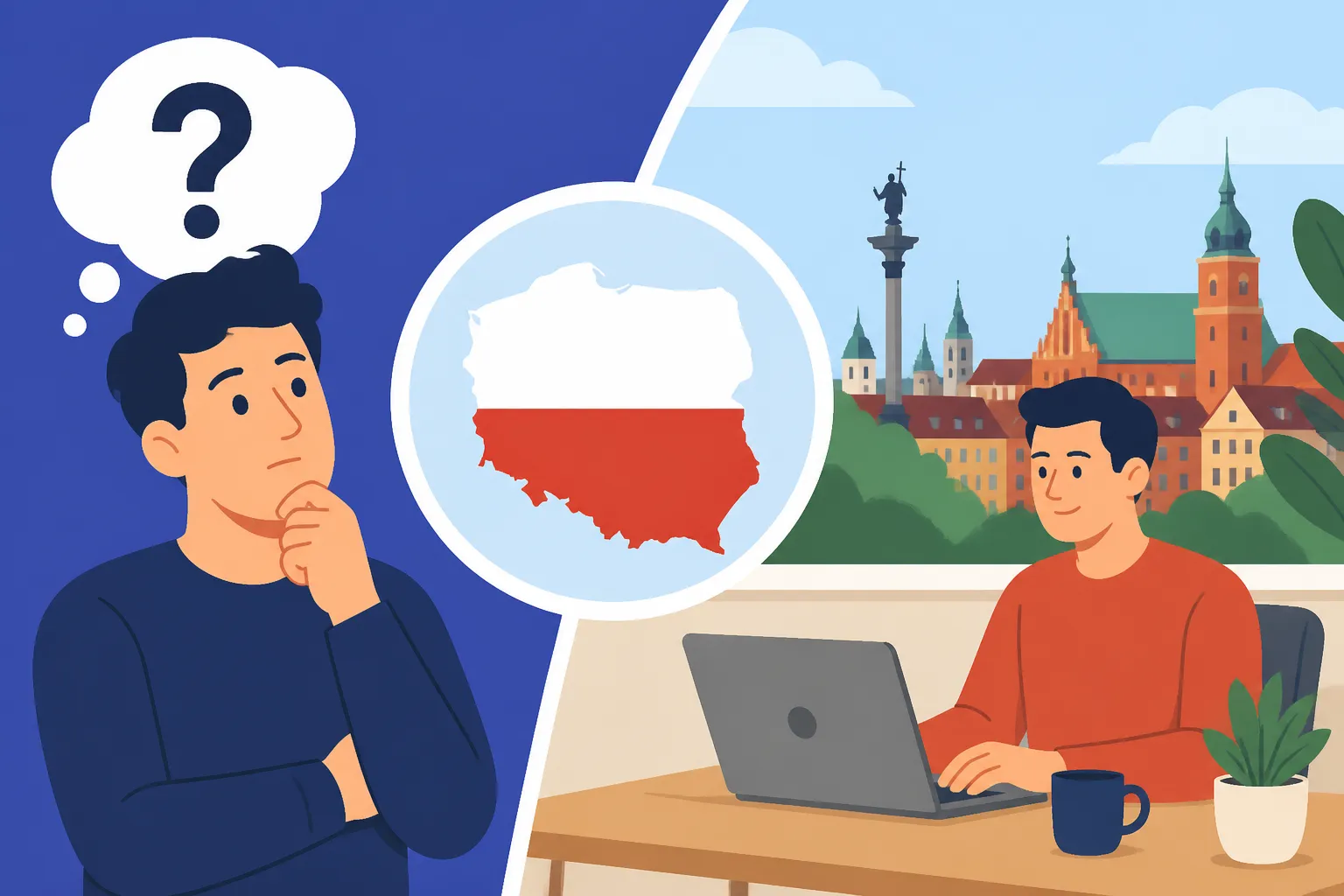
Am I a Tax Resident of Poland If I Work Remotely?
Ah, the joys of remote work! It promises freedom, the ability to live anywhere, and yet, for many of us expats here in Poland, it often brings a rather unwelcome companion: the perplexing question of tax residency. You're working for a company perhaps halfway across the globe, but your feet are firmly planted on Polish soil, and suddenly, the taxman – or rather, the Urząd Skarbowy – is a concept you need to grapple with. This guide is here to shed some light on whether your remote work means you're considered a tax resident of Poland and what that actually entails.
Unpacking Polish Tax Residency: The Core Rules for Remote Workers
Let's be honest, tax rules are rarely straightforward, and when you add international elements into the mix, it can feel like trying to untangle a ball of yarn that’s been attacked by a particularly enthusiastic kitten. But fear not, we'll break down the core principles Poland uses to determine tax residency, specifically for those of us living here but working for a foreign entity. It's crucial to understand these because misinterpreting them can lead to some truly unpleasant surprises down the line.
The 183-Day Rule and Centre of Life Interests
The first, and often most talked about, criterion for Polish tax residency is the "183-day rule." Simply put, if you spend more than 183 days in Poland within a tax year (which, handily, is the calendar year here), you are prima facie considered a Polish tax resident. This rule is quite common internationally, so it might sound familiar to those who've moved around a bit. However, it's not the only factor, and this is where it gets a little trickier for many remote workers.
Let's say you arrived in July and your 183 days will easily be surpassed by the end of the year. Boom, tax resident. But what if you've been bouncing between countries, or you arrived late in the year? This is where the second, more subjective, but equally important criterion comes into play: your "centre of life interests." This isn't just about where you sleep; it's about where your main personal and economic ties are. Are your family, spouse, or children living with you in Poland? Is your main home here, even if you travel for work? Do you have bank accounts, investments, or property in Poland? These are all indicators that Poland is your centre of life interests. For remote workers, even if your actual work is tied to another country, your life might be fully embedded in Poland. The Polish tax authorities will look at things like where your primary residence is, where your bank accounts are, where you're registered with local authorities (your Registering Your Residence (Zameldowanie) in Poland: The Complete Guide), and where you spend your free time. If the majority of these ties point to Poland, then regardless of the 183-day count, you're likely a tax resident. This can be a real head-scratcher, especially for digital nomads or those who initially moved for a short stint that just kept getting extended. It’s always best to err on the side of caution and consider these factors seriously.
When Your Employer is Abroad but You're in Poland
This is the quintessential remote worker dilemma. You're employed by a company based in, say, the US, UK, or Germany. Your salary hits a foreign bank account, and you might not even have Polish clients. Does that automatically exempt you from Polish tax residency? Absolutely not. As discussed, if you meet either the 183-day rule or the centre of life interests test, Poland will likely consider you a tax resident. This means that, from Poland's perspective, your worldwide income – including that salary from your foreign employer – is subject to Polish income tax.
The key takeaway here is that your employer's location doesn't dictate your tax residency. Your physical presence and the establishment of your life in Poland do. This often catches newcomers off guard, who might assume that because their employer isn't Polish, neither are their tax obligations here. It's a common misconception that can lead to significant headaches. You'll need to wrap your head around Understanding Income Tax (PIT) in Poland: The Full Expat Guide and probably file a PIT (Personal Income Tax) declaration here, even if your employer isn't deducting Polish taxes from your paycheck. This requires proactive planning and often a bit of self-discipline to set aside money for taxes you'll eventually owe. It’s a very different beast from having a local employer who handles all the ZUS and tax deductions for you.
The PESEL and NIP Numbers: Your Tax Identifiers
If you're going to be a tax resident in Poland, you'll inevitably need to interact with the tax system, and for that, you need the right identifiers. The two big ones are the PESEL and, in some cases, the NIP. The PESEL (Powszechny Elektroniczny System Ewidencji Ludności) is your universal identification number in Poland, kind of like a national ID number or Social Security Number. If you're residing here and plan to stay, getting a PESEL is almost inevitable and highly recommended. It’s essential for things like opening a bank account, registering with a doctor, and, yes, filing your taxes.
The NIP (Numer Identyfikacji Podatkowej) is your Tax Identification Number. For most individuals who have a PESEL, the PESEL number acts as their NIP for tax purposes. However, if you are, for example, self-employed (a Jednoosobowa Działalność Gospodarcza or JDG) or don't have a PESEL for some reason (which is rare if you're a long-term resident), you might need to apply for a separate NIP. For remote workers, especially those thinking about going freelance while living here, How to Get a PESEL and NIP Number in Poland is an absolute must-read. Without these numbers, engaging with the Polish tax system will be next to impossible. It's one of those administrative hurdles that feels like a rite of passage for every expat in Poland, and it's best to tackle it early rather than later.
Practical Implications of Being a Polish Tax Resident While Remote
So, you've figured out you're a Polish tax resident. Now what? This isn't just an academic exercise; it has real, tangible consequences for your finances and legal standing. It means you're officially part of the Polish tax net, and that comes with both responsibilities and, sometimes, complexities. For those working remotely for foreign companies, this often means taking a much more active role in managing your own tax affairs than you might be used to.
What You'll Need to Declare and How to Do It
As a Polish tax resident, you are generally subject to taxation on your worldwide income. This is crucial. It doesn't matter if your salary comes from a company in California or your rental income is from a property in Spain; Poland expects you to declare it. For remote employees, your salary from your foreign employer falls squarely into this category. You'll need to report this income on your annual PIT declaration. The most common form for employees is PIT-37, but if you have other sources of income or specific deductions, you might use PIT-36.
The process involves gathering documentation of your foreign income (pay slips, bank statements, employment contracts), converting it to PLN (Polish Złoty) using the average exchange rate from the National Bank of Poland (NBP) for the day the income was received, and then inputting it into the correct sections of the PIT form. Many expats find using professional assistance or online tax software helpful, especially in the first few years. Companies like Taxes for Expats specialize in helping foreigners navigate these complexities. You can also utilize the Polish government's e-Urząd Skarbowy platform, which has become much more user-friendly over the years, though sometimes still a bit tricky if your Polish isn't top-notch. For a comprehensive overview, check out Filing Your Annual Tax Return (PIT) in Poland: The Complete Walkthrough (2027). It's not a set-it-and-forget-it situation like back home where your employer deducts everything; you are personally responsible for declaring and paying your taxes.
Navigating Double Taxation Agreements (DTAs)
One of the biggest concerns for remote workers, and expats in general, is double taxation. Nobody wants to pay tax on the same income in two different countries! Thankfully, Poland has an extensive network of Double Taxation Agreements (DTAs) with many countries worldwide. These agreements are designed precisely to prevent you from being taxed twice on the same income. The DTA determines which country has the primary right to tax certain types of income and how relief from double taxation is provided.
For remote employees, the DTA will usually specify methods to eliminate double taxation. The two most common methods are:
- Exemption Method: Income taxed in one country is exempt from tax in the other.
- Credit Method: The tax paid in one country can be credited against the tax liability in the other.
Most DTAs Poland has entered into use the credit method for employment income. This means if you've already paid income tax in your employer's country (e.g., if they are legally obliged to deduct taxes there), you can typically claim a credit for those taxes against your Polish tax liability. This doesn't mean you don't declare the income in Poland; it means you declare it and then apply the DTA rules. This is where things get genuinely complicated, and why seeking professional advice from a tax advisor familiar with international taxation is highly recommended. It’s a crucial step in avoiding overpaying and ensuring compliance in both jurisdictions. For more details on this, take a look at How to Avoid Double Taxation as an Expat in Poland. Understanding these agreements is key to peace of mind and financial accuracy.
Potential Pitfalls and How to Avoid Them
Being a remote worker in Poland as a tax resident carries specific pitfalls. The most common one is simply not realizing you are a tax resident and therefore not declaring your income. This can lead to penalties, fines, and interest charges from the Polish tax authorities, which are never fun. Another trap is miscalculating currency conversions or not keeping meticulous records of your income and any foreign taxes paid.
Here’s a practical table summarizing typical income and documentation for remote workers:
| Income Type | Source Country | Polish Tax Treatment (as Resident) | Required Documentation | Key Action |
|---|---|---|---|---|
| Remote Salary | USA, UK, etc. | Declared as worldwide income, DTA applies | Payslips, bank statements, employment contract, proof of foreign tax paid | File PIT, claim DTA credit |
| Freelance Income | Various | Declared as worldwide income, DTA applies | Invoices, bank statements, proof of foreign tax paid | File PIT (often PIT-36 or JDG-related) |
| Rental Income (Foreign Property) | Any | Declared as worldwide income, DTA applies | Rental agreements, statements, proof of foreign tax paid | File PIT, claim DTA credit |
| Interest/Dividends (Foreign) | Any | Declared as worldwide income, DTA applies | Bank/brokerage statements, proof of foreign tax paid | File PIT, may be subject to Belka Tax (capital gains) |
To avoid these pitfalls, keep immaculate records. Seriously, every payslip, every bank statement showing income, every tax document from your foreign employer or country. Use a reliable money transfer service like Wise to track your income if it's coming from abroad, as they often provide clear statements of transactions and exchange rates. If you’re unsure, always consult with a Polish tax advisor. It’s an investment that can save you a fortune in the long run. Don't try to wing it; the Urząd Skarbowy is not known for its sense of humour when it comes to undeclared income. Remember, knowledge is power when it comes to The Complete Guide to Taxes in Poland for Expats (2027).
Special Scenarios and Considerations for Remote Workers
Life isn't always a straight line, and neither are tax situations, especially for the increasingly mobile workforce. Remote work has opened up a world of possibilities, but it also brings unique questions about how different living arrangements or business structures impact your tax residency in Poland.
Short-Term Stays vs. Permanent Relocation
This is a subtle but important distinction. If you're genuinely on a short-term visit – say, less than 183 days, and your true centre of life interests remains firmly in another country (your family is there, your primary home is there, etc.), then you might not be considered a Polish tax resident. In such cases, Poland would only have the right to tax income sourced within Poland, which for a remote worker for a foreign company, might be zero. However, this is a very fine line to walk, and the "centre of life interests" part can be incredibly subjective.
For instance, imagine you're a digital nomad who decides to spend four months exploring Krakow before moving on. You maintain your permanent address, bank accounts, and perhaps a family in your home country. In this scenario, it's unlikely you'd be considered a Polish tax resident, and your foreign-sourced income wouldn't be subject to Polish tax. But what if those four months stretch to seven, and you start making friends, renting a long-term apartment, and generally integrating into local life? Even if you don't hit the 183 days in the calendar year, the Polish tax authorities might argue that your centre of life interests has shifted. It’s a grey area, and documentation of your intent (e.g., proof of a return ticket, short-term lease, foreign tax declarations) can be crucial. Always consider the spirit of the law, not just the letter, especially with the 183-day rule, which can be overridden by the centre of life interests.
Self-Employed Remote Workers (JDG)
Many remote workers eventually transition from being employees of foreign companies to becoming freelancers or self-employed individuals, often through Poland's Jednoosobowa Działalność Gospodarcza (JDG) – a sole proprietorship. This is a game-changer for your tax situation. If you establish a JDG in Poland, you are unequivocally establishing an economic tie to Poland, and it becomes much clearer that you are a Polish tax resident.
Operating as a JDG means you are responsible for paying not only income tax (PIT) but also ZUS contributions (social security and health insurance). The Polish government offers various tax regimes for JDG owners, such as the progressive tax scale, flat tax, or the lump-sum tax on registered income (ryczałt od przychodów ewidencjonowanych), which is very popular among IT professionals. For instance, the ryczałt offers significantly lower tax rates (e.g., 12% for IT services, 15% for consulting) but comes with restrictions on expense deductions. When you're managing a JDG and working for foreign clients, you’ll need to ensure your invoices are correctly issued and that you're reporting your income accurately. This is a complex area, and anyone considering this route should thoroughly research Self-Employment in Poland: The JDG (Sole Proprietorship) Guide for Foreigners and probably consult a Polish accountant. The beauty of it is that it formalizes your presence here, but it also increases your administrative burden significantly. Many Taxes for Expats clients choose this route, but it requires careful planning.
Understanding Different Tax Forms and Reliefs
Finally, as a Polish tax resident working remotely, you'll need to familiarize yourself with the various tax forms and potential reliefs available. As mentioned, PIT-37 is common for employees, and PIT-36 or specific JDG forms for the self-employed. However, there are other forms you might encounter depending on your situation, like forms for capital gains (PIT-38) or foreign property income.
Poland also offers various tax reliefs (ulgi) that can reduce your tax burden. These can include:
- Child Tax Relief (Ulga na Dziecko): For parents.
- Internet Tax Relief (Ulga Internetowa): For a limited period.
- Housing Renovation Relief (Ulga Termomodernizacyjna): For specific property improvements.
- "Return Relief" (Ulga na Powrót): A newer relief aimed at encouraging Poles (and sometimes their non-Polish spouses) to return to Poland, offering a tax exemption for four years up to a certain income threshold.
While some of these might not directly apply to your remote work income, they can impact your overall tax liability. Knowing what you're eligible for is crucial, as every bit helps. The key is to keep up-to-date with Polish tax law, which, let's be honest, changes frequently. For those managing their own finances, services like How to Transfer Money Internationally from a Polish Account can also become relevant as you integrate more into the local financial ecosystem. Navigating the forms can be daunting, but with a good accountant or a lot of self-study, it's manageable.
It's clear that the question "Am I a tax resident of Poland if I work remotely?" isn't a simple yes or no. It depends on a combination of factors, primarily your time spent in Poland and where your life is genuinely centered. Embrace the learning curve, keep your records straight, and don't shy away from professional help. This beautiful country is worth the administrative effort!
Disclaimer
The information provided in this guide is intended for general informational purposes only and does not constitute legal, tax, or financial advice. Tax laws and regulations in Poland and other countries are complex and subject to change. It is essential to consult with a qualified tax advisor or legal professional familiar with international tax laws and your specific circumstances before making any decisions related to your tax residency or obligations. We are not responsible for any actions taken based on the information presented herein.