Understanding the e-Urząd Skarbowy Online Tax Portal in Poland
Oh, the Polish tax system! Just when you think you’ve finally gotten a handle on renting an apartment or deciphering public transport tickets, you realize that tax season is looming, and it feels like a whole new beast to conquer. For many expats, the very thought of navigating the Polish tax office (Urząd Skarbowy) can induce a cold sweat, especially if you're not fluent in Polish. But fear not, because today we’re diving deep into a tool designed to make things a little less painful: the e-Urząd Skarbowy online tax portal. This isn’t just a quick overview; we’re going to walk through this digital maze together, shedding light on how it works, what it can do for you, and how to conquer its quirks as a non-Polish speaker.
What Exactly is e-Urząd Skarbowy, Anyway?
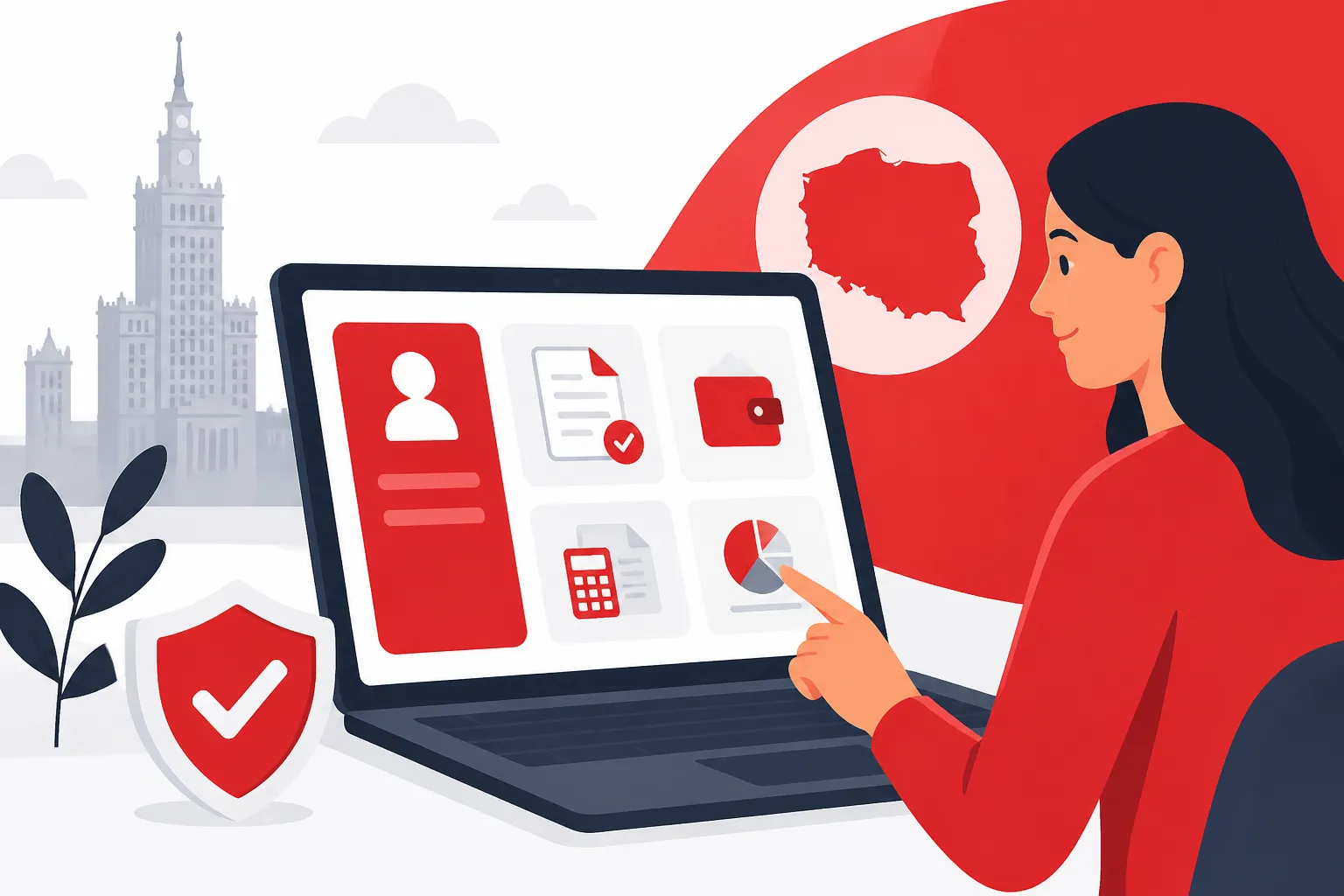
Before we jump into clicking buttons and filling out forms, let's get a proper understanding of what e-Urząd Skarbowy actually is. Think of it as Poland's digital handshake with its taxpayers – a centralized online hub where you can manage many of your tax obligations from the comfort of your home, or more likely, your kitchen table with a strong cup of coffee. It’s a huge step towards modernizing the often-daunting administrative landscape here.
The Digital Evolution of Polish Tax Filing
For a long time, dealing with taxes in Poland meant actual paper forms, queues at the local tax office, and a whole lot of head-scratching. The introduction of e-Urząd Skarbowy, particularly its flagship "Twój e-PIT" (Your e-PIT) service, marked a significant shift. This wasn't just about putting PDFs online; it was about creating an interactive platform where much of your annual income tax (PIT) declaration could be pre-filled for you.
When it first rolled out, it was a bit clunky, as new systems often are. There were glitches, confusion, and a definite learning curve for everyone, including Poles. For us expats, it felt like an additional layer of complexity on top of an already foreign system. But over the years, the platform has matured. It’s become more stable, more user-friendly (relatively speaking, of course!), and genuinely aims to simplify the process. It’s designed to be your primary point of contact with the tax authorities for many common tasks, a far cry from the days of trekking to the local Urząd Skarbowy with a pile of documents. While it doesn't solve every single tax headache – especially for those with more complex financial situations or international income – it certainly streamlines the most common annual declaration, the PIT.
Key Functions and Who Can Use It
So, what can this digital marvel actually do? At its core, e-Urząd Skarbowy allows you to:
- View your pre-filled PIT declarations: This is the big one, especially for employees. The system usually has your annual PIT-11 data from your employer already uploaded.
- Submit your annual PIT declarations: You can review, edit, accept, and send your tax forms digitally. No more printing, signing, and snail-mailing.
- Check the status of your declarations: Ever wonder if your tax return actually made it through? You can track its processing.
- Access your tax history: See previous years' declarations and payments.
- Pay your taxes online: If you owe money, you can make electronic payments directly through the portal.
- Manage basic personal data: Update your bank account details for refunds, or change your contact information.
- Access other tax services: For instance, the system also integrates with e-Deklaracje (e-Declarations) which allows submitting other types of declarations, though this might be more relevant for those running a business.
The platform is primarily for individual taxpayers (PIT), which means most employed expats will find it highly relevant. If you're running a business as a JDG (jednoosobowa działalność gospodarcza, or sole proprietorship), you'll also use aspects of the system, though your declarations (like VAT or more complex income taxes) might require additional software or an accountant. For our purposes today, we'll focus mostly on its utility for individual income tax, which is the most common interaction expats have with the Polish tax system.
Getting Started: Your First Steps with e-Urząd Skarbowy
Alright, let's roll up our sleeves. The first hurdle, as with many things administrative in Poland, is getting yourself set up to actually use the system. It's not as simple as creating a username and password, but once you're in, the benefits are clear.
The Essential Ingredients: PESEL and Login Methods
To even dream of accessing e-Urząd Skarbowy, you absolutely must have a PESEL number. This 11-digit national identification number is your key to almost everything official in Poland, including your tax affairs. If you haven't sorted this out yet, stop reading and check out our guide on How to Get a PESEL and NIP Number in Poland. Seriously, you won't get far without it.
Once you have your PESEL, you'll need a way to log in. This isn't your standard email-and-password combo. Poland uses secure electronic identification methods, which can feel a bit overkill at first, but they genuinely protect your sensitive data. The main ways to log in are:
- Profil Zaufany (Trusted Profile): This is the most common and versatile method. Think of it as your digital signature and identity verification system for all government services in Poland, not just taxes. If you don't have one, you can usually set it up online if you have an active Polish bank account that supports it, or by visiting an official confirmation point (like a post office or local Urząd). The online bank method is usually the easiest for expats – many Polish banks like PKO BP, mBank, Santander, ING, and Pekao offer direct integration to set up your Profil Zaufany through their online banking platform. This is a crucial step for many digital interactions with Polish administration, so it's well worth the effort.
- e-Dowód (Electronic ID Card): If you happen to be an EU citizen who has applied for and received a new-generation Polish electronic ID card, you can use this. It requires a special card reader and PIN, which is less common for non-EU expats.
- Bankowość Elektroniczna (Online Banking): Many Polish banks allow you to log in to e-Urząd Skarbowy directly through your online banking platform, without needing a separate Profil Zaufany, because your bank has already verified your identity. This is incredibly convenient if your bank offers it, and it's a feature more and more banks are integrating. Just look for the e-Urząd Skarbowy or government services login option within your bank's portal.
For most expats, setting up a Profil Zaufany via their Polish bank is the path of least resistance. It takes a bit of patience, but once it's done, you'll find it unlocks a lot of digital bureaucracy.
Navigating the Interface: A Foreigner's First Look
Logging in for the first time can feel a bit like stepping into a labyrinth with foreign signs. The interface, while reasonably structured, is entirely in Polish. This is where many expats hit their first wall of frustration. "Surely there's an English option?" you might wonder. Unfortunately, no, not directly within the portal itself.
However, don't despair! Here are some tips for your first look:
- Browser Translation Tools: Your browser's built-in translation feature (like Google Translate for Chrome) will be your best friend. While not perfect – sometimes the translations are a bit literal or miss nuances – it will give you a general idea of what each section and button means. Just be cautious, as sometimes translating input fields can cause issues. It's best to translate, understand, and then revert to Polish before typing any data.
- Key Sections: Once logged in, you'll typically see a dashboard. Look for terms like:
- "PIT" (Personal Income Tax) – This is where you'll find your annual declarations.
- "Twój e-PIT" – The dedicated service for pre-filled PIT forms.
- "Moje Dane" (My Data) – Where your personal information is stored.
- "Płatności" (Payments) – For checking outstanding taxes or making payments.
- "Korespondencja" (Correspondence) – Messages from the tax office.
- Practice Clicks (Carefully!): Spend some time just clicking around and seeing what's what. You won't break anything just by looking, but be mindful before confirming any submissions or payments. Getting familiar with the layout before tax season rush is a good idea.
Remember, every expat has been there. It feels overwhelming at first, but with a bit of systematic exploration and reliance on translation tools, it becomes manageable.
Filing Your PIT Return Through e-Urząd Skarbowy
The most common reason expats use e-Urząd Skarbowy is to file their annual Personal Income Tax (PIT) return. This is where the platform really shines, provided your tax situation isn't overly complicated.
The "Twój e-PIT" Service: A Blessing and a Mystery
The jewel in the crown of e-Urząd Skarbowy is "Twój e-PIT," which literally means "Your e-PIT." This service provides pre-filled annual tax declarations for most individual taxpayers. The tax office automatically gathers information from your employers (from your PIT-11 forms) and other institutions (like banks for interest, though this is less common for expats initially) and generates a draft PIT declaration for you.
What's usually included?
If you're employed under an umowa o pracę (employment contract) or an umowa zlecenie (mandate contract), your employer is obligated to send your PIT-11 form data directly to the tax office. This data typically includes:
- Your income (przychód)
- Your costs of obtaining income (koszty uzyskania przychodów)
- Advance payments on income tax (zaliczka na podatek dochodowy)
- Health insurance contributions (składki na ubezpieczenie zdrowotne)
- Social insurance contributions (składki na ubezpieczenie społeczne)
The system takes this information and populates the relevant fields in your PIT-37 (the most common form for employees) or PIT-36 (if you have other types of income like from a JDG or foreign sources, though the pre-filled might be limited). For many simple cases, this pre-filled declaration is almost ready to go!
What often isn't included (and why manual input is often needed)?
This is crucial for expats. While "Twój e-PIT" is great, it's not always comprehensive, especially if your financial life extends beyond a single Polish employment contract. Common things not automatically included that you might need to add manually:
- Income from self-employment (JDG): If you run your own business, this income won't be pre-filled. You'll need to calculate it yourself (or with an accountant) and manually input it, often requiring you to switch from a simple PIT-37 to a more complex PIT-36 or even PIT-28 if you're on the ryczałt (lump-sum tax) scheme. Our guides on How to Pay Taxes as a JDG Owner in Poland and Understanding the Ryczałt Lump-Sum Tax for the Self-Employed in Poland dive into this.
- Foreign income: A big one for many expats! If you have income from outside Poland – rental income from property back home, dividends from foreign stocks, or even if you worked part of the year in another country – this will not be in your "Twój e-PIT." You absolutely must declare this yourself. This is where things get tricky, and understanding How to Report Foreign Income to the Polish Tax Office and Tax Residency in Poland: A Definitive Guide for Expats (2027) becomes paramount.
- Deductions and reliefs (ulgi): While some common deductions might be pre-filled, many specific ones – like internet relief, child tax relief (ulga na dzieci), or donations – need to be added manually. You also need to meet specific criteria for these, so always double-check eligibility.
- Income from multiple Polish sources (beyond PIT-11): If you have income from umowa o dzieło (contract for specific work) that wasn't reported on a PIT-11, or other less common Polish income types, it might not appear.
This means that while "Twój e-PIT" is a fantastic starting point, it's rarely a "set it and forget it" solution for expats. It’s an invaluable backbone, but you almost always need to review and add to it.
Reviewing, Amending, and Submitting Your Declaration
Once you access your "Twój e-PIT," you'll see your pre-filled declaration. Here's a general step-by-step process:
- Access "Twój e-PIT": Log into e-Urząd Skarbowy using your chosen method (Profil Zaufany or online banking). Look for the "Twój e-PIT" section.
- Select the tax year: Make sure you're working on the correct year's declaration.
- Review the pre-filled data: This is your critical first step. Carefully check all the numbers. Do they match your PIT-11 forms (which your employer should provide you with a copy of)? Are your personal details correct?
- Add deductions/reliefs: If you're eligible for any tax breaks, this is where you input them. For example, if you have children, you might claim the child tax relief. Navigate to the sections for deductions (e.g., "ulgi i odliczenia") and add the relevant information. Be ready with supporting documents in case the tax office asks for them later (you don't submit them with the declaration, but you must keep them).
- Declare other income: If you have foreign income, self-employment income, or other Polish income not pre-filled, you must add it here. This often involves switching to a more comprehensive PIT form (like PIT-36) within the system if your situation dictates it. This step is often the most complex for expats.
- Designate 1.5% to an OPP (Optional): You'll usually find an option to donate 1.5% of your tax to a Public Benefit Organization (Organizacja Pożytku Publicznego, or OPP). You can choose a specific organization by entering its KRS number. It doesn't cost you anything extra, it just redirects a small portion of your tax to a charity of your choice. If you don't choose, the amount stays with the state.
- Enter your bank account for refund (if applicable): If you're expecting a refund, ensure your Polish bank account details are correct. If you've changed banks, update this information.
- Choose your submission method: You'll typically have options like:
- "Akceptuj i wyślij" (Accept and Send): If the pre-filled declaration is perfect and you have no changes, you can just accept and send it as is.
- "Zmień i wyślij" (Change and Send): If you've made amendments (added deductions, foreign income, etc.), you'll use this.
- "Odrzuć i złóż samodzielnie" (Reject and File Independently): If you find the pre-filled form completely wrong or prefer to start from scratch, you can reject it and upload a completely new declaration (which you would usually prepare using separate software or with an accountant). This is less common.
The importance of careful review before submission cannot be overstated. Once submitted, making corrections (known as korekta deklaracji) is possible, but it’s an extra step and something you want to avoid if possible. For a more detailed walkthrough, our article Filing Your Annual Tax Return (PIT) in Poland: The Complete Walkthrough (2027) provides excellent guidance.
Receiving Your Tax Refund (or Paying Extra!)
Once you've submitted your declaration, the waiting game begins.
If you're due a refund:
The tax office will process your return, and if everything checks out, they will transfer the money to the Polish bank account you specified in your declaration. The processing time can vary, but generally, it's within 45 days for online submissions. During peak tax season, it might be a bit longer. You can track the status of your refund through e-Urząd Skarbowy under your submitted declarations.
If you owe tax:
If your calculations show you need to pay additional tax, the system will clearly indicate the amount and provide you with payment details (a bank account number unique to your tax office and tax type). You can pay this online through your Polish bank's online banking system, or sometimes directly through e-Urząd Skarbowy itself, which links to payment portals. Make sure to pay by the deadline (usually April 30th) to avoid interest and penalties. If you need to send money from a foreign account to cover your tax bill, services like Wise can facilitate this, ensuring the funds arrive in PLN. Our guide on How to Transfer Money Internationally from a Polish Account offers more insights into such services.
It's always a relief when that refund hits your account or when you've successfully paid off your obligations. E-Urząd Skarbowy makes these final steps much more transparent and straightforward than the old paper-based methods.
Beyond PIT: Other Useful Features for Expats
While filing your annual PIT is probably the main event, e-Urząd Skarbowy offers more than just that. It's evolving into a central hub for various tax-related interactions, giving you more control and visibility over your financial standing with the Polish state.
Managing Your Tax Obligations and Communications
Think of e-Urząd Skarbowy as your personalized digital mailbox and ledger for the tax office. Beyond submitting your annual declaration, you can utilize it to keep tabs on a few other vital things:
- Payment History and Outstanding Amounts: Have you ever wondered if you paid that property tax last year, or if there's any small, forgotten amount lingering? The portal allows you to view your history of payments made to the tax office, giving you a clear ledger of your past financial obligations. More importantly, it can also show you if you have any outstanding tax liabilities. This is particularly helpful for those times when you might receive a letter in Polish that you struggle to fully understand. A quick check on the portal can clarify if there’s a payment due.
- Receiving Notifications from the Tax Office: The tax office might send you official correspondence directly through the e-Urząd Skarbowy. This could be anything from a confirmation of your submitted declaration, a query about a deduction you claimed, or even reminders about upcoming deadlines. While these will still be in Polish, receiving them digitally means they won't get lost in the post, and you can access them anytime, anywhere, giving you time to translate and understand.
- Changing Contact Details: If your address, bank account number for refunds, or other key personal details change, you can often update these directly within the "Moje Dane" (My Data) section. This ensures that any refunds go to the correct account and that the tax office has your most current information. Always ensure your refund bank account is a Polish one; international bank accounts are typically not accepted for direct refunds.
These functionalities empower you to be more proactive in managing your tax affairs, reducing the stress that often comes with administrative tasks in a foreign country. It means fewer trips to the tax office and more clarity.
Handling Foreign Income and Tax Residency Queries
This is where things can get a bit more nuanced and often require more than just the e-Urząd Skarbowy portal. While you can manually input foreign income into your PIT declaration via the portal, the portal itself doesn't offer sophisticated tools for calculating complex international tax scenarios.
- Reporting Foreign Income: As discussed, if you have income earned outside Poland – whether from past employment, investments, or rental properties – you are generally obligated to declare it in Poland if you are deemed a Polish tax resident. Our guide How to Report Foreign Income to the Polish Tax Office explains this in detail. You'll use the e-Urząd Skarbowy to access your PIT form (often PIT-36/ZG or a similar annex) and manually enter these figures. The portal facilitates the submission, but the heavy lifting of calculation and understanding double taxation treaties falls on you or your advisor.
- Understanding Tax Residency: The question of where you are a tax resident is fundamental to determining your global tax obligations. Poland has specific rules for this, based on factors like your "centre of vital interests" and length of stay. E-Urząd Skarbowy doesn't help you determine your tax residency status, but it's the platform through which you'll fulfill your obligations if you are a Polish tax resident. If you're unsure about your status, especially if you split time between countries or work remotely for a foreign company, it's essential to consult professional advice. Our article Tax Residency in Poland: A Definitive Guide for Expats (2027) is a great starting point for understanding these complex rules.
- Limitations for Complex International Tax Situations: For expats with complex financial arrangements spanning multiple countries, or those needing to claim specific foreign tax credits, relying solely on the e-Urząd Skarbowy can be challenging. The portal is designed for standard declarations. When your situation involves intricate double taxation agreements, specific foreign tax laws, or the need to report certain asset types, it's often prudent to seek specialized advice. Firms like Taxes for Expats specialize in navigating international tax complexities and can help ensure you’re compliant both in Poland and in your home country. They can also often prepare your Polish tax declaration and submit it on your behalf, reducing your stress.
While e-Urząd Skarbowy provides the digital conduit for your tax submissions, it's important to remember it's a tool, not a tax advisor. For anything beyond straightforward employment income, expert guidance can save you headaches and potential penalties.
Common Pitfalls and Troubleshooting for Foreigners
Navigating e-Urząd Skarbowy as an expat isn't always a smooth sail. There are common challenges that pop up, and knowing how to approach them can save you a lot of grief.
Language Barriers and Navigational Challenges
This is undoubtedly the biggest hurdle for most non-Polish speakers. The entire platform, from menu options to help texts and error messages, is in Polish.
- The Translation Trap: While browser translation tools are indispensable, they have their limits. They can sometimes mistranslate crucial tax terms, leading to confusion or incorrect input. For example, "koszty uzyskania przychodów" (costs of obtaining revenue) might be translated awkwardly, making it hard to understand what it refers to. Be aware that auto-translation can also sometimes interfere with input fields or confirmation buttons. My personal strategy is to translate the page to understand the section, then switch back to Polish to actually input data or click crucial buttons to prevent any technical glitches.
- Understanding Tax Jargon: Even with perfect translation, Polish tax terminology is complex. Words like zaliczka, ulga, odliczenie, podatek dochodowy, składka zdrowotna – these have specific legal meanings that a simple dictionary lookup might not fully convey in a tax context. It's not just the language; it's the specialized vocabulary.
- Tips for Overcoming:
- Polish-Speaking Friends/Colleagues: If you have a trusted Polish friend or colleague, ask if they can sit with you for your first few interactions with the portal. Even just having someone there to clarify terms can be immensely helpful.
- Online Polish-English Tax Glossaries: Seek out reliable online glossaries that explain Polish tax terms in English. These can be more accurate than general translation tools.
- Professional Help: For anything beyond the absolute basics, investing in an accountant or tax advisor who specializes in expats and speaks English is often the most stress-free solution. This brings us back to services like Taxes for Expats who can navigate this for you.
- Patience and Screenshots: Take screenshots of sections you don't understand and spend time translating them offline. Break down the process into small, manageable steps.
Technical Glitches and "Computer Says No" Moments
Like any complex online system, e-Urząd Skarbowy isn't immune to technical issues. Expats might face unique challenges, or simply be less familiar with how to troubleshoot in Poland.
- Login Issues: "My Profil Zaufany isn't working!" or "My bank login won't connect!" These are common frustrations. Double-check your internet connection, ensure your browser is updated, and clear your cache. If using Profil Zaufany, ensure your account isn't expired and you're entering the correct login details. Sometimes, the problem might be with the bank's integration rather than the tax portal itself.
- Error Messages: You've hit 'submit,' and a red banner appears with a cryptic Polish error message. This is often due to missing mandatory fields, incorrect data format, or a mismatch in numbers. Try to translate the error message accurately using a reliable tool. Sometimes, it's as simple as forgetting to check a box or entering text where a number is expected.
- System Overload: During peak tax filing season (especially in April), the system can sometimes slow down or experience temporary outages due to high traffic. If you're encountering persistent issues, try again during off-peak hours (e.g., late at night or early morning).
- Contacting Customer Support:
- Infolinia (Helpline): The National Tax Information (Krajowa Informacja Skarbowa – KIS) provides a helpline. The numbers are usually listed on the e-Urząd Skarbowy website (e.g., 801 055 055 or 22 330 03 30). Be prepared to speak Polish or have a Polish speaker assist you, as English support is not guaranteed.
- Email: Sometimes there's an email contact form or address for technical support. This can be a good option if your issue isn't urgent and you can clearly describe it in Polish (or use a precise translation).
- Local Tax Office (Urząd Skarbowy): As a last resort, if you're completely stuck and the online/phone support isn't working, you might need to visit your local tax office in person. Bring all your documents and a Polish-speaking friend if possible.
Managing expectations is key here. Troubleshooting in a foreign administrative system can be draining, so factor in extra time and be prepared for potential roadblocks.
Data Discrepancies and Missing Information
What if you log in, and your "Twój e-PIT" is just plain wrong, or crucial information is missing? This happens, and it's essential to know what to do.
- Incorrect Pre-filled Data: If the numbers from your employer's PIT-11 appear wrong, first double-check your own physical PIT-11 form from your employer. If there's a discrepancy, contact your employer's HR or accounting department immediately. They might have submitted incorrect data to the tax office, and they might need to issue a correction (korekta PIT-11).
- Missing PIT-11 Data: Sometimes, your employer might be late in submitting your PIT-11 data to the tax office. If your declaration isn't showing up by mid-February or early March, contact your employer. You are responsible for filing on time, even if their data is late. If they don't provide it, you might need to manually input the information from your payslips.
- Making Corrections (Korekta Deklaracji): If you've already submitted your declaration and later realize you made a mistake (e.g., forgot a deduction, or entered wrong foreign income), you can submit an amendment. You'll typically find an option for "Korekta deklaracji" (Declaration Correction) within e-Urząd Skarbowy. You essentially submit a new declaration, marking it as a correction, and only amend the incorrect fields. It's a fairly straightforward process, but again, attention to detail is crucial.
The Polish tax system, like any, places the ultimate responsibility on the taxpayer. So, even with the convenience of e-Urząd Skarbowy, always verify the information presented to you and be proactive in addressing any inconsistencies.
Pros and Cons of Using e-Urząd Skarbowy as an Expat
As with any digital tool, e-Urząd Skarbowy comes with its own set of advantages and disadvantages, especially when viewed through the lens of an expat user. It’s a bit of a mixed bag, offering genuine simplification in some areas while introducing new complexities in others.
The Advantages of Going Digital
Let’s start with the good stuff. When it works smoothly, e-Urząd Skarbowy can be a real game-changer for expats in Poland.
- Unparalleled Convenience and Speed: This is probably the biggest win. No more trekking to the tax office, waiting in long queues, or navigating confusing paper forms. You can access the portal 24/7 from anywhere with an internet connection. Filling out and submitting your PIT declaration can take minutes if your situation is simple and pre-filled data is accurate. This alone reduces a significant amount of administrative burden. Think about the time saved – time you can spend enjoying Poland instead of battling bureaucracy!
- Reduced Paperwork and Environmental Benefits: Moving to digital submissions means less printing, less archiving, and a smaller carbon footprint. While you should still keep your own copies of documents (like PIT-11s, proofs for deductions), the actual filing process is virtually paperless. This aligns with modern digital-first approaches and certainly feels more efficient.
- The "Twój e-PIT" Simplification: For expats working under a standard umowa o pracę with no other income, the pre-filled "Twój e-PIT" is a true blessing. It automates much of the process, minimizes calculation errors, and essentially prepares your tax return for you. All you often need to do is review, perhaps add a simple deduction, and click "accept and send." This automation is a huge relief, especially for those who find Polish numbers and tax rules daunting.
- Transparency and Tracking: The ability to check the status of your submitted declaration, view your payment history, and see correspondence from the tax office all in one place offers a level of transparency that was previously harder to achieve. You know exactly what’s happening with your tax affairs, which can bring a lot of peace of mind. Receiving your tax refund directly to your bank account with a clear timeline is also a significant benefit.
The Realities and Disadvantages
Now for the dose of realism. While e-Urząd Skarbowy is great, it’s not a magic bullet, especially for the unique situations many expats find themselves in.
- Initial Setup Complexity, Particularly Profil Zaufany: Getting set up with Profil Zaufany or even linking your bank account for the first time can be a mini-saga. It’s an extra layer of identity verification that, while secure, isn’t always intuitive for someone unfamiliar with Polish digital infrastructure. This initial hurdle can be frustrating and time-consuming.
- The Ever-Present Language Barrier: As we’ve thoroughly discussed, the complete lack of an English interface is a significant drawback. It forces expats to rely on imperfect translation tools or external help, adding a layer of cognitive load and potential for error. This can be incredibly isolating and disheartening when you’re trying to fulfill a serious legal obligation. It makes you feel very much on your own if you don't have a Polish friend or colleague to help.
- Limitations for Complex Tax Situations: While "Twój e-PIT" is fantastic for simple cases, it falls short for expats with:
- Self-employment income (JDG): You’ll need to manually input most of this, and often use other forms or an accountant.
- Foreign income: The system doesn’t pull this in, so you’re responsible for accurately reporting it and understanding double taxation treaties.
- Specific, non-standard deductions: While some common deductions are easy to add, more obscure ones might require careful navigation or external advice.
The portal is designed for the average Polish taxpayer, not necessarily the complex international profile of many expats.
- Lack of Personalized Guidance: E-Urząd Skarbowy is a tool for submission; it doesn't offer personalized tax advice. If you have questions about which deductions you’re eligible for, how to declare a specific type of foreign income, or your tax residency status, the portal won't tell you. You’re expected to know the rules or seek external professional help. This can lead to anxiety about making mistakes.
- Technical Glitches and Support in Polish: While generally stable, occasional technical issues can arise. Trying to get support via a Polish helpline or deciphering Polish error messages can be a stressful experience, especially when deadlines are looming.
Ultimately, e-Urząd Skarbowy is a powerful and increasingly essential tool for managing your taxes in Poland. For expats, its convenience and automation are clear benefits, especially for straightforward employment income. However, the language barrier and its limitations for more complex international tax situations mean that a holistic approach – combining the portal with reliable translation, a helpful Polish contact, or even professional tax advisors like Taxes for Expats for those trickier cases – is often the most sensible and least stressful strategy for navigating your financial obligations here.
| Feature / Method | Profil Zaufany | e-Dowód | Online Banking Login |
|---|---|---|---|
| Accessibility | Widely accepted for most Polish government services | Requires new-generation Polish ID and card reader (less common for expats) | Convenient if your Polish bank supports direct login to e-Urząd Skarbowy |
| Setup Process | Can be done online via Polish bank or in person at official points | Requires application for Polish e-Dowód, then specific hardware | Automatically available if your bank has integrated the service |
| Primary Benefit | Universal digital identity for various public administration tasks | Secure physical ID with digital functionalities | Easiest for frequent users of a specific bank, seamless integration |
| Expat Suitability | High – Best all-around option for most expats for various services | Low – Niche, primarily for EU citizens with Polish e-ID card | High – Very convenient if offered by your bank |
| Language Barrier | Polish interface throughout setup and usage | Polish interface | Polish interface within the tax portal, but bank's interface may be multi-lingual |
| Prerequisites | PESEL, active Polish bank account (for online setup) or in-person verification | PESEL, Polish e-Dowód card, card reader, and specific software | PESEL, active online banking account with integrated service |
Disclaimer
The information provided in this article is intended for general guidance only and does not constitute legal, financial, or tax advice. While we strive to keep the information up-to-date and accurate, tax laws and administrative procedures in Poland can change frequently. Expats should always consult with a qualified Polish tax advisor or accountant for advice tailored to their specific situation, especially concerning tax residency, foreign income, and complex financial matters. We are not responsible for any actions taken based on the information presented herein.