Can I Use My Polish Health Insurance When Travelling in the EU?
So, you've settled into life in Poland, got your NFZ all sorted, and now you're dreaming of a weekend getaway to Paris or a summer holiday in Croatia. The big question pops into your head: "What happens if I get sick or have an accident outside of Poland? Is my Polish health insurance even valid?" It's a valid worry, one I've personally grappled with many times. Navigating healthcare in your home country is one thing; trying to figure it out in a foreign land, potentially with a language barrier and different rules, can feel like a whole new level of administrative nightmare. This guide is here to shed light on how your Polish health insurance, specifically through the National Health Fund (NFZ), works when you travel within the European Union, European Economic Area (EEA), and Switzerland, and when you might need something extra.
The Magic Card: Understanding Your EKUZ (EHIC)
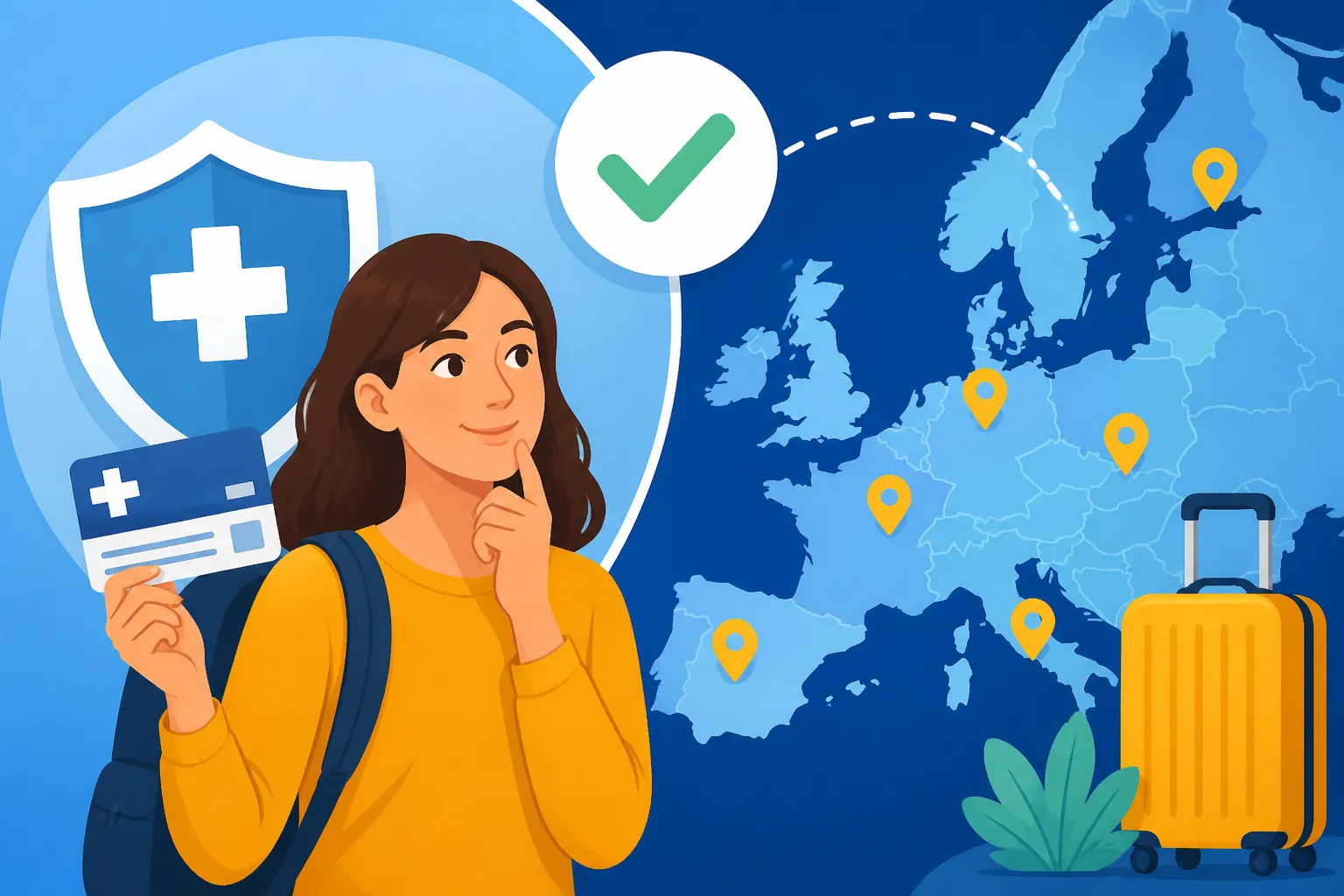
Let's start with the cornerstone of EU healthcare portability: the European Health Insurance Card, known as EKUZ in Poland (Europejska Karta Ubezpieczenia Zdrowotnego). This little plastic card is your best friend when traveling within Europe, but it's crucial to understand what it is and, more importantly, what it isn't.
What is the EKUZ and what does it cover?
Simply put, the EKUZ card is not a substitute for travel insurance. Instead, it grants you access to state-provided healthcare in any EU, EEA country, or Switzerland, under the same conditions and at the same cost as a resident of that country. This means if healthcare is free for locals, it’s free for you. If locals pay a co-payment for a consultation or medication, then you'll be expected to pay that same co-payment. It's about equal treatment, not a free pass for everything.
The key phrase here is "medically necessary." The EKUZ covers healthcare that becomes medically necessary during your stay. This typically includes sudden illnesses, accidents, or the exacerbation of a chronic condition, but not planned medical treatments. For example, if you break your leg skiing in Austria, the EKUZ will cover the cost of the emergency room visit, X-rays, and casting, just as it would for an Austrian citizen. If you develop a severe ear infection during your trip to Spain, you can visit a public doctor there. However, it won't cover a planned dental procedure or a cosmetic surgery you decide to get while on holiday. It also doesn't differentiate between whether you're traveling for leisure, work, or study – as long as your stay is temporary, the EKUZ covers you for medically necessary situations. Remember, the goal is to allow you to complete your temporary stay without having to return to Poland for unexpected medical care.
It's also important to understand that "state-provided" is the operative term. The EKUZ covers services provided by public healthcare providers, which might be different from private clinics or doctors that operate outside the national system. If you choose to go to a private facility, the EKUZ will not cover those costs, and you'll be on the hook for the full bill, unless you have supplemental private insurance. To learn more about the Polish public system that underpins this, check out our guide on How Poland's National Health Fund (NFZ) Works: A Full Overview.
How to Apply for Your EKUZ in Poland
Getting your EKUZ card in Poland is thankfully one of the less bureaucratic tasks you'll encounter as an expat, especially compared to some of the other hoops we jump through here! If you are covered by the Polish National Health Fund (NFZ) – which you likely are if you're employed, self-employed (JDG), or registered as a family member – you are eligible for an EKUZ.
The easiest way to apply is online via the Internetowe Konto Pacjenta (IKP) platform. If you have an IKP account set up, you can simply log in, navigate to the EKUZ section, and submit your application. The card will then be mailed to your registered address in Poland. This usually takes a few working days to a week. If you haven't set up your IKP yet, I highly recommend it – it's a game-changer for managing your healthcare in Poland. You can also apply in person at any regional NFZ branch (Oddział Wojewódzki NFZ). Just make sure you bring:
- Your ID (passport or residence card).
- Proof of your NFZ insurance (e.g., a printout from ZUS showing your current insurance status or a valid employment contract). For most employed individuals, the NFZ simply verifies your current insurance status through their system, as long as your ZUS contributions are up to date.
- A completed application form, which you can usually download from the NFZ website beforehand or pick up at the office.
The process at the NFZ office is usually quite quick. You take a number, wait your turn, present your documents, and often, they can print the card for you on the spot, especially if you apply at a larger branch in cities like Warsaw, Krakow, or Wroclaw. It's a surprisingly efficient bit of Polish bureaucracy! If you're wondering about your overall health insurance options in Poland, our guide on Health Insurance in Poland: Mandatory, Private and Subscription Options Explained might be a good read.
Limitations and Common Misconceptions
This is where many people get tripped up, thinking their EKUZ is an all-encompassing golden ticket. It's not. Understanding its limitations is just as important as knowing its benefits.
Firstly, as mentioned, the EKUZ only covers state-provided healthcare. If you find yourself in a beautiful, highly modern private hospital in Italy after a scooter accident, your EKUZ won't help you with that bill. You'd need to seek out a public hospital or clinic, which might be less convenient, further away, or simply not offer the same level of comfort or English-speaking staff.
Secondly, the EKUZ does not cover repatriation. This is a massive one. If you have a serious accident or illness abroad and need to be flown back to Poland for further treatment, or if the worst happens and your remains need to be transported home, the EKUZ offers no assistance. The costs for medical repatriation can be astronomical, easily running into tens of thousands of euros. This alone is often reason enough for many expats to consider additional private travel insurance.
Thirdly, it does not cover planned treatments. If you decide you want to have a specific surgery in Germany because their waiting lists are shorter, your EKUZ won't fund it. It's strictly for unexpected medical needs during a temporary stay.
Fourthly, it won't cover non-medical emergencies like lost luggage, trip cancellations, or personal liability. These are typical benefits of comprehensive travel insurance packages.
Finally, while it grants you access to care under the same terms as a local, those terms vary widely from country to country. In some countries, there might be significant co-payments for certain services or medications, which you'll have to pay out of pocket. For example, certain prescription medications might be fully reimbursed in Poland but only partially in France. Researching the local healthcare system of your destination can be a wise move.
When EKUZ Isn't Enough: The Case for Private Travel Insurance
Given the limitations of the EKUZ, relying solely on it for your travels in the EU, EEA, or Switzerland can leave you exposed to significant financial risks and logistical headaches. This is where private travel insurance steps in, acting as a crucial safety net for expats living in Poland but wanting to explore Europe.
Gaps in EKUZ Coverage You Need to Know
Let's really drill down into those gaps. Imagine you're hiking in the Dolomites, slip, and break your leg in a remote area. The public ambulance takes you to the nearest public hospital. Great, EKUZ covers that. But what if the mountain rescue helicopter ride cost several thousand euros? The EKUZ won't cover that. What if, due to the severity of your injury, the doctors recommend you can't fly commercially and need a specialist medical flight back to Poland? Again, the EKUZ offers no help for that potentially astronomical bill.
Or consider a different scenario: You have a sudden, severe toothache in Portugal. You find a public dentist, but they tell you the next available appointment is in two weeks, and you're leaving in three days. A private dentist can see you immediately, but without private travel insurance, you're paying that bill yourself. Similarly, while EKUZ covers acute exacerbations of pre-existing conditions, it generally won't cover long-term monitoring or non-urgent follow-ups, which private insurance might.
The beauty of a robust private travel insurance policy is that it fills these voids, offering peace of mind that your NFZ-covered EKUZ simply cannot. This is particularly relevant when you think about the potentially staggering costs of medical evacuation or repatriation, which are almost universally excluded from national health schemes like Poland's NFZ. If you’re also weighing your broader healthcare options back home, our piece on Public vs Private Healthcare in Poland: Which Should Expats Choose? provides a great overview.
The Peace of Mind of Supplemental Insurance
This brings us to the real value of supplemental private travel insurance. It’s not just about covering what EKUZ doesn't; it's about providing a much broader scope of protection and flexibility. For many expats, myself included, having a policy that covers medical evacuation, repatriation of remains, and offers a higher degree of choice in medical facilities is non-negotiable.
Imagine you're traveling frequently for work or leisure. An annual multi-trip policy can be incredibly cost-effective. For those living a more nomadic lifestyle, or perhaps working remotely while traveling, specialized insurance providers are becoming increasingly popular. Companies like SafetyWing, for instance, cater specifically to digital nomads and long-term travelers, offering policies that extend beyond the typical short-term travel insurance to cover longer stays and provide robust medical and travel benefits, including repatriation. They understand that for many of us, Poland is home, but the world is our office or playground.
These policies often include benefits like:
- Emergency medical care: Higher coverage limits, often covering private hospital care which can be crucial in countries where public services might have longer waits or language barriers.
- Medical evacuation and repatriation: As discussed, this is critical and not covered by EKUZ.
- Trip interruption/cancellation: Protection if your trip is cut short or cancelled due to unforeseen circumstances.
- Lost or delayed baggage: A common travel headache that can be financially burdensome.
- Personal liability: Coverage if you accidentally cause injury or damage to someone or something else.
- Emergency dental treatment: Beyond just pain relief, some plans cover more extensive emergency work.
Understanding these added layers of protection can transform a potentially stressful situation into a manageable one. It means you can focus on recovery rather than battling bureaucratic nightmares or spiraling costs. You might also be interested in Understanding Private Health Insurance Plans in Poland for more context on private options.
Real-Life Scenarios: When Private Insurance Saves the Day
Let me share a couple of hypothetical, but all-too-real, scenarios that highlight why private travel insurance is so important.
Picture my friend, Anna, who, like many of us, lives in Krakow and loves to ski. One winter, she took a trip to the French Alps. She had her EKUZ, of course. Unfortunately, she took a nasty fall and suffered a complex fracture. The local mountain rescue took her off the slope. At the public hospital, they confirmed the fracture and performed initial stabilization. The EKUZ covered this. However, the French doctors, seeing the complexity of the break, recommended she return to Poland for specialized surgery and rehabilitation, particularly since she had a trusted orthopedic surgeon back in Warsaw. Her private travel insurance kicked in, arranging and covering the cost of a medical escort and a comfortable, medically-equipped flight back to Poland. Without it, she would have faced a bill well over 10,000 euros for repatriation alone, not to mention the stress of organizing it herself while in pain.
Then there's Tomasz, a self-employed expat in Gdansk who frequently travels for conferences. On a trip to Germany, he developed severe abdominal pain. He went to a local Krankenhaus (hospital) but, being an impatient type and not fluent in German, he found the communication challenging and the public system wait times long, even for acute pain. He remembered his private travel insurance included access to a 24/7 English-speaking medical helpline. They directed him to a highly-regarded private clinic nearby, where he was seen almost immediately, diagnosed with acute appendicitis, and underwent surgery within hours. His private insurance covered the full cost, minus his deductible. If he'd only relied on his EKUZ, he might have spent crucial hours waiting in a public ER, struggling with language, or paying out-of-pocket for private care without any reimbursement.
These stories, while fictionalized, illustrate the genuine added value of private travel insurance beyond the basic coverage of the EKUZ. It's about access, flexibility, and financial protection when you're most vulnerable. For more on handling urgent situations, refer to our guide on Emergency Medical Care in Poland: What Every Expat Needs to Know.
Navigating Healthcare Abroad with Your Polish Insurance
So, you’ve landed in another EU country with your EKUZ in hand, maybe even a private travel insurance policy. What exactly do you do if you need medical attention? The key is knowing the ropes and being prepared.
Accessing Care in EU/EEA/Switzerland Member States
First and foremost, if it's a non-emergency situation but you still need to see a doctor – perhaps for an acute but not life-threatening illness – your best bet is to find a local public healthcare provider. This usually means a general practitioner (GP) or a public clinic. In many countries, you might need to show your EKUZ card upfront. It's wise to carry a physical copy of your card, not just a photo on your phone, as some places may require it.
When presenting your EKUZ, make it clear that you are seeking state-provided healthcare under the European regulations. Be prepared for potential language barriers; while English is widely spoken in tourist areas, it’s not guaranteed in all medical settings. A translation app or a phrasebook for basic medical terms can be incredibly useful. Some expat communities or hotels might also be able to recommend English-speaking doctors within the public system. Remember, the terms of care will be those of the country you are in, so if locals pay a consultation fee, you will too. Keep all receipts and documentation from any visit, no matter how minor, as these will be essential if you need to seek reimbursement later.
What to Do in an Emergency Situation
In a true emergency, don't hesitate. Call the universal European emergency number, 112, immediately. This number works across all EU/EEA countries and Switzerland, connecting you to police, ambulance, or fire services. Clearly state the nature of the emergency and your location.
Once the ambulance arrives or you are at a hospital, present your EKUZ card as soon as possible. Even in an emergency, showing the card early can streamline the administrative process and ensure you are treated as a public patient. Again, clarity on your EKUZ status is important. You might be asked for your PESEL number or other identifying details, so ensure you have your passport or residence card readily available.
Be aware that even in emergencies, there might be co-payments depending on the local system. For example, in some countries, there’s a flat fee for an emergency room visit unless you are admitted to the hospital. These are costs you’ll be expected to cover on the spot. This is where comprehensive private travel insurance can be a huge relief, as it might cover these immediate out-of-pocket expenses or offer direct billing options. Our guide to Understanding Emergency Numbers and Ratownictwo Medyczne in Poland might offer some context, though procedures will vary abroad.
Reimbursement Process After the Fact
Let’s say you had to pay for some services or medications out of pocket while abroad, perhaps because you couldn't find a public provider immediately, or because there was a co-payment. What then?
Upon your return to Poland, you can apply to the NFZ for reimbursement. This isn't always a straightforward process, so prepare for some paperwork and patience. You will need:
- Original receipts: For all medical expenses, including doctor's visits, hospital stays, and medications.
- Medical documentation: Reports from doctors, hospital discharge summaries, diagnoses – anything that confirms the medical necessity of the treatment.
- Proof of payment: Bank statements or credit card statements if the receipts alone aren't sufficient.
- A completed NFZ reimbursement application form: Available on the NFZ website or at their offices.
The NFZ will assess your claim based on what the equivalent treatment would have cost in Poland under the public system, or what a local in the visited country would have paid. They will reimburse you up to that amount. It's not uncommon for the reimbursement to be partial, especially if the foreign costs were significantly higher than Polish rates. It’s a detailed process that can take time, but it’s worth pursuing to recover eligible expenses. For more specific guidance, see How to Claim Reimbursement for Medical Costs in Poland.
Practical Tips for Worry-Free EU Travel
Preparation is key when it comes to healthcare abroad. A little planning can save you a lot of stress, money, and potentially pain.
Before You Go: Your Pre-Trip Checklist
Before you even think about packing your bags, take a moment to ensure your health coverage is sorted.
- Apply for your EKUZ (or check its validity): Make sure your card is current. They usually have a validity period of 3-5 years for employed individuals, or a shorter period if your NFZ coverage is temporary. If it's expired or close to expiring, apply for a new one well in advance of your trip. Don't leave this until the last minute!
- Consider private travel insurance: Seriously, weigh the benefits. For peace of mind and protection against the significant gaps in EKUZ coverage (especially repatriation), a supplemental policy is invaluable. Look at options like SafetyWing, or compare offerings from Polish insurers or international providers. Think about your destination, activities (e.g., adventure sports often need extra coverage), and trip duration.
- Research local healthcare: A quick search for "public hospitals [city name]" or "doctors [city name]" in your destination can give you an idea of where to go if needed. Also, jot down local non-emergency medical numbers if available.
- Pack essential medications: Bring enough of any prescription medication you need, along with a copy of your prescription (preferably translated into English or the local language). This can prevent issues at customs and help if you need a refill.
- Understand your specific NFZ status: If you're self-employed (JDG) or on certain types of contracts, your NFZ status and EKUZ validity periods might be different. Ensure your ZUS contributions are up to date. Our guide on How to Get Your PESEL Number and Why It Matters for Healthcare is a foundational read here.
During Your Trip: Essential Actions
Even with all the preparation, things can still happen. Knowing what to do in the moment can make a world of difference.
- Keep your EKUZ accessible: Have it with your ID and other important documents. A photo on your phone is a good backup, but a physical card is usually preferred. If you have private insurance, keep those details handy too.
- Inform your travel companions: Make sure at least one other person you're traveling with knows about your health conditions, medications, and where to find your insurance information.
- Document everything: If you do need medical care, keep meticulous records. Get written reports, discharge summaries, and all receipts. Make sure they clearly state the services provided and the amounts paid.
- Don't be afraid to ask: If you're unsure whether a facility is public or private, or what costs you might incur, ask before receiving treatment. Better to clarify upfront than to face a surprise bill later. Some private travel insurance plans offer 24/7 helplines that can guide you through this, which is incredibly useful.
Returning to Poland: Follow-Up
The journey isn't over just because you're back home.
- Submit reimbursement claims promptly: As soon as you can, gather all your documents and submit your reimbursement request to the Polish NFZ. The sooner you do it, the fresher the details are in your mind, and the quicker the process can begin. Remember, patience is a virtue here.
- Keep copies: Make copies of everything you send to the NFZ. This is crucial for your records in case of any disputes or delays.
- Review your private insurance claims: If you used your private travel insurance, follow their specific claims procedure. They typically have stricter deadlines for submitting documentation, so don't delay.
Navigating the intricacies of the Polish healthcare system and its international reach can feel like a labyrinth at times, but with the right information and preparation, you can travel with much greater confidence. For a broader perspective on handling medical situations as an expat, our Navigating the Polish Healthcare System: An Expat's Roadmap (2027) might offer further insights. Enjoy your European adventures, knowing you're well-equipped for whatever comes your way!
Disclaimer
The information provided in this guide is intended for general informational purposes only and does not constitute legal, medical, or financial advice. While we strive to keep the information up-to-date and accurate, regulations and procedures, especially concerning healthcare and insurance, are subject to change. It is always recommended to consult with the official National Health Fund (NFZ) in Poland, an insurance provider, or a qualified legal professional for advice tailored to your specific situation before making any decisions related to your health insurance or travel plans.