Is Childbirth Free Under the NFZ in Poland?
Finding out you are expecting a baby is a whirlwind of emotion, but for an expat in Poland, that initial joy is often followed by a cold sweat over potential medical costs. Navigating the National Health Fund (NFZ) can feel like deciphering a complex secret code. This guide demystifies the system, explaining exactly what is covered, who qualifies for free care, and where you might still need to open your wallet.
The Legal Reality of Maternity Care in Poland
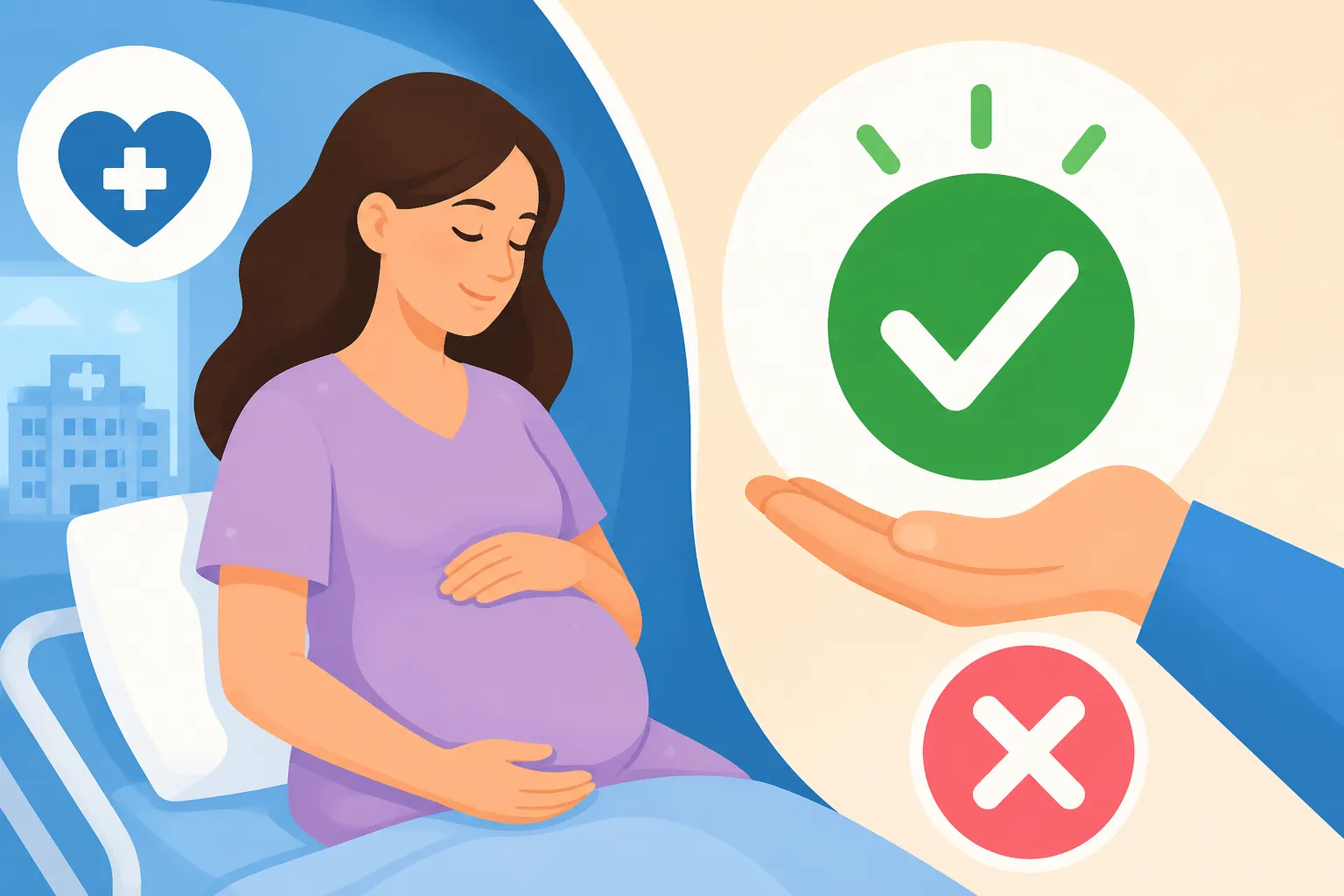
The short answer to whether childbirth is free in Poland is a resounding "yes," provided you fall under the umbrella of the public insurance system. In Poland, maternity care is treated with a high level of priority. Under the Polish Constitution, pregnant women, women in confinement, and children have a right to special health care financed by public funds. This means that if you are insured, you should not be paying out of pocket for the delivery, the hospital stay, or the standard prenatal tests.
However, "insured" can be a loaded term for a foreigner. Generally, if you are employed on an Umowa o Pracę (contract of employment) or an Umowa Zlecenie (mandate contract) that includes health contributions, you are covered. Your employer handles the registration with ZUS (Social Insurance Institution), which then flows into the NFZ. To understand the mechanics of this, you might want to read How Poland's National Health Fund (NFZ) Works: A Full Overview to get a better grasp of the bureaucratic side of things.
For those who are self-employed or running a business, the rules are slightly different but the outcome is the same: once you pay your monthly health contribution, your maternity care is covered. A common worry for many newcomers is the "waiting period." Unlike some private insurance plans that have a 10-month waiting period for maternity, the NFZ coverage is usually active as soon as your registration is processed. If you are in that awkward transition period between moving and your work contract starting, having a backup like SafetyWing can offer peace of mind for general medical emergencies, though it functions differently than a full maternity plan.
Who Exactly Qualifies for Free Childbirth
Eligibility is the first hurdle. Most expats living legally in Poland will have access to the NFZ. This includes anyone working for a Polish company, the spouses of insured workers, and students who have voluntarily insured themselves. If you are a non-working spouse, your partner must formally "add" you to their insurance. This is a crucial step that many forget, assuming that marriage automatically grants coverage. It does not; the paperwork must be filed with the employer or ZUS.
Interestingly, Poland has a unique provision where even uninsured pregnant women who have Polish citizenship—or certain residency statuses—are entitled to free care during pregnancy and childbirth. However, for most non-EU expats, having a valid residence permit and active insurance is the standard requirement to avoid a massive bill from the hospital. If you are still in the process of getting your paperwork in order, understanding How to Get Your PESEL Number and Why It Matters for Healthcare is essential, as the PESEL is the "golden key" that allows hospital staff to find you in the electronic system (EWUŚ).
While SafetyWing isn't a replacement for the long-term maternity coverage of the NFZ, it's a vital tool for the travel and settling-in phase of expat life, ensuring you aren't left vulnerable to other health issues while your Polish residency is being processed. Once your residency is stable, the NFZ becomes your primary vehicle for all things related to the baby.
What is Included in the NFZ Maternity Package
When we say "free," we mean the medical essentials. The Polish "Standard of Perinatal Care" (Standard Opieki Okołoporodowej) is a legal document that outlines exactly what every woman is entitled to. This includes a specific number of ultrasounds (usually three or four, unless there are complications), regular blood and urine tests, the glucose tolerance test, and screenings for infections.
During the delivery itself, the NFZ covers the cost of the medical team (doctor and midwife), the delivery room, and all necessary medications. This includes an epidural (znieczulenie zewnątrzoponowe). In the past, getting an epidural in Poland was notoriously difficult or required an "under-the-table" payment. Thankfully, laws have changed, and it is now officially free and available upon request, provided there is an anesthesiologist available and no medical contraindications.
The hospital stay following the birth is also covered. This usually lasts two to three days for a natural birth and three to five days for a C-section. During this time, the hospital provides food for the mother and basic medical care for the newborn, including the first set of vaccinations and hearing screenings. To prepare for this journey, I highly recommend reading Understanding Maternity and Prenatal Care in Poland for a deeper dive into the specific medical milestones you will encounter.
The Role of the Midwife and the Green Notebook
In the Polish system, the midwife (położna) is arguably more important than the doctor for a healthy pregnancy. From the 21st week of pregnancy, you are entitled to free meetings with a community midwife. These sessions are designed to prepare you for labor and breastfeeding. Many expats don't realize this service exists and miss out on valuable support.
Every pregnant woman in Poland receives a "Karta Ciąży"—a small green or white notebook. This is your most important document. Every test result, weight measurement, and ultrasound summary is recorded here. You must carry it with you everywhere. If you show up at a hospital in labor without your Karta Ciąży, the staff will have a much harder time providing safe care.
After you give birth and return home, the community midwife will visit you at least four times. These "patronage visits" are completely free under the NFZ. The midwife checks the baby's weight, the healing of the umbilical cord, and the mother's recovery. It is an incredible resource for new parents who are far from their own families. For more on how the system coordinates these services, check out Navigating the Polish Healthcare System: An Expat's Roadmap (2027).
Potential Hidden Costs and Upgrades
While the medical care is free, there are "luxury" items that many expats choose to pay for. The public system provides a high standard of medical safety, but the "comfort" side can sometimes feel a bit like a throwback to the 1980s. For example, most NFZ hospital rooms are shared by two to four women. If you want a private room (sala jednoosobowa), you may have to pay a daily fee, and these are often subject to availability.
Another common "extra" is hiring a dedicated midwife. While the midwife on duty is free, some women prefer to pay for a specific midwife who will stay with them throughout their entire labor, regardless of shift changes. This can cost anywhere from 1,500 PLN to 3,000 PLN depending on the city and the hospital.
| Service Type | NFZ (Public) | Private Clinic / Upgrades |
|---|---|---|
| Prenatal Visits | Free at NFZ clinics | 250 – 450 PLN per visit |
| Standard Scans | Free (usually 3-4) | 300 – 600 PLN per scan |
| Delivery Room | Free (Standard) | Included in private packages |
| Epidural | Free (Subject to availability) | Guaranteed in private packages |
| Hospital Room | Shared (Free) | Private (500 – 1,000 PLN/night) |
| Dedicated Midwife | Midwife on shift (Free) | 1,500 – 3,000 PLN (Optional) |
For many, the choice between public and private comes down to a balance of cost and comfort. You can read a detailed comparison in Public vs Private Healthcare in Poland: Which Should Expats Choose? to see which path aligns with your budget and expectations.
Managing the Paperwork: IKP and PESEL
The Polish healthcare system has gone digital in a big way. The Internetowe Konto Pacjenta (IKP) is your online health portal. This is where your e-recepta (e-prescriptions) and e-skierowanie (e-referrals) live. During pregnancy, your doctor will issue many referrals for blood tests and specialists. Instead of a paper slip, you get a code sent to your phone.
Setting up your IKP is one of the first things you should do after finding out you are pregnant. It allows you to track your care and ensures that all your records are in one place. If you are unsure how to do this, follow the steps in How to Set Up an Internetowe Konto Pacjenta (IKP) Patient Account. Having this account active makes the "free" aspect of the system much smoother, as it prevents lost paperwork that could lead to being charged for tests.
Also, don't forget that as a pregnant worker, you have significant rights. If your job is stressful or physically demanding, your doctor can easily issue an "L4" (sick leave). In Poland, pregnancy-related sick leave is paid at 100% of your average salary, which is a huge relief for many. You can learn more about this in Understanding Sick Leave (Zwolnienie Lekarskie L4) in Poland.
What Happens if You Are Not Insured?
If you find yourself pregnant and without NFZ coverage, the situation is more stressful but not impossible. You can voluntarily insure yourself with the NFZ, which involves paying a monthly fee (around 600-700 PLN). This is often much cheaper than paying for a full private birth package, which can range from 10,000 PLN to 20,000 PLN in cities like Warsaw or Krakow.
For expats who haven't yet secured their ZUS contributions, or for visiting family members who come to help after the birth, SafetyWing provides essential coverage for those unexpected health hiccups that aren't related to the birth itself. It is always better to have some form of insurance than none at all, especially in a foreign country where administrative delays are common.
If you are an EU citizen, your EHIC card (EKUZ in Polish) will cover "necessary" care, which includes childbirth if you happen to go into labor while visiting. However, it is not intended for "planned" births abroad. If you moved to Poland and are an EU citizen, you should transition to the local system as soon as possible. Detailed instructions can be found in The Complete Guide to Healthcare in Poland for Expats (2027).
Adding the Baby to Your Insurance
Once the baby is born, the "free" care continues, but only if you register the child. You have a limited window to report the birth to the Civil Registry Office (Urząd Stanu Cywilnego), which will then issue a birth certificate and a PESEL for the baby.
After you have the baby's PESEL, you must notify your employer (or ZUS, if self-employed) to add the child to your health insurance. This ensures that the baby's follow-up visits to the pediatrician and mandatory vaccinations are covered. For a step-by-step on this process, see How to Register Family Members for Health Insurance in Poland.
The Polish system also offers a one-time birth grant called Becikowe for lower-income families, and a monthly child benefit known as "800+" for all residents. These aren't healthcare per se, but they certainly help with the costs of a new arrival.
Important Medical Disclaimer
The information provided in this guide is for educational and informational purposes only. While I have lived through the Polish system and researched current regulations, I am not a doctor, lawyer, or government official. Healthcare laws and NFZ policies in Poland can change, and individual circumstances (such as visa types or specific medical needs) can significantly affect your eligibility and costs. Always consult with your HR department, a legal professional, or the NFZ directly to confirm your insurance status before making medical decisions. If you have a medical emergency, dial 112 immediately.