How Do I Apply for the Blue Card (Niebieska Karta) in Poland?
Navigating the labyrinthine world of Polish immigration can often feel like a full-time job in itself, especially for highly skilled professionals trying to make a life here. It’s a process fraught with paperwork, changing regulations, and the unique quirks of local bureaucracy. This guide is here to cut through the confusion, offering a comprehensive, realistic look at applying for the EU Blue Card (Niebieska Karta) in Poland, a pathway designed to attract top talent from outside the European Union.
What Exactly is the Blue Card (Niebieska Karta) in Poland?
Let's be honest, when you first hear "Blue Card," it's easy to dismiss it as just another work permit. But for highly skilled expats, the EU Blue Card, or Niebieska Karta in Polish, is a completely different beast, offering a more streamlined and advantageous path to living and working in Poland and, indeed, across much of the European Union. It's Poland's way of rolling out the welcome mat for talented individuals who possess specialized skills and qualifications, often in sectors experiencing labor shortages. Think of it as a golden ticket compared to the standard, often more restrictive, temporary residence and work permits.
Beyond Just a Work Permit: The Benefits for Highly Skilled Expats
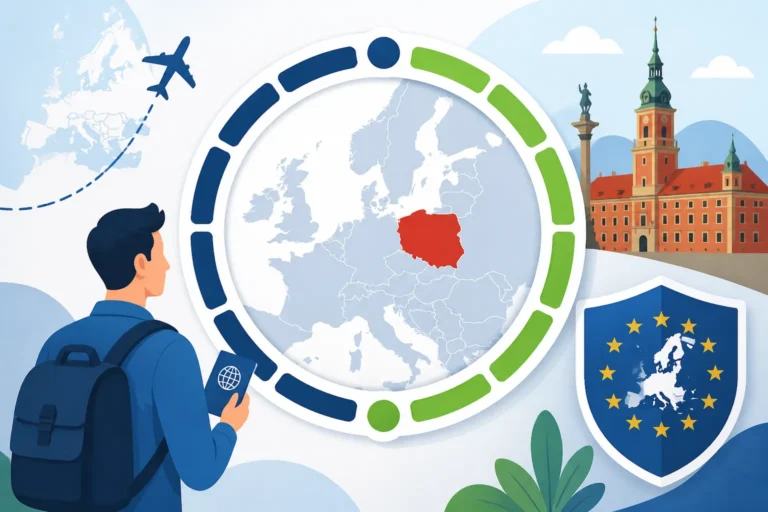
The core distinction of the Blue Card lies in its generous benefits, which extend far beyond mere employment authorization. For starters, it grants you mobility. After your first 18 months of residence in Poland under the Blue Card, you gain the right to move to another EU member state (excluding Ireland and Denmark) for highly qualified employment, with fewer bureaucratic hurdles than other permits. This kind of flexibility is a massive draw for those who see their careers potentially taking them to other European hubs.
Beyond the geographical freedom, the Blue Card typically offers quicker processing times in theory (though "quicker" in Polish immigration terms can still mean a few months, let's be real). It also significantly eases the path for family reunification. Unlike some other permits, your immediate family members – spouse and dependent children – can apply for their own residence permits, allowing them to live and work in Poland immediately, without needing separate work permits. This is a huge relief for families who want to settle together without additional stress. Furthermore, holding an EU Blue Card often provides a faster track to obtaining EU Long-Term Resident Status, which is a major stepping stone towards more permanent residency or even Polish citizenship. It’s designed to validate the often-frustrating journey by offering tangible, long-term advantages.
Eligibility Criteria: Do You Qualify for a Polish Blue Card?
Before you dive headfirst into collecting documents, you need to be absolutely sure that you meet the stringent eligibility criteria for the EU Blue Card in Poland. This isn't a permit for just anyone; it's specifically tailored for those with high qualifications and specific employment prospects. Poland, like other EU member states, wants to ensure that the Blue Card mechanism genuinely attracts professionals who fill critical skill gaps, contributing significantly to the economy. So, let’s break down what they’re looking for.
The Education and Experience Mandates
First and foremost, the Blue Card is all about skills. The primary requirement here is a higher education qualification. This typically means a university degree that required at least three years of study. If you graduated from a university in your home country, you’ll need to provide evidence of this, such as your diploma and transcripts. However, I know from experience that proving your educational chops from abroad can sometimes be a bit of a headache. The Polish authorities need to be able to assess the equivalence of your foreign degree. If your degree isn't from an EU/EEA/Switzerland institution, you might need to go through a process called nostrification or recognition. For a deep dive into this, you might find our guide on How to Get Your Foreign Degree Recognised (Nostryfikacja) in Poland incredibly helpful.
What if you don't have a formal university degree? Don’t fret entirely; there's an alternative path, though it’s less common. You can still qualify if you can demonstrate at least five years of relevant professional experience at a highly skilled level. This experience must be directly related to the profession for which you've received the job offer in Poland. This isn't just about showing up with a CV; you'll need official letters from previous employers, detailed job descriptions, and possibly proof of specific projects or achievements to substantiate your claim. It's a higher bar to clear, proving that your practical knowledge and skills are equivalent to a university education.
Meeting the Salary Threshold: What's the Magic Number?
This is where the rubber meets the road for many potential applicants. The EU Blue Card isn't for entry-level positions; it's for jobs that pay well above the national average. To qualify, your gross annual salary must be at least 150% of the average national gross salary in Poland for the preceding year. This figure changes annually, so you always need to check the latest official statistics published by the Polish Central Statistical Office (GUS).
Based on current estimates for 2024, the minimum gross salary threshold for the Blue Card is usually around PLN 10,000-12,000 per month. This means your employment contract must clearly state a salary that meets or exceeds this amount. This is a critical point, and it’s usually one of the first things the Urząd Wojewódzki (Voivodeship Office) will check. It ensures that the Blue Card is used for genuinely high-value talent, not just any foreign worker. For expats, earning this kind of salary in Poland generally means a very comfortable lifestyle, especially outside of central Warsaw, but it's a significant financial commitment for your prospective employer.
The Job Offer and Contract Essentials
So, you've got the education (or experience) and your potential salary looks good. The next crucial piece of the puzzle is a legitimate, specific job offer. You cannot apply for a Blue Card speculatively; you need to have already secured a position. This job offer must be for highly qualified employment – meaning it requires the skills and education you've just demonstrated.
Your prospective Polish employer must provide you with a valid employment contract (an umowa o pracę is usually preferred, though other types can be considered if they meet specific criteria) for a minimum duration of one year. This contract needs to clearly detail your position, responsibilities, working conditions, and, crucially, the salary that meets the Blue Card threshold. The employer also plays an active role in the application process, often providing supporting documentation or even submitting parts of the application on your behalf. Ensure your contract explicitly states that your role requires a higher professional qualification or relevant experience, matching the Blue Card's criteria. It's all about demonstrating a clear fit for a high-value role in the Polish economy.
The Application Process: A Step-by-Step Walkthrough
Alright, you’ve checked off the eligibility boxes, taken a deep breath, and mentally prepared for the administrative odyssey. Applying for the Blue Card (Karta Pobytu dla pracownika o wysokich kwalifikacjach) in Poland is fundamentally a temporary residence permit application, but with its own specific requirements and complexities. While the overall process shares similarities with other residence permits, the details matter, and missing even a tiny piece of information can lead to frustrating delays.
Gathering Your Documentation: The Paper Chase
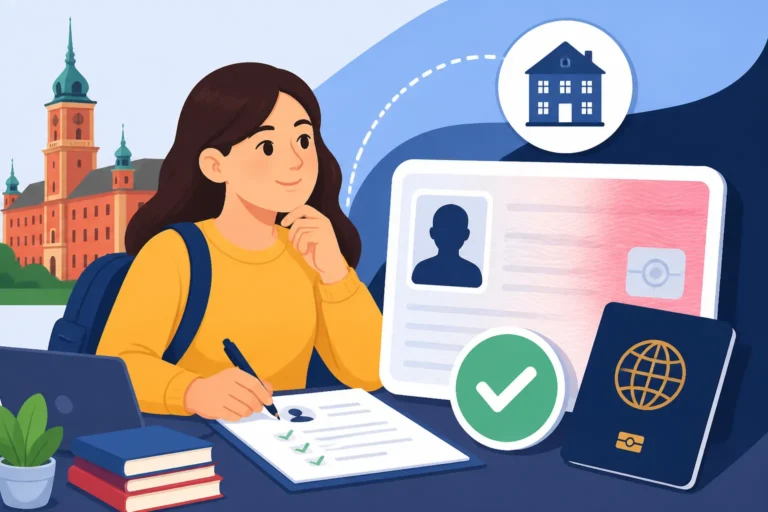
Ah, the paperwork. This is where most expats either excel or get utterly bogged down. The list of required documents for a Blue Card application is extensive and precise. You'll need:
- Application Form: The official "Application for a temporary residence permit" form, filled out in Polish. There are usually English versions available for reference, but the submission must be in Polish.
- Valid Travel Document: Your passport, with at least two blank pages, and copies of all pages with stamps or visas. Don't forget to show the original during submission.
- Biometric Photos: Four up-to-date biometric photographs (3.5 x 4.5 cm). These must meet specific standards – usually plain white background, front-facing, neutral expression.
- Proof of Higher Education/Professional Experience: Your university diploma, transcripts, or detailed letters from previous employers proving five years of highly skilled professional experience. These must be translated into Polish by a sworn translator if they are not originally in Polish. For non-EU documents, an apostille might also be required.
- Employment Contract: The signed contract with your Polish employer, specifying your position, duties, and, crucially, your salary, which must meet the Blue Card threshold.
- Information from the Starosta: In most cases, your employer needs to obtain information from the local Starosta (district head) regarding the local labor market. This is essentially a declaration that there are no suitable Polish or EU candidates for your position. However, some professions are exempt from this "labor market test," particularly those in high demand. Your employer should handle this.
- Proof of Stable and Regular Income: This is usually covered by your employment contract, but sometimes additional bank statements might be requested.
- Proof of Health Insurance: You need to show that you are covered by health insurance in Poland. If you’re employed, your employer will typically register you with the ZUS (Social Insurance Institution) which includes public health insurance (NFZ). However, if there’s a gap in coverage or you prefer, private insurance options are also available. Companies like Cigna Global offer comprehensive expat health insurance plans that could meet these requirements. For more details on what’s expected, check out our guide on What Health Insurance Do I Need for a Polish Residence Permit?.
- Proof of Accommodation: A rental contract (umowa najmu) or a declaration from your employer that they provide accommodation.
- Administrative Fee: Proof of payment of the stamp duty for the application (typically around PLN 440) and for the residence card itself (PLN 100).
My best advice? Make a checklist and check it twice. Then ask a Polish friend or an immigration consultant to check it a third time. Any missing document, or an incorrectly translated one, will send your application back, adding weeks or even months to your wait.
Submitting Your Application to the Urząd Wojewódzki
With your meticulously prepared dossier in hand, your next step is to submit it to the relevant Urząd Wojewódzki (Voivodeship Office) in the region where you intend to live and work. For instance, if you're settling in Warsaw, you'll be dealing with the Mazowiecki Urząd Wojewódzki. This is often the point where frustrations peak for many expats.
Most Urzędy now require you to book an appointment online to submit your application. Let me tell you, getting one of these slots can feel like winning the lottery. They often get snatched up within minutes of becoming available. Be prepared to check the portal frequently, often late at night or early in the morning when new slots are released. Some offices also have a physical queue system, but relying on that can mean hours of waiting. Our guide on How Do I Book an Urząd Wojewódzki Appointment for My Karta Pobytu? offers some excellent tips for navigating this particular hurdle. Once you manage to submit your application in person, make sure you receive a stamp in your passport. This pieczątka is crucial as it legally allows you to remain in Poland while your application is being processed, even if your previous visa or permit expires. Without this stamp, your legal stay can become precarious.
The Biometrics and Interview Stage
After submitting your initial documents, you'll usually be scheduled for a biometrics appointment. This is where your fingerprints are taken and a digital photograph is captured for your future residence card. This appointment is mandatory and usually quite quick and straightforward, provided you show up on time with your passport and the original Urząd confirmation.
In some cases, especially if your application raises questions or if it's deemed necessary, you might be called for an interview with an immigration officer. This isn’t a universal step, but it’s a possibility. The interview could cover details about your job, your qualifications, your intentions in Poland, or even your relationship with your family members if they’re applying for permits too. If you're not fluent in Polish, you might need to bring a sworn translator. Always be honest and have your documents ready for reference. This stage is less common for Blue Card applications, as the eligibility is often clearer from the documents, but it’s good to be prepared just in case.
What to Expect After Application: Waiting Times and Rights
You've submitted your mountain of paperwork, had your fingerprints taken, and perhaps even managed an interview. Now comes the most trying part for many: the wait. The Polish immigration system, while striving for efficiency, is often overwhelmed, and patience becomes your most valuable asset.
Navigating the Waiting Game
Let's be realistic: official processing times for the EU Blue Card can range from a few weeks to several months, sometimes even longer than six months in busier Urząds like Warsaw or Krakow. The legal timeframe is usually 60 days, but in practice, delays are very common. It's a running joke among expats that "Polish time" applies heavily to administrative matters. During this waiting period, your passport will have a stamp (the pieczątka) confirming your legal stay in Poland while your application is under review. This stamp is incredibly important; it means you can legally remain and work in Poland, even if your previous visa has expired. However, it does not allow you to travel outside of Poland without a valid visa for your destination country (e.g., if you're a non-Schengen national without a multi-entry Schengen visa).
You can usually check the status of your application online through the Urząd Wojewódzki's portal, though updates can be infrequent. You might also receive wezwania (requests for additional documents). These are common, so don't panic if you get one. It simply means the officer needs more clarification or a missing piece of information. Respond promptly and precisely to avoid further delays. While frustrating, it shows your application is being actively reviewed.
Your Rights and Mobility with a Polish Blue Card
Once your Blue Card is approved and you receive your Karta Pobytu (residence card), you'll initially have a permit valid for 12 months, or for the duration of your employment contract plus three months, whichever is shorter. This allows you to legally reside and work in Poland. A significant advantage of the EU Blue Card is the flexibility it offers regarding employment changes. For the first two years of holding a Blue Card in Poland, if you wish to change employers, you typically need to inform the Urząd Wojewódzki of your new employment contract. After two years, you can generally change jobs without needing to apply for a new permit or even informing the authorities, as long as the new job still meets the highly qualified employment criteria.
Beyond Poland, the Blue Card offers EU-wide mobility. After 18 months of legal residence in Poland as an EU Blue Card holder, you have the right to move to another EU country (excluding Ireland and Denmark) for highly qualified employment. When you move, you apply for a Blue Card in that new country, often under more favorable conditions than a first-time applicant. This makes it an attractive option for those considering a longer-term career trajectory across Europe.
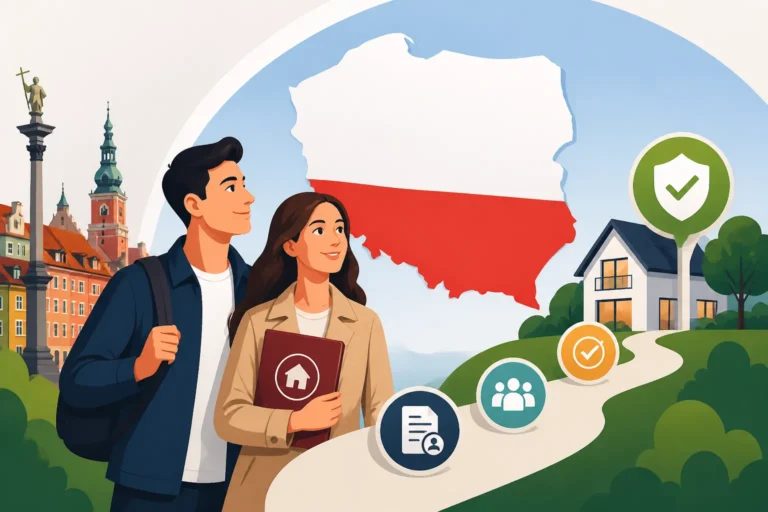
Crucially, the Blue Card greatly facilitates family reunification. Your immediate family members – spouse and dependent children – can apply for their own residence permits, allowing them to live and work in Poland from the outset, without needing a separate work permit. This is a huge relief for expat families. You can find more detailed information on this process in our guide on How Do I Apply for Family Reunification in Poland?. Moreover, accumulating time on a Blue Card counts towards acquiring EU Long-Term Resident Status and eventually Permanent Residence in Poland: The Complete Pathway (2027), making it a strategic choice for long-term expats.
Common Challenges and Insider Tips for Blue Card Applicants
Applying for a Blue Card in Poland is a significant bureaucratic undertaking, and it's easy to get lost in the details. Having personally navigated parts of this system, I can tell you that understanding the common pitfalls and getting some insider tips can save you a world of stress, time, and potentially, money.
Language Barriers and Administrative Hurdles
One of the biggest obstacles for many non-Polish speaking expats is the language barrier. While Urząd Wojewódzki staff members are often helpful, not all of them will be fluent in English. Trying to understand complex legal terminology or administrative instructions in Polish can be incredibly daunting. It's not uncommon to receive official letters (wezwania) that are solely in Polish, requesting additional documents or clarification. This can cause significant anxiety and lead to misunderstandings.
My top tip here is to not go it alone if you don’t feel confident in your Polish. Consider hiring a professional. An immigration lawyer or a dedicated immigration consultant who specializes in expat services can be an invaluable asset. They understand the nuances of the system, know exactly what documents are needed, and can communicate effectively with the Urząd. If a lawyer is out of your budget, try to enlist a trusted Polish-speaking friend to help you translate documents, fill out forms, and even accompany you to appointments. They can act as an informal translator and advocate. Always remember to be persistent and polite, even when you feel frustrated; it goes a long way.
Avoiding Pitfalls and Ensuring Success
The immigration process in Poland is meticulous, and common mistakes often lead to significant delays or even rejection. Here are some key pitfalls to avoid:
- Incomplete Applications: This is the most frequent reason for delays. Every single document listed in the requirements must be present, correct, and submitted in the required format. Double-check everything before submission.
- Incorrect Translations: If a document is not in Polish, it must be translated by a sworn (certified) translator in Poland. Do not use online translation tools or uncertified translators; the Urząd will not accept them.
- Outdated Information: The salary threshold and other requirements for the Blue Card can change annually. Ensure you are working with the most up-to-date information, usually found on the official Urząd Wojewódzki websites or the Ministry of Interior and Administration.
- Missing Biometrics: Failing to attend your biometrics appointment or providing incorrect photos will halt your application.
- Proving Funds/Accommodation: While your job contract covers income, ensure you have clear proof of accommodation for the duration of your permit application.
- Lack of Communication: If you receive a wezwanie (request for additional documents), respond promptly within the given deadline. Ignoring it will likely lead to your application being left unaddressed or even rejected.
To maximize your chances of success, be meticulously organized. Keep physical and digital copies of every document you submit. Create a clear timeline for your application process. While companies like Sirelo specialize in making the physical relocation process smoother, your Blue Card application needs specific, detailed attention to polish administration. Their services can certainly help with the broader move, reducing overall stress, allowing you to focus on the immigration details. Remember, the goal is to make it as easy as possible for the immigration officer to approve your application. The more complete and accurate your submission, the better your chances for a swift and positive outcome.
| Requirement Category | Key Criteria for EU Blue Card in Poland | Details & Notes for Expats |
|---|---|---|
| Applicant | Non-EU/EEA/Swiss Citizen | Must not be an EU/EEA/Swiss national. |
| Education/Exp. | Higher Education or 5+ Years Experience | University degree (3+ years study) OR 5 years relevant, highly skilled professional experience. Foreign degrees may require How to Get Your Foreign Degree Recognised (Nostryfikacja) in Poland. |
| Employment | Valid Job Offer & Contract | Employment contract for highly qualified work, minimum 1 year. Role must match qualifications. |
| Salary | 150% of National Average Gross Salary | Check current official GUS statistics. For 2024, generally PLN 10,000-12,000+ gross/month. |
| Health Insurance | Comprehensive Coverage | Employer-provided ZUS (NFZ) or private health insurance plan (e.g., Cigna Global). See What Health Insurance Do I Need for a Polish Residence Permit?. |
| Labor Market Test | Information from Starosta (Employer) | Employer must typically provide this (unless profession is exempt). |
| Documents | Extensive & Translated | Passport, photos, application form, degree/experience proof, employment contract, accommodation, fees. All non-Polish documents require sworn translation. |
| Application Venue | Urząd Wojewódzki | Apply at the Voivodeship Office in your region of residence. Booking appointments can be challenging. See How Do I Book an Urząd Wojewódzki Appointment for My Karta Pobytu?. |
| Family | Family Reunification | Immediate family (spouse, children) can apply for permits. See How Do I Apply for Family Reunification in Poland?. |
| Mobility | EU-wide after 18 months | After 18 months in Poland, can move to other EU states (excluding Ireland/Denmark) for highly qualified work. |
| Long-Term Stay | Path to Permanent Residency | Time on Blue Card counts towards EU Long-Term Resident Status and Permanent Residence in Poland: The Complete Pathway (2027). |
Disclaimer
The information provided in this guide is intended for general informational purposes only and does not constitute legal advice. While we strive to keep the information accurate and up-to-date, immigration laws and procedures in Poland can change frequently. It is always recommended to consult with the official Polish immigration authorities (Urząd Wojewódzki) or a qualified immigration lawyer for advice tailored to your specific situation. Reliance on any information in this guide is solely at your own risk.