How to Apply for a Temporary Residence Permit (Karta Pobytu) in Poland
Oh, the Karta Pobytu! Just hearing those words can send shivers down the spine of any expat who’s been through the Polish immigration maze. It’s an administrative rite of passage, often fraught with confusing forms, long waits, and a constant feeling of "did I forget something essential?" This guide is here to untangle that bureaucratic beast, walking you through the application process for a Temporary Residence Permit in Poland, helping you gather your documents, understand the timelines, and keep your sanity intact.
Understanding the Karta Pobytu: What Exactly Is It?
Before we dive into the nitty-gritty, let's get a clear picture of what a Karta Pobytu, or Temporary Residence Permit, actually is. In essence, it's a physical card that serves as your ID and proof of legal residence in Poland for a specified period, typically between one and three years. For many non-EU citizens, this little plastic card becomes your most important possession, allowing you to live, work, or study here legally. It’s not just a fancy ID; it’s your key to accessing public services, opening bank accounts, and generally feeling settled. Without it, you’re often stuck in a limbo, unable to fully integrate, which is a frustrating reality for many new arrivals.
Who Needs a Temporary Residence Permit?
Simply put, if you’re a non-EU/EEA/Switzerland citizen planning to stay in Poland for longer than 90 days within any 180-day period, and you don't have a valid long-stay visa covering your entire intended stay (which is rare, as most D-type visas are for 365 days maximum, and you'll likely need to extend your stay beyond that), you’re going to need a Karta Pobytu. This applies whether you've arrived on a D-type national visa or perhaps even a Schengen visa and found yourself a long-term opportunity. EU citizens, bless their hearts, have a much simpler process of just registering their residence. For the rest of us, the Karta Pobytu is the standard path. It's designed to regulate long-term stays, ensuring that you have a legitimate reason to be here and that the Polish state is aware of your presence. It's often the first major step after landing, and frankly, it can feel like climbing Mount Everest when you're still figuring out how to buy groceries.
The Different Bases for Application
The beauty (or complexity, depending on how you look at it) of the Karta Pobytu lies in its various "bases" for application. You don't just apply for a Karta Pobytu; you apply for one based on a specific purpose. This distinction is crucial because the required documents and even the application forms vary significantly depending on your reason for staying in Poland.
The most common bases for expats include:
- Work: This is probably the most frequent reason. If you've landed a job with a Polish employer, you'll apply for a Karta Pobytu based on employment. Often, this will be a "Single Permit" (Jednolite Zezwolenie) application, which cleverly combines your work permit and residence permit into one. It means fewer trips to different offices, which is a small victory in itself.
- Study: Poland has become a popular destination for international students. If you're enrolled in a Polish university or other accredited educational institution, you'll apply for a Karta Pobytu based on your student status. This usually requires proof of enrollment, tuition payment, and sufficient funds to support yourself.
- Family Reunification: If your spouse or a close family member already has a Karta Pobytu or Polish citizenship, you might be eligible to apply for residence based on family reunification. This pathway is designed to keep families together, which is always a relief, but still comes with its own bureaucratic hurdles, like proving the relationship and the sponsor's financial stability.
- Running a Business: For the entrepreneurial spirits among us, you can apply for a Karta Pobytu if you've registered a business in Poland, such as a Jednoosobowa Działalność Gospodarcza (JDG) or a Spółka z ograniczoną odpowiedzialnością (Sp. z o.o.). This typically requires demonstrating the viability of your business and its benefit to the Polish economy.
- Other Circumstances: There are also less common bases, such as scientific research, humanitarian reasons, or being a victim of human trafficking.
Each of these categories has its own unique set of documents and requirements, making it vital to correctly identify your primary reason for staying. Getting this wrong at the outset can lead to frustrating delays and requests for additional paperwork, dragging out an already lengthy process.
Why it Feels Like a Marathon, Not a Sprint
Let's be brutally honest: applying for a Karta Pobytu is not for the faint of heart. It will test your patience. It will involve multiple trips to the Urząd Wojewódzki (Voivodeship Office), which often feels like stepping into a time warp where efficiency is a foreign concept. The paperwork alone is enough to make you consider packing up and moving to a country that processes applications via telepathy. Expect to gather documents you didn't even know existed, stand in queues that snake through multiple floors, and navigate forms written in Polish that sometimes even native speakers struggle with.
The sheer volume of required documentation can be overwhelming. Beyond the standard passport copies and application forms, you'll need everything from employment contracts and ZUS payment confirmations to proof of accommodation and health insurance. And just when you think you have everything, they might ask for something else. This back-and-forth is common. It’s not necessarily malice; it’s often just the system. So, mentally prepare yourself for a process that typically takes many months, sometimes even a year or more, from initial submission to receiving that precious card. This extended timeline is a consistent point of frustration for expats, leaving many in limbo without full legal status for longer than anticipated.
Gathering Your Arsenal: Essential Documents and Requirements
When it comes to applying for your Karta Pobytu, the phrase "be prepared" isn't just a suggestion, it's a survival mantra. The success of your application hinges almost entirely on submitting a complete and accurate set of documents. Forget one tiny detail, and you could be facing weeks or even months of delays. It’s like assembling a complex IKEA wardrobe, but with more legal ramifications and in a language you might not fully understand.
The Non-Negotiables: Standard Documents for Every Applicant
Regardless of your specific reason for applying, there's a core set of documents that everyone needs to provide. These are the building blocks of your application, and without them, you won't even get past the first hurdle. Make multiple copies of everything, because you never know when you'll need an extra set.
Here’s your baseline checklist:
- Completed Application Form (Wniosek o udzielenie zezwolenia na pobyt czasowy): This is the main form, usually available for download from your local Urząd Wojewódzki website. Fill it out meticulously, preferably typing, as legibility is key. If you're unsure about a section, it's better to leave it blank and ask a consultant during your appointment than to guess incorrectly. There are different forms depending on your basis (e.g., a specific form for work, another for study, etc.), so double-check you have the right one.
- Valid Passport/Travel Document: You’ll need a copy of all pages containing travel stamps, visas, and personal data. Crucially, bring the original with you to your appointment for verification. Ensure your passport is valid for at least three months beyond the intended period of your stay.
- Four Passport-Sized Photographs: These must be recent, against a plain white background, and adhere to specific dimensions (usually 35x45mm). No smiling, no glasses (unless for medical reasons), and definitely no selfies! Many photo studios in Poland are familiar with Karta Pobytu requirements, so you can usually just tell them what it's for.
- Proof of Payment of Stamp Duty (Opłata Skarbowa): This fee is typically 340 PLN for a Karta Pobytu based on work, study, or family, or 440 PLN for business activities. You pay this into the relevant municipal or voivodeship office account, and you'll need the confirmation of payment. Always verify the correct account number for your specific Urząd Wojewódzki, as it can differ.
- Proof of Accommodation (Potwierdzenie Zamieszkania): This is where many expats get tripped up. You need to prove you have a place to live in Poland. This can be a rental agreement (umowa najmu) registered with the Urząd Skarbowy, a declaration from your landlord, or a notarized statement from the property owner. If you’re staying with friends or family, they’ll need to provide a formal letter. Make sure the document clearly states the address and the period of your intended stay. For a deeper dive into this, you might find "How to Prove Accommodation for a Polish Residence Permit?" helpful.
- Proof of Health Insurance (Ubezpieczenie Zdrowotne): This is absolutely non-negotiable. You must demonstrate that you have health coverage in Poland. For employees, this is usually covered by your ZUS contributions. If you’re self-employed or a student, you might need to voluntarily insure yourself with the NFZ or purchase private health insurance. Many expats opt for comprehensive international private insurance from providers like Cigna Global to ensure they have peace of mind beyond basic public coverage. Whatever your choice, ensure you have official documentation. More details can be found in "What Health Insurance Do I Need for a Polish Residence Permit?".
- PESEL Number: While not always strictly required at the very first submission, having a PESEL number streamlines many processes. It's essentially your national identification number. If you're employed, your employer will usually help you get one. If not, you'll need to apply for it separately, usually at your local municipal office (Urząd Gminy/Miasta). Learn more about this crucial number in "How to Get Your PESEL Number and Why It Matters for Healthcare".
Always check the specific website of your regional Urząd Wojewódzki (e.g., Mazowiecki Urząd Wojewódzki for Warsaw, Małopolski Urząd Wojewódzki for Krakow) for the most up-to-date and exact list, as requirements can sometimes have minor regional variations.
Proving Your Purpose: Specific Documents for Different Reasons
Beyond the standard documents, you’ll need to provide evidence that supports your specific reason for staying in Poland. This is where the application becomes highly individualized.
-
For Work-Based Karta Pobytu:
- Work Permit (Zezwolenie na pracę) or Declaration of Intent to Employ (Oświadczenie o zamiarze powierzenia pracy): Your employer typically handles this. If you're applying for a Single Permit (Jednolite Zezwolenie), the employer often applies for both simultaneously. This is a critical document, proving that you have a legitimate job offer. Explore "How to Apply for a Polish Work Permit (Zezwolenie na Pracę)" for more details.
- Employment Contract: A signed copy of your contract, clearly stating your position, salary, and employment terms.
- Information from the Starosta (Labour Market Test): In some cases, especially for certain nationalities or professions, your employer might need to demonstrate that no Polish or EU citizens could fill your role. This is known as the Labour Market Test.
- Confirmation of ZUS Payments: Proof that your employer is paying your social security contributions.
-
For Study-Based Karta Pobytu:
- Certificate of Enrollment: An official letter from your university confirming your student status, course details, and duration.
- Proof of Tuition Fee Payment: Receipts or bank statements showing that you’ve paid your tuition fees for the current academic year.
- Proof of Sufficient Funds: Bank statements showing you have enough money to cover your living expenses for the duration of your stay. The exact amount is set by law and can vary, so check current regulations.
- Information on Scholarships (if applicable): If you're receiving a scholarship, provide official documentation. For a comprehensive overview, see "Understanding Residence Permits for Students in Poland".
-
For Family Reunification:
- Marriage Certificate/Birth Certificate: Official documents proving your relationship to the Polish citizen or resident (translated and apostilled if from abroad).
- Copy of the Sponsor's Karta Pobytu or Passport: Proof of their legal status in Poland.
- Sponsor's Proof of Income: To demonstrate they can financially support you.
- Proof of Joint Accommodation: If you live together.
-
For Business Activity (JDG/Sp. z o.o.):
- Registration Documents: For JDG, proof of entry into CEIDG; for Sp. z o.o., KRS extract.
- Business Plan/Financial Forecasts: To show the viability and benefit of your business to Poland.
- Proof of Funds: To establish and run your business.
- Evidence of Income: If the business is already operating.
This tailored approach means you really need to drill down into the requirements specific to your situation. Don't rely on generic lists; always consult the official Urząd Wojewódzki website for your region and your specific application basis.
The Dreaded Proof of Funds and Accommodation
Let's dedicate a moment to these two common stumbling blocks.
Proof of Funds: The Polish authorities want to see that you won't become a burden on the state. For students, this means showing a certain amount in your bank account – typically enough to cover your rent, food, and other living expenses for at least a few months, if not the entire year. For self-employed individuals, it's about demonstrating financial stability. For those on work permits, your employment contract and ZUS payments usually suffice. The key is to provide official, dated bank statements in Polish or English, clearly showing your name and the balance. Don't try to submit a screenshot from your banking app; they want official bank-issued documents.
Proof of Accommodation: As mentioned, this is often trickier than it sounds. A simple rental agreement isn't always enough. The Polish authorities often prefer a rental agreement that has been registered with the tax office (Urząd Skarbowy). If your landlord is hesitant to do this (which, sadly, some are to avoid tax implications), you might need an official declaration from them, notarized, stating that you live at the address and for how long. If you own property, the akt notarialny (notarial deed) is your proof. The aim is to prove legitimate, long-term housing. If you're moving with a company, they might be able to provide a corporate lease or a letter confirming your accommodation. Services like Sirelo, which specialize in expat relocation, sometimes offer assistance or resources for finding compliant housing, although they don't directly provide the documents themselves. Always make sure your accommodation document matches the address you put on your application form!
It's a lot, I know. My advice? Start gathering these documents as soon as you can. Some, like bank statements, will need to be very recent when you submit, but others, like original certificates, can be prepared well in advance.
Navigating the Application Process: Step-by-Step
Alright, you've gathered your documents – congratulations, that's already half the battle! Now comes the actual submission process. This sequence of events can feel like a bureaucratic obstacle course, but breaking it down into manageable steps can help demystify it.
Booking That Elusive Urząd Wojewódzki Appointment
This is often the first real challenge: simply getting an appointment. The Urząd Wojewódzki (Voivodeship Office) is the government body responsible for immigration matters in each region (voivodeship) of Poland. In big cities like Warsaw, Krakow, or Wroclaw, the demand for appointments far outstrips availability.
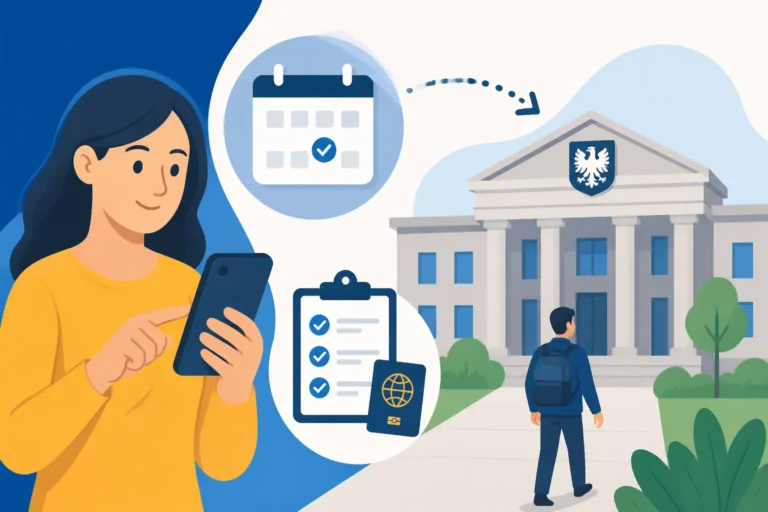
- Online Booking Systems: Most Urzędy Wojewódzkie operate an online booking system. You’ll typically find a link on their official website (e.g., "rezerwacja wizyty" or "umów wizytę"). These slots often disappear within minutes of becoming available, sometimes appearing only once a week at a specific time (e.g., every Monday at 8 AM). You need to be fast, vigilant, and patient.
- The Waiting Game: It’s not uncommon for people to spend weeks or even months trying to snag an appointment. Don’t get discouraged if you don’t succeed immediately. Keep checking, even at odd hours, as cancellations sometimes pop up.
- In-Person Submission (Rare): While less common now due to the high demand and online systems, some offices might still allow limited in-person submissions without an appointment, or offer a "ticket" system on specific days. This usually means arriving very early in the morning and preparing for a potentially very long wait. However, for a Karta Pobytu, an appointment is almost always required.
- Sending by Post: In some situations, especially for extensions or if you're unable to get an appointment, you might be able to mail your application. However, be aware that you will still need to provide biometric data in person, which will require another appointment. Submitting by post can be risky as it might delay the official start of your processing.
Once you finally secure that appointment, cherish it! Make sure you know the exact date, time, and specific department (often labeled as "Oddział Spraw Cudzoziemców" – Department for Foreigners) within the Urząd Wojewódzki. For more specific guidance on how to get past this first hurdle, read "How to Book an Appointment at the Urząd Wojewódzki for Immigration".
Completing the Application Form (Wniosek) and Attachments
You've got your appointment, now it’s time to double-check that Wniosek (application form). This document is the heart of your application.
- Accuracy is Paramount: Fill in every single field that applies to you. Even small mistakes can lead to requests for corrections, which means more delays. If you're unsure about what a field means, ask for help, perhaps from a Polish-speaking friend or a legal consultant.
- Polish Language: The form is in Polish. While some Urzędy might provide English translations as a guide, the official submission must be in Polish. If your Polish isn't up to scratch, consider using a translation service or a consultant to ensure accuracy.
- Attach Everything: When you go for your appointment, ensure all your supporting documents (copies, originals for verification) are neatly organized. I always recommend using folders or binders with dividers, making it easy for the officer to go through. Having a checklist, and ticking off each item, can also prevent last-minute panic.
Remember to sign the form in the designated places. An unsigned form is an invalid form, and that’s a rookie mistake you don’t want to make!
The Infamous Biometric Data Submission
This is the part where they capture your fingerprints and often take another photograph (even though you provided your own).
- During Your Appointment: Typically, biometric data is collected during your initial appointment at the Urząd Wojewódzki, right after your documents have been reviewed. This is why an in-person appointment is usually mandatory for new applications.
- What to Expect: You’ll be directed to a separate station where an officer will digitally scan your fingerprints (all ten, one by one). They’ll also take a digital photo. This photo is the one that will appear on your Karta Pobytu.
- Importance: This biometric data is essential for the creation of your physical Karta Pobytu card, which acts as your official identification document during your stay in Poland. It also contributes to security measures. For a closer look at this step, check out "How to Get a Residence Card (Karta Pobytu) and Its Biometrics in Poland".
Once your documents are submitted and biometrics are taken, you'll usually receive a stamp in your passport, confirming that your application is under review. This stamp is crucial as it legalizes your stay in Poland while your application is pending, even if your previous visa has expired. Do not lose this stamp!
What to Expect After Submission: Interviews and Further Requests
Once you've submitted your application and provided biometrics, the next phase begins: waiting, and potentially, more interaction.
- The Waiting Period: This is where the patience truly comes in. Processing times vary wildly between Urzędy Wojewódzkie and even within departments. Some lucky applicants might hear back in a few months, while others could wait over a year. There are legal limits (e.g., 60 days for a decision in administrative proceedings), but these are frequently exceeded due to the sheer volume of applications.
- Requests for Additional Documents (Uzupełnienie Braku Formalnego): It's almost a given that you'll receive a letter (often in Polish) requesting additional documents or clarifications. Don't panic! This is very normal. The letter will specify what's needed and give you a deadline (usually 7-14 days) to submit it. It's crucial to respond promptly. If you don't understand the request, seek immediate help from a Polish speaker or a legal advisor. Missing documents are a primary reason for delays.
- Interviews: While not universal, some applicants, particularly those applying for family reunification or business-related permits, might be called for an interview. This is an opportunity for the officers to clarify information, verify details, and assess the legitimacy of your stay. If an interview is required, you'll receive a separate notification detailing the date, time, and location. Prepare to answer questions about your life in Poland, your job, your finances, and your relationship (if applicable).
- Status Checks: You might be able to check the status of your application online via a dedicated portal, but these systems are not always perfectly up-to-date. Calling the Urząd Wojewódzki is another option, but often involves long hold times and limited information.
This post-submission period can be particularly stressful, especially if your visa expires and you're relying solely on the stamp in your passport to justify your stay. This is why preparing thoroughly beforehand is so important.
Common Pitfalls and How to Sidestep Them
The Karta Pobytu journey is riddled with potential missteps that can prolong the process or even lead to rejection. Knowing what to watch out for can save you a lot of grief.
The Waiting Game: Understanding Processing Times
As frustrating as it is, the lengthy processing time is perhaps the biggest "pitfall" simply because it’s largely out of your control. Officially, the administrative code states decisions should be made within a month (or two for complex cases), but in reality, this is almost never the case for a Karta Pobytu.
- Reality vs. Law: While the law sets deadlines, Polish Urzędy often invoke "exceptionally complex cases" clauses or simply cite high volumes of applications. In cities like Warsaw or Krakow, waiting 6-12 months for a decision, or even longer, has become the norm.
- Impact on Travel: If your visa expires and you only have the stamp in your passport, you can legally stay in Poland. However, leaving the Schengen area on this stamp means you cannot re-enter the Schengen zone (including Poland) until your Karta Pobytu is issued. This can severely restrict international travel, impacting family visits, holidays, or work trips abroad. Plan accordingly!
- What You Can Do:
- Submit a Complete Application: This is your best defense against delays. Any missing document adds weeks or months.
- Be Proactive (Carefully): While you can inquire about your status, constant calls or visits often don't speed things up and can even annoy officers. If you've passed the 6-month mark with no communication, a polite written inquiry (zapytanie o stan sprawy) might be appropriate.
- Accept the Reality: Mentally prepare for a long wait. It’s part of the expat experience in Poland.
Dealing with Missing Documents and Language Barriers
These two issues often go hand-in-hand and are primary causes of application delays.
- Missing Documents: When the Urząd requests additional documents, you'll receive a letter (wezwanie) specifying what's needed and a deadline.
- Action: Do not ignore this letter! Translate it immediately if you don't understand Polish. Gather the requested documents quickly and submit them before the deadline. Make sure to reference your application number (numer sprawy) when submitting additional documents.
- Tip: Always keep a copy of everything you send, including the cover letter, and ask for a confirmation of receipt if submitting in person. If sending by post, use registered mail with confirmation of delivery.
- Language Barriers: Most Urząd Wojewódzki staff communicate solely in Polish. This can be incredibly challenging for expats who are new to the country and language.
- Action: If you are not fluent in Polish, bring a Polish-speaking friend, colleague, or professional translator with you to your appointment or to help you with correspondence. Do not rely on Google Translate for official documents or communication, as nuances can be lost.
- Professional Help: Many expats choose to engage immigration lawyers or consultants who specialize in Karta Pobytu applications. While an added cost, their expertise in navigating the Polish legal and administrative system, dealing with language, and ensuring document completeness can be invaluable and potentially save you months of delays and stress.
What Happens If Your Application is Rejected?
It's a disheartening scenario, but rejections do happen. It's not the end of the world, and you usually have options.
- Reasons for Rejection: Common reasons include:
- Incomplete application/missing crucial documents.
- Failure to meet specific criteria (e.g., insufficient funds for students, "labour market test" not passed for workers).
- Concerns about the legitimacy of the declared purpose of stay (e.g., suspected sham marriage, non-viable business).
- Criminal record or security concerns.
- Appealing the Decision (Odwołanie): If your application is rejected, you will receive a formal decision (decyzja odmowna) in writing, explaining the reasons. You typically have 14 days from the date of receiving this decision to lodge an appeal (odwołanie) to the Head of the Office for Foreigners (Szef Urzędu do Spraw Cudzoziemców) via the same Urząd Wojewódzki that issued the initial decision.
- Strategy: Your appeal should directly address each point of rejection, providing counter-arguments or new evidence if available. This is definitely a time to consult with an immigration lawyer, as a well-structured appeal significantly increases your chances of success.
- New Application: If an appeal isn't successful or isn't a viable option, you can always prepare a new, more complete application. However, be aware of your legal stay status. If your current visa has expired and your rejection means you no longer have legal grounds to stay, you might be required to leave Poland and re-apply from your home country. This is a worst-case scenario that you certainly want to avoid.
Life with a Karta Pobytu: Rights, Responsibilities, and Renewals
Finally, after all the trials and tribulations, you receive that little plastic card! It's a moment of immense relief, signifying that you've officially made it through a significant hurdle of expat life in Poland. But the journey doesn't end there; with a Karta Pobytu come rights, responsibilities, and future considerations.
Your Rights and Freedoms with a Temporary Residence Permit
Holding a Karta Pobytu grants you several crucial rights and freedoms that significantly improve your quality of life in Poland.
- Legal Stay and Work: This is the most fundamental right. Your Karta Pobytu confirms your legal right to reside in Poland for the period it's valid, and usually, to work (if granted based on employment) without needing a separate work visa.
- Travel in the Schengen Area: This is a huge perk! With your Karta Pobytu, you can travel freely within the Schengen area for up to 90 days in any 180-day period, without needing additional visas for those countries. Just remember to always carry your passport along with your Karta Pobytu when traveling outside Poland.
- Access to Public Services: Your Karta Pobytu, coupled with your PESEL number, allows you to access various public services. This includes registering with a family doctor through the NFZ system, enrolling children in public schools, and opening bank accounts more easily.
- Driving: You can drive in Poland with your foreign license (check specific rules for your country of origin) or exchange it for a Polish one, facilitated by your legal residency. Check "How to Exchange Your Foreign Driving Licence in Poland" for more details.
- Signing Contracts: Whether it's for a mobile phone, internet service, or a long-term rental, having a Karta Pobytu makes these administrative tasks much smoother. You're no longer just a visitor; you're a recognized resident.
This card represents stability and integration. It removes a lot of the initial anxiety and opens up many more possibilities for truly settling into life in Poland.
Keeping Your Karta Pobytu Valid and Up-to-Date
Just like your passport, your Karta Pobytu has an expiry date. It’s absolutely essential to keep track of this and take action well in advance.
- Validity Period: Temporary Residence Permits are usually issued for one, two, or three years, depending on your basis of stay and the discretion of the Urząd. The expiry date is clearly printed on the card.
- Change of Circumstances: If your circumstances change significantly (e.g., you change employers, your university program ends early, you move addresses), you have a legal obligation to inform the Urząd Wojewódzki within a specified timeframe (usually 15 days). Failure to do so can lead to problems when you apply for renewal or a different permit. This isn't just bureaucratic red tape; it's about maintaining accurate records for the authorities.
- Lost or Stolen Card: If your Karta Pobytu is lost or stolen, report it to the police immediately. You'll then need to apply for a replacement card at the Urząd Wojewódzki, providing the police report. There will be a fee for a new card.
Being diligent about these responsibilities is key to avoiding future headaches and maintaining good standing with the immigration authorities.
Planning for Renewal or the Next Step: Permanent Residence
As your Karta Pobytu's expiry date looms, you'll need to decide on your next step.
- Renewal (Extension): If you still meet the criteria for your current basis of stay (e.g., continued employment, ongoing studies), you can apply for an extension of your Temporary Residence Permit. The process for extending your Karta Pobytu is very similar to the initial application, involving submitting a new application form and updated supporting documents. Crucially, you should submit your renewal application before your current Karta Pobytu expires. If you submit it before expiry, your legal stay in Poland is maintained while your renewal application is being processed, even if it takes many months. This is vital to remember. For a deeper dive into this, consult "How to Extend Your Temporary Residence Permit in Poland".
- Permanent Residence (Pobyt Stały): After a certain period of continuous legal stay in Poland (typically five years on a temporary residence permit, or less if you meet specific criteria like having Polish ancestry or a Pole's Card), you might become eligible to apply for a Permanent Residence Permit. This is a more stable status, often with fewer restrictions and a longer validity. It's the next logical step towards long-term settlement, and eventually, even Polish citizenship. If this is your long-term goal, start familiarizing yourself with the requirements well in advance by checking out "How to Apply for Permanent Residence (Pobyt Stały) in Poland".
- EU Long-Term Resident Status: Another option after five years of legal and continuous stay is applying for EU Long-Term Resident Status. This permit grants similar rights to permanent residence in Poland but also allows for easier movement and residence in other EU member states.
The Karta Pobytu isn't just a hurdle; it's a foundational step in building your life in Poland. It requires patience, meticulous preparation, and a fair bit of grit, but ultimately, it unlocks the freedom to truly experience and contribute to your adopted home. You've got this!
Disclaimer
The information provided in this guide is for general informational purposes only and does not constitute legal advice. While we strive to keep the information accurate and up-to-date, immigration laws and procedures in Poland can change frequently. It is always recommended to consult with the official Urząd Wojewódzki website for your specific region, or seek advice from a qualified immigration lawyer or consultant, before making any decisions related to your residence permit application.