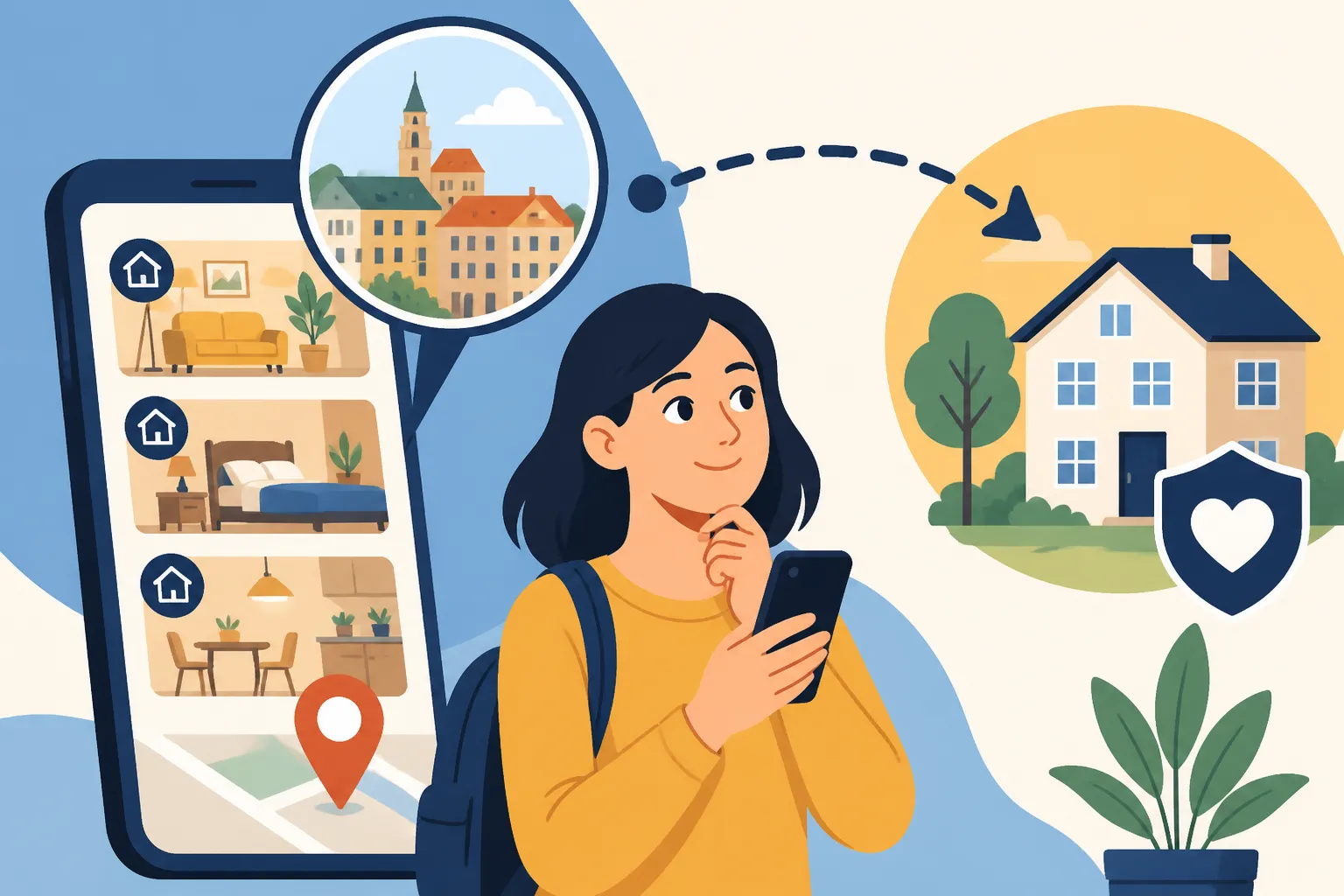
How Do I Find Short-Term Rentals Before Finding a Permanent Home?
Arriving in a new country like Poland, whether for work, study, or just a fresh start, often feels like you're trying to land a plane in a storm while also learning to fly it. The overwhelming rush to find a "permanent" home can be incredibly stressful, especially when you're still grappling with the language, the public transport, and the sheer volume of paperwork. This guide is here to tell you that you don't have to tackle everything at once; finding a comfortable, convenient short-term rental is your best first step, giving you the breathing room to truly settle in and find the right long-term place without panic.
Understanding Your Short-Term Needs and Options in Poland
When you first land in Poland, you're not just looking for a roof over your head; you're looking for a temporary base, a sanctuary from which to launch your new life. It's about buying yourself time and peace of mind.
Why Short-Term Rentals Are Essential for New Arrivals
Trust me on this, the pressure of securing a long-term lease within days of arrival is something you want to avoid at all costs. You're still figuring out which neighbourhood suits you, what your commute will actually be like, and where the closest Biedronka (supermarket) is. Committing to a year-long contract when you haven't even had a decent cup of kawa (coffee) in your prospective area is a recipe for regret.
A short-term rental gives you invaluable flexibility. It allows you to:
- Explore: Really get a feel for different districts. Does the lively central area appeal, or do you prefer the quieter, greener outskirts?
- Avoid Rushing: Finding a good long-term rental in Poland can take time. There's paperwork, viewings, and often a bit of negotiation involved. You don't want to make a snap decision on a less-than-ideal place just because you're desperate.
- Handle Administration: Many essential tasks, like getting your PESEL number or opening a Polish bank account, require a stable address or at least a period of being settled. Doing these from a comfortable, temporary home is far less stressful than from a cramped hotel room.
- Validate Your Choices: What looks good on a map might not feel right in person. A short-term stay lets you test the waters before diving into a long-term commitment.
It's about making your initial transition smoother, giving you space to breathe and assess your surroundings before locking into something long-term.
Types of Short-Term Accommodation in Poland
Poland offers a decent range of short-term options, each with its own quirks and benefits. Knowing what's out there will help you make an informed choice that fits your budget and preferences.
- Serviced Apartments: These are often the most expat-friendly option. Think of them as a hybrid between a hotel and a rental apartment. They come fully furnished, usually with a small kitchen or kitchenette, and often include utilities, Wi-Fi, and cleaning services in the price. Many have English-speaking staff, which is a huge bonus when you're still grappling with the Polish language. They're typically pricier than a standard apartment rental but offer convenience and a hassle-free experience. Cities like Warsaw, Krakow, and Wroclaw have numerous aparthotels and dedicated serviced apartment complexes.
- Airbnb/Booking.com Apartments: These platforms are goldmines for short-term stays in Poland. You can find everything from cosy studio flats (known as kawalerka here) to multi-bedroom apartments. The main advantage is flexibility – you can often book for a few nights, a week, or even a month or two. Prices vary wildly depending on location, season, and amenities. You get a local feel, often with more space and kitchen facilities than a hotel. Just be sure to check reviews diligently and communicate clearly with the host.
- Hotels/Hostels: For a very short initial stay (a few days to a week), a hotel or even a well-rated hostel can work. They offer immediate availability, no long-term commitments, and usually come with basic services. However, for anything longer than a week, they quickly become the most expensive option and lack the home comforts you'll crave, like a proper kitchen or laundry facilities.
While you might find options for sublets or room rentals, these tend to be a bit more geared towards students or those looking for slightly longer-term arrangements (e.g., 3-6 months) and often involve more commitment and less flexibility than a dedicated short-term rental platform. For that initial landing, focus on the first two categories.
Navigating the Platforms and Practicalities of Booking
Once you understand your options, it's time to get down to the brass tacks of actually booking something. The online world makes this relatively straightforward, but there are definitely nuances to consider in Poland.
Key Online Platforms and How to Use Them
When you're trying to find a short-term spot, these are your go-to digital tools:
- Booking.com: While often associated with hotels, Booking.com also lists a huge array of aparthotels and private apartments in Poland. It's fantastic for comparing prices and availability. Use the filters to narrow down your search: look for "apartments," "aparthotels," or even "guest houses" if you're open to different styles. Pay close attention to the reviews, especially those from other foreigners, and cross-reference the location on a map to see how it aligns with your potential work or study area.
- Airbnb: This platform is probably your best friend for a truly apartment-like experience. You can find places that feel like a home away from home, often with fully equipped kitchens, which can save you a fortune on eating out. When searching, utilize filters for longer stays (e.g., 28+ nights often comes with a discount), look for "Instant Book" if you're on a tight schedule, and prioritize "Superhosts" for a more reliable experience. Make sure to read the descriptions thoroughly for details on utilities, Wi-Fi, and any additional cleaning fees. Communication is key here – don't hesitate to message hosts with questions before booking. And while you're navigating a new city and coordinating with hosts, having reliable mobile data is non-negotiable. Services like Airalo, offering eSIMs, can be a lifesaver, ensuring you're always connected without hunting for local SIM cards on day one.
- Dedicated Serviced Apartment Providers: In larger cities, you'll find companies specializing purely in serviced apartments. For instance, in Warsaw, you might look up companies like Renters or local chains. These often cater specifically to business travellers and expats, offering a higher standard of service and often better English support. The downside is that they might be less flexible with very short stays or have less variety than the larger platforms.
A Quick Comparison of Short-Term Accommodation Types
| Feature | Hotels/Hostels | Airbnb/Booking.com Apartments | Serviced Apartments (Dedicated Providers) |
|---|---|---|---|
| Availability | High, immediate check-in | Varies, dependent on host calendar | Good, especially in business districts |
| Cost (per night) | Highest for long-term | Moderate to High, discounts for longer stays | High, but often all-inclusive |
| Amenities | Basic room, sometimes breakfast | Full kitchen, laundry (varies) | Full kitchen, laundry, often cleaning |
| Service | Daily cleaning, reception | Host communication, self-service | Cleaning, reception, English staff |
| Flexibility | Easy to extend/cancel | Varies by host policy | Can be less flexible, minimum stays |
| "Home" Feeling | Low | High, personalized | High, professional yet homely |
| Deposit | Rare | Often required (via platform) | Often required |
Essential Considerations Before Booking
Before you hit that "confirm" button, pause and consider a few crucial points. These details can significantly impact your comfort and overall experience.
- Location, Location, Location: This isn't just a real estate cliché; it's vital for short-term stays. Think about where your work or university will be, and then find a temporary spot that offers a manageable commute. Do you want to be right in the bustling city centre, like the Śródmieście district in Warsaw or Stare Miasto in Krakow, or would you prefer a quieter, greener neighbourhood with good public transport links? Use Google Maps or JakDojade (Poland's excellent public transport app) to simulate commutes. You'll thank yourself later when you're not spending hours stuck in traffic or on a crowded bus.
- Length of Stay: Be realistic. While some people find a long-term rental in a week, it's rare. Give yourself at least two to four weeks, preferably a month, especially if you're arriving during peak season (e.g., summer or early autumn for students). This buffer time is crucial for both administrative tasks and property hunting. Don't underestimate how long it might take to sort out something like finding a suitable long-term rental in Krakow or other major cities.
- Budget: Beyond the nightly rate, factor in potential cleaning fees, service charges, and any local city taxes (opłata miejscowa). Sometimes a seemingly cheaper option can end up being more expensive with all the add-ons. Also, remember that eating out daily will quickly drain your wallet, so access to a kitchen in your short-term rental can be a massive money-saver, tying into the broader topic of the cost of living in Poland for expats.
- Amenities: Wi-Fi is probably number one on everyone's list, followed closely by a functional kitchen and laundry facilities. Trust me, after a long journey and weeks of trying to settle, having the ability to cook your own meals and wash your clothes without hassle is invaluable. Check if towels, linens, and basic kitchenware are provided. If you plan to work remotely from your short-term spot, good internet speed is non-negotiable. For a more detailed look into connectivity, you might check out guides like "How to Set Up Home Internet and TV in Poland".
On-the-Ground Strategies for Your Temporary Stay
Once you've secured your temporary home, the real work (and fun!) of settling into Poland begins. Your short-term rental is more than just a place to sleep; it's your command centre for getting established.
Making the Most of Your Temporary Home
Think of your temporary accommodation as your launchpad. Use this time wisely to explore, connect, and get those foundational administrative tasks sorted.
- Explore and Test: This is your chance to really kick the tires on different areas. Is the dzielnica (district) you thought you loved actually too loud at night? Is the commute from your prospective long-term neighbourhood really manageable during rush hour? Walk around, visit local parks, find nearby shops, and try out the public transport. Understanding the rhythm of a place can only be done by living in it for a while.
- Networking: This is a fantastic time to connect with other expats. Join local expat groups on social media, attend meetups, or even strike up conversations in cafés. Other foreigners who have already navigated the Polish system can be an incredible resource for advice on everything from where to find an English-speaking doctor in Poland to which supermarket has the best pierogi.
- Getting Initial Administration Done: Having a physical base makes it much easier to start tackling the Polish bureaucracy. This includes vital steps like applying for your PESEL number, which is crucial for almost everything, and setting up a Polish bank account. While you might not have your final long-term address yet, you'll at least have a temporary one for initial documentation. For guidance, refer to "How to Get Your PESEL Number and Why It Matters for Healthcare" and "The Expat Guide to Opening a Bank Account in Poland".
Transitioning to a Permanent Residence
Your short-term stay is designed to transition smoothly into your permanent home. This means actively looking for your long-term place while you're still comfortably housed.
- Start the Search Early: Don't wait until the last week of your temporary lease. Begin browsing online portals like Otodom, Morizon, or Gumtree for long-term rentals about 2-3 weeks before your short-term lease ends. Consider using a real estate agent (known as pośrednik) if you're struggling with the language barrier or finding suitable options. They can be invaluable in navigating the market, though remember they come with a fee. For more in-depth advice on this, check out articles like "How Do I Find a Long-Term Rental in Krakow".
- Understanding Rental Contracts and Deposits: Polish rental contracts can be a bit different from what you're used to. You'll likely encounter a standard umowa najmu (rental contract), and sometimes an umowa najmu okazjonalnego (occasional rental agreement), which offers landlords more protection. Be prepared for a security deposit, typically one or two months' rent, but sometimes up to three. Always clarify what's included in the rent (czynsz) and what utilities you'll be responsible for. Knowing "How Much Deposit Do Landlords Require in Poland" is crucial. For detailed guidance on rental contracts, refer to "How to Sign a Rental Contract (Umowa Najmu) in Poland".
- Moving Logistics: Once you’ve found your permanent place, the logistical challenge of moving all your belongings might seem daunting. This is where services like Sirelo, an international moving comparison platform, can come in handy. They help you find and compare quotes from reputable moving companies, making the process of transferring your life from temporary to permanent much smoother.
- Extending if Needed: Sometimes, despite your best efforts, the perfect long-term place just hasn't materialized by the end of your short-term lease. Don't panic. Many Airbnb hosts or serviced apartment providers are open to extending your stay, especially if you communicate early. It might be slightly more expensive than your initial booking, but it's better than rushing into a bad long-term decision.
Common Pitfalls and How to Avoid Them
Even with the best planning, moving to a new country can throw curveballs. Being aware of potential issues with short-term rentals in Poland can save you a lot of grief.
Scams and Misleading Listings
Sadly, wherever there's a market, there are always a few bad apples. While platforms like Airbnb and Booking.com have measures in place, it's wise to remain vigilant.
- Too Good to Be True Prices: If an apartment in a prime location is listed at an unbelievably low price, proceed with extreme caution. It's often a red flag.
- Vague Descriptions and Photos: Listings with blurry, sparse, or generic photos, or descriptions that lack specific details, should make you suspicious. Real landlords and hosts want to showcase their property.
- Pressure Tactics: Be wary if a "host" pressures you to book immediately without answering your questions, or tries to push you into paying outside the platform. Legitimate transactions happen within the platform's secure payment system. Never transfer money directly to a private bank account before arrival.
- Verify Location: Use street view on Google Maps to verify that the exterior of the building, or at least the general area, matches the listing. Sometimes, addresses can be slightly off, or the photos might be from a different location entirely.
- Read Reviews, Critically: Not just the star rating, but what people actually say. Look for consistent feedback, both positive and negative, about the host, cleanliness, amenities, and accurate descriptions. A listing with no reviews at all, especially if it's new, isn't necessarily a scam, but requires extra caution.
Unexpected Costs and Logistics
Beyond the rent, there are other small things that can add up or cause headaches if you're not prepared.
- City Tax (Opłata Miejscowa/Uzdrowiskowa): In some tourist-heavy areas or health resorts, you might encounter a small daily city tax added to your accommodation bill. This is usually a few złoty per person per night and is standard practice. It’s typically collected by the host or hotel.
- Currency Exchange Rates: If you're paying in a foreign currency, be mindful of exchange rate fluctuations and any fees your bank or credit card might charge. It's often best to pay in PLN if possible to avoid surprises.
- Luggage Storage: If there's a gap between checking out of your short-term place and moving into your permanent one, plan for luggage storage. Larger train stations (like Warsaw Centralna or Krakow Główny) usually have lockers, or some hotels might offer to hold your bags for a few hours.
- Airport Transfer: Before you even reach your short-term rental, you'll need to get there from the airport. Research public transport options (buses, trains) or pre-book a taxi or ride-share. Understanding the Polish public transport system, especially in a new city, can be tricky at first, so a guide like "The Expat Guide to Public Transport in Poland" can be very helpful. Remember, trying to set up electricity, gas, or even internet after moving in is a whole other adventure! For initial utility setup, you might find some useful tips in "How Do I Set Up Electricity After Moving Into a Polish Apartment?" for when you move to your permanent home.
Finding a short-term rental in Poland doesn't have to be a daunting experience. With a bit of planning, using the right platforms, and keeping an eye out for potential pitfalls, you can secure a comfortable and convenient base that sets you up for success in your new Polish adventure. Good luck, and enjoy the journey!
Disclaimer
Please note that the information provided in this guide is for general informational purposes only and does not constitute legal, financial, or professional advice. Laws, regulations, and market conditions in Poland can change rapidly. While we strive to provide accurate and up-to-date information, it is essential to consult with relevant professionals (e.g., real estate agents, legal advisors, tax consultants) for advice tailored to your specific situation. We cannot be held responsible for any actions taken based on the information presented herein.