How Do I Set Up Direct Debit for Electricity Bills in Poland?
Ah, the never-ending dance with Polish bureaucracy and bill payments! When you first arrive in Poland, everything feels like a steep learning curve, and managing your utilities can be a surprisingly stressful ordeal. Manually transferring money each month for your electricity bill, wondering if you've got the right account number or if the payment has actually gone through, can add a layer of anxiety you just don't need.
Well, take a deep breath, because there's a simpler way: direct debit, or as it's known here, polecenie zapłaty. This guide is going to walk you through exactly how to set up direct debit for your electricity bills in Poland, cutting out that monthly worry and giving you one less thing to stress about in your new Polish home. We'll cover everything from who your provider likely is, what your bills actually mean, and the clear steps to get it all sorted.
Understanding Electricity Providers and Billing in Poland
Before we dive into the nitty-gritty of setting up direct debits, it’s super helpful to understand the landscape of electricity in Poland. Unlike some countries where you have a vast choice, here, it's a bit more regional and often feels like you get what you get!
Who Are the Main Electricity Providers?
When you move into a new place in Poland, whether you're renting an apartment in bustling Warsaw or a quiet house in the countryside, your electricity provider is almost always predetermined by your geographical location. You rarely get to choose a different company, which can be a relief in one sense (less choice paralysis!) but also a frustration if you don't like their customer service.
The major players you'll likely encounter across Poland are:
- PGE Polska Grupa Energetyczna: This is the largest energy company in Poland, serving a huge chunk of the country, especially in central and eastern regions. If you're in Warsaw or areas east, chances are high you're with PGE.
- Tauron Polska Energia: Dominant in southern Poland, so if you're settling in Krakow, Katowice, or Wrocław, Tauron will probably be your supplier.
- Energa SA: Primarily covers northern and central Poland, including cities like Gdańsk, Gdynia, and Toruń.
- Enea SA: Serves western Poland, with areas like Poznań and Szczecin falling under their wing.
- E.ON Polska (formerly Innogy): This one specifically serves Warsaw and its immediate surroundings.
It's common for expats to inherit an existing contract or simply be assigned to the regional provider. Your landlord or real estate agent should be able to tell you which company supplies your new home. If you're managing the move yourself, perhaps with the help of services like Sirelo to keep things organised, don't forget to explicitly ask about utility providers when you're looking at properties.
| Provider Name | Primary Service Region | Typical Website Domain |
|---|---|---|
| PGE Polska Grupa Energetyczna | Central, Eastern, and parts of Southern Poland | pge-obrot.pl |
| Tauron Polska Energia | Southern Poland | tauron.pl |
| Energa SA | Northern and Central Poland | energa.pl |
| Enea SA | Western Poland | enea.pl |
| E.ON Polska | Warsaw and immediate surroundings | eon.pl |
The Polish Billing System Explained
Once you know your provider, the next hurdle is understanding the bills themselves. They can be a bit of a maze, even for Polish speakers, let alone for us expats trying to decipher terms in a new language. Your electricity bill (rachunek za energię elektryczną) typically breaks down into several key components:
- Energy Consumption (Zużycie energii elektrycznej): This is the actual amount of electricity you've used, measured in kilowatt-hours (kWh). The price per kWh can vary depending on your tariff (e.g., single-rate G11 or dual-rate G12 for day/night usage).
- Distribution Fees (Opłaty dystrybucyjne): These are charges for the transmission and distribution of electricity through the grid. They include fixed charges and variable charges based on consumption.
- Fixed Charges (Opłaty stałe): These are regular fees that don't depend on your consumption, such as subscription fees or network access fees.
- Taxes (Podatki): Of course, there are taxes! The primary one is VAT (podatek VAT or PTU).
Most providers offer two main billing methods:
- Actual Usage (Rozliczenie rzeczywiste): You provide meter readings regularly (monthly or bi-monthly), and your bill reflects your exact consumption. This is ideal for accuracy but requires consistent effort from you.
- Estimated Usage (Rozliczenie prognozowane): The provider estimates your consumption based on past usage and sends you advance payments (prognozy) for several months. At the end of a billing period (usually yearly), they take an actual meter reading (odczyt licznika) and adjust the difference. If you paid too much, you get a refund; if too little, you owe the difference. This can lead to surprisingly high "wyrównanie" (settlement) bills if your usage changes significantly.
Before setting up direct debit, most expats resort to manual payments. This typically involves:
- Bank Transfer (Przelew): Logging into your online banking (hopefully you've already set up your How to Open a Bank Account at a Polish Bank as a Foreigner!) and manually inputting the provider's account number, the correct amount, and your customer number as a reference. This is what you'll be replacing.
- Post Office (Poczta Polska): Taking your paper bill to a post office and paying in cash. This is a common method for many Poles but can be a bit intimidating with language barriers and queues.
- Żabka or Other Convenience Stores: Some smaller shops allow bill payments, which is convenient but might come with a small fee.
Let's be honest, all of these manual methods are a bit of a pain. You're trying to build a new life, navigate a new culture, and the last thing you need is another administrative headache. Direct debit is about to become your new best friend.
The Step-by-Step Guide to Setting Up Direct Debit (Polecenie Zapłaty) for Electricity
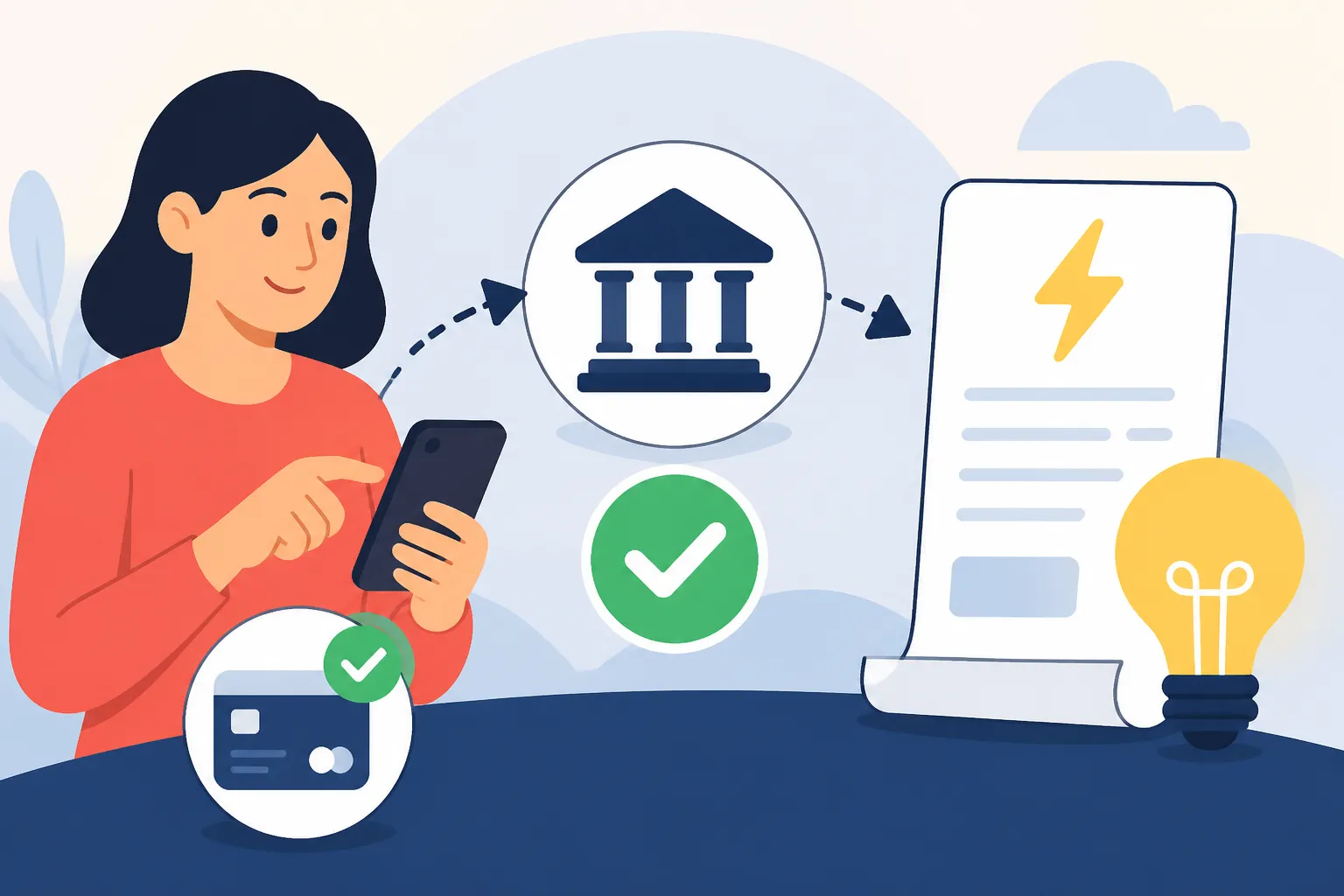
Alright, you're ready to ditch the manual bill payments and embrace the ease of direct debit. The Polish term for direct debit is polecenie zapłaty. It sounds formal, but it's really just a standing instruction to your bank to pay a specific company (your electricity provider, in this case) directly when they present a bill.
Prerequisites Before You Start
Before you even think about starting the process, make sure you have these essentials in order. Trust me, having everything ready upfront will save you so much frustration.
- A Polish Bank Account: This is non-negotiable. Direct debits in Poland operate from Polish bank accounts. If you haven't opened one yet, check out our guide on The Expat Guide to Opening a Bank Account in Poland. Major banks like PKO BP, Santander, mBank, ING Bank Śląski, and Pekao SA all support direct debits, and their online banking systems are generally quite user-friendly once you get the hang of them.
- Your Electricity Account Number (Numer Klienta/Abonenta): This is a unique identifier found on all your electricity bills or your contract. It's crucial for linking your bank account to your electricity provider. Look for terms like "Numer Klienta," "Numer Odbiorcy," or "Numer Identyfikacyjny" on your bill.
- PESEL or NIP: If you're an individual, your PESEL number (the Polish national identification number) will be required. For businesses, you'll need your NIP (tax identification number). If you're still wondering How to Get Your PESEL Number and Why It Matters for Healthcare, it's definitely something to sort out for all your administrative needs.
- Electricity Contract Information: Having a copy of your electricity contract (if you have one) or recent bills can be helpful as they contain all the necessary details about your provider and account.
- Access to Online Banking or a Physical Bank Branch: You'll need one of these to initiate the direct debit. Online banking is usually the easiest and fastest method. If you're still getting used to digital payments, our guide on How to Set Up Online Banking and BLIK Payments in Poland can help.
How to Initiate the Direct Debit Request
There are generally two routes to setting up a direct debit for your electricity in Poland: through your bank or through your electricity provider. I highly recommend the bank route as it tends to be more straightforward for expats.
Option 1: Through Your Bank (Recommended)
This is usually the most hassle-free method, as Polish banks have streamlined this process within their online banking platforms.
- Log in to Your Online Banking: Access your bank's website or mobile app.
- Navigate to Direct Debit Section: Look for a section related to payments, services, or direct debits. Common terms might be "Polecenie Zapłaty," "Zarządzanie Poleceniami Zapłaty," "Płatności cykliczne" (recurring payments), or "Usługi." In English interfaces, it might simply be "Direct Debits."
- Initiate a New Direct Debit: Select the option to add a new direct debit.
- Search for the Electricity Provider: Most banks will have a list of pre-registered companies. Search for your electricity provider by name (e.g., PGE, Tauron, Enea, E.ON). If it's not on the list, there might be an option to add it manually, but this is less common for major utilities.
- Input Your Customer Details:
- You'll need to enter your electricity account number (numer klienta/abonenta) precisely as it appears on your bill.
- Your PESEL (for individuals) or NIP (for businesses).
- Sometimes, your full name and address registered with the electricity provider.
- Set Limits (Optional but Recommended): Your bank might allow you to set a maximum amount for each direct debit payment or a total monthly limit. This can offer an extra layer of security, preventing unexpectedly high payments, especially if your bills are based on estimated usage. While tempting, be mindful not to set it too low, or legitimate bills might be rejected.
- Review and Confirm: Carefully check all the details you've entered. Ensure the provider name, your account number, and any limits are correct. Confirm the setup, usually with a two-factor authentication method (SMS code, mobile app confirmation).
What happens next? Your bank will send the direct debit request to your electricity provider. The provider then needs to confirm the details and activate it on their end. This isn't an instant process; it can take a few business days, sometimes up to a week or two. You should receive a confirmation from both your bank and your electricity provider once it's active. During this transition, keep an eye on your upcoming bills – your first bill after initiating direct debit might still require manual payment.
Option 2: Through Your Electricity Provider
While some electricity providers like PGE, Tauron, and Enea do offer the option to set up direct debit directly through their customer portals or by submitting a form, this route can often involve more paperwork and waiting.
- Check Their Website/Customer Portal: Visit your electricity provider's website (e.g., pge-obrot.pl, tauron.pl, energa.pl) and look for a "Polecenie Zapłaty" or "Direct Debit" section in their customer service or forms area.
- Download the Form: You'll typically find a downloadable PDF form (formularz polecenia zapłaty).
- Fill Out the Form: This form will require your personal details, electricity account number, and your bank account details (IBAN, bank name).
- Bank Confirmation (Sometimes Required): Crucially, some providers require that you take this form to your bank first to get it stamped and signed by the bank, confirming that your account exists and is valid for direct debits. This adds an extra step and a trip to a physical bank branch.
- Submit the Form: Once completed and, if necessary, bank-confirmed, you'll need to send the form back to your electricity provider. This is often done via postal mail (registered mail is recommended for proof) or by submitting it in person at a customer service office (Punkt Obsługi Klienta).
- Wait for Activation: Similar to the bank-initiated method, there will be a waiting period for the provider to process the request and activate the direct debit.
As you can see, the bank route is usually less administrative heavy, especially for those of us who dread Polish paperwork!
Managing and Troubleshooting Your Electricity Direct Debits
Once you've navigated the setup process, the relief of having one less thing to worry about each month is immense. But it's not quite "set it and forget it" forever. A little oversight can save you big headaches later on.
What Happens After Setup?
After your direct debit is successfully set up, here's what you can expect:
- Confirmation is Key: You should receive official confirmation, usually an email or a letter, from both your bank and your electricity provider stating that the polecenie zapłaty is active. Don't throw these away! They're proof.
- First Payment Nuances: Be prepared that the very first bill after setting up direct debit might still need to be paid manually. The system often needs a full billing cycle to kick in properly. Always check your incoming bills.
- Monthly Deduction: From then on, when your electricity bill is due, the amount will automatically be debited from your Polish bank account on the due date. This usually happens a day or two before the actual due date to ensure timely payment.
- Continue Monitoring Bills: Even with direct debit, it's a good practice to still glance at your monthly or bi-monthly electricity bills when they arrive. This is especially important if you're on an estimated usage plan. A sudden spike in estimated usage could mean a massive adjustment bill later. You want to spot any anomalies early.
- The Sweet Taste of Convenience: The biggest benefit, of course, is the sheer convenience. No more remembering due dates, no more manual transfers, and significantly reduced risk of late fees. It's truly a game-changer for daily life in Poland. When you're busy sorting out other aspects of your life, like maybe figuring out How Much Does Private Health Insurance Cost in Poland in 2026? or navigating the complexities of your residence permit, having one less bill to manually handle is a blessing.
Common Issues and How to Solve Them
Life in Poland, especially as an expat, teaches you that things don't always go smoothly. Here are some common issues you might encounter with direct debits and how to tackle them:
- Insufficient Funds: This is the most common reason for a direct debit to fail. If there isn't enough money in your account on the payment due date, your bank will reject the payment.
- Consequences: You might incur a late payment fee from your electricity provider. Repeated failures could even lead to your direct debit being cancelled, or in extreme cases, service interruption.
- Rectification: Immediately transfer the outstanding amount to your electricity provider manually via bank transfer, and make sure to include your customer number as a reference. Then, ensure there are sufficient funds for future payments.
- Incorrect Details: If the electricity provider's details or your customer number were entered incorrectly during setup, the direct debit simply won't work or might be applied to the wrong account (yikes!).
- What to do: First, check your online banking to see the direct debit details. If they are wrong, cancel the existing direct debit and set up a new one with the correct information. If you're unsure, contact your bank's customer service. You might also need to contact your electricity provider to ensure they have the correct polecenie zapłaty linked to your account.
- Switching Providers or Moving: While less common to switch electricity providers in Poland, moving to a new address will definitely require action.
- Action: When you move, you must cancel the direct debit for your old address and set up a new one for your new address (assuming it's with the same or a different provider). Do not cancel the old direct debit until you've received and paid your final bill for the old property. This ensures you don't accidentally get hit with an unpaid bill later. You can usually cancel a direct debit through your online banking by finding the existing polecenie zapłaty and selecting "anuluj" or "usuń" (cancel/delete). For comprehensive advice on navigating utilities when moving, our guide on The Expat Guide to Setting Up Utilities in Poland is a must-read.
- Language Barrier: This is a persistent challenge for many expats in Poland. When things go wrong, communicating with customer service can be tough.
- Tips: Many major banks have English-speaking helplines or staff at larger branches. For electricity providers, English support is less common. Use Google Translate (or a similar tool) to draft your questions in Polish, or if possible, ask a Polish-speaking friend or colleague for help. Having your How to Get a PESEL and NIP Number in Poland ready will usually speed things up.
Alternatives to Direct Debit if it's Not for You
While direct debit offers unparalleled convenience, it might not be for everyone, or perhaps you just need a temporary solution before you get it set up.
- Regular Bank Transfers (Przelew): You can set up recurring transfers (similar to standing orders) through your online banking. This means you specify a fixed amount to be transferred to your electricity provider each month.
- Pros: Gives you more control over the amount paid each month.
- Cons: You'll still need to monitor your actual consumption and adjust the transfer amount periodically, especially if you're on an estimated billing cycle. Otherwise, you'll end up with a large adjustment bill or overpaying significantly.
- Online Payment Portals: Many electricity providers (PGE, Tauron, Enea, E.ON) have dedicated customer portals (eBOK or Internetowe Biuro Obsługi Klienta) where you can log in, view your bills, and pay them directly using a credit/debit card or services like Przelewy24 or BLIK.
- Pros: Easy and quick, often providing immediate payment confirmation.
- Cons: Still requires manual action each billing period.
- Physical Payments: As mentioned earlier, taking your bill to a post office (Poczta Polska) or a convenience store like Żabka to pay in cash or by card is always an option.
- Pros: No bank account needed if paying cash. Immediate confirmation slip.
- Cons: Time-consuming, potential for queues, and can be challenging with language barriers.
Ultimately, setting up direct debit for your electricity bills is a small step that makes a huge difference in managing your finances and reducing administrative burden in Poland. It's all part of settling in and making this country feel more like home.
Disclaimer
Please note that the information provided in this guide is for general informational purposes only and does not constitute professional financial, legal, or administrative advice. While we strive to provide accurate and up-to-date information, regulations and procedures in Poland can change. It is always recommended to verify specific details with your electricity provider, bank, or a qualified advisor. Your individual circumstances may vary.