How Do I Enrol My Child in a Przedszkole (Preschool) in Warsaw?
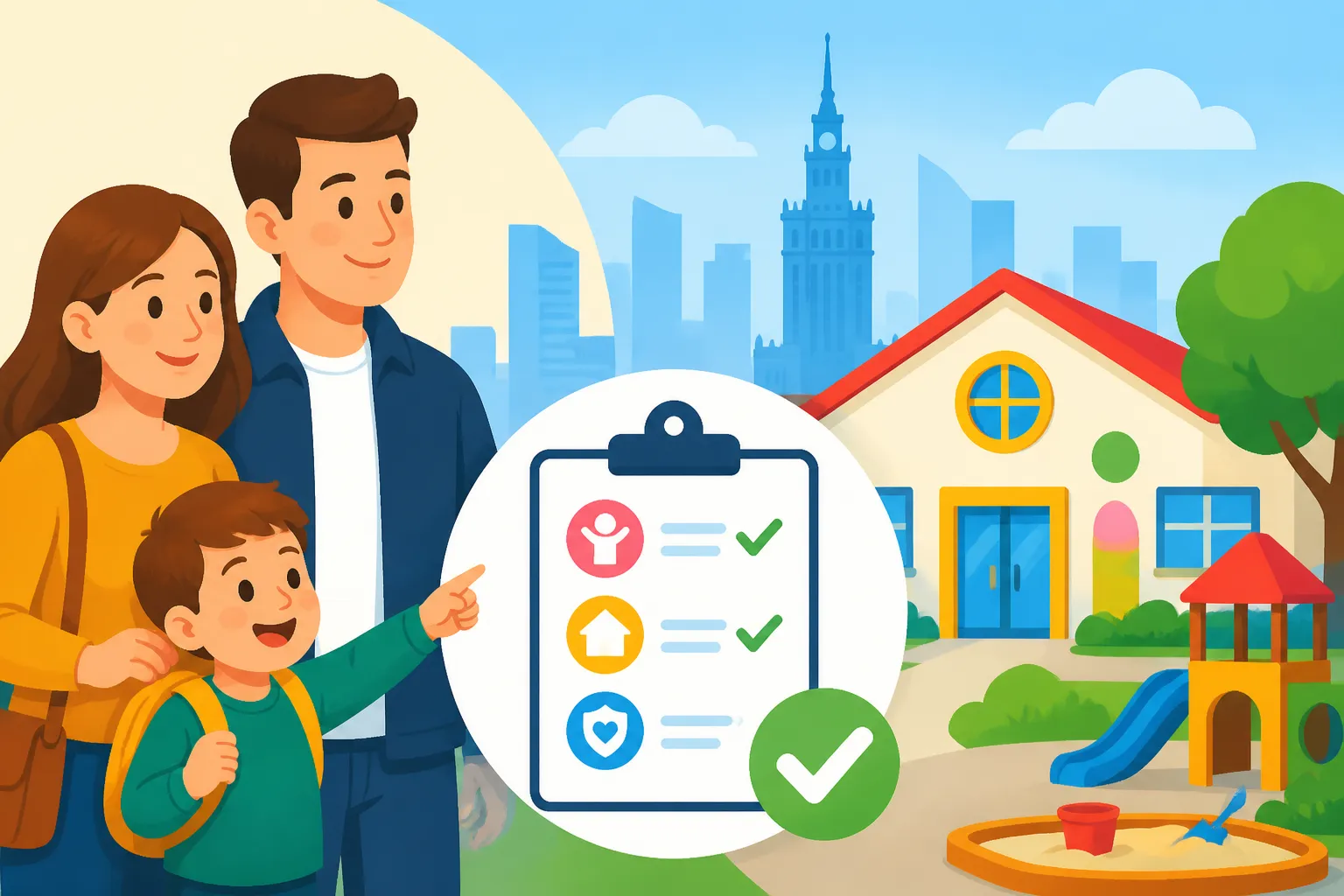
Navigating the Polish educational system, especially when you’re new to the country, can feel like trying to solve a Rubik's Cube blindfolded. One of the first major hurdles for expat parents with young children is figuring out how to get their little ones into a przedszkole – a preschool or kindergarten. This guide is here to untangle that process, specifically focusing on Warsaw, offering practical advice and a realistic look at what to expect as you try to secure a spot for your child.
Understanding the Polish Preschool System (Przedszkola) in Warsaw
Before you even think about submitting an application, it’s crucial to grasp the basic structure of early childhood education here in Poland. It’s not a one-size-fits-all system, and knowing the differences between types of institutions will save you a lot of time and potential headaches. Warsaw, being the capital, has a wide array of options, but also a lot of competition.
Public vs. Private Przedszkola: What's the Difference?
This is perhaps the biggest decision you'll face. Public przedszkola (known as przedszkola publiczne) are funded by the local municipality, which in Warsaw means the city council and individual dzielnica (district) authorities. The big appeal? They're significantly more affordable. For a standard five-hour educational program, they are free of charge. You only pay for additional hours (beyond the core curriculum), meals, and sometimes a small contribution for materials. The curriculum is set nationally, and the language of instruction is exclusively Polish. This can be a fantastic way for your child to immerse themselves in Polish language and culture quickly. However, competition for places is fierce, particularly in popular districts.
On the flip side, private przedszkola (przedszkola niepubliczne or prywatne) offer more flexibility but come with a higher price tag. They are privately funded and can set their own curricula, often offering bilingual or international programs. Many cater specifically to expat families, with English, German, or French being the primary language of instruction, or at least a significant part of the daily routine. While they typically have smaller class sizes and a wider range of extracurricular activities, the monthly fees can be substantial, often ranging from 1,500 PLN to 3,000+ PLN, not including meals or enrolment fees. The application process for private przedszkola is also much simpler and direct, usually involving a chat with the director and signing a contract, without the complex points system of public schools.
Age Requirements and Stages of Preschool Education
In Poland, early childhood care is generally divided into two main stages: żłobek (nursery or daycare) for children aged roughly 6 months to 3 years, and przedszkole (preschool/kindergarten) for children aged 3 to 6 years. It’s important to understand this distinction. If your child is under three, you’ll be looking for a żłobek, which operates under slightly different rules and often has separate recruitment processes.
For przedszkola, children typically start the year they turn three. By law, all children aged 6 are required to attend a "zero year" (zerówka) which is usually offered within a przedszkole or sometimes at a primary school. This zerówka prepares them for first grade. While attending przedszkole from age 3-5 is optional, it's highly recommended for a child's social and educational development, and frankly, for parents' sanity! Keep in mind that for public przedszkola, a child's age is calculated as of September 1st of the year they are applying. So, if your child turns three on September 5th, they'll likely have to wait until the following year for a public przedszkole spot.
Key Terminology and Concepts
Navigating the system will be a lot easier if you're familiar with some key Polish terms and concepts. Rekrutacja is the general term for recruitment or the application process. When applying to public przedszkola, you’ll submit a wniosek (application form) through an elektroniczny system (electronic system). Your chances of acceptance are determined by a system punktowy (points system) based on various kryteria rekrutacyjne (recruitment criteria). A komisja rekrutacyjna (recruitment committee) will review these applications.
You'll also hear about deklaracja o kontynuowaniu edukacji (declaration of continued education) if your child is already attending a public przedszkole and you want them to stay for another year. For new applicants, it’s all about the rekrutacja. Understanding these terms will help you decode the official websites and communications, which are often solely in Polish. Don't be shy about using translation apps or asking for help from Polish-speaking friends or colleagues; it’s a lifesaver in these situations.
Navigating the Warsaw Public Przedszkole Application Process
Trying to get your child into a public przedszkole in Warsaw can feel like a competitive sport. It requires diligence, a good understanding of the system, and a fair bit of patience. But the financial savings make it a very attractive option for many expat families who plan to stay long-term.
Eligibility and Required Documents for Foreigners
First and foremost, your child needs a PESEL number. This unique identification number is absolutely crucial for almost all administrative procedures in Poland, including school enrollment. If you haven't sorted this out yet, make it a priority. Our guide on How to Get Your PESEL Number and Why It Matters for Healthcare can walk you through the process. Along with the PESEL, you'll need proof of residence (zameldowanie) in Warsaw. This confirms that you and your child are residents of the city and therefore eligible for local public services. You can learn more about this in our guide on Registering Your Residence (Zameldowanie) in Poland: The Complete Guide.
Other essential documents include your child's birth certificate (often an apostilled or translated version, depending on the dzielnica requirements), proof of your employment or self-employment status in Poland (which contributes to the points system), and often your latest Polish tax settlement (PIT) if you’ve been living and working here. If you're a non-EU citizen, your child’s and your own Karta Pobytu will be required as well. Each dzielnica might have slightly different requirements, so always check the specific rules for the district where you live. Sometimes, proof of family status (e.g., if you’re a single parent or have more than one child) can also grant additional points.
The Online Recruitment System (System Elektroniczny) in Warsaw
Warsaw operates a centralized online recruitment system for public przedszkola. This is where the magic (or madness, depending on your perspective) happens. Recruitment typically kicks off in March for the following academic year starting in September. The exact dates are announced by the city of Warsaw and by each dzielnica, so keep an eye on the official education portals (e.g., edukacja.warszawa.pl). You'll usually apply through the system specific to your dzielnica or through a central Warsaw system.
The process generally involves:
- Creating an account: You'll need an ePUAP profile or a trusted profile (profil zaufany) to log in and sign documents electronically.
- Filling out the application form (wniosek): This is done online. You’ll list your preferred przedszkola in order of priority (usually up to 3-5 choices). Be strategic here; picking schools within walking distance or those with historically lower competition might increase your chances.
- Attaching documents: You'll scan and upload all the required documents digitally.
- Confirming your choices: Make sure everything is correct before submitting. Once submitted, you’ll likely need to print a confirmation, sign it, and deliver it in person to your first-choice przedszkole or to the Urząd Dzielnicy (District Office). Some dzielnice allow full electronic submission with profil zaufany.
- Monitoring results: The system will announce preliminary and final results on specific dates. If your child is accepted, you’ll then need to confirm their place electronically and/or by submitting a physical confirmation form. Missing these deadlines means losing the spot!
This online system, while efficient, can be overwhelming due to its Polish-only interface and the sheer volume of information. Having a friend or colleague who speaks Polish help you navigate it is invaluable.
Understanding the Points System (Kryteria Rekrutacyjne) and Chances of Acceptance
The public przedszkole system in Poland operates on a points-based allocation, making it a meritocracy of sorts, though it's more about meeting specific family criteria than academic merit. There are two main categories of criteria: statutory and additional.
Statutory Criteria (Kryteria Ustawowe): These are mandatory and apply across the board, giving points for circumstances like:
- Child with a disability (highest points)
- Child with a chronic illness
- Child from a family with multiple children
- Child from a single-parent family
- Child from a foster family
- Child of parents with disabilities
Additional Criteria (Kryteria Dodatkowe): These are set by the individual gmina (municipality), in this case, the city of Warsaw and its dzielnice. They can vary significantly but often include:
- Both parents working or running a business in Warsaw (significant points)
- Parents settling taxes in Warsaw (proving local contribution)
- Parents being students
- Child having siblings already attending the przedszkole
- Proximity of residence to the przedszkole
- Child having received a vaccination for measles, mumps, and rubella (MMR)
Each criterion is assigned a certain number of points. The more points you accumulate, the higher your child’s chances of getting a spot. It's truly a numbers game. For expat families, proving tax residency and employment in Warsaw are often the most accessible "additional" points. Without many of these points, especially in highly sought-after dzielnice like Mokotów, Wilanów, or Śródmieście, securing a place can be challenging, even with a strong internet connection for the application (and perhaps a useful eSIM from Airalo to ensure you're always connected during this stressful period!). Be realistic about your chances and always have a backup plan, which brings us to private options.
Exploring Private and International Preschool Options in Warsaw
If the public system feels like too much of a maze, or if you prefer an English-speaking environment, Warsaw's private and international przedszkola are an excellent alternative. While more expensive, they offer different benefits that many expat families find invaluable.
Advantages and Disadvantages of Private Przedszkola
The primary advantage of private przedszkola is flexibility. Their enrolment periods are often year-round, not confined to the strict spring recruitment of public schools. This means if you arrive in Warsaw mid-year, you still have options. They often boast smaller class sizes, leading to more individualized attention for your child. The curriculum is typically broader, incorporating various educational philosophies (Montessori, Reggio Emilia, etc.) and focusing heavily on language development if it's a bilingual or international setting. Many also offer a richer array of extracurricular activities, from ballet to coding, all included in the fee.
However, the cost is the most significant disadvantage. Monthly fees can be high, and there are often additional one-time enrolment or registration fees. Spaces, while more readily available than in public schools, can still be competitive in the most popular international schools, sometimes requiring applications months in advance. The level of Polish immersion will also be lower, which might be a pro or con depending on your family's long-term goals. While not directly related to education, these schools often have diverse student bodies, which can be a huge plus for expat kids settling into a new country, offering a sense of community for both children and parents.
Finding English-Speaking and Bilingual Preschools
Warsaw has a thriving international community, and with it, a good selection of English-speaking and bilingual przedszkola. You'll find a concentration of these schools in areas popular with expats, such as Wilanów, Mokotów, Ursynów, and Ochota. Some well-known names that often come up in expat circles include International European School Warsaw (IES), The British School Warsaw, American School of Warsaw (ASW), and various smaller, independent bilingual institutions like Kids' Planet or Montessori schools.
When researching, look beyond just the language. Consider the school's philosophy, teacher-to-student ratio, facilities (outdoor play areas are crucial!), and the overall atmosphere. Many offer trial days or introductory visits, which are excellent opportunities to see if the environment feels right for your child. Don't be afraid to ask about staff qualifications, particularly regarding their experience with non-native English speakers or children from diverse cultural backgrounds. Online expat groups and forums are also fantastic resources for recommendations and reviews from other parents who have walked this path before you.
The Application Process and Costs for Private Institutions
Applying to a private przedszkole is generally a much more straightforward affair than navigating the public system. You'll typically apply directly to the school of your choice, usually via their website or by contacting their admissions office. The process often involves:
- Initial Inquiry: Contact the school for information, current fees, and availability.
- Application Form: Complete the school’s specific application form, which might be online or a downloadable document.
- Required Documents: You'll usually need your child's birth certificate, vaccination records, and sometimes a letter from a previous school or daycare. A PESEL may be requested, but isn't always mandatory for initial enrolment in private settings.
- Interview/Meeting: Many schools will invite you and your child for an informal meeting or interview. This is a chance for them to assess your child’s readiness and for you to ask any remaining questions.
- Offer and Contract: If accepted, you'll receive an offer, which will detail the fees, payment schedule, and terms. You'll then sign a contract.
- Enrolment Fee: Expect to pay a one-time, non-refundable enrolment fee upon signing, which can range from a few hundred to a couple of thousand PLN.
As for costs, budget for a significant chunk of your monthly expenses. Fees vary widely, but a rough estimate for a good quality English-speaking przedszkole in Warsaw could be anywhere from 1,800 PLN to 3,500 PLN per month, plus meals (an additional 200-500 PLN/month). Some schools also have annual fees for materials or special events. When you're calculating your overall Cost of Living in Poland, these educational costs for children are a major factor to consider. Make sure you get a detailed breakdown of all costs upfront to avoid any surprises.
Practical Tips and Common Challenges for Expat Parents
Even with all the information, enrolling your child in a przedszkole can still throw a few curveballs your way. As expats, we often face unique challenges that locals don’t.
Overcoming Language Barriers and Cultural Differences
One of the most common frustrations is the language barrier. Many official documents and online systems are solely in Polish. Don't hesitate to seek help! Enlist a Polish colleague, friend, or even consider hiring a local assistant for a few hours to help with translations and phone calls. Websites like Lingee or DeepL can be your best friends for quick translations. For important documents, professional translation might be necessary. It’s also important to understand that communication styles can differ. Be prepared for directness, and don’t take it personally if processes seem inflexible.
Culturally, Polish przedszkola often have a different approach to discipline, routine, and parent involvement than what you might be used to. Embrace it with an open mind. Your child will likely be exposed to Polish traditions, songs, and stories, which is a wonderful part of their expat experience. Attending school events, even if you don't understand every word, shows your support and helps build community. Remember, your child will likely pick up Polish much faster than you think!
Dealing with Waiting Lists and Alternative Solutions
Whether you're aiming for public or popular private przedszkola, waiting lists are a reality. For public przedszkola, if your child doesn't get a spot in the main recruitment round, there's often a supplementary round (rekrutacja uzupełniająca), but these spots are even more limited. It's smart to have a backup plan.
Consider these alternatives:
- Applying to multiple private przedszkola: Don't put all your eggs in one basket.
- Kluby Malucha (Toddler Clubs): These are less formal than przedszkola or żłobki and offer a few hours of care and activities, often for younger children or as a bridge before a full przedszkole spot opens up. They're typically private and paid hourly or monthly.
- Nannies or Babysitters: For some, a private nanny might be a flexible solution, especially if you have an infant or multiple young children. While more expensive, it offers personalized care and can be an excellent option for children who need more time to adjust to a new environment.
- Homeschooling/Co-ops: A less common but growing option, especially in expat communities, where parents might take turns caring for a small group of children.
Remember, flexibility is key when you're moving your life, and indeed your family, to a new country. When initially setting up your life here, moving companies like Sirelo can help with the logistics, easing one burden so you can focus on others, like finding the right educational fit for your child.
Preparing Your Child for a Polish Przedszkole
The transition to a new school in a new country can be tough for children. Here are some ways to prepare them:
- Basic Polish Phrases: Start teaching them simple greetings (dzień dobry, do widzenia), common requests (proszę, dziękuję), and key words for needs (pić, jeść, toaleta). Even a few words can make a huge difference in their confidence.
- Socialization: If possible, arrange playdates with other children, especially Polish-speaking ones, before school starts. This helps them get used to group settings and different languages.
- Routine: Establish a consistent morning and evening routine well before school begins. Przedszkola often have a strict schedule, including nap times for younger children, and predictability can be comforting.
- Talk About It: Discuss what school will be like, read books about starting przedszkole, and reassure them that it's okay to feel nervous. Emphasize the fun aspects – new friends, toys, and activities.
- Independence: Encourage self-help skills like dressing themselves, eating independently, and communicating their needs. This will empower them and make the transition smoother for both them and their teachers.
Ultimately, finding the right przedszkole in Warsaw for your child as an expat is a journey that requires research, patience, and a bit of determination. While the public system offers great value, it comes with administrative challenges and high competition. Private options, though pricier, provide more flexibility and often English-language support. Whichever path you choose, remember that many expat families have successfully navigated this, and your child will likely thrive in their new Polish environment, picking up new skills and perhaps even a new language with remarkable speed!
Disclaimer
The information provided in this guide is for general informational purposes only and does not constitute legal, financial, or educational advice. While we strive to keep the information up-to-date and accurate, regulations and procedures in Poland can change frequently. We recommend verifying all specific requirements and deadlines with the relevant authorities (e.g., Urząd Miasta Stołecznego Warszawy, specific dzielnica offices, or individual przedszkola) or consulting with a qualified professional before making any decisions.