How to Exchange Your Foreign Driving Licence in Poland
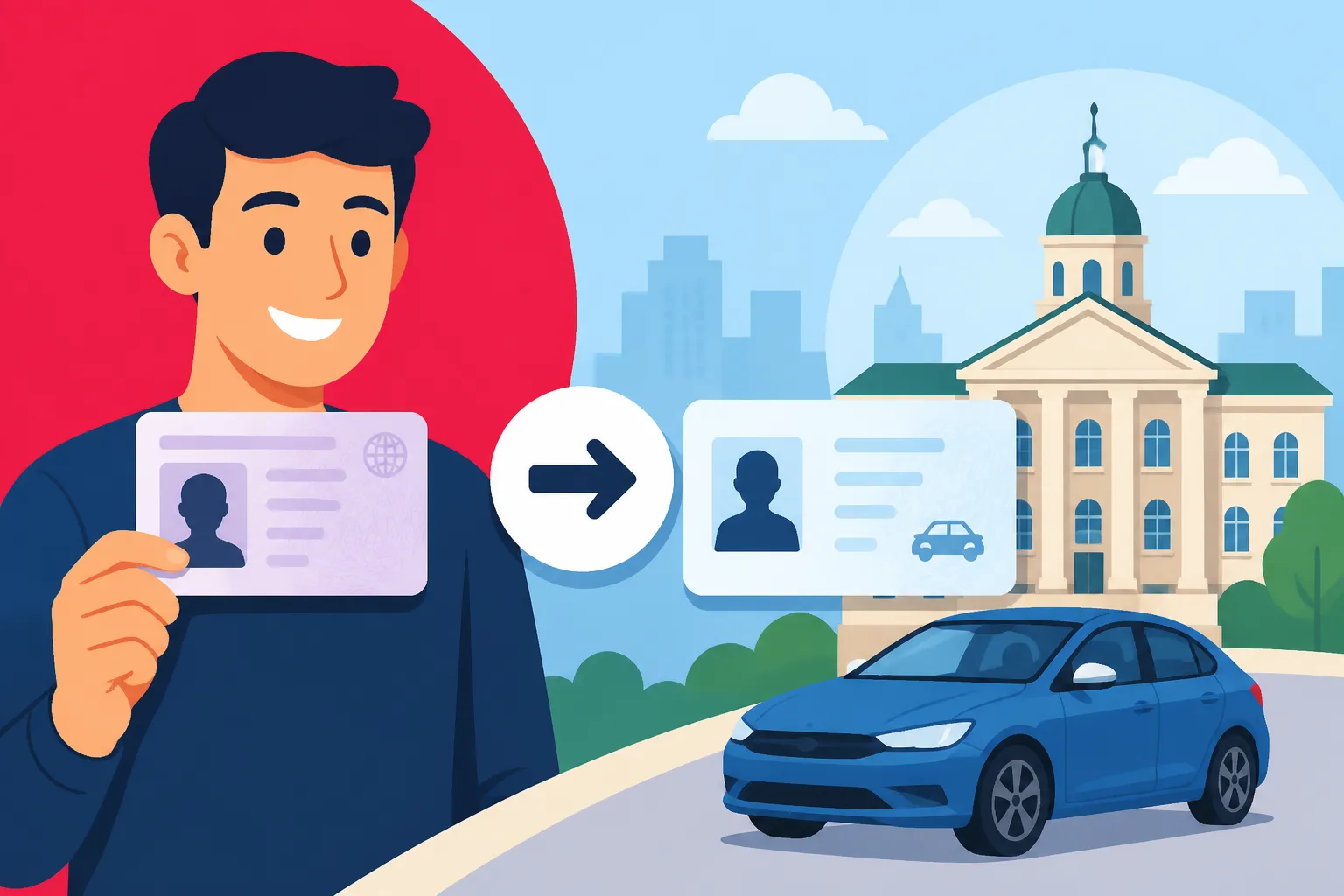
Ah, the Polish driving licence exchange! It sounds straightforward on paper, doesn't it? "Just swap one for the other!" you might think. But, like so many administrative tasks here, it can quickly turn into a multi-act drama if you're not prepared for the specific hoops you'll need to jump through. This guide is going to walk you through every twist and turn, helping you navigate the sometimes baffling process of exchanging your foreign driving licence in Poland, so you can keep driving legally and with minimal stress.
Understanding the Rules: Who Needs to Exchange and When
Navigating the administrative labyrinth of a new country is never easy, and something as fundamental as your driving licence can feel like a high-stakes puzzle. In Poland, the rules for exchanging your foreign driving licence depend heavily on where you're from. It's not a one-size-fits-all scenario, and knowing your category from the outset can save you a lot of grief and wasted trips to the Urząd.
The Legal Obligation for Different Nationalities
Let's break down who has to exchange their licence and who has more flexibility. This is often where expats get tripped up, and believe me, you don't want to find yourself on the wrong side of Polish traffic law.
For those of you hailing from an EU (European Union) or EEA (European Economic Area) country – which includes Iceland, Liechtenstein, and Norway – you're in a relatively fortunate position. Generally, you don't have to exchange your driving licence for a Polish one. Your existing licence is recognised and perfectly valid for as long as it remains current. However, there are a couple of situations where you might choose to exchange it. For instance, if your EU/EEA licence is lost or stolen, or if it expires while you're living in Poland, you'd apply for a Polish replacement. This often makes practical sense, as dealing with a Polish Urząd for a replacement is usually easier than trying to coordinate with your home country's authorities from afar. Just remember, if you decide to exchange it, your original licence will be sent back to your country of origin.
Now, if you're from a non-EU/EEA country, the situation is quite different and considerably more rigid. This is where that infamous 185-day rule comes into play, and it's something you absolutely cannot ignore. If you establish permanent or temporary residence in Poland, you are legally obliged to exchange your driving licence for a Polish one within 185 days from the date you registered your residence. Yes, that 185-day rule creeps up on you faster than you think, especially when you're busy trying to figure out all the other aspects of setting up life here. This isn't just a suggestion; it's a hard deadline. Failing to exchange your licence within this timeframe means your foreign licence ceases to be valid in Poland, and driving with it could lead to significant fines, invalid insurance, and other legal complications. It's a proper headache, so mark that calendar!
Recognised Licences and International Driving Permits
Not all foreign driving licences are created equal in the eyes of the Polish law. Poland adheres to international conventions on road traffic, primarily the Vienna Convention on Road Traffic (1968) and, to a lesser extent, the Geneva Convention on Road Traffic (1949). What this means for you is that if your country is a signatory to one of these conventions, the exchange process is generally smoother because your licence is already recognised as compliant with international standards.
Most countries around the world are signatories to at least one of these conventions, making their licences generally acceptable for exchange. However, if your licence is from a country that is not a signatory to either the Vienna or Geneva Convention, you're looking at a much more involved process. In such cases, the Polish authorities might not be able to simply exchange your licence. Instead, you could be required to pass a full Polish driving theory and practical test – essentially, starting from scratch. This is a crucial distinction, and it's worth checking your country's status early on. A quick search for "[Your Country] Vienna Convention Road Traffic" should give you the answer.
An International Driving Permit (IDP) often causes confusion. An IDP is not a driving licence in itself; it's a supplementary document that translates your existing foreign licence into multiple languages. It acts as an official endorsement that your national licence is valid. While an IDP is highly recommended and often legally required for tourists and short-term visitors from non-EU/EEA countries who plan to drive in Poland, it does not exempt you from the 185-day exchange rule once you become a resident. Think of it as a helpful companion for your licence, but not a substitute for the official exchange. During your initial period of settling in, an IDP, coupled with your original licence, allows you to drive legally. However, once those 185 days of residence tick by, an IDP alone won't suffice. You'll need to follow through with the exchange. For many expats, this is just one of the many bureaucratic hurdles to clear, alongside things like getting your How to Get Your PESEL Number and Why It Matters for Healthcare or even just trying to get your How Do I Set Up Home Internet and TV in Poland. It's all part of the grand adventure of life in Poland!
The Step-by-Step Process: Your Journey Through the Urząd
Alright, so you've established that you need to exchange your foreign driving licence. Now comes the nitty-gritty: the actual process. Believe me, this isn't a task you want to rush into unprepared. Polish bureaucracy thrives on precision, and one missing stamp or incorrect form can send you back to square one, adding weeks or even months to your waiting time. Preparation is absolutely key to minimizing frustration.
Gathering Your Documents Before You Even Think About Going
Before you even dream of setting foot in the Urząd Miasta or Starostwo Powiatowe (the local government office responsible for vehicle registration and driving licences), you need to gather all your ducks in a row. This stage is paramount, as incomplete documentation is the number one reason for rejection or delays. Think of it as preparing for a very strict, detail-oriented exam.
First and foremost, you'll need your original foreign driving licence. This is non-negotiable, as the authorities will typically take it from you when you submit your application. This can be a bit nerve-wracking, as it means you won't have a valid driving document while your Polish licence is being processed, which we'll discuss more later. You'll also need a certified translation of your foreign licence into Polish. This isn't just any translation; it must be done by a tłumacz przysięgły (sworn translator) registered with the Polish Ministry of Justice. Do not try to save a few zloty by using a non-certified translator; it will be rejected. You'll also need a proof of residency in Poland, which could be your valid How to Apply for a Temporary Residence Permit (Karta Pobytu) in Poland, a visa, or a zameldowanie certificate. The Urząd also requires two current, clear photographs (35x45mm, front-facing, similar to passport photos), an application form (which you can usually download from the Urząd's website or pick up there), and proof of payment of the administrative fee. Oh, and your PESEL number is crucial, so make sure you've already sorted that out!
Making the Application at the Local Starostwo Powiatowe
Once your stack of documents is pristine and complete, it's time for the actual submission. This usually happens at the Wydział Komunikacji (Department of Communication) within your local Starostwo Powiatowe (District Office) or Urząd Miasta (City Office) if you live in a larger city. For example, if you're in Warsaw, you'd head to one of the district offices, like the one on ul. Smocza or ul. Leśna, depending on your dzielnica. In Krakow, you'd likely go to al. Powstania Warszawskiego.
Before you go, check if you need to book an appointment online. Many Urzęds in larger cities have introduced online booking systems, which can save you hours of waiting in line. If you can't book online, prepare for a wait – grab a number, find a seat, and bring a good book or some podcasts. When your number is called, approach the counter with all your carefully prepared documents. The official will scrutinise every single piece of paper, often with a level of detail that feels slightly excessive. Be prepared for questions, and if your Polish isn't fluent, consider bringing a Polish-speaking friend or engaging a professional assistant to help you navigate the conversation. They will take your foreign driving licence, issue you a confirmation of submission (which is not a temporary driving permit, unfortunately), and send you on your way to the next stage: the waiting game.
The Waiting Game and Temporary Solutions
This is often the most frustrating part of the entire process, and it’s where many expats’ patience is truly tested. After you've submitted all your documents, the Urząd needs to verify the authenticity of your foreign driving licence with the issuing authority in your home country. This inter-country communication can take a significant amount of time – anywhere from a few weeks to several months, or even longer in some cases. There's usually no clear communication during this period, leaving you in limbo.
The biggest pain point during this waiting period is that you will not have a valid driving document. Your foreign licence has been surrendered, and your Polish one hasn't been issued yet. The confirmation of submission from the Urząd is not a temporary driving permit. This means that, legally, you cannot drive in Poland until your new licence is issued. This can be a huge disruption to your daily life, particularly if you rely on a car for work, school runs, or general errands. You'll find yourself relying heavily on The Expat Guide to Public Transport in Poland, which, thankfully, is generally excellent in Polish cities. It’s a bitter pill to swallow, and it truly validates the frustration many foreigners feel with Polish administrative processes.
It’s wise to mentally prepare for this downtime and plan alternatives. If you need to travel internationally during this period, you might face issues as you won't have a physical driving licence for identification or rental car purposes. For those who are still in the throes of international relocation and dealing with multiple administrative tasks, remember that services like Sirelo can assist with various aspects of moving, which, while not directly solving your licence limbo, can at least ease other burdens. Just buckle up and be patient; your Polish driving licence will arrive eventually.
Required Documents: Don't Leave Home Without These
The Polish authorities are sticklers for paperwork. I’ve seen countless expats get turned away from the Urząd because one tiny document was missing or incorrectly formatted. This section is designed to be your definitive checklist, ensuring you walk in with confidence, not confusion.
The Absolute Must-Haves
Let's get down to the brass tacks. These are the documents you absolutely cannot apply without. Consider this your core toolkit for the driving licence exchange process.
- Application Form (Wniosek o wymianę prawa jazdy): This is the official request form for exchanging your driving licence. You can usually find it on the website of your local Urząd Miasta or Starostwo Powiatowe (search for "wniosek wymiana prawa jazdy [your city]"). Fill it out carefully, ensuring all details match your other documents precisely.
- Original Foreign Driving Licence: As mentioned, you'll need to surrender your physical foreign licence. Make sure it's valid and not expired.
- Certified Translation of Your Foreign Driving Licence: This must be carried out by a tłumacz przysięgły (sworn translator) in Poland. This isn't optional, even if your licence is in English and the official understands it. The official seal of a sworn translator is crucial.
- Proof of Identity and Legal Stay: This typically means your passport and your Karta Pobytu (residence permit) or a valid visa. The authorities need to confirm who you are and that you are legally residing in Poland.
- PESEL Number: Your Polish national identification number is essential for any administrative procedure in Poland, including this one. If you haven't obtained it yet, it's a priority. You might have received one when you registered your residence, but if not, check out guides like How to Get Your PESEL Number and Why It Matters for Healthcare.
- Colour Photographs: Two current, identical photos, 35x45mm, showing a clear, front-facing image of your face against a white background, without head covering (unless for religious reasons) or dark glasses. Standard passport photo rules apply.
- Proof of Administrative Fee Payment: There's a fee for issuing the new licence. The current fee for a driving licence is typically around PLN 100. You'll usually need to pay this fee at the Urząd cash desk (kasa) or via bank transfer, and then present the receipt. Always check the exact amount and payment method with your local Urząd beforehand.
- Medical Certificate (Orzeczenie Lekarskie): This is a document confirming you are medically fit to drive. More on this below.
- Confirmation of Residence Registration (Zaświadczenie o Zameldowaniu): While your Karta Pobytu might state your address, a separate, recent certificate of zameldowanie (residence registration) is often required as proof of your registered address in Poland. This is another crucial piece of paper you might have gotten after reading Registering Your Residence (Zameldowanie) in Poland: The Complete Guide.
Translations and Certifications
I can't stress this enough: for anything in a foreign language (which, let's be honest, is probably your entire life story on paper right now), it needs a sworn translation. This isn't just a favour; it's a legal requirement for official documents. A tłumacz przysięgły is certified by the Ministry of Justice and their translations carry legal weight. You'll find lists of sworn translators online, often categorised by language. Expect to pay anywhere from PLN 50-150 per page, depending on the language and complexity. Get your driving licence translated well in advance, as good sworn translators can sometimes have a queue.
In some rarer cases, particularly if your licence is from a country not party to the Vienna or Geneva Conventions, or if the Urząd struggles to verify its authenticity, they might also ask for a consular confirmation from your country's embassy or consulate in Poland. This is less common but can happen. It essentially means your embassy confirms the validity and details of your driving licence. This can add another layer of complexity and cost, so it's good to be aware of the possibility.
The All-Important Medical Examination
Yes, even if you’ve been driving for decades without issue, Poland wants to make sure you’re still good to go. Before you even submit your application, you need to undergo a medical examination by a certified doctor. This isn't a full physical, but it's more than just a quick glance. The doctor will check your eyesight, hearing, and general physical and mental fitness to drive.
You can't just go to any doctor for this. It needs to be a specific type of medical professional who is authorised to issue orzeczenia lekarskie (medical certificates for driving purposes). You can ask at your local Urząd for a list of approved doctors in your area, or simply search online for "badania lekarskie prawo jazdy [your city]". Expect to pay around PLN 200-300 for this examination, and it's not covered by public health insurance. This medical certificate is crucial, and without it, your application won't be processed. It's a standard procedure, much like getting a check-up if you're trying to figure out How to Choose and Register with a GP (Lekarz POZ) in Poland for your everyday health needs.
Here's a handy table to help you keep track of your documents:
| Document | Requirement | Notes |
|---|---|---|
| Application Form | Original, fully completed | Download from Urząd website or pick up there. |
| Foreign Driving Licence | Original, valid | Will be surrendered; ensure you have photocopies for your records. |
| Certified Translation | Original, by sworn translator | Essential, no exceptions. |
| Passport | Original and photocopy of main page | For identification. |
| Karta Pobytu/Visa | Original and photocopy | Proof of legal residence. Important if you're working on getting your How to Apply for a Temporary Residence Permit (Karta Pobytu) in Poland. |
| PESEL Number | Proof of assignment | Required for all official procedures. |
| Photographs | 2 x (35x45mm) colour, passport-style | Recent, clear, white background. |
| Proof of Fee Payment | Original receipt | Pay at Urząd or bank, check current fee. |
| Medical Certificate | Original, from authorised doctor | Must be specific for driving licence purposes. |
| Proof of Residence Registration | Original, recent (e.g., zaświadczenie o zameldowaniu) | Confirms your registered address in Poland. |
Take this list seriously, gather everything, and make photocopies of absolutely everything before you hand over the originals. Trust me, it’s worth the extra effort.
Overcoming Challenges and Common Pitfalls
If you’ve spent any time dealing with Polish administration, you’ll know it’s rarely a smooth, perfectly signposted journey. The driving licence exchange is no exception. Expats often face hurdles that can turn a seemingly simple task into a test of endurance. But don't worry, we've all been there, and knowing what to expect can help you navigate it better.
Language Barriers and Dealing with the Urząd
Ah, the language barrier. It's a perennial challenge for expats in Poland, and the Urząd is often where it feels most acute. While younger officials in major cities might have some English, you cannot rely on it. Official communication, forms, and most interactions will be in Polish. Even with Google Translate, the nuances of bureaucratic Polish can be a nightmare. Legal and administrative jargon can be particularly tricky to interpret, leading to misunderstandings or missed requirements.
My advice? If your Polish isn't at a confident conversational level, bring a Polish-speaking friend, colleague, or professional assistant with you. This isn't just for translation; it's also for understanding the context, asking clarifying questions, and ensuring you don't accidentally agree to something you don't understand. Many expats find it worthwhile to hire a local agency or an individual assistant who specialises in helping foreigners with administrative tasks. While it's an added cost, the peace of mind and time saved can be invaluable. It also helps to be polite, patient, and persistent. A smile and a "Dzień dobry" go a long way, even if you follow it with halting Polish or a request for help.
Long Waiting Times and Communication Gaps
Remember that "waiting game" I mentioned? It’s not just about sitting in the Urząd lobby. The processing time for a driving licence exchange can be agonizingly long. While the official legal deadline for the Urząd to process a request is typically 30 days (or 60 days for more complex cases), this often refers to the internal process after they receive all necessary information and verification. The verification from your home country's authorities can take many months, and unfortunately, this period usually isn't counted within the Urząd's official processing time.
During this extended wait, communication from the Urząd is often minimal to non-existent. You won't receive regular updates. This lack of transparency can be incredibly frustrating, leaving you wondering if your application is even moving forward. My advice is to try to get a contact person or at least an extension number if possible during your submission. After a reasonable period (say, 2-3 months), you might consider calling or revisiting the Urząd to politely inquire about the status of your application. Sometimes a gentle nudge is needed, but again, ensure you have Polish language support if you're calling. Remember that this period also means you cannot legally drive in Poland, a significant point of stress for many.
What If Your Licence Isn't Recognised?
This is a scenario you really want to avoid, but it's a critical pitfall to be aware of. As discussed, if your foreign driving licence is from a country that is not a signatory to the Vienna or Geneva Conventions on road traffic, the Polish authorities cannot simply exchange it. In this unfortunate situation, you will be required to take the full Polish driving test – both the theoretical (knowledge) and practical (on-road) components.
This means enrolling in a Polish driving school, attending classes, and passing exams that are designed for Polish speakers and drivers. While some driving schools in larger cities may offer English-language courses, they are far less common, and the process will be considerably more time-consuming and expensive than a simple exchange. This effectively puts you back at square one, as if you've never driven before. If you suspect this might be your case, it's vital to research this possibility upfront and factor it into your relocation plans. If this happens, you'll need to dive deep into topics like Driving in Poland: Licences, Registration and Rules for Expats (2027) to understand the Polish driving system from the ground up. It’s a huge undertaking, so do your homework!
Post-Exchange Life and Alternatives to Exchange
After all the hurdles, the waiting, and the paperwork, there's a light at the end of the bureaucratic tunnel: your very own Polish driving licence. But what happens then, and what if you decided the exchange wasn't for you?
Receiving Your Shiny New Polish Licence
The day you get that notification (often by text message or email, if you provided your contact details) that your Polish driving licence is ready for collection is a small victory dance moment for many expats. You'll head back to the Urząd, present your identification and the confirmation of submission, and finally, receive your shiny new prawo jazdy.
Take a moment to check all the details on your new licence. Ensure your name, date of birth, address, and especially the categories of vehicles you're permitted to drive are all correct. Polish driving licences are typically valid for 15 years for most categories, unless there are medical restrictions. This new card will be your official proof of driving privilege in Poland and across the EU/EEA. It’s definitely a moment to savour, a tangible sign that you're truly settled in. For many, it feels like another box checked off the list of things you need to do to feel fully at home in Poland, much like understanding your The Complete Visa Guide for Relocating to Poland (2027) or getting your initial residence documents.
What Happens If You Don't Exchange (and Why You Should)
Let’s be brutally honest here: trying to avoid the exchange process as a non-EU/EEA resident after the 185-day mark is a bad idea. A really bad idea. Once those 185 days of residence pass, your foreign driving licence is no longer considered valid for driving in Poland.
If you continue to drive with an invalid licence, you face several serious consequences:
- Hefty Fines: Polish traffic police are vigilant. If you're pulled over and found to be driving with an invalid licence, you'll face a significant fine.
- Insurance Invalidity: This is perhaps the most critical point. In the event of an accident, your car insurance policy could be rendered invalid if you were driving without a legally recognised licence. This means you would be personally liable for all damages, which could be financially ruinous.
- Legal Trouble: Driving without a valid licence can lead to more severe legal repercussions than just a fine, especially if you're involved in an accident. It can affect your immigration status and future residence applications.
While the process of exchanging your licence can be annoying, time-consuming, and frustrating, the risks of not doing it far outweigh the inconvenience. It's a fundamental requirement for anyone planning a long-term stay and wanting to drive legally and safely in Poland.
Temporary Solutions for Short Stays or Visits
If you're only in Poland for a short period – perhaps as a tourist, on a short-term business trip, or just exploring the possibility of moving – the rules are much more relaxed.
- EU/EEA Citizens: Your national driving licence is fully valid for the duration of your stay. No IDP or exchange needed.
- Non-EU/EEA Citizens: If you're staying for less than 185 days (i.e., you haven't established residence), your foreign driving licence, accompanied by an International Driving Permit (IDP), is generally sufficient. The IDP effectively translates your licence and validates it for international use. You obtain an IDP in your home country before you travel. Do not expect to get one in Poland with a foreign licence. Remember, the IDP itself is not a licence; it must always be presented alongside your original national driving licence. For those shorter trips or before you're fully settled, having a reliable eSIM like Airalo can keep you connected without the hassle of local SIM cards, making those initial days much smoother. This temporary solution allows you to explore Poland's beautiful cities and countryside without administrative worries, as long as you stick to the duration limits.
Practical Tips for a Smoother Ride
Having been through countless bureaucratic hurdles in Poland myself, I've learned that attitude and preparation can make a world of difference. While it won't magically make the Urząd faster, it can certainly reduce your personal stress levels.
Preparation is Key
This is my mantra for almost everything administrative in Poland. For the driving licence exchange, it's absolutely paramount.
- Start Early: Don't wait until day 184 of your residence to start thinking about this. As soon as you establish residence, put the licence exchange on your priority list. The medical exam, sworn translation, and potential Urząd queues all take time. The earlier you start, the less stress you'll accumulate. Think of it as part of your The Complete Guide to Moving to Poland: Your First 90 Days (2027).
- Gather All Documents: Use the checklist provided earlier, and double-check every item. Don't assume anything. If in doubt, call the Urząd (with Polish help if needed) or check their official website.
- Make Copies of EVERYTHING: Before you hand over any originals (especially your foreign driving licence!), make multiple photocopies. You might need them for your records, or in case of an unlikely but possible bureaucratic mishap.
- Organise Your Paperwork: Have your documents neatly organised, perhaps in a folder, in the order they're listed on the application form. This makes a good impression and can streamline the process for the official handling your case.
- Check Opening Hours and Appointment Systems: Urząd hours can be quirky, and some require appointments. Always check the current situation online or by phone before you go.
Seeking Professional Help
While it might feel like an added expense, for many expats, especially those with limited Polish language skills or highly complex situations, seeking professional help is a worthwhile investment.
- Expat Service Agencies: In major Polish cities, there are numerous agencies that specialise in assisting foreigners with administrative tasks, including driving licence exchanges. They know the ins and outs, the common pitfalls, and can often act as your advocate. They typically charge a fee for their services, which can range from a few hundred zloty to over a thousand, depending on the complexity and scope of their assistance.
- Legal Counsel: For very unusual or complicated cases (e.g., non-standard licences, issues with verification), consulting with a lawyer specialising in administrative law for foreigners might be necessary.
- Language Assistants: If a full-service agency is too much, simply hiring a local individual to accompany you to the Urząd specifically to translate and help you fill out forms can be incredibly helpful. This is often more affordable than a full agency service.
- Online Communities: Expats in Poland are usually a friendly and helpful bunch. Join local expat Facebook groups or online forums. While they can't handle your application for you, they can offer recent experiences, tips, and sometimes even recommend specific sworn translators or doctors.
Being Patient and Persistent
I know, I know. Patience is a virtue, but Polish bureaucracy can test the limits of anyone's calm demeanour. However, a frustrated or angry approach rarely yields positive results in the Urząd.
- Manage Expectations: Understand that delays are common. The process will likely take longer than you anticipate. Prepare for this mentally.
- Polite Persistence: If you need to follow up, do so politely but persistently. A calm, respectful approach is always best. Avoid aggressive tones or demanding answers.
- Keep Records: Note down dates of submission, names of officials (if possible), and any information you're given. This can be helpful if you need to escalate an issue, though that's rarely necessary for driving licences.
- Breathe: Take a deep breath. You're not the first expat to go through this, and you won't be the last. Your licence will arrive. This attitude applies to many aspects of life here, whether you're navigating the complexities of How Poland's National Health Fund (NFZ) Works: A Full Overview or any other official procedure.
Remember, the goal is to get your Polish driving licence and continue enjoying the freedom of the open road. With careful preparation and a realistic outlook, you'll get there. And for any bigger moves, thinking ahead with resources like Sirelo can really make a difference in easing overall relocation stress.
Disclaimer
Please note that while this guide provides comprehensive information based on current regulations and typical expat experiences in Poland, administrative laws and procedures can change. It is always recommended to verify the most up-to-date requirements with your specific local Urząd Miasta or Starostwo Powiatowe (District Office) or consult with a legal professional or expat services agency. This information is for general guidance only and does not constitute legal advice.