Understanding the Annual Vehicle Inspection (Przegląd Techniczny) in Poland
Ah, the dreaded annual vehicle inspection, or as it's known here, the Przegląd Techniczny. If you're an expat living in Poland and you own a car, this is one of those administrative hoops you absolutely have to jump through. It can feel like just another piece of the intricate Polish bureaucracy designed to test your patience, especially if you're used to a simpler system back home. But trust me, understanding this process isn't just about avoiding fines; it’s about ensuring your own safety and the safety of others on the road. This guide will walk you through everything you need to know about the Przegląd Techniczny, from why it exists to how to navigate it without pulling your hair out.
What is the Przegląd Techniczny and Why Does it Matter?
When you first get settled in Poland, there's a lot to wrap your head around – from understanding the Complete Guide to Cost of Living in Poland for Expats (2026) to figuring out your local public transport. But if you decide to buy a car, a whole new set of rules comes into play, and the Przegląd Techniczny is right at the top. This isn't just a suggestion; it's a mandatory annual health check for your vehicle, ensuring it meets specific safety and environmental standards.
The Legal Requirement and Its Importance
The Przegląd Techniczny is Poland's equivalent of a roadworthiness certificate, much like the MOT in the UK or TÜV in Germany. Every single vehicle registered in Poland, from your compact city car to a heavy-duty truck, must undergo this inspection. The legal basis for this is pretty straightforward: the Polish Road Traffic Law mandates it to ensure that vehicles on the road are safe for drivers, passengers, and pedestrians, and that they aren't polluting excessively. It’s a measure to prevent accidents caused by mechanical failures and to keep air quality in check, especially in our beautiful, historic cities.
Without a valid Przegląd, you're not just risking a hefty fine – which, let me tell you, police here are not shy about issuing if you're pulled over with an expired inspection. You could also face severe consequences if you're involved in an accident. Your insurance company might refuse to cover damages, leaving you financially responsible for everything. Imagine the headache of trying to explain to a Polish insurance adjuster why your Przegląd was overdue after a fender bender. It's simply not worth the risk. This small annual task plays a huge role in the overall Driving in Poland: Licences, Registration and Rules for Expats (2027).
Key Differences from Home Country Inspections
If you're coming from a country with a similar inspection system, you might think it's all the same, but there are always nuances. For instance, in some countries, the inspection might be more focused on emissions, or perhaps on structural integrity. Here in Poland, the Przegląd Techniczny is quite comprehensive. It covers everything from the basics like lights and tires to more complex systems such as suspension, brakes, and exhaust emissions.
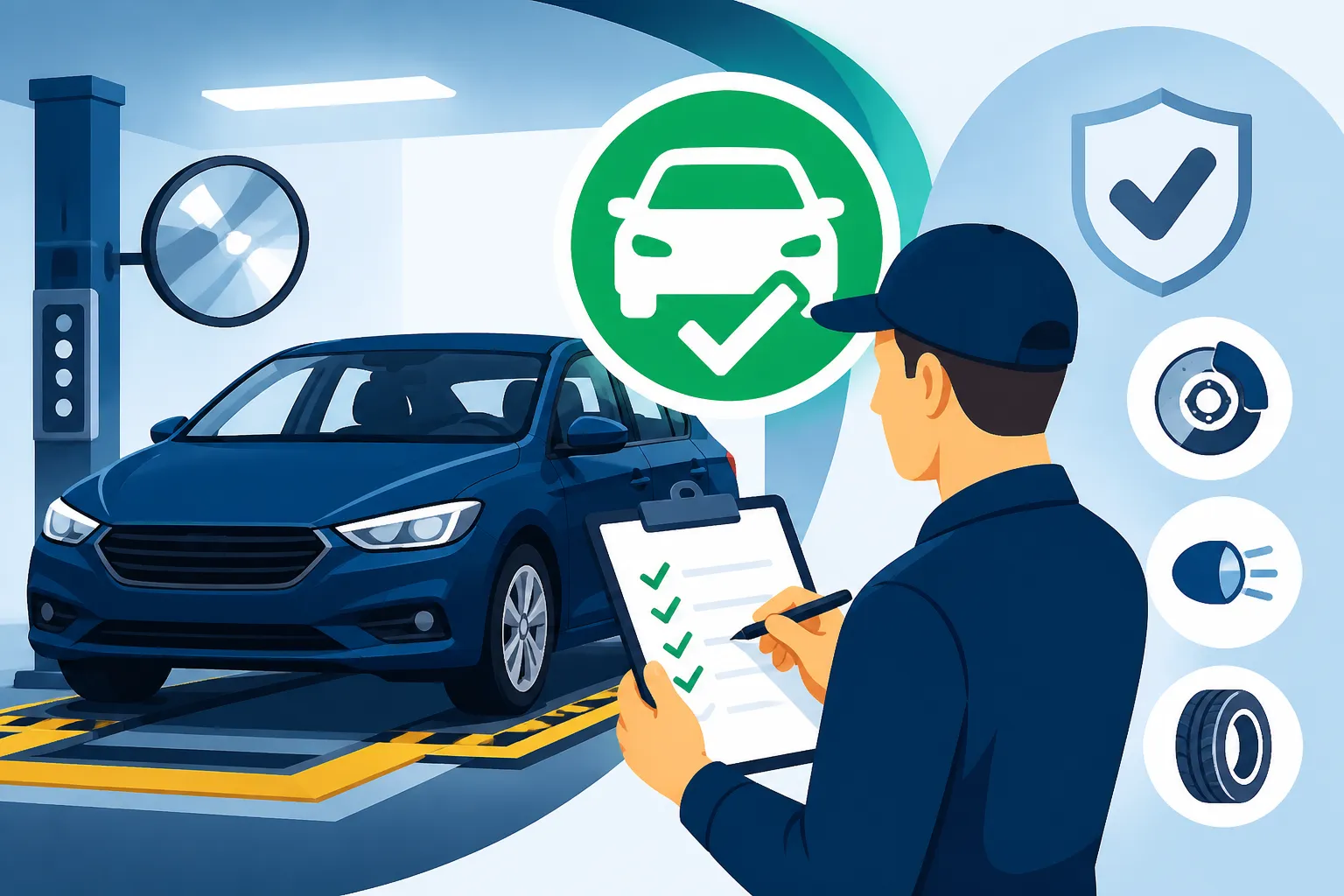
One of the interesting aspects is the role of the diagnostician. These are the folks who conduct the inspection at what's called a Stacja Kontroli Pojazdów (Vehicle Inspection Station). They are highly trained and follow a strict checklist. Unlike some places where mechanics might "overlook" minor issues, diagnosticians in Poland are generally very diligent. They have a responsibility to adhere to the legal standards, and their job is to pass or fail your car based purely on those regulations. This means you can't just charmingly ask them to let a small fault slide – it doesn't work that way, and honestly, you wouldn't want it to, for safety's sake. The process is quite standardised, which can be both a blessing and a curse for expats trying to figure it out for the first time.
When and Where to Get Your Przegląd Done
Understanding the timing and location for your Przegląd is half the battle. Miss the deadline, and you're in for penalties. Go to the wrong place, and you've wasted your time. It’s all about staying organised and knowing where to look.
Understanding the Inspection Schedule
For most passenger cars in Poland, the Przegląd Techniczny is an annual affair. However, there are some exceptions for newer vehicles that offer a brief reprieve. If you've just bought a brand-new car, congratulations! You've got a bit of a grace period:
- The first inspection is due after 3 years from the initial registration date.
- The second inspection is then due after 2 years from the first one.
- After that, it's an annual inspection every single year.
So, if you bought a car in January 2024, your first Przegląd would be due by January 2027. Your second by January 2029, and then January 2030, 2031, and so on.
For older vehicles, or any car that's already passed its initial grace periods, it's a straightforward annual deadline. How do you find your specific expiry date? Easy. It's stamped right there on your vehicle registration document, the dowód rejestracyjny. Look for a date next to the "Termin następnego badania technicznego" (Date of next technical inspection) field. Mark it on your calendar, set phone reminders, write it on your fridge – whatever it takes!
Falling behind on your Przegląd can lead to some significant hassle. If you're pulled over by the police and your Przegląd is expired, you'll likely face a fine ranging from 1,500 PLN to 5,000 PLN. What’s worse, they can impound your vehicle's registration certificate (the dowód rejestracyjny) and even order your car to be towed at your expense if it's deemed a safety hazard. Trust me, getting your dowód rejestracyjny back from the police is another bureaucratic adventure you absolutely want to avoid. So, being proactive here saves you money, time, and a whole lot of stress.
Locating an Authorised Inspection Station Stacja Kontroli Pojazdów
So, where exactly do you go for this inspection? You need an authorised Stacja Kontroli Pojazdów (SKP). These are dedicated inspection stations, not just any mechanic's garage. You'll spot them by their distinctive blue and white sign, usually featuring a letter (A, B, C, D, E) indicating the types of vehicles they can inspect. For most passenger cars, a station marked "A" (for vehicles up to 3.5 tonnes) will be sufficient.
Finding one is quite simple these days. A quick search on Google Maps for "Stacja Kontroli Pojazdów" in your city (e.g., "Stacja Kontroli Pojazdów Kraków") will bring up a plethora of options. Many local mechanics also have an affiliated SKP on-site or nearby, so if you already have a trusted garage, ask them. Some larger chains, like Norauto or Speed Car, also operate SKPs.
You generally don't need an appointment, though it's always a good idea to call ahead, especially during peak times like the end of the month. Walk-ins are common, and you might just have to wait in line. I've found that mid-week, mid-morning is often the quietest time. Remember, the key is to look for the official sign. SKPs are regulated by the Polish Ministry of Infrastructure, ensuring a consistent standard across the country. And hey, while you're waiting, you can always use a handy e-SIM like Airalo to stay connected and distract yourself with social media or translating Polish signs!
The Przegląd Techniczny Process: What to Expect
Walking into a Stacja Kontroli Pojazdów for the first time can feel a bit daunting, especially if your Polish isn't fluent. But once you understand the steps and what's expected, it becomes much less intimidating.
Documents and Fees
First things first: when you roll up to the inspection station, you'll need one crucial document: your dowód rejestracyjny (vehicle registration document). This is the small green booklet that is essentially your car's ID. Make sure it's up-to-date and in good condition. You don't need your driver's license or proof of insurance, as they mainly focus on the vehicle itself. However, it's always good practice to have all your How to Register a Vehicle (Rejestracja Pojazdu) in Poland documents handy, just in case.
Now, let's talk about money. This is one of the more transparent parts of the Polish administrative system. The fee for a standard passenger car Przegląd Techniczny is fixed by law across the entire country. As of my last check, it's typically around 98 PLN (which includes a small fee for the Centralna Ewidencja Pojazdów i Kierowców – Central Register of Vehicles and Drivers). You'll pay this directly at the station, usually in cash or by card. There are no hidden charges or regional variations, which is a rare treat in the world of expat bureaucracy!
What happens if your car fails? Don't panic. If the diagnostician finds an issue, they won't automatically charge you for a full re-inspection. They'll issue a report detailing the faults. You'll then have 14 days to get those specific issues fixed. If you return within that 14-day window to the same inspection station, you'll only pay a reduced fee for the re-inspection of the failed components, typically a few zloty per item. For example, if your headlights were misaligned, you'd only pay for the headlight check, not a full Przegląd again. This is a huge relief and saves a lot of money compared to other countries.
The Inspection Checklist: What They Look For
The Przegląd Techniczny is a thorough examination, far from just a cursory glance. Diagnosticians use specialised equipment and follow a detailed checklist to ensure your car is safe and compliant. Here’s a breakdown of the main areas they inspect:
- Lighting System: All lights must be working correctly – headlights (low and high beam), turn signals, brake lights, reverse lights, license plate lights, and fog lights. They also check for proper alignment of headlights.
- Brakes: This is critical. They test both the service brake (foot brake) and the parking brake (handbrake) on a roller dynamometer to check their efficiency and balance.
- Tires: Tread depth, condition of the tire walls, and correct size/type for the vehicle are all checked. Worn or damaged tires are a common reason for failure.
- Suspension: They use a shaker plate to test the condition of shock absorbers, springs, and other suspension components for excessive play or leaks.
- Steering System: Checks for play in the steering wheel and steering components.
- Exhaust System & Emissions: They measure exhaust gases to ensure they meet environmental standards. A smoky exhaust or a loud, damaged muffler will cause a fail.
- Chassis and Bodywork: Structural integrity, signs of excessive rust, sharp edges, and proper attachment of body parts are scrutinised.
- Wipers and Windshield: Wipers must be functional and the windshield free of major cracks or damage that obstruct visibility.
- Mirrors: All mirrors must be present, intact, and properly adjusted.
- Safety Features: Seatbelts (functionality), horn, and often the presence of mandatory equipment like a first-aid kit, fire extinguisher, and warning triangle.
This is a comprehensive list, and they don't mess around. If something is even slightly off, they'll make a note. The good news is that these checks are designed to keep you safe on the road, so think of it as a forced maintenance schedule!
Communication Challenges and Tips for Expats
Let's be real: for many expats, the biggest hurdle isn't the car itself, but the language barrier. Most diagnosticians, especially in smaller towns, might not speak English. Trying to understand complex technical terms in Polish, especially if your car has failed and you need to know why and what needs fixing, can be incredibly frustrating.
Here are some tips to help you navigate this:
- Bring a Polish-speaking Friend: This is by far the easiest solution. Ask a colleague, a Polish neighbour, or a friend to accompany you. Even if they just translate the gist of what's being said, it makes a huge difference.
- Use Translation Apps: Google Translate or similar apps can be lifesavers. While not perfect for technical jargon, they can help you understand the basics of the diagnostician's report or convey simple questions. Make sure your phone has a good data connection, maybe even consider a local SIM card or an international eSIM from providers like Airalo if you're frequently on the go.
- Find Expat-Friendly Stations: In larger cities like Warsaw, Krakow, or Wroclaw, some SKPs are more accustomed to dealing with foreigners and might have staff who speak at least some English. Ask around in expat groups or check online forums for recommendations.
- Ask for a Written Report: Always ask for the detailed report if your car fails. This written document, even if in Polish, will list the specific faults using standardised codes. You can then take this report to your mechanic (who might also speak English) for repair, or use an app to translate the fault codes.
- Be Patient and Polite: This goes a long way. Polish people generally appreciate effort and a good attitude. Even if communication is tough, a smile and a "Dzień dobry" (good morning) can smooth things over.
Understanding what needs to be fixed is paramount. If you don't grasp the issue, you might end up paying for unnecessary repairs or, worse, not fixing the critical safety fault. Don't be afraid to ask for clarification, even if it means resorting to pointing and gesturing!
Common Issues and How to Prepare Your Vehicle
Nobody wants to fail the Przegląd Techniczny. It's a waste of time and potentially money. The good news is, many common failure points can be identified and even addressed before you even set foot in the inspection station. A little proactive maintenance can save you a lot of hassle.
Pre-Inspection Checks You Can Do
Think of this as your personal pre-flight checklist. Before you head to the Stacja Kontroli Pojazdów, take an hour to go through these simple checks. You don't need to be a master mechanic, just observant.
- All Lights Work: Turn on your ignition and check every single light: low beam, high beam, parking lights, fog lights (front and rear), turn signals (front, side, rear), brake lights (ask a friend or use a reflection to check these), and reverse lights. Don't forget the license plate illumination. Replace any blown bulbs.
- Tires: Check your tire pressure (the correct pressure is usually on a sticker inside your driver's side door or fuel cap) and visually inspect for adequate tread depth (the legal minimum is 1.6mm, but diagnosticians often recommend more) and any visible damage like bulges, cuts, or cracks. Remember, uneven wear could indicate suspension issues.
- Wipers and Washer Fluid: Ensure your windshield wipers operate smoothly and clear the glass effectively. Top up your washer fluid reservoir. A dirty windscreen can actually be a reason for failure, believe it or not!
- Horn: Give it a quick honk. It needs to work.
- Fluid Levels: Check engine oil, brake fluid, coolant, and power steering fluid (if applicable). Ensure they are within the recommended levels.
- Mirrors: All mirrors should be intact, clean, and securely attached.
- Windshield: Look for any large cracks or chips, especially in the driver's line of sight. Small chips might pass, but a significant crack won't.
- Safety Equipment: Poland requires a fire extinguisher and a warning triangle. Many cars also carry a first-aid kit. Make sure these are present and accessible. The fire extinguisher should also have a valid inspection sticker (usually stamped annually).
- Cleanliness: While not a direct inspection point, a clean car (inside and out, especially under the hood and around the number plates) shows you care about your vehicle. Diagnosticians are human; it can't hurt!
By performing these simple checks, you address the most common, easily fixable issues that lead to inspection failures. It’s a bit like checking your Internetowe Konto Pacjenta (IKP) Patient Account for upcoming appointments – a little proactive check-in can prevent future headaches.
Addressing Potential Failure Points
Beyond the DIY checks, some issues require a professional touch. Knowing these common failure points can help you decide whether to visit your mechanic before the Przegląd.
- Brake Issues: Uneven braking, spongy pedal, or a grinding noise are red flags. Brake pads and discs wear out. Get these checked.
- Suspension Noises/Play: If you hear clunks or feel excessive looseness over bumps, your suspension components (e.g., control arm bushings, ball joints, shock absorbers) might be worn. These are safety-critical.
- Exhaust Leaks/Damage: A loud exhaust or visible rust holes in the muffler will likely fail. Excessively high emissions (often due to engine issues or a faulty catalytic converter) will also cause a fail.
- Corrosion/Rust: While some surface rust on older cars is expected, structural rust on the chassis, brake lines, or suspension mounting points is a serious safety concern and an automatic failure.
- Fluid Leaks: Any significant leaks of oil, coolant, or brake fluid are definite failures, as they pose environmental and safety risks.
If you suspect any of these more serious issues, it's almost always better to take your car to your trusted mechanic before the Przegląd. They can diagnose and repair the problems, ensuring your car passes the first time. The cost of a pre-inspection repair might seem like an extra expense, but it often saves you the hassle of a failed Przegląd, the stress of being off the road, and potentially more expensive repairs if the initial problem worsens. Plus, you’ll avoid the headache of a partial re-inspection fee and the need to rush back to the SKP within 14 days. It's an investment in peace of mind and safety.
Post-Inspection Steps and What a Sticker Means
So, you’ve endured the Przegląd, maybe even had a moment of pure panic when the diagnostician started talking rapid-fire Polish. Now what? Understanding the outcome and what to do next is just as important as the inspection itself.
Receiving Your Results and Documentation
If your vehicle passes the Przegląd Techniczny, congratulations! You've successfully navigated another piece of Polish bureaucracy. The diagnostician will do a few key things:
- Stamp Your Dowód Rejestracyjny: This is the most important part. They will literally stamp and sign your dowód rejestracyjny (vehicle registration document) in the designated box, confirming the date of the inspection and its validity. This stamp is your official proof that your car is roadworthy.
- Issue an Inspection Certificate: You'll usually receive a small printout or certificate detailing the inspection results. Keep this with your other important What Medical Documents Should I Bring When Moving to Poland? papers, perhaps even a copy in your glove box alongside your dowód rejestracyjny.
- No More Windshield Stickers: This is a common point of confusion for expats from countries where a physical sticker on the windshield indicates a passed inspection (like the old MOT stickers in the UK). Poland used to have these, but they were phased out a few years ago. Now, the official record is electronic and the stamp in your dowód rejestracyjny is the only physical proof needed. So, don't expect a sticker, and don't worry if you don't get one!
What happens if your dowód rejestracyjny is full? It happens! Over years of ownership, those little boxes for stamps fill up. If you run out of space, the diagnostician will issue a separate certificate. You will then need to take this certificate, along with your full dowód rejestracyjny, to your local Urząd Komunikacji (Vehicle Registration Office) to apply for a new dowód rejestracyjny. This is another administrative step, but not overly complex, usually involving a small fee and a bit of waiting. It’s part of the general process of Registering Your Residence (Zameldowanie) in Poland: The Complete Guide, where you’re constantly updating official documents.
What to Do if You Fail the Inspection
Now, for the less fun scenario: your car fails. It happens, often for minor things. The diagnostician will issue you a detailed report, called a zaświadczenie o negatywnym wyniku badania technicznego (certificate of negative technical inspection result). This document will clearly list all the faults found. These faults are categorized:
- Minor Faults: These might be noted, but generally won't cause a failure.
- Significant Faults: These are issues that will lead to a failure, but you still have a grace period to fix them.
- Dangerous Faults: These are critical safety issues that mean your car is immediately deemed unsafe to drive. In this case, your dowód rejestracyjny will be immediately impounded, and you cannot legally drive the car until the faults are rectified and it passes re-inspection.
As mentioned earlier, if your car has significant faults, you typically have 14 days from the date of the failed inspection to get the necessary repairs done. During this period, you can generally still drive your car, but only to and from the repair shop and the inspection station. If you're pulled over and found driving for other purposes with a failed Przegląd and a ticket, you could face further penalties.
Once the repairs are complete, you must return to the same Stacja Kontroli Pojazdów for a re-inspection. You will present your dowód rejestracyjny and the negative inspection report. The diagnostician will only re-check the specific components that failed previously. This is where the reduced re-inspection fee comes in. For example, if only your brake lights failed, you'll only pay for the brake light check. If you waited too long past the 14 days, or go to a different station, you'll have to pay for a full new Przegląd.
It’s a structured system designed to get unsafe cars off the road while giving owners a fair chance to fix things. The key is to act quickly and understand exactly what needs to be repaired from the report. If you’re unsure, take the report to a trusted mechanic who can explain it in more detail, perhaps even in English.
Owning a Car in Poland: Beyond the Przegląd
The Przegląd Techniczny is a crucial annual event, but it's just one part of the larger picture of owning and driving a car in Poland as an expat. There are other ongoing responsibilities and rules you need to be aware of to stay on the right side of the law and ensure a smooth experience.
Vehicle Registration and Insurance Obligations
Once you've managed to How to Buy a Used Car in Poland as a Foreigner and gotten it registered, the process doesn't end with just the initial paperwork. Your dowód rejestracyjny is your vehicle's identity card, and keeping it current is critical. If you ever change your address, modify your vehicle significantly, or even get a new license plate, you might need to update your registration details at the Urząd Komunikacji.
More importantly, mandatory third-party liability insurance (OC) is non-negotiable in Poland. You must have valid OC insurance at all times. Driving without it is a serious offense that carries incredibly steep fines – far higher than those for a late Przegląd. The Polish Road Fund (UFG) has a system that automatically detects uninsured vehicles, so you won't get away with it for long. Always ensure your insurance policy is renewed on time and keep proof of insurance in your car, even though technically police can check it electronically.
While OC is mandatory, you might also consider additional insurance like AC (Autocasco, for damage to your own vehicle) or assistance packages, especially if you drive an expensive car or rely on it heavily. Companies like PZU, Link4, and Warta are popular choices for car insurance in Poland, and many offer policies in English or have English-speaking agents, which is a huge relief when dealing with complex terms.
Driving Regulations and Road Safety Tips
Beyond the official documents and inspections, understanding daily driving regulations is crucial. Poland adheres to Continental European driving rules, which means driving on the right.
Here are a few pointers for expats:
- Speed Limits: Generally, 50 km/h in urban areas (60 km/h between 23:00 and 05:00), 90 km/h outside urban areas, 100 km/h on single carriageway expressways, 120 km/h on dual carriageway expressways, and 140 km/h on motorways. Pay attention to signs, especially around schools and residential areas.
- Headlights: You must drive with headlights on at all times, day or night, year-round. This is a common mistake for expats from countries where daytime running lights are optional.
- Alcohol Limits: Poland has a very strict zero-tolerance policy for drinking and driving. The legal limit is extremely low (0.2 permille blood alcohol content), effectively meaning you shouldn't drink any alcohol if you plan to drive. Penalties are severe.
- Winter Tires: While not legally mandatory, winter tires are highly recommended from late autumn to early spring due to often severe winter conditions. They significantly improve grip and safety on snow and ice.
- Safety Belts: Everyone in the car must wear a seatbelt, front and rear passengers. Children require appropriate child seats.
- Motorway Tolls: Poland has a mix of toll roads and free motorways. Some tolls can be paid at gates, while others require the e-TOLL system (for vehicles over 3.5 tonnes) or the e-vignette system for specific sections. If you're planning longer trips, familiarize yourself with the How Does the e-Toll Motorway System Work in Poland?.
- Parking: Parking in cities, especially in historical centers, can be tricky and often requires payment via parking meters or apps like moBILET or SkyCash. Be mindful of parking signs (especially "zakaz postoju" – no waiting, and "zakaz zatrzymywania się" – no stopping).
Navigating traffic, understanding signage, and remembering the rules can be a learning curve. Give yourself time to adjust. A good GPS system is invaluable, and remember that when your car fails its Przegląd, knowing How to Use the Public Transport Ticket System in Polish Cities suddenly becomes a very valuable skill!
Comparison of DIY Checks vs. Professional Inspection
To give you a clearer picture, here's a table comparing what you can easily check at home versus what a professional diagnostician will assess during your Przegląd Techniczny.
| Area of Inspection | What You Can Check (DIY) | What the Diagnostician Checks (Professional) |
|---|---|---|
| Lights | Functionality (all lights turn on/off), clean lenses | Functionality, alignment (using special equipment), condition of lenses, correct bulb type |
| Tires | Tread depth (coin test), pressure, visible damage, bulges | Tread depth (precise measurement), pressure, overall condition, sidewall integrity, correct size/type for vehicle, balance |
| Brakes | Fluid level, handbrake engagement, spongy pedal feel | Efficiency (foot brake & handbrake on dynamometer), balance across axles, condition of pads/discs/lines, fluid leaks, ABS system functionality |
| Suspension | Obvious leaks, severe noises over bumps, visible damage | Shock absorber efficiency, excessive play in joints/bushings, spring integrity, overall structural condition |
| Steering | Excessive play in steering wheel | Play in steering wheel, condition of steering components (tie rods, ball joints), power steering system |
| Exhaust System | Loud noises, visible smoke (colour), obvious damage | Leaks, corrosion, secure mounting, catalytic converter efficiency, emissions levels (CO, HC, NOx) |
| Chassis & Bodywork | Visible rust, sharp edges, loose panels | Structural integrity, excessive rust (especially load-bearing parts), security of attachments, general body condition |
| Wipers & Windshield | Wiper function, washer fluid level, visible large cracks/chips | Wiper effectiveness, windshield damage (size and location of cracks/chips), washer jet function |
| Safety Equipment | Presence of fire extinguisher, warning triangle, first aid kit | Presence and validity of required equipment (fire extinguisher inspection sticker, warning triangle) |
| Fluids | Engine oil, coolant, brake fluid, power steering fluid levels | Overall leak check, appropriate fluid types and levels |
Disclaimer
The information provided in this guide is for general informational purposes only and does not constitute legal, financial, or professional advice. While we strive to keep the content accurate and up-to-date, laws and regulations in Poland, particularly regarding vehicle inspections and administrative processes, can change. Always consult official Polish government sources (e.g., Urząd Komunikacji, Urząd Wojewódzki websites) or a qualified local professional for the most current and specific advice pertaining to your individual situation. Relying solely on the information presented here is at your own risk.