How Do I Pay Tax on Foreign Property While Living in Poland?
Dealing with property in your home country or anywhere outside Poland, while simultaneously navigating the labyrinthine Polish tax system, can feel like you're trying to solve a Rubik's Cube blindfolded. It's a common source of stress and confusion for expats, leaving many wondering how to declare that rental income or property sale without accidentally falling afoul of the law or paying tax twice. This guide is here to untangle the complexities, offering clear, empathetic advice on how to pay tax on foreign property while living in Poland, ensuring you stay compliant and confident.
Understanding Polish Tax Residency for Foreign Property
Before you even begin thinking about specific forms or tax rates, the absolute bedrock of your tax obligations in Poland, especially concerning foreign income, is your tax residency status. This isn't just a formality; it dictates where you're expected to pay tax on your worldwide income. For many expats, this is where the real headaches begin, as different countries have different rules, and you might find yourself in a situation of dual residency if not careful.
The 183-Day Rule and Centre of Life Interests
Poland, like many countries, primarily uses two key criteria to determine if you're a tax resident: the "183-day rule" and the "centre of life interests" rule.
The 183-day rule is pretty straightforward on the surface: if you spend more than 183 days in Poland within any given tax year (which, here, aligns with the calendar year, January 1st to December 31st), you are generally considered a Polish tax resident. This isn't just consecutive days, mind you; it's the cumulative total. Every time you cross the border back into Poland, the clock ticks. So, if you're popping back home for holidays, flying for work trips, or taking quick weekend breaks to other European cities, those days still count towards your presence in Poland. Keeping a detailed travel log can be incredibly helpful here, especially if your situation is borderline.
However, it's not just about the days. The more nebulous, and often more decisive, factor is your centre of life interests. This is where things get personal and require a bit of self-reflection. The Polish tax authorities will look at where your personal and economic ties are strongest. Think about it:
- Personal Ties: Where is your spouse and children living? Where do your closest friendships reside? Where are your hobbies, community involvement, and social life centered? Do you own a home in Poland or merely rent?
- Economic Ties: Where is your main source of income? Where do you hold your primary bank accounts? Where are your investments located? Do you have business interests in Poland?
Let's imagine a scenario: You moved to Warsaw for a job on September 1st. By December 31st, you've only been in Poland for 122 days, so you haven't hit the 183-day mark. But your spouse and children joined you, you've rented a long-term apartment, enrolled your kids in school, and have a steady job here. Even without hitting 183 days in that initial year, Poland will likely consider your centre of life interests to be in Poland from your arrival date. This means that from the moment you established those strong ties, you became a Polish tax resident, and your worldwide income, including from foreign property, becomes subject to Polish tax rules. This is a critical distinction, and one that often trips up new expats. For a more detailed look, check out our guide on Tax Residency in Poland: A Definitive Guide for Expats (2027).
Impact on Foreign Property Income
Once you're deemed a Polish tax resident, the game changes entirely for your foreign property income. As a Polish tax resident, Poland expects you to declare all your income, regardless of where it was earned or where the assets are located. This means that if you own a rental property back in your home country, or if you sell a holiday home in Spain, the income or gains from these activities must be reported to the Polish tax authorities.
The good news is that Poland has an extensive network of double taxation treaties (DTTs) with many countries worldwide. These treaties are designed precisely to prevent you from being taxed twice on the same income – once in the country where the income arose (the source country) and once in Poland, your country of residence. Without these treaties, it would be a chaotic mess! We’ll dive deeper into how these treaties work shortly, but it’s crucial to understand that your tax residency status in Poland is the trigger for needing to consider your foreign property income in the first place.
Types of Foreign Property Income and How Poland Taxes Them
Foreign property income isn't a single monolithic entity. It typically falls into two main categories: ongoing rental income and one-off capital gains from sales. Each has its own set of rules and considerations within the Polish tax system.
Rental Income from Abroad
Ah, the steady stream of rental income from that apartment you still own back home. It sounds lovely, doesn't it? Until you realise you need to factor in Polish taxes. If you are a Polish tax resident and receive rental income from a property located outside Poland, you absolutely need to declare it here.
Poland offers a couple of options for taxing rental income, which can be a bit confusing as an expat. You generally have a choice between:
-
Tax Scale (Skala Podatkowa): This is the standard income tax system. Your rental income (after deducting eligible costs like maintenance, property management fees, depreciation, etc., if you have documentation for them) is added to your other income (e.g., salary from your Polish job) and taxed according to progressive tax brackets.
- Up to 120,000 PLN: 12% tax rate
- Above 120,000 PLN: 32% tax rate on the amount exceeding 120,000 PLN
The beauty of the tax scale is that you can often deduct legitimate expenses, potentially lowering your taxable income. However, it also means your rental income could push you into a higher tax bracket if your overall income is substantial.
-
Lump-Sum Tax (Ryczałt od Przychodów Ewidencjonowanych): This is often a more attractive option for many landlords, especially those with minimal deductible expenses. With ryczałt, you pay a flat percentage of your gross revenue (not profit) from rental income.
- 8.5% on annual rental income up to 100,000 PLN.
- 12.5% on the excess amount over 100,000 PLN.
The key difference here is that you cannot deduct any costs. You simply pay a percentage of the money that comes in. This can be fantastic if your property has low running costs or you prefer simplicity. You need to inform the tax office of your choice to use ryczałt by a specific deadline (usually January 20th of the tax year, or the month after you start receiving income). If you don't declare this, the tax scale will be applied by default. Understanding the nuances of this can save you a fair bit of money, so it’s worth looking into how Understanding the Ryczałt Lump-Sum Tax for the Self-Employed in Poland (though primarily for businesses, the concept for rental income is similar) works for rental income too.
Here’s a simplified comparison:
| Feature | Tax Scale (Skala Podatkowa) | Lump-Sum Tax (Ryczałt) |
|---|---|---|
| Basis | Taxed on net income (revenue minus costs) | Taxed on gross revenue |
| Tax Rates | Progressive (12%, 32%) | Flat (8.5% up to 100k PLN, 12.5% above) |
| Deductible Costs | Yes, if documented | No, cannot deduct any costs |
| Complexity | Potentially more complex with cost tracking | Simpler, but less flexible with expenses |
| Combined Income | Added to other income (e.g., salary) | Separate calculation, doesn't aggregate with salary for tax bracket purposes |
| Notification | Default, unless ryczałt is chosen | Must notify Urząd Skarbowy of choice |
It's vital to remember that these are Polish tax rules. You still need to comply with the tax obligations in the country where your property is located. This is where double taxation treaties become your best friend, as they prevent you from paying tax on the same portion of income in both Poland and the source country.
Capital Gains from Foreign Property Sales
Selling a property abroad can bring a significant sum, and Poland expects its tax residents to declare any capital gains arising from such a sale. A capital gain is essentially the profit you make from selling an asset for more than you bought it for (plus acquisition costs and improvement expenses).
If you are a Polish tax resident and sell a property located outside Poland, the capital gain from that sale is generally subject to Polish income tax. The standard rate for capital gains in Poland is 19%. This 19% applies to the profit, which is calculated as the sale price minus the purchase price and any documented, eligible costs (such as renovation costs, notary fees, real estate agent commissions from the purchase/sale).
Unlike rental income, where you might have recurring payments, a property sale is a one-off event. However, the same principle of worldwide income taxation applies. Just like with rental income, double taxation treaties play a critical role here. Most DTTs will specify which country has the primary right to tax capital gains from immovable property, and then how the other country provides relief. Often, the country where the property is located (the source country) will have the first right to tax. Poland then provides relief for the tax paid there.
For instance, if you sell an apartment in Germany, Germany will likely tax the gain according to its rules. Then, when you declare this gain in Poland, Poland will provide a mechanism (usually the credit method, which we’ll discuss) to reduce your Polish tax liability by the amount of tax you've already paid in Germany. This ensures you're not paying the full 19% in Poland on top of what you paid in Germany.
This area can be particularly complex due to the varying rules for calculating gains (e.g., inflation adjustments, eligible deductions) in different countries. It's often advisable to seek specialised advice from a firm that handles Taxes for Expats with international property experience to ensure accurate reporting and maximum tax efficiency.
Navigating Double Taxation Treaties and Avoiding Double Payments
The concept of double taxation can be terrifying. Nobody wants to pay tax twice on the same income. Thankfully, this is precisely what Double Taxation Treaties (DTTs) are designed to prevent. Poland has signed DTTs with a vast number of countries worldwide, from Albania to the USA, ensuring that individuals and businesses are not unfairly burdened.
Understanding the Methods of Relief
DTTs typically employ one of two main methods to eliminate double taxation: the exemption method or the credit method. The specific method used depends on the treaty Poland has with the country where your property is located. You absolutely need to know which method applies to your situation.
-
Exemption Method (Metoda Wyłączenia z Progresją): This is generally the more favourable method. Under the exemption method, income earned in the foreign country (e.g., your rental income or capital gain from foreign property) is exempt from taxation in Poland. You still have to declare it on your Polish tax return (e.g., PIT-36 or PIT-36L, with an attached PIT/ZG form) to allow the Polish tax office to calculate your overall effective tax rate, but you won't pay Polish tax on that specific foreign income. This method is often called "exemption with progression" because while the income itself isn't taxed, it's included when calculating the tax rate applicable to your other Polish-source income.
- Example: If you earn rental income from a property in Germany (which often uses the exemption method under the Poland-Germany DTT), you declare it in Poland, but you won't pay Polish tax on that rental income. However, its presence helps determine the tax bracket for your Polish salary.
-
Credit Method (Metoda Proporcjonalnego Odliczenia): This method is more common and, frankly, a bit more work. Under the credit method, income earned in the foreign country is subject to Polish tax. However, the Polish tax you owe on that income is reduced by the amount of tax you already paid in the foreign country, up to the amount of Polish tax that would be due on that income. In simple terms, you get a tax credit for foreign taxes paid.
- Example: You sell an investment property in the UK (which generally uses the credit method with Poland). You pay capital gains tax in the UK. When you declare this gain in Poland, you calculate the Polish tax due on that gain. Then, you can deduct the UK tax you paid from your Polish tax liability for that income. You won't get a refund if the foreign tax was higher than the Polish tax due, but you won't pay more than the higher of the two tax rates combined.
It is absolutely crucial to verify which method applies to your situation by consulting the specific DTT between Poland and the country where your property is located. This information is readily available on the Polish Ministry of Finance website, but it can be dense legalese. For guidance, our article on How to Avoid Double Taxation as an Expat in Poland provides more detailed examples and strategies.
Practical Steps for Claiming Relief
So, you've figured out which method applies. Now, how do you actually put it into practice?
-
Gather Documentation: This cannot be stressed enough. You must have clear, verifiable documentation of all foreign income and all foreign taxes paid. This includes:
- Rental agreements, bank statements showing rental income received.
- Purchase and sale agreements for property sales.
- Proof of any eligible deductions or costs (e.g., invoices for renovations, property management fees).
- Official tax assessments or payment confirmations from the foreign tax authority, clearly showing the tax paid on the specific income.
Without this documentation, the Polish tax office will likely disallow your claim for relief, potentially leading to you paying tax twice.
-
Use the Correct Forms: When filing your annual PIT return in Poland, foreign income from property is declared on specific annexes:
- PIT/ZG (Informacja o Wysokości Dochodu z Zagranicy): This is the key form where you report your foreign income, specify the country, the type of income (rental, capital gain), and the amount of tax paid abroad. You attach this to your main PIT form (usually PIT-36 or PIT-36L).
- Main PIT Form (PIT-36 or PIT-36L): If you are employed in Poland, you'll likely use PIT-36. If you're self-employed and use the progressive tax scale, you'll also use PIT-36. If you're self-employed and use the flat tax (19%), you'll use PIT-36L. If you're solely dealing with capital gains from property sales, PIT-39 might be relevant. It's on these main forms that the calculation for relief (exemption or credit) is ultimately performed.
-
Currency Conversion: Your foreign income will almost certainly be in a different currency. For Polish tax purposes, you must convert it into Polish Złoty (PLN). The general rule is to use the average exchange rate published by the National Bank of Poland (NBP) from the last working day preceding the day the income was received. This can be tedious, especially for regular rental income, but it's essential for accuracy.
-
Consider Professional Advice: Seriously, if you have significant foreign property income or complex situations (e.g., multiple properties in different countries, unusual ownership structures), engaging a tax advisor or firm specialising in international taxation is often a wise investment. They can help navigate the specific DTT clauses, ensure correct calculations, and assist with preparing the necessary documentation and forms. Services like Taxes for Expats can be invaluable resources for this complex area.
Reporting Your Foreign Property Income to the Polish Tax Office
Once you’ve understood your residency, the types of income, and how double taxation treaties apply, the next step is the actual reporting to the Urząd Skarbowy, Poland’s tax office. This can be intimidating, especially if you’re not fluent in Polish or familiar with the online systems.
The Annual PIT Return and Relevant Forms
Every tax resident in Poland is required to file an annual Personal Income Tax (PIT) return by April 30th of the following year (e.g., for 2023 income, the deadline is April 30th, 2024). This deadline applies whether you have income from foreign property or not.
For foreign property income, as mentioned, you’ll typically be using:
- PIT-36: This is the most common form for individuals who earn income taxed under the general tax scale (like salary from employment in Poland) and also have other sources of income, including foreign income. If you choose the progressive tax scale for your foreign rental income, it will be aggregated here.
- PIT-36L: If you are self-employed and pay a flat 19% tax, this is your primary form. If you also choose the flat 19% capital gains tax on a foreign property sale, that will be reported here.
- PIT-39: This form is specifically for capital gains from the sale of real estate. While primarily used for property located in Poland, it can be relevant for declaring foreign property sales where specific Polish tax rules apply (e.g., if you don't benefit from a DTT exemption or if Poland is the primary taxing country). It's crucial to confirm if this is the correct form, as often PIT-36 with PIT/ZG is used for foreign property.
- PIT/ZG (Informacja o Wysokości Dochodu z Zagranicy): This is the essential annex for all foreign income. You'll need one PIT/ZG for each country from which you received foreign income. So if you have a rental property in Spain and sold another in France, you'll need two separate PIT/ZG forms. This form details the source country, the type of income, the gross amount received, and any tax already paid abroad.
If you opt for the lump-sum tax (ryczałt) for rental income, you’ll file a PIT-28 form. This is for lump-sum taxed income, and it also requires a PIT/ZG annex for foreign sources. Remember, you must have informed the tax office of your choice for ryczałt by the prescribed deadline (January 20th or the month after income started).
The Polish tax office provides an online portal called e-Urząd Skarbowy (e-Tax Office). Here, many of your pre-filled tax returns (Twój e-PIT) are available, but these often do not automatically include foreign income. You usually need to log in, manually add the foreign income data, and then generate your final return. While this system is much more user-friendly than it used to be, it still requires careful attention to detail. Our article on Filing Your Annual Tax Return (PIT) in Poland: The Complete Walkthrough (2027) can guide you through the general process.
Payment Deadlines and Methods
Paying your taxes in Poland follows specific deadlines:
-
Monthly or Quarterly Advance Payments (for Rental Income): If you have ongoing rental income, you are generally required to pay monthly or quarterly advance payments of income tax.
- If using the tax scale (PIT-36), you calculate your estimated tax due each month/quarter and pay it by the 20th of the following month (or by the 20th of the month after the quarter ends).
- If using the lump-sum tax (PIT-28), you pay the 8.5% or 12.5% of your gross rental income by the 20th of the following month (or quarter) for the previous month's (or quarter's) income.
The final annual adjustment is then made when you file your PIT-36 or PIT-28 by April 30th.
-
Capital Gains from Property Sales: For capital gains from foreign property sales, the 19% tax is generally due by the April 30th deadline of the year following the sale, when you file your PIT return. However, it's always wise to prepare for this payment well in advance.
How to Pay:
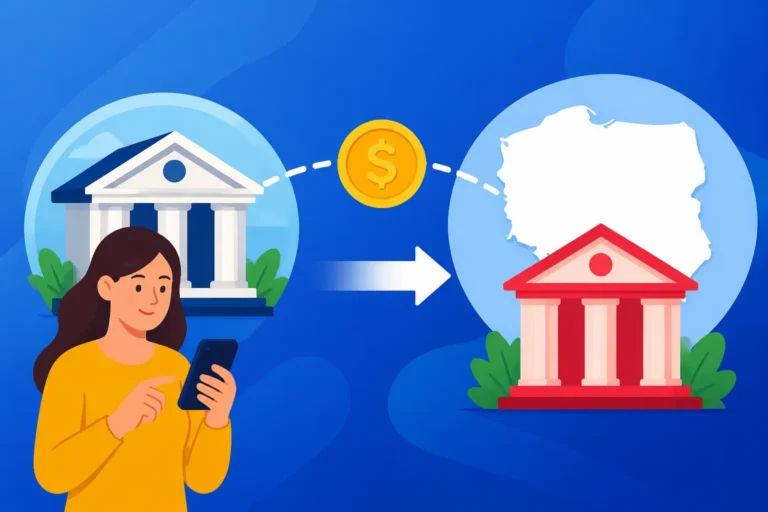
Tax payments in Poland are typically made via bank transfer to a specific individual tax account (known as a "mikrorachunek podatkowy"). This is a unique bank account number assigned to each taxpayer (based on your PESEL or NIP). You can find your mikrorachunek on the e-Urząd Skarbowy portal. Most Polish banks offer convenient online banking services for making these transfers. Platforms like Wise (formerly TransferWise) can be useful for converting your foreign currency to PLN and then transferring it to your Polish bank account from which you can make the tax payment, helping manage exchange rates efficiently. For information on general banking and payment systems in Poland, consider reading How to Set Up Online Banking and BLIK Payments in Poland.
Challenges and Considerations for Expats with Foreign Property
Navigating foreign property income while living in Poland comes with its unique set of challenges. It's not just about filling out forms; it's about understanding the nuances that can impact your financial well-being.
Currency Conversion and Exchange Rate Fluctuations
One of the most persistent headaches for expats with foreign property is dealing with different currencies. Your rental income might arrive in EUR, USD, GBP, or something else entirely, but for Polish tax purposes, it must be converted to PLN.
- Conversion Rate: As mentioned, you generally use the average exchange rate published by the National Bank of Poland (NBP) from the last working day preceding the day the income was received. This isn't just a suggestion; it's a legal requirement. For rental income received monthly, this means doing 12 separate conversions!
- Exchange Rate Risk: Exchange rate fluctuations can significantly impact your actual PLN-denominated income and, consequently, your tax liability. A strong PLN against your income currency means your income is worth less in PLN, potentially reducing your tax burden, but also your actual spending power. Conversely, a weak PLN means your income is worth more, increasing your tax. This isn't something you can easily control, but it's a factor to be aware of when planning your finances.
- Managing Transfers: When you transfer your foreign property income to Poland, using services that offer competitive exchange rates and low fees is crucial. Banks can sometimes hit you with unfavourable rates. Financial technology services like Wise are often lauded by expats for their transparent rates and lower costs compared to traditional banks for international money transfers. This can make a tangible difference to your net income after all is said and done.
Record-Keeping and Professional Advice
This might sound like a broken record, but stellar record-keeping is your best defense against tax complications and a potential audit.
- Meticulous Records: Keep every single document related to your foreign property: purchase contracts, sale contracts, rental agreements, invoices for property management, repair receipts, utility bills, mortgage interest statements, and, crucially, all official tax declarations and payment receipts from the foreign country. Organize them clearly, perhaps digitally, so they're easily accessible if the Polish tax office ever asks for clarification or supporting evidence. They are entitled to request proof of income and tax paid abroad, and without it, you're on shaky ground.
- Language Barrier: The Polish tax office, Urząd Skarbowy, primarily operates in Polish. While many officials might have some English, all official communication and documentation will be in Polish. This can be a significant barrier for many expats. If you receive correspondence from the tax office, do not ignore it. Get it translated by a sworn translator immediately.
- The Value of Professional Advice: Given the complexities of international taxation, varying DTT interpretations, and the language barrier, engaging a professional tax advisor is highly recommended, especially for those with substantial foreign property assets. A good tax advisor can:
- Help determine your exact tax residency status.
- Advise on the most beneficial tax regime for your rental income (ryczałt vs. tax scale).
- Ensure correct application of double taxation treaties.
- Assist with accurate currency conversions.
- Prepare and file your annual tax returns and all necessary annexes.
- Communicate with the Urząd Skarbowy on your behalf.
- Identify potential tax deductions or reliefs you might overlook.
Finding an advisor who specialises in international taxation and is familiar with both Polish and foreign tax laws is invaluable. Don't be afraid to invest in this expertise; it can save you significant money and stress in the long run. Many expat-focused financial services, like those offered by Taxes for Expats, specifically cater to these cross-border tax challenges. Remember, the Polish tax system, much like its bureaucratic counterparts, doesn't always forgive ignorance. Being proactive and well-informed is your best strategy.
Disclaimer
The information provided in this guide is for general informational purposes only and does not constitute professional tax, financial, or legal advice. Tax laws and regulations in Poland and other countries are subject to change and vary depending on individual circumstances. We strongly recommend consulting with a qualified tax advisor or financial professional for advice tailored to your specific situation.