How Do I Get a NIP Number in Poland?
Landing in Poland, you quickly realize that official business often requires an alphabet soup of acronyms: PESEL, ZUS, PIT, and, of course, NIP. Trying to navigate which one you need, when, and how to get it can feel like deciphering an ancient script while blindfolded. If you've just been asked for your NIP and are staring blankly, this guide is here to untangle the mystery and walk you through the process of obtaining your tax identification number in Poland, making sense of the bureaucracy along the way.
What Exactly is a NIP Number and Why Do You Need One?
Alright, let's cut through the jargon. NIP stands for Numer Identyfikacji Podatkowej, which simply translates to Tax Identification Number. Think of it as your unique ID solely for tax purposes here in Poland. While many countries use a single national ID for everything, Poland often differentiates, and the NIP is specifically your key to the tax office's system, especially if you fall into certain categories of foreigners.
For many years, pretty much everyone living and working here needed a NIP. Then things changed, as they often do with Polish regulations, and the PESEL became the primary identifier for most individuals. However, for expats, there are still crucial situations where a NIP is absolutely necessary, and misunderstanding this can lead to headaches down the line. It's not just a piece of paper; it's what connects you to your tax obligations and rights within the Polish system. Without it, certain financial dealings and tax filings just won't happen.
NIP vs. PESEL: Understanding the Difference
This is probably the most common point of confusion for new arrivals, and for good reason! The lines blur sometimes, but here's the simplest way to look at it:
Your PESEL is your personal identification number, a bit like a Social Security Number or national ID in other countries. It's assigned to almost everyone who registers their residence (zameldowanie) in Poland and intends to live here for more than 30 days. You'll use your PESEL for nearly everything personal: healthcare, banking, registering for school, social security, and increasingly, filing your annual tax return if you're an employee with a standard employment contract. If you're wondering how to get this crucial number, you can find a comprehensive guide on How to Get Your PESEL Number and Why It Matters for Healthcare.
A NIP, on the other hand, is specifically for tax identification. Historically, everyone with tax obligations needed one. Today, the general rule is: if you are a natural person (an individual) and you have a PESEL number, your PESEL number serves as your tax identification number. You typically won't be issued a separate NIP. However, there are very specific and important exceptions where a NIP is still required, primarily for those who don't have a PESEL and have tax obligations, or for those undertaking specific types of economic activity. This distinction is vital for expats, as you might start needing a NIP before you even qualify for a PESEL, depending on your situation.
Who Needs a NIP and When Should You Apply?
Okay, so if your PESEL usually acts as your tax ID, who still needs a dedicated NIP? This is where many expats trip up, so let's clarify the specific scenarios where you'll need to go through the NIP application process. It's less common than it used to be for regular employees, but for business owners, certain types of income, or those without a PESEL, it's non-negotiable.
The Polish tax authorities (Urząd Skarbowy) are quite clear on this, though finding that clarity in English can be a challenge. Generally, you need a NIP if you are:
- A natural person who does not have a PESEL number, but you have tax obligations in Poland or need to register for VAT. This is a common scenario for many new arrivals who haven't yet registered their residence and therefore don't have a PESEL but are starting work or other activities that generate taxable income.
- A legal entity or an organizational unit without legal personality (like a company or a partnership). For businesses, the NIP is always required.
- A self-employed individual running a sole proprietorship (JDG). Even if you have a PESEL, when you register your JDG, you'll be assigned a NIP that identifies your business for tax purposes. While your PESEL might be linked, the NIP becomes the primary identifier for your entrepreneurial activities.
When the NIP Becomes Indispensable for Expats
Let's break down those scenarios for expats a bit more concretely, as this is where the rubber meets the road.
First off, if you're coming to Poland to work, and you haven't yet sorted out your residence registration (which leads to a PESEL), but your employer needs to pay you and report your income to the tax office, you'll almost certainly need a NIP. This happens frequently with initial employment contracts before you've fully settled in. Your employer will usually tell you this, but it's good to be proactive. Without a NIP, your employer won't be able to properly process your taxes and social security contributions.
Secondly, if you're venturing into self-employment, perhaps setting up a Self-Employment in Poland: The JDG (Sole Proprietorship) Guide for Foreigners, a NIP is absolutely non-negotiable. Your JDG will be identified by its NIP for all tax and business-related matters. Even if you have a PESEL as an individual, your business entity operates under its NIP. This is crucial for invoicing, paying your taxes, and dealing with the Urząd Skarbowy. This will also be the identifier used when you deal with Understanding ZUS Social Contributions in Poland: The Full Guide.
Finally, even if you don't live here full-time but have specific taxable income originating in Poland – perhaps from renting out a property you own, selling some assets, or earning royalties – and you don't have a PESEL, you'll need a NIP to correctly report and pay your taxes. This ensures you're compliant with Polish tax law, which can otherwise lead to fines or complications. Understanding these nuances is part of getting to grips with The Complete Guide to Taxes in Poland for Expats (2027).
The Step-by-Step Process to Obtain Your NIP
Now, for the practical part. Getting a NIP doesn't have to be a nightmare, but it does require attention to detail and patience. Poland's administrative processes, while improving, still often rely on paper forms and in-person visits. Here's how you tackle it.
The main administrative body you'll be dealing with is the Urząd Skarbowy, which is the Polish Tax Office. Each city and district has one, and you'll typically apply to the one responsible for your place of residence, or, if you don't have a registered residence, the one corresponding to where you derive income. You can learn more about how this system works in How the Polish Tax Office (Urząd Skarbowy) Works.
Gathering Your Essential Documents
Before you even think about stepping foot in an Urząd Skarbowy, make sure you have all your ducks in a row. A missing document can send you right back to square one, which is incredibly frustrating.
Here's a general checklist of what you'll need:
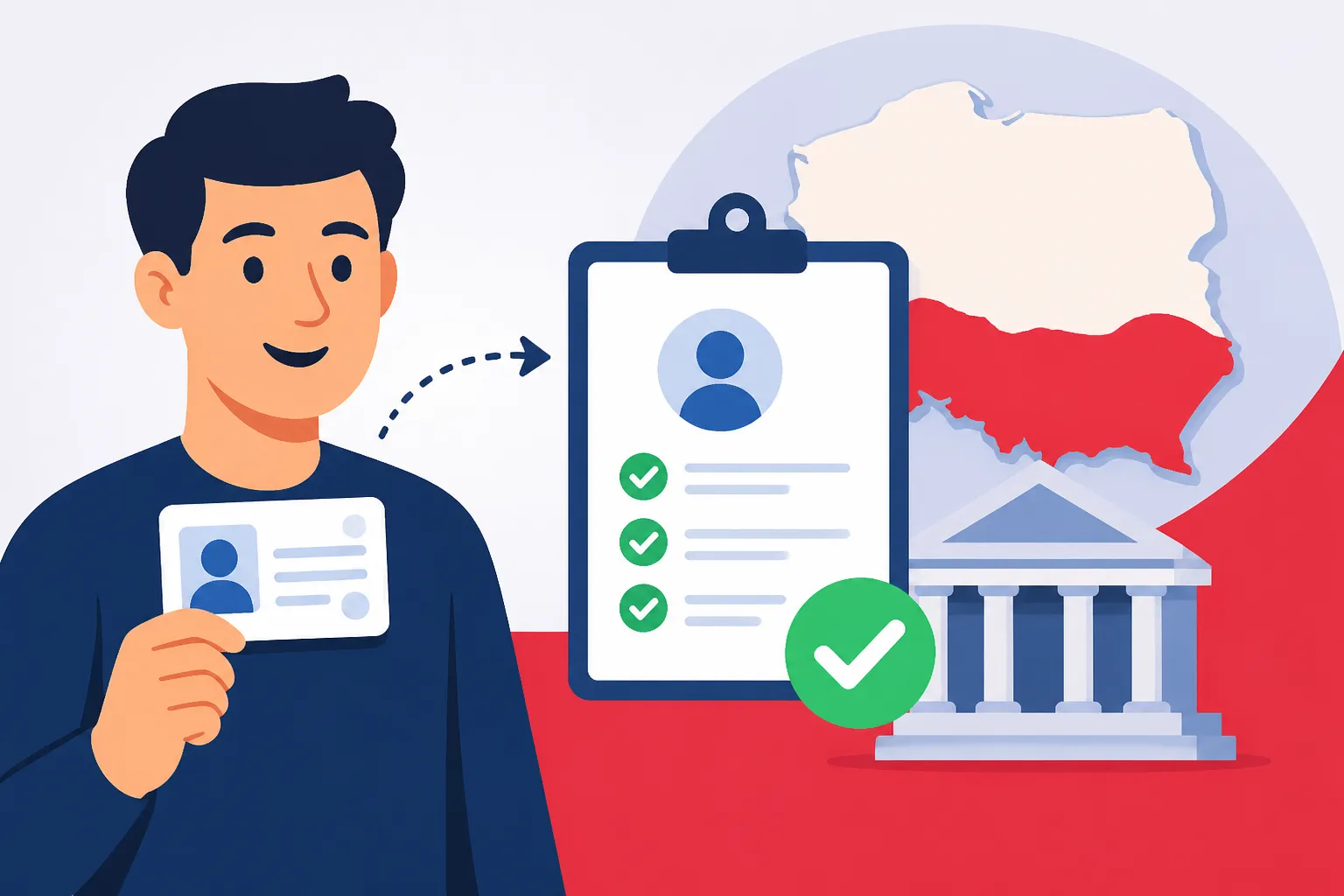
- Your valid passport or national ID card: This is your primary identification, and they will need a copy of it.
- Proof of address in Poland: This is crucial. This could be your rental agreement (umowa najmu), a utility bill in your name, or your zameldowanie certificate if you've already managed to register your residence. If you haven't yet, bringing a signed rental contract is usually sufficient. Remember, a NIP is tied to your address, so they need to know where to send official correspondence. Speaking of which, if you need to tackle residence registration, check out How to Register Your Residence (Zameldowanie) in Poland: The Complete Guide.
- Documents confirming the reason for your NIP application: This is specific to your situation. If you're employed, a draft of your employment contract (umowa o pracę) or a declaration from your employer stating the need for a NIP can be helpful. If you're self-employed, any initial business registration documents or even a simple letter stating your intention to register a JDG will support your application.
- The NIP-7 application form (more on this below).
Always bring originals and at least one copy of everything. While most Urząd Skarbowy locations have photocopiers, they're not always reliable or free. It's far better to be over-prepared than under-prepared. Also, be prepared for official documents not in Polish to require a certified translation by a sworn translator (tłumacz przysięgły). Always confirm this with your specific Urząd Skarbowy or a tax advisor beforehand.
Filling Out the NIP-7 Application Form
The NIP-7 form is your gateway to getting your NIP. It's an official Polish government document, and yes, it's entirely in Polish. This is often where expats feel the first surge of dread. Don't worry, it's manageable with a bit of guidance.
You can usually download the NIP-7 form from the website of the Ministry of Finance (Ministerstwo Finansów) or simply pick one up at your local Urząd Skarbowy. It asks for standard personal information: your name, surname, date and place of birth, parents' names, nationality, and your address in Poland. Crucially, it also asks for the legal basis for your application – essentially, why you need a NIP. This is where you'll indicate if it's for self-employment, employment as a non-PESEL holder, or other tax obligations.
Accuracy is paramount. Any errors could lead to delays or rejection. If your Polish isn't up to scratch, please, for your own sanity, do not try to guess! Seek help. This is one of those times when investing in a professional translator or asking a trusted Polish-speaking friend is absolutely worth it. Services like Taxes for Expats often have experience with these forms and can guide you through the process, ensuring everything is filled out correctly. They specialize in simplifying the complex Polish tax landscape for foreigners, and their assistance can prevent costly mistakes.
Submitting Your Application to the Tax Office (Urząd Skarbowy)
Once your NIP-7 form is perfectly filled out and all your documents are gathered, it's time to submit. You'll need to visit the Urząd Skarbowy that covers your registered address (zameldowanie) or, if you don't have one, your temporary residence address or the place where your main source of income is located. For example, if you live in Warsaw, it would be one of the Warsaw tax offices.
When you go, be prepared for a wait, especially during peak times. Take a number (usually from a machine near the entrance, look for "numerki") and wait for your turn. When called, approach the designated window with a smile and all your documents. Hand over your NIP-7 form and supporting documents. The official will review them, often ask a few clarifying questions (again, a translator can be a lifesaver here), and if all is in order, they will accept your application.
You should receive a confirmation of submission. Keep this document safe! It's your proof that you've applied. The NIP itself is typically issued relatively quickly, often within a few days to a couple of weeks, but sometimes it can take longer. It will usually be sent to your declared address by post. If you are very lucky and they are not busy, sometimes they issue it on the spot. Once you have it, remember that you’ll need it for things like Filing Your Annual Tax Return (PIT) in Poland: The Complete Walkthrough (2027).
Common Challenges and Pro Tips for Expats
Let's be real: bureaucracy anywhere can be a pain, and in Poland, it often comes with a language barrier and a unique way of doing things. But don't despair! Many expats have navigated this path before you, and with a few insights, you can too.
Navigating Language Barriers and Bureaucracy
This is perhaps the biggest hurdle. Most government officials in the Urząd Skarbowy will primarily speak Polish. While some younger employees might have basic English, you cannot count on it for an official procedure like applying for a NIP. Expecting them to accommodate you in English is not fair or realistic.
- Bring a Polish Speaker: This is my absolute top recommendation. Whether it's a friend, a colleague, or a professional translator, having someone fluent in Polish by your side will drastically reduce stress and the chance of misunderstandings. They can translate questions, explain your situation clearly, and ensure you understand the information given to you.
- Professional Help: For more complex situations, or if you simply want to minimize hassle, consider hiring a tax advisor or an accountant who specializes in expat services. They are well-versed in these forms and processes and can often handle the application on your behalf, or at least guide you through every step. Taxes for Expats is a great example of a service that understands these needs and can offer tailored assistance for foreigners in Poland. They can save you hours of head-scratching and potential errors.
- Preparation is Key: Even with a translator, having all your documents organized and your reason for applying clear in your mind (and on paper) will make the process smoother.
Potential Delays and How to Follow Up
While the official processing time for a NIP application can be relatively short, administrative processes in Poland can sometimes take longer than expected. It's not uncommon for things to get lost in the mail or for there to be internal delays.
- Be Patient, But Proactive: Give it a reasonable amount of time (e.g., 2-3 weeks after submission). If you haven't received your NIP by then, don't just wait indefinitely.
- Follow Up: You can call the Urząd Skarbowy (again, a Polish speaker will be invaluable here) or visit in person, bringing your submission confirmation. Inquire about the status of your application. Sometimes, a gentle follow-up is all that's needed to get things moving.
- Keep Records: Always keep copies of everything you submit and any confirmations or correspondence you receive. This paper trail is invaluable if there are any issues or if you need to prove when and what you submitted.
Practical Advice for Managing Your Finances with a NIP
Once you have your NIP, you're officially registered for tax purposes in Poland, opening up many financial avenues. This is just one step in managing your financial life in Poland.
For example, when you set up a bank account here, which is often a critical first step for expats, your NIP (or PESEL, depending on your situation) will be a key piece of information your bank will require. If you're looking for guidance on this, check out How to Open a Bank Account at a Polish Bank as a Foreigner. Similarly, for many expats, managing international finances involves sending money home or receiving payments from abroad. Services like Wise (formerly TransferWise) are incredibly popular among expats for their transparent fees and favorable exchange rates for international money transfers, making it easier to manage your funds across borders.
Beyond basic banking, your NIP will be essential for reporting all your income sources to the Polish tax authorities. Whether it's income from employment, self-employment, or other gains, everything needs to be properly declared. You might also need your NIP when dealing with How to Report Foreign Income to the Polish Tax Office. It’s an identifier that ties your financial activities directly to the state, so it’s something you’ll use for many years to come while living and working here.
Here's a quick overview table comparing NIP and PESEL:
| Feature | NIP (Numer Identyfikacji Podatkowej) | PESEL (Powszechny Elektroniczny System Ewidencji Ludności) |
|---|---|---|
| Purpose | Primarily for tax identification | General personal identification (national ID) |
| Who Needs It (Expats) | Individuals without PESEL with tax obligations; Businesses/Self-employed (JDG) | Most residents living >30 days; employees with standard contracts |
| When to Apply | Before starting a business (JDG); if employed and don't have PESEL; other taxable income without PESEL | Upon registering residence (zameldowanie) |
| Primary Authority | Urząd Skarbowy (Tax Office) | Urząd Gminy/Miasta (Municipal Office) |
| Format | 10 digits | 11 digits (includes date of birth) |
| Identification Type | Taxpayer ID | Personal ID |
Getting your NIP might seem like another mountain to climb in Polish bureaucracy, but with this guide and a bit of patience (and perhaps some Polish-speaking assistance), you'll conquer it in no time. It’s a necessary step to integrate into the financial and administrative life here, so once it's done, you can tick off another major expat milestone. Good luck!
Disclaimer
This article is for general informational purposes only and does not constitute professional advice. Laws, prices and regulations vary by location and change over time. Consult a qualified professional for guidance on your specific situation.