How Do I Convert My JDG to a Sp. z o.o. in Poland?
Alright, my fellow expat entrepreneur! You’ve done it. You’ve successfully navigated the initial labyrinth of setting up your Jednoosobowa Działalność Gospodarcza (JDG), or sole proprietorship, in Poland. You’ve built your business, seen it grow, and now you’re pondering the next big leap: converting your JDG into a Spółka z ograniczoną odpowiedzialnością (Sp. z o.o.), a limited liability company. It’s a common, yet often intimidating, progression, fraught with new bureaucratic challenges and decisions. But don't worry, I’ve been there, seen it, and helped many like you figure it out. This guide is designed to demystify the process, explain the 'whys' and 'hows,' and prepare you for this significant step in your business journey here in Poland.
Why Consider Converting Your JDG to a Sp. z o.o.?
So, your JDG is doing well, but you’re feeling the limitations, aren't you? It’s a natural evolution for many growing businesses in Poland. The simplicity of a JDG is a double-edged sword: easy to set up, but it ties your personal assets directly to your business liabilities. This is often the primary driver for considering a shift to a limited liability company.
Limiting Personal Liability
This is, hands down, the biggest reason most entrepreneurs make the switch. With a JDG, you, as the individual, are personally responsible for all your business's debts and obligations. If your business runs into financial trouble, creditors can come after your personal assets – your home, your car, your savings. It’s a terrifying thought, especially when you’ve poured your heart and soul (and cash!) into building something.
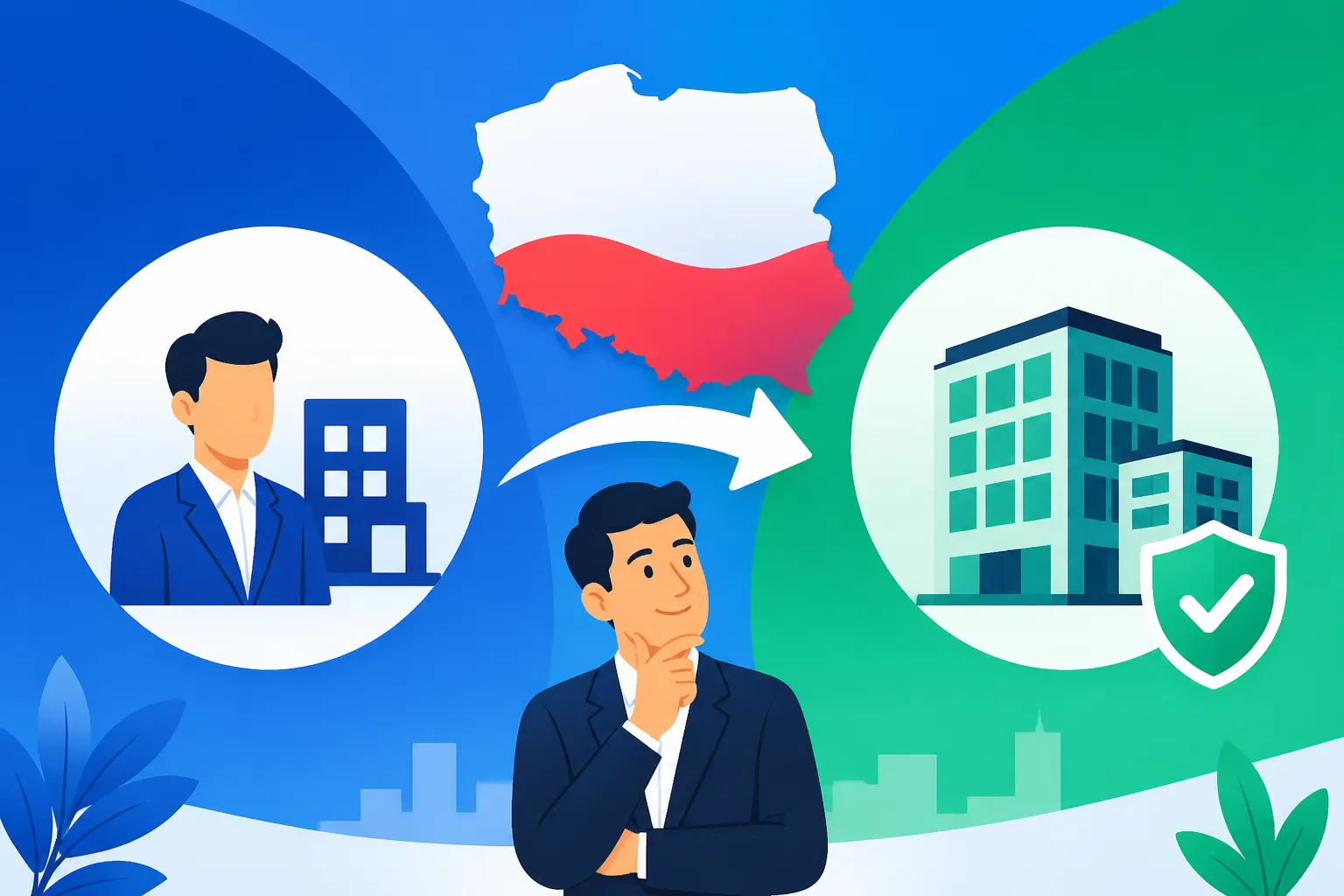
A Sp. z o.o., on the other hand, is a separate legal entity. This means the company is responsible for its own debts and obligations, limiting your personal liability to the amount of capital you've invested in the company. Think of it as a protective shield. If the company goes bankrupt, your personal assets are generally safe. This peace of mind is invaluable as your business grows and takes on larger projects, employs more people, or enters riskier ventures. It truly allows you to sleep better at night, knowing that a business hiccup won't jeopardize your entire life savings here in Poland.
Enhancing Credibility and Investment Potential
Let's be honest, a Spółka z o.o. just sounds more serious and established than a Jednoosobowa Działalność Gospodarcza. For many larger clients, partners, or investors, dealing with a limited liability company signals greater professionalism and stability. It suggests that your business has a more robust structure, audited accounts, and clear governance.
This enhanced credibility can open doors to new opportunities. For instance, if you're looking to secure significant financing, attract venture capital, or even just sign a major contract with a large corporate client, a Sp. z o.o. is often preferred, sometimes even required. Investors are more likely to put money into a company with limited liability, as their investment structure is clearer, and their personal risk is contained. It also makes it easier to bring in co-founders or shareholders down the line, as the ownership structure is clearly defined by shares, unlike the single-owner nature of a JDG. It's a sign that you're playing in the big leagues now.
Flexibility in Tax Optimization and Profit Distribution
While a JDG benefits from relatively straightforward taxation and ZUS contributions, a Sp. z o.o. offers different avenues for tax optimization, particularly as profits grow. A Sp. z o.o. is subject to Corporate Income Tax (CIT) on its profits, typically at 9% for small companies (with revenue below €2 million) or 19% for larger ones. As the owner (or shareholder), you then pay personal income tax (PIT) on any dividends you take out. This "double taxation" might sound like a drawback initially, but it offers strategic advantages.
For example, you might decide to reinvest profits back into the company without paying personal income tax on them immediately. You can also pay yourself a salary from the Sp. z o.o., which is a deductible expense for the company. The specific combination of salary, dividends, and retained earnings can be structured to optimize your overall tax burden, especially when working with expert advice. For a deeper dive into these complexities, engaging with specialists in Taxes for Expats can be incredibly helpful, as they understand both Polish regulations and international tax treaties. Also, if you plan to hire employees, the Sp. z o.o. framework simplifies this, as you become an employee (or board member) of your own company, making your personal ZUS contributions distinct from those of your staff.
The Step-by-Step Process of Conversion: Navigating the Bureaucracy
Now, let's talk about the actual "how-to." Converting your JDG to a Sp. z o.o. in Poland isn't a simple tick-box exercise. It involves several distinct legal and administrative steps, and it’s important to understand each one. This isn't just closing one door and opening another; it's a careful transition.
The Liquidation of Your JDG
Before you can truly move forward with the Sp. z o.o., you need to wind down your JDG. This doesn't mean simply stopping operations; it's a formal process that needs to be handled correctly to avoid future liabilities. You'll need to update your entry in the Centralna Ewidencja i Informacja o Działalności Gospodarczej (CEIDG) – Poland’s central register of business activities for sole proprietors – to indicate that your business is being suspended or liquidated.
This step involves settling all outstanding obligations of your JDG: paying off suppliers, closing customer contracts, and collecting any outstanding invoices. You'll need to file a final PIT declaration for your JDG and, if you were a VAT payer, a final VAT declaration. Crucially, you must also formally remove yourself from the ZUS (Social Insurance Institution) register as a JDG owner. This means ensuring all your social security and health contributions are up to date and informing ZUS of the cessation of your sole proprietorship. This process is often intertwined with registering your new Sp. z o.o., as many people transition directly from paying ZUS as a JDG owner to paying ZUS as a board member (if applicable) or employee of their new company. Remember, this isn't a quick sprint; it's a marathon, and sometimes, navigating the nuances of ZUS can be one of the trickiest parts.
Establishing the New Sp. z o.o.
This is where you bring your new limited liability company to life. The first critical step is drafting the Articles of Association (Umowa Spółki). This document defines the company's name, registered office (seat), share capital, scope of activity (using Polish PKD codes), and the structure of its management. It must be prepared in the form of a notarial deed. This is a big one, as it requires a notary public, and it’s where a good Polish speaker or a trusted legal advisor comes in handy. Remember, official documents in Poland are almost always in Polish, and misunderstandings can lead to costly errors. If your Polish still needs some work, platforms like iTalki can be incredibly useful for brushing up on legal and business terminology.
Once the Articles of Association are signed, you need to contribute the minimum share capital, which is currently PLN 5,000. This capital can be cash or in-kind contributions. Then, you'll proceed to register the company with the National Court Register (Krajowy Rejestr Sądowy, KRS). This involves submitting a form KRS-W4, along with the notarial deed, proof of share capital payment, and other necessary declarations. The KRS entry formally grants your Sp. z o.o. legal personality. Simultaneously, the company will automatically be assigned a NIP (tax identification number) and REGON (national business registry number). You'll also need to register for VAT if applicable, which can be done with a form VAT-R at the appropriate tax office. It's a complex dance of documents and deadlines, so having a clear checklist and possibly professional help is paramount.
Transferring Assets and Contracts
The conversion isn’t just about creating a new legal entity; it’s about ensuring continuity for your business operations. This means systematically transferring all relevant assets and contracts from your JDG to your new Sp. z o.o. This might include physical assets like equipment, intellectual property, existing client contracts, supplier agreements, and even your business's goodwill.
For physical assets, a sales agreement between your JDG (as the seller) and your Sp. z o.o. (as the buyer) might be necessary. This transaction could have tax implications, so professional advice is crucial here. For contracts, you’ll likely need to draft assignment agreements or amendments with each client and supplier, informing them of the change in your legal entity. While many clients will understand, it’s a good practice to manage these communications professionally and proactively. Finally, remember to open a new business bank account in the name of your Sp. z o.o., and gradually shift all financial transactions to this new account. For more information on business accounts, you can check out our guide on How to Open a Business Bank Account in Poland. It's meticulous work, but it ensures your business continues to operate smoothly under its new legal structure.
Legal and Tax Implications of the Change
Shifting from a JDG to a Sp. z o.o. profoundly changes how your business is taxed, how you’re insured, and your overall legal standing. These are not minor adjustments; they are fundamental shifts that require careful planning and understanding.
Understanding Corporate Income Tax (CIT) vs. Personal Income Tax (PIT)
With a JDG, your business income is simply added to your personal income and taxed under the Personal Income Tax (PIT) regime. This often means using the tax scale (12% and 32% brackets) or the flat tax (19%), or ryczałt for specific services. All your business profits are effectively your income. Our guide on Understanding Income Tax PIT in Poland The Full Expat Guide delves deeper into this.
A Sp. z o.o., however, is subject to Corporate Income Tax (CIT). This means the company pays tax on its profits first. As mentioned, this can be 9% for small entities (under €2 million annual revenue) or 19% for others. Only after the company has paid CIT and decided to distribute profits as dividends do shareholders pay personal income tax (PIT) on those dividends, typically at a flat rate of 19% (the so-called Podatek Belki). This two-tier taxation is a key difference. While it means profits are taxed twice, it also provides strategic opportunities for reinvestment and tax deferral. You might choose to retain profits within the company to fund expansion, thereby delaying personal tax obligations. This strategic flexibility is a major draw for growing businesses.
ZUS Contributions: Employee vs. Entrepreneur
Ah, ZUS. The bane of many an expat entrepreneur’s existence. As a JDG owner, you are generally obligated to pay monthly ZUS contributions, covering social security (pension, disability, sickness) and health insurance (składka zdrowotna). The amount can be substantial, especially after the initial "preferential ZUS" period. You can find detailed breakdowns in our guide to Understanding ZUS Social Contributions in Poland: The Full Guide.
When you convert to a Sp. z o.o., the situation changes. If you are the sole shareholder of the Sp. z o.o., the Polish law considers you, in essence, an entrepreneur (despite the limited liability company structure) and you will still be obliged to pay full ZUS contributions, much like a JDG owner. However, if your Sp. z o.o. has at least two shareholders, even if one holds 99% and the other 1%, you are no longer automatically deemed an entrepreneur for ZUS purposes. Instead, if you take on a role as a board member (członek zarządu) or an employee of the company (e.g., as a CEO under an umowa o pracę or umowa zlecenie), your ZUS contributions will be calculated differently, based on your salary or remuneration. This can sometimes be more advantageous, but it's a complex area that demands careful calculation and often, professional consultation.
Accounting and Reporting Requirements
Gone are the days of simplified accounting (księga przychodów i rozchodów) typical for many JDGs. A Sp. z o.o. is required to maintain full accounting records (pełna księgowość). This involves a much more detailed and rigorous system of bookkeeping, including a chart of accounts, balance sheets, profit and loss statements, and cash flow statements. This is a significant increase in administrative burden and complexity.
You’ll almost certainly need to engage a professional accounting firm to handle your Sp. z o.o.'s books. They will be responsible for preparing monthly or quarterly financial statements, filing CIT declarations, and preparing the annual financial report, which must be submitted to the KRS and often requires auditing if your company reaches certain thresholds. While this adds to your operational costs, it also ensures compliance and provides a much clearer financial picture of your business. It's a trade-off: more complexity, but also more transparency and legal compliance, which again, boosts credibility for partners and investors.
Post-Conversion Life: What Changes and What Stays the Same?
You've made the switch, the ink is dry, and your Sp. z o.o. is officially registered. Congratulations! Now what? Life certainly changes, but some aspects of running your business might feel familiar, just with a new legal wrapper.
Operational and Administrative Shifts
Your day-to-day operations will largely continue, but the underlying administrative framework changes significantly. Every official action will now be taken in the name of the Spółka z o.o., not you personally. This means new invoicing templates, new contract headers, and new bank account details for all transactions. You'll need to update your website, business cards, and any other public-facing materials with the new company name and details, including your KRS number.
Internally, decision-making processes become more formalized. While as a JDG owner, you could make decisions on the fly, a Sp. z o.o. requires resolutions by the Board of Directors (Zarząd) or shareholders (if it's a major decision). Even if you are the sole board member and shareholder, these decisions still need to be documented. This means maintaining proper corporate records, including minutes of board meetings and shareholder resolutions. It might feel like unnecessary bureaucracy, but it's crucial for legal compliance and future audits. Even simple things like signing a new lease or purchasing significant assets require a formal approach now.
Implications for Employment and Growth
As a Sp. z o.o., you now have a much clearer and more formal structure for hiring employees. You can hire individuals under umowa o pracę (employment contract) or other civil law contracts like umowa zlecenie or umowa o dzieło, without the personal liability directly attached to you as an individual entrepreneur. This also applies to yourself: you can be formally employed by your own company, receiving a salary and benefits like any other employee, separate from your role as a shareholder. Our guide on Understanding the Umowa o Pracę vs Umowa Zlecenie vs Umowa o Dzieło can provide valuable insights here.
This new structure is far more conducive to scaling. You can more easily bring in partners by issuing new shares, or even prepare the company for a future sale without having to disentangle personal and business assets. The Sp. z o.o. structure is built for growth, allowing for clearer divisions of ownership, management, and responsibilities. This makes it an ideal vehicle if you foresee your business expanding beyond a single-person operation, attracting external investment, or eventually selling it off.
Table: Key Differences Between JDG and Sp. z o.o.
To help you visualize the core changes, here’s a quick comparison:
| Feature | JDG (Jednoosobowa Działalność Gospodarcza) | Sp. z o.o. (Spółka z ograniczoną odpowiedzialnością) |
|---|---|---|
| Legal Status | Natural person, no separate legal entity | Legal entity, separate from owners |
| Liability | Unlimited personal liability | Limited to company's assets (owners' investment) |
| Minimum Capital | None | PLN 5,000 (share capital) |
| Taxation | Personal Income Tax (PIT) on owner's income | Corporate Income Tax (CIT) on company profits; PIT on dividends |
| ZUS Contributions | Mandatory for owner (as entrepreneur) | Mandatory for sole shareholder (as entrepreneur); otherwise, based on employment |
| Accounting | Simplified (e.g., księga przychodów i rozchodów) | Full accounting (pełna księgowość) |
| Setup Time/Cost | Fast, inexpensive | Slower, more expensive (notary, KRS fees) |
| Credibility | Lower (often seen as small business) | Higher (professional structure) |
| Ease of Transfer/Sale | Difficult (sells assets, not entity) | Easier (shares can be sold) |
| Management | Owner is manager | Board of Directors (Zarząd) manages, shareholders oversee |
This table should give you a clear, at-a-glance understanding of the critical differences. Each point represents a shift in responsibility, cost, or opportunity. For more specific tax advice relevant to your situation, especially considering international aspects, always consult with professionals.
Practical Advice for a Smooth Transition
Making this shift is a big deal, and it's easy to feel overwhelmed by all the moving parts. I've gathered a few tips from personal experience and observing countless others go through the same journey.
Seek Professional Guidance
Honestly, this is non-negotiable. Trying to convert a JDG to a Sp. z o.o. on your own, especially if you're not fluent in legal Polish, is akin to performing surgery on yourself. You'll need a lawyer to draft the Articles of Association and navigate the KRS registration, and an accountant experienced with pełna księgowość from the outset. Many legal and accounting firms in Poland specialize in helping foreign entrepreneurs, offering services in English.
Don't hesitate to shop around and get recommendations. A good lawyer will explain the nuances of the Articles of Association, ensure compliance, and guide you through the notarial process. A skilled accountant will set up your new accounting system, advise on tax optimization strategies for your Sp. z o.o., and ensure all your ZUS and tax declarations are correctly filed from day one. They are an investment, not an expense, particularly when avoiding costly mistakes. This is a journey you truly don't want to embark on alone.
Plan Your Timing and Financials Carefully
The conversion process isn't instant. It can take several weeks, sometimes months, from drafting the Articles of Association to final KRS registration. During this period, you’ll have both your JDG winding down and your Sp. z o.o. coming into existence. Plan your cash flow accordingly. You might incur legal and accounting fees upfront, and you’ll need to ensure you have the minimum share capital for the Sp. z o.o.
Think about the best time to execute this. Mid-year might simplify accounting transitions compared to year-end, but every business is different. Consider any major contracts or projects your JDG is currently undertaking. Will they seamlessly transfer to the new entity, or should you complete them before the switch? A well-planned timeline will minimize disruption to your business operations and reduce stress. Also, be sure to have all your What Documents Do I Need to Get a PESEL in Poland? and NIP numbers sorted for both you and your new entity.
Communicate Transparently with Stakeholders
As you transition, keep your key stakeholders informed. Your clients, suppliers, and any employees should be aware of the change. Explain why you're making the switch – often, the increased professionalism and limited liability are positive selling points that build confidence. Provide clear instructions on updated bank details, invoicing procedures, and contact information.
This transparency builds trust and minimizes any confusion or disruption. For employees, clearly explain how their contracts might transition (if applicable) and what this means for their employment. Proactive and clear communication will ensure everyone is on board with your company's exciting new chapter. A professional approach here can differentiate you from other businesses and strengthen your relationships moving forward.
Disclaimer
Please remember that I am an expat lifestyle blogger and not a legal or financial professional. The information provided in this guide is for general informational purposes only and does not constitute legal, tax, or financial advice. Polish law, particularly regarding company formation and taxation, is complex and subject to change. It is essential to consult with qualified legal, accounting, and tax professionals specializing in Polish law and international taxation before making any decisions about converting your business structure. They can provide advice tailored to your specific circumstances and ensure full compliance with all applicable regulations.