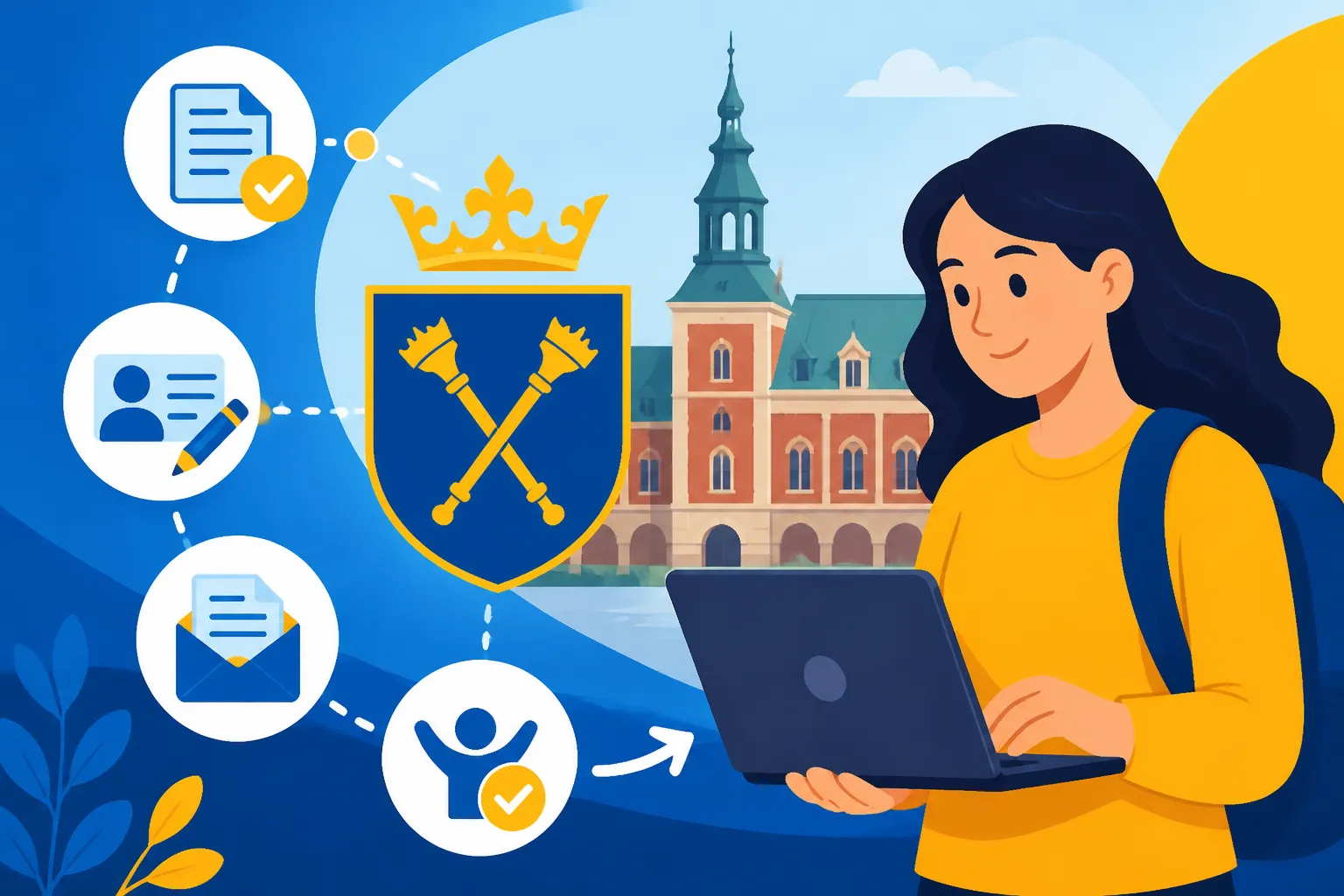
How Do I Apply to Jagiellonian University as an International Student?
Applying to a university in a new country can feel like trying to solve a Rubik's Cube blindfolded, and Poland's prestigious Jagiellonian University is no exception, especially for international students navigating unfamiliar systems. If you're dreaming of walking the hallowed halls of one of Europe's oldest universities, this comprehensive guide will walk you through every critical step, from initial requirements to settling into life in beautiful Kraków, validating the hurdles and providing actionable advice.
Dreaming of Jagiellonian? Understanding the Appeal and Initial Steps
Landing a spot at a top-tier European university like Jagiellonian University in Kraków is a huge accomplishment, and for good reason. It's not just about the academics; it's about immersing yourself in a city steeped in history, culture, and vibrant student life. But before you can picture yourself sipping coffee in Kazimierz between lectures, you'll need to understand the unique landscape of applying as an international student. This isn't your home country's application system, and a little foreknowledge goes a long way to ease the inevitable frustrations.
A Legacy of Learning: Why Jagiellonian Stands Out
Jagiellonian University, or Uniwersytet Jagielloński (UJ) as it's known locally, isn't just any university; it's a cornerstone of European intellectual history, founded way back in 1364. We're talking about an institution that has educated luminaries like Nicolaus Copernicus, Pope John Paul II, and numerous Nobel laureates. Its reputation for academic excellence spans a vast array of fields, from medicine and law to humanities and sciences. For international students, this means a degree from UJ carries significant weight globally. Beyond the prestige, Kraków itself is an incredibly expat-friendly city, offering a lower cost of living compared to many Western European capitals, stunning architecture, and a buzzing student atmosphere. You'll find a wide range of programs taught in English, which simplifies things immensely if your Polish isn't quite up to snuff yet. However, don't underestimate the power of picking up some basic Polish – it truly enriches your daily life here.
General Pathways for International Applicants
For international students, the application process to Jagiellonian University generally funnels through their online recruitment system, known as ERK (Elektroniczna Rejestracja Kandydatów – Electronic Candidate Registration). This is your primary portal for everything, from browsing programs to uploading documents and tracking your application status. The key distinction often lies between EU/EEA citizens and non-EU/EEA citizens. EU/EEA citizens typically have an easier path, often treated similarly to Polish nationals regarding tuition fees (though this can vary by program) and visa requirements. Non-EU/EEA students, on the other hand, face additional steps, including mandatory student visas and higher tuition fees. Both groups, however, will need to prove their academic qualifications and language proficiency. It's crucial to check the specific requirements for your chosen program, as these can vary wildly even within the same university. Trust me, overlooking a small detail can set you back weeks, so meticulous double-checking is your best friend here. If you're unsure about where to start with your general university search in Poland, you might find guidance in a broader resource like The Complete Guide to Studying at a Polish University (2027).
Demystifying the Application Process: From Documents to Deadlines
Once you've set your sights on Jagiellonian, the real work begins: assembling your application. This stage is where many international students hit their first bureaucratic roadblocks. Poland loves its paperwork, and getting everything right requires patience and precision. You'll be dealing with everything from academic transcripts to language certificates, and ensuring they meet Polish standards is paramount.
Academic Puzzles and Language Tests
First things first, your academic qualifications. For undergraduate programs, you'll generally need a high school diploma or equivalent. For Master's degrees, a Bachelor's degree in a relevant field is required. Now, here's where it gets tricky: these documents often need to be legalized or apostilled, depending on the country where they were issued. This means having an official stamp or certificate that verifies the authenticity of your document for international use. This isn't a quick process, and it often involves your home country's Ministry of Foreign Affairs or a similar body, so start early! Some degrees, especially those from outside the EU, might also require nostrification, which is the official recognition of your foreign degree in Poland. This can be a lengthy process, so don't leave it to the last minute. If you need more information on this, check out How to Get Your Foreign Degree Recognised (Nostryfikacja) in Poland.
Then there's language. If you're applying to a program taught in English, you'll need to provide proof of English proficiency, typically through tests like IELTS (minimum 6.0-6.5, depending on the program) or TOEFL. If your previous education was entirely in English, sometimes a certificate from your institution can suffice, but always confirm with UJ's admissions office. For programs taught in Polish, you'll need a certificate of Polish language proficiency, usually B1 or B2 level from an officially recognized institution. This can be a significant hurdle, but don't despair! Many expats find great success by taking intensive Polish courses once they arrive, or even before with online platforms. For instance, iTalki can be a fantastic way to get a head start on your Polish language skills, practicing with native speakers before you even arrive in Kraków.
Taming the ERK Online Application System
The ERK system is your digital lifeline to Jagiellonian University. It's where you'll create your profile, select your desired program(s), and upload all the necessary documents. The system itself is fairly intuitive, but the sheer volume of information and document requirements can feel overwhelming. Make sure to accurately fill in all personal details, educational background, and contact information. When uploading documents, ensure they are high-quality scans or clear photographs and in the requested format (usually PDF).
Here's a general checklist of common documents you'll need to upload:
- Scanned copy of your passport or national ID: Ensure it's valid for at least six months beyond your intended stay.
- High school diploma/certificate (for Bachelor's) or Bachelor's degree diploma/transcript (for Master's): Remember the legalization/apostille mentioned earlier.
- Transcript of records: Listing all courses and grades.
- Proof of English or Polish language proficiency: IELTS, TOEFL, or official Polish language certificate.
- CV/Resume: Especially for Master's programs.
- Motivation letter: Explaining why you want to study at UJ and in your chosen program.
- Reference letters: Sometimes required for specific programs.
- Medical certificate: Confirming you're fit to study.
- Recent passport-style photograph.
- Proof of application fee payment.
The application fee is usually a one-time, non-refundable payment (around 85 PLN, but confirm the exact amount on the UJ website). You'll typically pay this via bank transfer, and you'll need to upload proof of payment to the ERK system. Always keep a digital and physical copy of your payment confirmation. Missed deadlines are unfortunately non-negotiable, so plan ahead. You can find more detailed requirements on what paperwork you'll need when exploring What Documents Do I Need to Enrol at a Polish University?.
The Interview and Entrance Exam Hurdle
For many programs at Jagiellonian University, especially Master's degrees or highly competitive fields, an interview or entrance exam is part of the selection process. These are usually conducted online via platforms like Zoom or Microsoft Teams, especially for international candidates.
Preparing for a Remote Interview:
Treat an online interview with the same seriousness as an in-person one. Ensure you have a stable internet connection, a quiet environment, and professional attire. Research the faculty members you might be speaking with and be prepared to discuss:
- Your motivation for choosing the specific program and Jagiellonian University.
- Your academic background and relevant experiences.
- Your career aspirations and how this program aligns with them.
- Any projects or research interests you have.
- Your understanding of the program's curriculum.
They might also test your critical thinking or problem-solving skills, depending on the field. The goal is to demonstrate genuine interest, intellectual curiosity, and a solid understanding of your chosen subject.
Specific Requirements for Certain Faculties:
Some faculties have very specific entrance exams. For example, medical programs often require exams in biology, chemistry, and physics, along with an interview. Art-related fields might require a portfolio submission or practical tests. Always check the individual program's admission criteria on the UJ website meticulously. These are not general knowledge tests; they are designed to assess your aptitude and foundational knowledge relevant to the rigorous curriculum you're applying for.
Beyond Admission: Navigating Visas, Finances, and Life in Poland
Getting that coveted admission letter is a huge relief, but it's just one step. For many international students, the next big hurdle involves securing your legal stay in Poland and figuring out how to fund your adventure. This part of the journey can be fraught with bureaucratic slowdowns, so maintaining a realistic timeline and having a healthy dose of patience is essential.
Securing Your Stay: Visa and Residence Permit Essentials
If you're a non-EU/EEA citizen, your admission letter from Jagiellonian University is your golden ticket to applying for a National (Type D) Visa at the Polish embassy or consulate in your home country. This visa is typically issued for study purposes and allows you to enter and stay in Poland for a specific period, usually up to one year.
The visa application typically requires:
- A valid passport.
- The original admission letter from Jagiellonian University.
- Proof of sufficient financial means to cover your tuition and living expenses.
- Proof of travel medical insurance.
- Flight reservation or itinerary.
- Proof of accommodation in Poland (though this can sometimes be sorted out after arrival, it's better to show a plan).
- A completed visa application form and passport-sized photos.
Once you arrive in Poland, you'll need to apply for a Temporary Residence Permit (Karta Pobytu). This is a crucial document that allows you to legally reside in Poland for the duration of your studies, typically valid for up to three years (renewable). You apply for this at the Urząd Wojewódzki (Voivodeship Office) in Kraków, specifically the Department for Foreigners. Be prepared for a lengthy process – it can often take several months, and you'll usually need to book an appointment far in advance. Gather all your documents meticulously, including your admission letter, proof of financial stability, health insurance, and proof of address (like a rental agreement). For a deeper dive into this vital step, consult resources like Understanding the National (Type D) Visa for Poland and How to Apply for a Temporary Residence Permit (Karta Pobytu) in Poland.
Crunching the Numbers: Tuition, Living Costs, and Support
Let's talk money, because studying abroad is an investment. Tuition fees at Jagiellonian University for international students vary significantly by program and whether it's taught in Polish or English. Generally, programs taught in English are more expensive. For Bachelor's and Master's degrees, expect fees to range from €2,000 to €5,000 per academic year, with some specialized programs (like medicine or dentistry) being substantially higher, even up to €10,000-€15,000. Doctoral programs sometimes offer waivers or lower fees.
Beyond tuition, you need to budget for living costs in Kraków. Compared to Western European cities, Kraków is quite affordable. Here's a rough breakdown:
| Expense Category | Estimated Monthly Cost (PLN) | Estimated Monthly Cost (EUR) | Notes |
|---|---|---|---|
| Accommodation | 800 – 1,800 | 180 – 400 | Student dorms are cheaper, private room in shared apartment is mid-range, studio apartment is higher. |
| Utilities | 150 – 300 | 35 – 70 | Electricity, gas, water, internet (often included in rent for dorms/shared apartments). |
| Groceries | 600 – 1,000 | 140 – 230 | Depends heavily on cooking at home vs. eating out. |
| Public Transport | 50 – 100 | 12 – 23 | Monthly student pass is very affordable. |
| Personal Expenses | 300 – 600 | 70 – 140 | Toiletries, entertainment, occasional dining out. |
| Books/Supplies | 50 – 150 | 12 – 35 | Varies by program, many resources available digitally. |
| Total Estimated | 1,950 – 3,950 | 440 – 900 | Excludes tuition and health insurance. |
Note: These are estimates and can fluctuate based on lifestyle and current exchange rates. Always check the latest figures.
For more general information on daily expenses, you could refer to The Complete Guide to Cost of Living in Poland for Expats (2026).
Scholarship Opportunities:
Jagiellonian University, the Polish government, and various international bodies offer scholarships for international students. These can be merit-based, need-based, or specific to certain countries or fields of study. Always check the UJ website's scholarship section, the Polish National Agency for Academic Exchange (NAWA), and scholarship portals in your home country. Don't be shy about applying – every little bit helps! If you're concerned about your financial obligations, understanding the Polish tax system might be relevant if you plan to work part-time or after graduation. Resources like "Taxes for Expats" can provide helpful insights into navigating financial responsibilities in Poland.
Making Kraków Your Home: Accommodation and Adaptation
Finding a place to live is often one of the first and most pressing concerns upon arrival. Kraków offers various accommodation options for students:
- University Dormitories: These are usually the most affordable option, offering a room (often shared) and basic facilities. They're a great way to meet other students and immerse yourself in university life. You apply for these directly through Jagiellonian University after admission.
- Private Student Residences: Similar to dorms but privately owned, often offering slightly more modern facilities and single rooms.
- Private Rental Market: Renting a room in a shared apartment or a studio apartment (kawalerka) is a popular choice. Websites like Otodom, Gumtree, and Facebook groups (e.g., "Mieszkania Kraków for Expats") are good places to start. Be prepared for a deposit (usually 1-2 months' rent) and to sign a rental agreement (umowa najmu). If you're looking for more general information on how to secure housing, check out How to Find and Rent Long-Term Accommodation in Poland.
When adapting to life in Kraków, remember that while English is widely spoken in academic and tourist circles, venturing beyond this will require some effort on your part. Polish culture is rich and welcoming, but understanding local customs and a few basic phrases will make your daily interactions much smoother. Don't be afraid to ask questions; Poles are generally very helpful, especially when they see you making an effort to speak their language.
Final Preparations and Settling In: Your Expat Toolkit
You’ve got your acceptance, sorted your visa, and now it’s time to pack your bags and prepare for the adventure of a lifetime in Kraków. This final stage is all about practicalities, ensuring a smooth transition into your new academic and social life in Poland.
Language Learning and Cultural Immersion
Even if your program is entirely in English, learning some Polish will drastically improve your experience. Basic phrases for shopping, ordering food, asking for directions, and greeting people will open doors and show respect. Poles genuinely appreciate it when foreigners try to speak their language, and it can turn a mundane interaction into a heartwarming one. Jagiellonian University often offers Polish language courses for international students, which are an excellent resource. Alternatively, there are numerous private language schools in Kraków, or you can continue with online tutoring platforms like iTalki to build your confidence before or during your studies. Engaging with the local language is not just about communication; it's about deeper cultural immersion.
Beyond language, take the time to learn about Polish customs and etiquette. Politeness, respect for elders, and understanding social cues will help you navigate your new environment with grace. Kraków is a city with a deep Catholic heritage, and while Poland is generally modern, traditional values are still present. Being aware of these nuances will help you avoid misunderstandings and build stronger connections.
Essential Administrative Tasks upon Arrival
Upon arriving in Poland, there are a few crucial administrative steps you’ll need to complete, often shortly after you’ve settled into your accommodation. These can feel like navigating a maze, but they are absolutely essential for a smooth and legal stay.
- PESEL Number: This is your national identification number, similar to a social security number. You’ll need it for practically everything, from opening a bank account to registering with the local clinic. As an international student, you can usually apply for a PESEL number when you register your address (see zameldowanie below), or through your university. If you're curious about the general process, you can learn more about How to Get Your PESEL Number and Why It Matters for Healthcare.
- Bank Account: While you might manage for a bit with international cards, having a Polish bank account makes life significantly easier for paying rent, utilities, and receiving any local stipends or part-time work wages. Major banks like PKO BP, Santander, and mBank are expat-friendly and offer English-language online banking.
- Health Insurance: Poland has a public healthcare system (NFZ), but as an international student, you'll need to ensure you have adequate health insurance coverage. EU/EEA students can use their EHIC card. Non-EU/EEA students typically need to secure private health insurance or voluntarily register with the NFZ if they meet certain criteria. Your university might also offer specific insurance plans.
- Zameldowanie (Residence Registration): You are legally required to register your temporary residence (zameldowanie na pobyt czasowy) at the local Urząd Miasta (City Office) or Urząd Gminy (Commune Office) within 30 days of arrival. This is important for many administrative processes, including obtaining your PESEL. Your landlord or dormitory administration can usually assist you with this.
- Internetowe Konto Pacjenta (IKP): Once you have your PESEL and are covered by health insurance, you can set up your online patient account. This allows you to access your medical history, e-prescriptions, and e-referrals digitally, making navigating healthcare much easier.
Remember, patience is key when dealing with Polish bureaucracy. Always bring all original documents, copies, and often extra passport photos, as requirements can sometimes be specific. Don't hesitate to ask for help from the Jagiellonian University international office – they are there to support you. Embarking on this journey will undoubtedly have its challenges, but the rewards of studying at a venerable institution like Jagiellonian University in the heart of Kraków are truly immense.
Disclaimer
The information provided in this guide is for general informational purposes only and does not constitute legal, financial, or immigration advice. While we strive to keep the information up-to-date and accurate, regulations and procedures in Poland can change frequently. Readers are strongly advised to consult official Jagiellonian University admissions resources, the Polish Ministry of Foreign Affairs, and relevant Polish government offices for the most current and specific requirements pertaining to their individual circumstances.