What Is the Cost of a Dental Implant in Poland?
Losing a tooth is stressful enough, but looking at a $4,000 bill for a single implant in the US or UK can feel like a second blow. You have likely heard that Poland is a premier destination for dental work, but how much does it actually cost when you factor in the consultation, the surgery, and the final crown? This guide reveals the transparent costs of dental implants in Poland to help you plan your budget without the nasty surprises.
Breaking Down the Component Costs of a Dental Implant
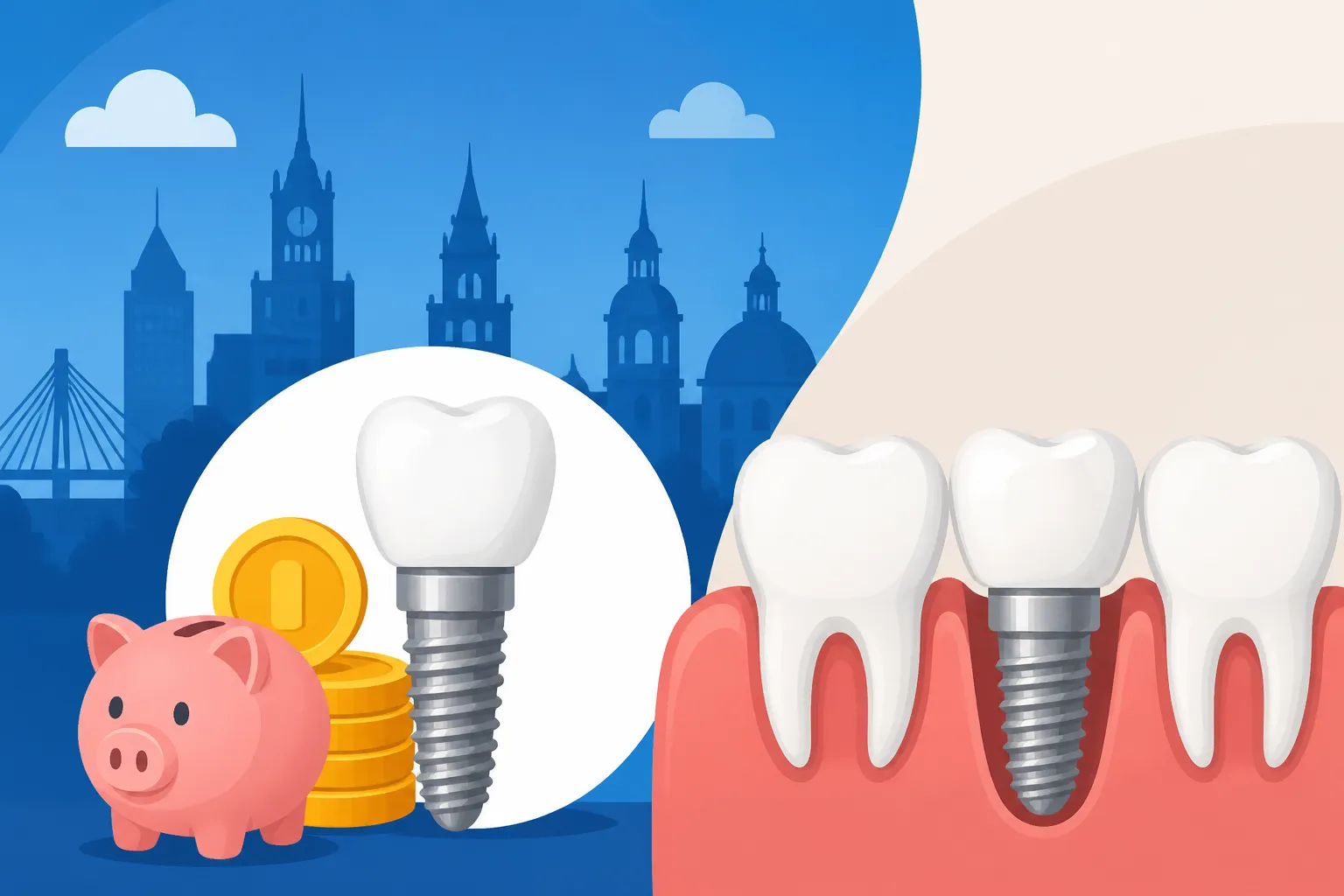
When you first start browsing the websites of dental clinics in Warsaw or Krakow, you might see a price tag like 2,500 PLN and think you have found the bargain of a lifetime. As someone who has spent years navigating the medical landscape here, I have to tell you: read the fine print. In the Polish dental market, "cost of an implant" often refers strictly to the titanium screw itself. To get a functional tooth, you need three distinct parts: the implant (the screw), the abutment (the connector), and the crown (the visible tooth).
A standard titanium implant from a reputable mid-range brand like Osstem or Dentium usually starts at around 2,500 PLN to 3,500 PLN. However, this is just the foundation. The abutment, which sits on top of the screw, can add another 600 PLN to 1,200 PLN depending on whether it is made of titanium or aesthetic zirconia. Finally, the crown—the part you actually chew with—ranges from 1,500 PLN for metal-ceramic to 2,500 PLN or more for high-end, translucent zirconia. When you add these up, a "complete" single tooth replacement typically lands between 5,000 PLN and 8,000 PLN.
It is also important to remember that Public vs Private Healthcare in Poland: Which Should Expats Choose? is a vital question when considering dental work. While the state system provides some basic care, it is crucial to understand that Understanding Dental Care Coverage Under the NFZ in Poland almost never includes dental implants. These are viewed as a "luxury" or "aesthetic" procedure by the National Health Fund, meaning you will be paying out of pocket at a private clinic. If you are an expat living here, you are likely already used to the high quality of private clinics like Medicover or LUX MED, but even within those networks, dental implants are usually billed as a separate specialty service.
Geographic Price Variations Across Poland
Just like the cost of rent, dental prices fluctuate depending on which city you choose. Warsaw is undeniably the most expensive. In the capital, you are paying for the high overhead of clinics located in trendy districts like Wilanów or Śródmieście. A full implant procedure here might lean toward the 8,000 PLN mark. If you head to cities with a high density of dental schools and clinics, such as Lublin or parts of Upper Silesia, you might find the same quality of work for 15-20% less.
Krakow and Wroclaw sit somewhere in the middle. These cities are hubs for dental tourism, meaning the clinics are incredibly well-equipped with English-speaking staff and the latest 3D imaging technology. Because of the competition, prices are competitive, but they are not the "cheapest" in the country. You are paying for a premium experience where the dentist likely spent their summer at a conference in Switzerland learning the latest techniques. For many expats, the slightly higher price in a major city is worth it for the ease of communication and accessibility.
Diagnostic and Consultation Fees
Before the surgeon even touches a drill, there is the diagnostic phase. You cannot simply walk in and get an implant. You will need a panoramic X-ray (around 100-150 PLN) and, almost certainly, a 3D CT scan (CBCT), which costs between 250 PLN and 450 PLN. This scan is non-negotiable; it allows the surgeon to see the density of your jawbone and the location of your nerves.
Many clinics offer the initial consultation for free if you agree to the treatment plan, but if you are just "shopping around," expect to pay 150 PLN to 300 PLN per visit. During this phase, you should also consider your overall health coverage. While an implant is a planned surgery, having a reliable safety net like SafetyWing is great for nomads and expats who are traveling between countries while completing their multi-stage dental work. SafetyWing provides that extra layer of security for unexpected medical issues that might arise during your stay in Poland.
The "Hidden" Clinical Procedures That Increase the Price
Most people go into a dental office expecting to pay for an implant and a crown, but they often forget that the "site" must be prepared. If you have been missing a tooth for several years, your jawbone may have thinned out. In this case, the dentist cannot simply screw an implant into nothing. You will need a bone graft.
Bone augmentation can cost anywhere from 1,500 PLN to 4,000 PLN depending on the amount of synthetic or natural bone material required. If the implant is being placed in the upper jaw, you might also need a "sinus lift." This is a surgical procedure that moves the sinus membrane upward to make room for the bone graft. A sinus lift is a significant surgery and can add 2,500 PLN to 5,000 PLN to your total bill. I have seen many expats get frustrated when their initial 5,000 PLN estimate doubles because their bone density wasn't up to par.
Extractions and Temporary Teeth
If the tooth being replaced is still in your mouth but is failing, you will need to pay for a "controlled extraction." This is usually more expensive than a standard tooth pulling because the dentist must be extremely careful not to damage the surrounding bone. Expect to pay 300 PLN to 600 PLN for this.
Furthermore, the implant process takes time—usually 3 to 6 months for the screw to fuse with the bone (osseointegration). Unless you want to walk around with a gap in your smile, you will need a temporary solution. A "flipper" (a removable temporary tooth) costs around 500 PLN, while a temporary crown fixed to the implant can cost 800 PLN to 1,200 PLN. These are the small costs that often get left out of the "all-inclusive" advertisements you see online.
Follow-up Visits and Medications
After the surgery, you will be prescribed antibiotics and painkillers. These are relatively cheap in Poland, but it is another thing to manage. You will also need to return to the clinic for a check-up to remove sutures and eventually for the "uncovering" of the implant. While these visits are often included in the initial surgery fee, you should always confirm this.
If you are coming to Poland specifically for this work, make sure you have accounted for the multiple trips. Implants are a marathon, not a sprint. Using a service like SafetyWing can be helpful if you are an international traveler making multiple entries into Poland over a six-month period, as it covers you for various medical emergencies that could disrupt your travel schedule.
| Item/Service | Estimated Cost (PLN) | Estimated Cost (USD – Approx) |
|---|---|---|
| Initial Consultation & 3D CT Scan | 400 – 700 PLN | $100 – $175 |
| Titanium Implant (Screw Only) | 2,500 – 4,000 PLN | $625 – $1,000 |
| Standard Abutment | 600 – 1,200 PLN | $150 – $300 |
| Zirconia Crown (Final Tooth) | 2,000 – 3,000 PLN | $500 – $750 |
| Bone Grafting (if needed) | 1,500 – 4,000 PLN | $375 – $1,000 |
| Sinus Lift (if needed) | 2,500 – 5,000 PLN | $625 – $1,250 |
| Total (Standard Case) | 5,500 – 8,500 PLN | $1,375 – $2,125 |
Comparing Implant Brands and Material Quality
In the world of dentistry, brand names matter. Poland offers a wide range of options, from budget-friendly Korean and Israeli brands to "Gold Standard" Swiss and American brands. If you are a young expat who plans to have this implant for the next 40 years, I highly recommend looking into premium brands like Straumann or Nobel Biocare.
Premium implants often come with a lifetime guarantee and are supported by decades of clinical research. They also use specialized surfaces that speed up the healing process. However, they come with a "premium" price tag, usually adding 1,500 PLN to 2,000 PLN to the base cost of the screw. The benefit of these brands is that if you move to another country in five years and the implant has an issue, any dentist in London, New York, or Berlin will have the specific tools needed to fix it.
The Rise of Zirconia Implants
While traditional implants are made of titanium, there is a growing trend toward zirconia (ceramic) implants. These are marketed as "metal-free" and are often preferred by patients with metal sensitivities or those who are concerned about the gray shadow that titanium can sometimes cast through thin gum tissue.
Zirconia implants are significantly more expensive in Poland, often starting at 5,000 PLN for the screw alone. They also require a surgeon with specific experience in ceramic placement, as the material is less forgiving than titanium. Most clinics in Poland will offer titanium as the default, but if you want the "aesthetic peak," be prepared to pay a 40-50% surcharge.
Warranty and Long-Term Care
One of the best things about the Polish dental market is the competitive warranty system. Most reputable clinics will offer a 5-year to 10-year warranty on the mechanical parts of the implant. However, these warranties are usually conditional. You must return to the clinic every 6 months for a professional cleaning and check-up.
If you miss these appointments, the warranty is often voided. This is a crucial detail for "dental tourists" who don't actually live in Poland. If you are an expat, this is easier to manage, but you should still factor in The Cost of Healthcare in Poland: A Complete Breakdown for Foreigners (2026) when planning your annual health and dental budget. Regular maintenance is the only way to ensure your 8,000 PLN investment doesn't end up failing due to "peri-implantitis" (the dental version of gum disease for implants).
Navigating the Logistics for Expats in Poland
For those of us living here, the biggest hurdle isn't just the price; it's the administration. When you go for a surgery this significant, you want to make sure your How to Set Up an Internetowe Konto Pacjenta (IKP) Patient Account is ready. While private dental records aren't always automatically synced to the IKP, many modern clinics are moving in that direction, allowing you to see your prescriptions and referrals in one place.
If you are currently working on a The Expat Guide to Polish Work Visas and Permits (2027), you might be wondering if your employer-provided medical subscription covers any of this. Generally, companies like LUX MED or Medicover offer "dental packages," but these usually only cover cleanings, fillings, and perhaps a discount on more advanced work. It is very rare for a standard employee package to cover the full cost of an implant. Always check your specific plan details before booking that first CT scan.
Communication and Language Barriers
While most dental surgeons in big cities speak excellent English, the receptionists and dental assistants might not. This can lead to confusion regarding the final bill or the post-operative instructions. I always recommend asking for a written "Treatment Plan" (Plan Leczenia) in English. This document should list every single cost, from the screw to the sutures.
If you are feeling overwhelmed by the medical jargon, you might want to read up on Navigating the Polish Healthcare System: An Expat's Roadmap (2027) to get a better handle on how medical services are structured here. Knowing the difference between a "Stomatolog" (general dentist) and a "Chirurg Szczękowy" (maxillofacial surgeon) can save you a lot of time. For an implant, you specifically want an implantologist or a surgeon, not just a general dentist who "also does implants."
Insurance and Payment Plans
For many expats, paying 8,000 PLN upfront is a big ask. Many Polish clinics now offer "MediRaty," which is a medical financing system. It allows you to break the cost down into monthly installments. However, as a foreigner, getting approved for financing can be tricky if you don't have a stable Understanding Polish Employment Contracts and Worker Rights (2027) or a long-term residence permit.
If you are a digital nomad or between jobs, you won't have access to these local payment plans. In these cases, having a global health perspective is vital. While SafetyWing is excellent for travel and medical emergencies, it doesn't cover elective dental implants. However, by saving money on your general health insurance through a nomad-friendly provider like SafetyWing, you can move those funds into your "dental fund" to pay for your Polish implants in cash. Most clinics will even give you a 5% discount if you pay for the whole procedure upfront in cash or by bank transfer.
Final Thoughts on Quality and Value
Is it worth getting a dental implant in Poland? Absolutely. The quality of care in high-end Polish clinics is on par with, and often exceeds, what you would find in Western Europe or North America. The surgeons here are highly trained, and because they perform so many of these procedures for international patients, they are incredibly efficient.
Just remember that the "cost" is more than just a number on a website. It's the cost of the CT scans, the bone grafts, the temporary teeth, and the multiple trips to the clinic. If you go in with your eyes open and a detailed treatment plan in hand, you will end up with a world-class smile for a fraction of the price you would pay back home.
Disclaimer
The information provided in this guide is for informational purposes only and does not constitute professional medical or financial advice. Prices and regulations in Poland are subject to change. Always consult with a qualified dental professional and your insurance provider before undergoing any medical procedures.