How to Set Up Waste and Recycling Collection (Śmieci) in Poland
Navigating waste and recycling in Poland can feel like trying to solve a Rubik's Cube blindfolded, especially when you're just getting settled in. The local system, known as śmieci, often baffles newcomers with its specific segregation rules and local variations. This comprehensive guide is here to demystify everything from the color-coded bins to the tricky administrative declarations, ensuring you can manage your household waste like a seasoned expat.
The Polish "Śmieci" System: An Expat's First Encounter
One of the first things you'll realize when you move to Poland is that waste management isn't a "set it and forget it" kind of deal. Unlike some countries where you might choose a private company, here it's largely a communal responsibility. The system, affectionately (or perhaps exasperatedly) known as śmieci, is designed to promote recycling and reduce landfill waste, but it comes with its own set of rules that can be a steep learning curve for foreigners.
Understanding the Local Authority's Role
In Poland, waste management falls under the purview of your local gmina (municipality or commune). This means that the specific rules, collection schedules, and even the nuances of what goes into which bin can vary slightly from city to city, or even from one district to another within the same large metropolis. It’s not uncommon to find that what was acceptable in Warsaw might have a different procedure in Krakow or Gdańsk. This localized approach is often a source of initial confusion for expats, who might be used to a more standardized national system.
The gmina is responsible for organizing the collection of municipal waste. They do this by contracting specialized waste management companies. As a resident, you generally don't get to choose your provider; it's pre-determined by your local council. Your role is primarily to comply with the segregation rules and ensure your waste is ready for collection according to the schedule. This centralized system aims for efficiency but can feel opaque if you're not used to checking local government websites or deciphering Polish regulations.
The Mandatory Segregation
At the heart of Poland's śmieci system is mandatory waste segregation. This isn't just a suggestion; it's a legal requirement, and non-compliance can lead to higher fees or even fines. The fundamental principle is simple: sort your waste into specific categories, each designated by a different color bin. This commitment to sorting is a nationwide effort to meet EU recycling targets and promote environmental sustainability.
The idea is that by separating waste at the source – your home – the recycling process becomes much more efficient, and fewer valuable resources end up in landfills. Expect to have multiple bins or bags in your home, which can be a spatial challenge in smaller apartments. Getting into the habit early is key, as trying to quickly sort everything just before collection day will invariably lead to mistakes and frustration.
Who's Responsible: Landlord, Administrator, or You?
When it comes to the nitty-gritty of waste collection, the lines of responsibility can sometimes feel blurry, particularly for newcomers. Generally, if you're renting an apartment, your landlord or the building's administrator (if it's a multi-unit dwelling) is the one responsible for the administrative setup of the waste collection service with the gmina. This includes submitting the initial Deklaracja Śmieciowa (waste declaration) and often handling the payment of the opłata za śmieci (waste fee) as part of your czynsz (building and administration fees). For more on these costs, you might want to look into understanding Building and Administration Fees (Czynsz) in Poland.
However, while the landlord or administrator handles the service contract and fees, you, the resident, are solely responsible for the actual segregation of waste within your apartment and placing it into the correct communal bins. This means understanding the rules, diligently sorting your trash, and taking it to the designated collection points. If you live in a house, you might have direct responsibility for both the declaration and the physical sorting. It's crucial to clarify these roles from the outset, ideally when you're signing your rental contract (Umowa Najmu) in Poland. Don't be shy about asking your landlord or administrator for a clear breakdown of the local segregation rules.
The Quintet of Bins: What Goes Where?
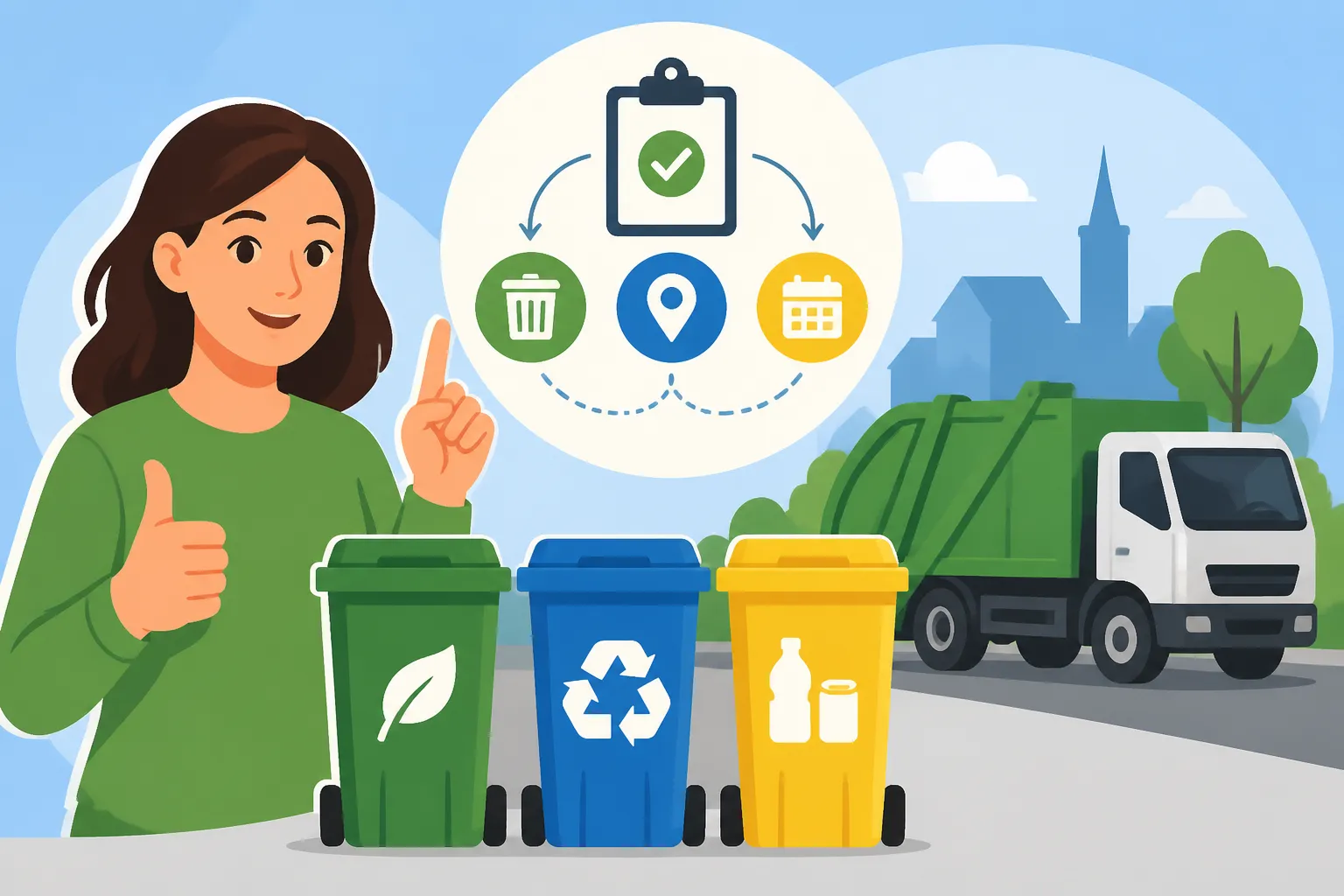
The Polish waste segregation system typically revolves around five main categories, each represented by a specific color. While this simplifies the process, knowing precisely what can and cannot go into each bin is where the real challenge lies. Getting it wrong can lead to your building being charged higher fees for improperly segregated waste, or worse, your trash being refused.
Papier (Paper): Blue Bin Basics
The blue bin is designated for papier – paper and cardboard. This category includes a variety of items you'd expect, like newspapers, magazines, advertising flyers, cardboard boxes (flattened, please!), paper packaging, and school notebooks. It's generally a straightforward category, but there are some important exceptions and best practices to keep in mind to ensure effective recycling.
The golden rule for paper is that it should be relatively clean and dry. Greasy pizza boxes, for example, or heavily soiled paper plates often cannot be recycled and should go into the mixed waste. Similarly, waxed paper, laminated paper, or paper coated with plastic (like many juice cartons, although some municipalities allow them in yellow) are usually not accepted here. Even things like used tissues or paper towels, due to their moisture content and potential contamination, belong in mixed waste. Always flatten your cardboard boxes to save space in the bin – your building administrator and fellow residents will thank you for it.
Metale i Tworzywa Sztuczne (Metals and Plastics): Yellow Bin Essentials
The yellow bin is arguably the busiest and most confusing bin for many expats, as it collects both metale (metals) and tworzywa sztuczne (plastics), often alongside multi-material packaging. This is where you'll dispose of plastic bottles (squashed to save space!), plastic packaging from food products, plastic bags, metal cans (from food or drinks), aluminum foil, and often, opakowania wielomateriałowe (multi-material packaging) like Tetra Pak cartons for milk or juice.
The key to effective sorting here is cleanliness. While you don't need to wash items thoroughly, they should be relatively empty and rinsed of major food residues. For instance, a yogurt pot should be scraped out. Common mistakes include putting dirty plastic cutlery, plastic toys (these are usually mixed waste due to composite materials), or items made of different materials that are hard to separate (like a metal cap firmly attached to a plastic tube) into this bin. Styrofoam packaging, such as that used for electronics, typically also goes into mixed waste, unless your gmina specifically states otherwise or has a dedicated collection point.
Szkło (Glass): Green Bin Guidelines
The green bin is for szkło – glass. This category is generally for glass bottles and jars, such as those from beverages, food preserves, or cosmetics. Most municipalities in Poland accept both colorless (white) and colored glass (brown, green) in the same green bin. This simplifies things somewhat compared to countries that require further separation by color.
Again, the principle of cleanliness applies: glass items should be empty and rinsed. You usually don't need to remove labels, but metal caps and plastic lids should be removed and placed in the yellow bin (or mixed, if too small). Critically, not all glass is created equal, and many common glass items are not accepted in the green bin. This includes drinking glasses, ceramics, porcelain, mirrors, window panes, heat-resistant dishes (like Pyrex), light bulbs, and car windshields. These items have different chemical compositions and melting points, which can contaminate the recycling stream. Such items typically belong in mixed waste or require special disposal at a PSZOK (Punkt Selektywnej Zbiórki Odpadów Komunalnych).
Bio (Biodegradable/Organic): Brown Bin Particulars
The brown bin is dedicated to bio waste – biodegradable or organic materials. This is where your food scraps, garden waste, and other compostable materials go. Typical contents include fruit and vegetable peels, leftover fruits and vegetables, coffee grounds, tea bags, eggshells, and garden waste like leaves, grass clippings, and small twigs. This waste stream is crucial for producing compost and reducing the amount of organic material going to landfills.
One of the most confusing aspects of the bio bin is the variation in what's accepted, especially regarding meat and bones. In many Polish cities, particularly larger ones like Warsaw, meat, bones, cooked food, and animal waste are not accepted in the brown bio bin and must go into odpady zmieszane (mixed waste). This is often due to pest control concerns and the specific composting processes used. However, some smaller municipalities might have different rules. It’s absolutely vital to check your local gmina regulations for this category. Biodegradable bags are often encouraged or even required for bio waste, and these are readily available in most Polish supermarkets.
Odpady Zmieszane (Mixed Waste/Residual): Black Bin Overview
Finally, we arrive at the black bin, for odpady zmieszane – mixed waste, also known as residual waste. This is essentially the catch-all for anything that cannot be placed into the other segregated bins. Think of it as your last resort. If you've diligently sorted your paper, plastics/metals, glass, and bio waste, what's left goes here. This typically includes items like dirty plastic packaging, ceramics, porcelain, broken mirrors, old clothes (that aren't suitable for donation), styrofoam, non-recyclable plastic items (like toothbrushes or plastic toys), ashes, and any food waste not accepted in the bio bin (such as meat or cooked food in many areas).
The amount of mixed waste you generate should ideally be minimal if you're segregating correctly. This bin is the most expensive to process, as it often goes to landfills or incineration. Therefore, reducing your mixed waste is a direct way to contribute to a more sustainable system and potentially help keep communal waste fees lower. Remember, even items that seem recyclable but are contaminated (e.g., a paper cup full of coffee residue) often end up here.
Navigating Registration and Fees (Opłata za Śmieci)
Once you understand what goes where, the next hurdle is the administrative side: registering for the service and paying the fees. This isn't usually a direct transaction like setting up your electricity or water, but rather a declaration process that feeds into your local gmina's billing system. Getting this right is crucial to avoid issues and ensure your waste is collected legally. If you're currently in the process of setting up utilities, you might also find guides on How to Set Up Electricity in Your Polish Home or How to Set Up Water, Gas and Heating in Poland useful.
The Declaration (Deklaracja Śmieciowa)
The cornerstone of Poland's waste collection system is the Deklaracja o wysokości opłaty za gospodarowanie odpadami komunalnymi, or simply Deklaracja Śmieciowa (Waste Declaration). This is a formal document submitted to your local urząd gminy (municipal office) or urząd miasta (city office) that states how many people live at your address and confirms your commitment to segregating waste. It's the basis upon which your waste collection fee is calculated.
If you're renting, your landlord or building administrator usually handles the initial submission of this declaration. However, it's vital to be aware of it because any changes in your household – like a new person moving in or someone moving out – require an update to this declaration. Failing to update it can lead to discrepancies and potential fines, or an incorrect fee calculation. If you're a homeowner, you'll be responsible for submitting this yourself. The declaration explicitly asks you to state that you will segregate your waste, affirming your understanding of the system's requirements. This document is a critical step, often linked to your official registration of residence, known as zameldowanie. For more details on this, check out our guide on How to Register Your Residence (Zameldowanie) at the Urząd in Poland.
Calculating Your Waste Fee
The opłata za śmieci (waste fee) isn't a fixed national rate; it's determined by each individual gmina. The calculation method can vary, but the most common factor is the number of people residing at a given address. So, the more people living in your apartment or house, the higher your monthly fee will be. Some municipalities might also consider the amount of water consumed, assuming a correlation between water usage and waste production, though this is less common for residential properties.
The fee is generally lower if you declare that you will diligently segregate your waste. If you choose not to segregate (which is rare and often comes with substantial penalties), or if inspections reveal you are not segregating properly, your fee can be significantly higher. For example, in Warsaw, as of recent checks, the fee for segregated waste might be around 85 PLN per person per month. These rates are subject to change, so always check the official website of your local urząd gminy or urząd miasta for the most current figures applicable to your address. This fee is often incorporated into your general living costs, so understanding the overall cost of living in Poland for expats is important.
Payment Methods and Schedules
Once your Deklaracja Śmieciowa has been submitted and processed, you'll be issued with a unique bank account number to which you should transfer your monthly or quarterly waste fee. Payment schedules typically involve monthly or quarterly installments. You won't usually receive a physical bill in the mail for this; it's your responsibility to remember to pay based on the information provided by your gmina.
Most expats find it easiest to set up a recurring bank transfer (a zlecenie stałe) from their Polish bank account to ensure timely payments. If you're just getting your finances sorted, remember that opening a bank account at a Polish bank as a foreigner is one of your first steps. Your building administrator will often collect this fee from you as part of your czynsz and then remit it to the gmina on behalf of the building. If you're a homeowner, you'll be paying directly. Missing payments can lead to interest charges and eventually enforcement actions, so it's essential to keep track of these obligations.
Beyond the Bins: Special Waste and Recycling Initiatives
While the five colored bins cover the bulk of household waste, there are numerous items that simply don't fit into these standard categories. These require special disposal methods, and ignoring them can lead to environmental harm or personal inconvenience (and fines). Poland has a system in place for these odpady problemowe (problematic waste), and knowing how to navigate it is a sign of a truly well-adapted expat.
Problematic Waste (Odpady Problemowe)
This category is vast and includes anything that can't be safely or appropriately recycled in the standard bins due to its size, composition, or hazardous nature. Think electronics, batteries, old medicines, paints, solvents, chemicals, expired pesticides, used oils, and even car tires. Disposing of these items improperly can be harmful to the environment and human health.
The primary solution for problematic waste is the Punkt Selektywnej Zbiórki Odpadów Komunalnych, or PSZOK. These are communal selective waste collection points run by your gmina. You can transport your problematic waste to these centers, often free of charge for residents, where they will be properly processed or stored for specialized recycling. Each gmina has its own PSZOK (or several), and their operating hours and accepted materials vary, so always check your local council's website. For example, in Warsaw, you can find several PSZOK locations listed on the city's official waste management portal. Knowing about these facilities is key to responsible waste disposal.
Clothing and Textile Recycling
Those old jeans, worn-out t-shirts, or clothes that no longer fit don't belong in the black mixed waste bin. Instead, Poland has a well-established system for clothing and textile recycling. Throughout cities and towns, you'll find large, often grey or red, bins specifically for used clothes and shoes. These are typically managed by charities like PCK (Polish Red Cross) or by private companies that sort and redistribute wearable items or recycle fabrics.
Before donating, ensure clothes are clean and dry, and preferably bagged to protect them. Shoes should be paired. Items that are heavily damaged, stained, or simply unwearable for donation (e.g., extremely ripped clothing, single shoes) should generally go into mixed waste, as they can contaminate the textile recycling stream. However, for items that still have life in them, these collection bins are an excellent way to give them a second chance and support sustainable practices. If you're moving house, companies like Sirelo might offer guidance on how to manage large volumes of personal items, including clothes you might want to donate or dispose of before your move.
Bulk Waste (Odpady Wielkogabarytowe)
Got an old sofa, a broken wardrobe, or a discarded mattress? These odpady wielkogabarytowe (bulk waste items) are too large for your regular mixed waste bin and cannot be simply left on the street. Fortunately, Polish municipalities organize special collection days for such items. These are typically scheduled a few times a year for specific neighborhoods, and residents are informed in advance about the dates. On these designated days, you can place your bulk waste items next to your regular bins, and a separate truck will collect them.
Alternatively, some gminas allow you to arrange a special, on-demand collection for a fee, or you can transport these items yourself to a PSZOK. Always check your local gmina's website for the current schedule and procedures for bulk waste collection. Improper disposal of large items can result in fines, so it's always worth taking the time to understand the correct process. This is particularly relevant if you're furnishing a new apartment or getting rid of old furniture – something many expats face when moving into or out of a new place.
Tips for Expat Success and Common Pitfalls
Moving to a new country like Poland comes with its fair share of administrative challenges, and the śmieci system is no exception. It's easy to feel overwhelmed by the rules, especially when they differ from what you're used to. But with a bit of proactive effort and understanding, you can master the Polish way of waste management.
Language Barriers and Local Nuances
One of the biggest hurdles for expats in Poland is the language barrier. Official gmina websites, waste calendars, and specific sorting instructions are almost exclusively in Polish. While online translation tools like Google Translate are invaluable, they don't always capture the nuances of official terminology. This can lead to misunderstandings, especially when it comes to specific types of packaging or materials. For example, the difference between opakowania wielomateriałowe (multi-material packaging) and tworzywa sztuczne (plastics) might not always be crystal clear through a direct translation.
Furthermore, as mentioned earlier, local rules can differ. What's considered bio waste in one town might not be in another. Relying solely on general information can lead to errors. It's highly recommended to seek out official, current information for your specific gmina. Don't be afraid to ask Polish friends, colleagues, or even trusted online expat groups for clarification. Having a reliable mobile data plan, perhaps through a travel eSIM like Airalo, can be a lifesaver for looking up information on the go when you're standing in front of the bins, scratching your head.
Finding Information in English
While direct English translations of all gmina waste regulations are rare, there are ways to get the information you need. Many city councils, particularly in larger cities like Warsaw, Krakow, or Wroclaw, have sections of their websites dedicated to foreign residents or have some basic information in English. Look for sections titled "For Foreigners," "Residents," or "Environmental Protection."
Another excellent resource is local expat forums and Facebook groups. These communities are often brimming with seasoned expats who have already navigated these waters and are willing to share their experiences and direct you to relevant information. Searching for "waste segregation [your city name] expat" can yield surprising results. Sometimes, your building administrator might even have printed English guidelines, especially in buildings with a high number of foreign residents. Don't underestimate the power of collective expat wisdom!
Dealing with Building Administrators (Administrator Budynku)
In multi-unit buildings, your administrator budynku (building administrator) or wspólnota mieszkaniowa (housing community) is often your primary point of contact for anything related to communal services, including waste collection. They are typically responsible for liaising with the gmina and the waste collection company, ensuring there are enough bins, and handling the overall building's waste fees.
Developing a good relationship with your administrator is vital. They can clarify specific rules for your building, provide the collection schedule, and inform you about any changes. If you notice issues like overflowing bins or confused neighbors, it's usually best to approach the administrator. Be patient, as they often manage many properties and might have limited English. A polite email (perhaps drafted with the help of a Polish-speaking friend or translator) is often more effective than an impromptu conversation. Remember, they are there to help ensure the building runs smoothly, and proper waste management is a big part of that.
Making the System Work for You: Practical Hacks
Understanding the theory is one thing, but making the śmieci system seamlessly integrate into your daily life is another. As an expat, you might not have been raised with five different bins in your kitchen, so setting up your home efficiently and leveraging available tools can make a world of difference.
Setting Up Your Home Recycling Station
Polish apartments, especially older ones, aren't always designed with multiple waste bins in mind. This can be a challenge when you suddenly need space for papier, metale i tworzywa sztuczne, szkło, bio, and odpady zmieszane. A practical solution is to create a dedicated "recycling station" in your kitchen or utility area. This might involve a set of smaller, labeled bins that you regularly empty into the larger communal bins outside.
Consider buying stackable recycling bins or a single unit with multiple compartments. Many Polish supermarkets (like Lidl, Biedronka, or Auchan) and home improvement stores (like Castorama or OBI) sell practical and often affordable recycling solutions. For bio waste, a small kitchen caddy with a lid is essential to prevent odors. Make it easy for yourself and everyone in your household to sort correctly, so it becomes a habit rather than a chore. Consistency is key to avoiding those "oops, which bin?" moments.
Essential Apps and Online Resources
In an increasingly digital world, technology can be your best friend when it comes to managing waste in Poland. Many gminas have dedicated sections on their official websites (look for Gospodarka Odpadami or Śmieci) where you can find detailed segregation rules, collection schedules for your specific address, and information about PSZOK locations. Some larger cities even offer mobile apps. For example, Warsaw has an app that can provide personalized collection calendars and sorting reminders.
Beyond official channels, there are general waste sorting apps available (often in Polish, but with visual aids) that can help identify which bin an item belongs to. A quick search on your phone's app store for "segregacja odpadów" might yield useful results. Bookmarking your gmina's waste management page on your browser or adding the collection schedule to your digital calendar can save you a lot of last-minute scrambling. Remember to utilize your mobile data, perhaps with a trusty plan from Airalo, to access these resources on the go.
Reducing Waste and Embracing Zero-Waste Principles
Ultimately, the easiest way to deal with waste is to produce less of it in the first place. Embracing more sustainable and zero-waste principles can significantly simplify your śmieci management. This means being mindful of your purchases: choosing products with minimal packaging, opting for reusable bags and containers when shopping (a common practice in Poland), buying in bulk, and even considering making some items from scratch to avoid packaged versions.
Many Polish cities are seeing a rise in sklepy zero waste (zero-waste shops) where you can buy groceries, cleaning supplies, and personal care products without plastic packaging. By consciously reducing your overall waste footprint, you'll find yourself with fewer items to sort and dispose of, making the entire śmieci system feel much less daunting. It’s a win-win: good for the environment, and good for your peace of mind as an expat navigating a new system. If you're moving to Poland, you'll also be thinking about your overall possessions. Companies like Sirelo can help you plan your move, which includes thinking about what you bring and what you might want to responsibly declutter before you even arrive, reducing waste from the start.
| Waste Category | Bin Color | Typical Contents | Common Exclusions/Errors |
|---|---|---|---|
| Papier (Paper) | Blue | Newspapers, magazines, cardboard boxes, paper packaging, school notebooks | Greasy pizza boxes, used tissues, wet paper, waxed paper, laminated paper |
| Metale i Tworzywa Sztuczne (Metals & Plastics) | Yellow | Plastic bottles, plastic packaging, metal cans, aluminum foil, Tetra Pak cartons | Dirty plastic containers, plastic toys, styrofoam, batteries, aerosols, rubber items, electronics |
| Szkło (Glass) | Green | Glass bottles, glass jars (empty & rinsed, clear/colored) | Drinking glasses, ceramics, porcelain, mirrors, window panes, light bulbs, heat-resistant glass |
| Bio (Biodegradable/Organic) | Brown | Fruit & vegetable scraps, coffee grounds, tea bags, eggshells, garden waste | Meat, bones, cooked food, animal waste (check local gmina rules!), ash, oils |
| Odpady Zmieszane (Mixed Waste) | Black | Everything else that cannot be segregated into other bins | Anything that clearly belongs in one of the other segregated bins |
Disclaimer
The information provided in this guide is intended for general informational purposes only and is subject to change. Waste management regulations in Poland are determined at the municipal (gmina) level and can vary significantly from one location to another. While we strive to provide accurate and up-to-date information, readers should always consult the official website or contact their local urząd gminy or building administrator for the most current and specific guidelines applicable to their residence. This guide does not constitute legal or professional advice.