How to Use the Public Transport Ticket System in Polish Cities
One of the first things that hits you when you move to a new Polish city, whether it’s the bustling streets of Warsaw or the charming lanes of Krakow, is the public transport. It's fantastic, really, once you get the hang of it – efficient, widespread, and generally on time. But oh, that initial hurdle of figuring out the ticket system! It can feel like navigating a maze blindfolded, with different zones, validation rules, and payment options that vary from city to city. This guide is here to untangle that knot, offering a veteran expat’s perspective to help you understand the public transport ticket system in Polish cities, making your daily commute and weekend explorations a breeze.
Understanding the Basics: Zones, Types of Transport, and Ticket Validity
When you first step onto a tram or bus in Poland, it’s easy to feel a bit overwhelmed. You're trying to figure out if you even have the right ticket, let alone how to use it. The key to unlocking this mystery lies in understanding the foundational concepts: the city zones, the various modes of transport, and the crucial element of ticket validity. Once you grasp these, the rest falls into place, I promise.
Navigating City Zones: When and Where They Apply
Most major Polish cities operate on a zone system, particularly for their larger metropolitan areas. This is usually pretty straightforward within the city limits, but things can get a little tricky if you’re venturing out to the suburbs or surrounding towns. In Warsaw, for instance, you have two main zones: Zone 1 (Strefa 1) covers the entire administrative area of the capital city, including the vast majority of residential areas, business districts, and tourist attractions. Then there's Zone 2 (Strefa 2), which extends beyond Warsaw's city boundaries into adjacent municipalities that are part of the broader metropolitan area, such as Piaseczno or Legionowo.
Understanding these zones is paramount because your ticket price and validity directly depend on which zones your journey crosses. If you're staying within the city proper, a Zone 1 ticket is all you need. However, if your journey starts in Zone 1 and ends in Zone 2, or vice versa, you’ll need a Zone 1+2 ticket. Ignorance of the zone system is no excuse if a ticket inspector catches you with the wrong ticket, and believe me, they do check. Always double-check your destination's zone, especially if you're taking regional buses or trains, which might fall under a different tariff entirely. Sometimes even Google Maps or local transport apps will indicate the zones for your planned route, which is a lifesaver.
Types of Public Transport in Poland
Poland boasts a comprehensive public transport network, especially in its larger cities. You’ll mostly be relying on buses and trams, but metros and urban trains also play a significant role in some urban centers. In cities like Warsaw, the metro is a fast and efficient way to cross town, while trams often offer a more scenic, albeit sometimes slower, route through the city center. Buses, on the other hand, are the workhorses, reaching nearly every nook and cranny, including night lines that run when other services have stopped.
Beyond the city-specific transport, you'll also find regional train services, primarily run by operators like Koleje Mazowieckie around Warsaw, or Polregio and PKP Szybka Kolej Miejska (SKM) in various regions, connecting cities with their surrounding towns and even other major cities. These usually have their own separate ticketing systems or integrated tickets if your city has an agreement. It’s worth noting that while your city public transport ticket generally won't cover long-distance train travel, some urban sections of these regional train lines might be accessible with your standard city tickets, especially in metropolitan areas with integrated systems, like the Szybka Kolej Miejska (SKM) in the Gdańsk-Sopot-Gdynia Tri-City area. Always check the specific operator's rules; it’s better to be safe than sorry and avoid an unexpected fine.
Decoding Ticket Validity: Time, Single-Ride, and Transfers
This is where many expats initially stumble. It's not just about having a ticket; it's about having the right ticket and using it correctly. Generally, Polish cities offer a few main types of tickets:
- Single-Ride Tickets (Bilety Jednorazowe): These are straightforward and cover one journey, regardless of duration or transfers, within a specific zone. You validate it once, and you’re good until you exit the vehicle. However, these are becoming less common in favour of time-based tickets.
- Time-Based Tickets (Bilety Czasowe): These are incredibly popular and often the most cost-effective for short journeys involving transfers. You buy a ticket for a certain duration – typically 20, 30, 75, 90, or 120 minutes. Once validated, you can transfer between different lines and even different modes of transport (bus, tram, metro) within the designated zones for the specified time. For example, a 75-minute ticket in Warsaw means you can hop on and off as many times as you like within 75 minutes of validation. Just remember, the clock starts ticking the moment you validate it.
- Day Passes/Multi-Day Passes: For tourists or those planning a lot of travel in a short period, these can be a godsend. You can get 24-hour, 72-hour, or even weekend passes that offer unlimited travel within specified zones for their duration. These are especially useful for exploring new cities like Krakow or Wroclaw without constantly worrying about buying new tickets.
When you're trying to figure out which ticket to buy, consider how many stops you're going, if you need to change lines, and how long you anticipate the journey taking. If you're going just one or two stops on a single bus, a 20-minute ticket might be perfect. But if you're crossing the city with two transfers, a 75-minute or 90-minute ticket is a safer bet. Don't be afraid to estimate a little extra time, especially during peak hours.
Where to Buy Tickets: Physical vs. Digital Options
Gone are the days when you could only buy tickets from a grumpy kiosk vendor or directly from the bus driver (though that option still exists in some places, often with a surcharge and only for single-use tickets). Poland has embraced modernity, offering a plethora of ways to purchase your public transport tickets, making it much more convenient for expats and tourists alike.
Traditional Purchase Points: Kiosks, Ticket Machines, and Drivers
Despite the digital revolution, the old-school methods still hold strong and are often a fallback when your phone battery dies or the app decides to act up. "Ruch" kiosks (a common chain in Poland, though others exist too) and small convenience stores often sell physical tickets. These are great if you prefer a tangible ticket, and the staff can usually guide you on which one to buy, even if there's a slight language barrier. Just look for the "Bilety" sign.
However, the most common physical purchase point in major cities are the omnipresent ticket machines, or biletomaty. You'll find these at most major tram and bus stops, as well as inside trams and buses themselves. These machines are a dream come true, offering multi-language options (Polish, English, German, Ukrainian, etc.), allowing you to buy various types of tickets for different zones and durations. You can pay with cash or, more conveniently, with a debit or credit card. Just be aware that the machines inside vehicles might sometimes only accept card payments or have limited cash functionality, so it's always good to have a card handy. Using these machines is generally very intuitive, guiding you step-by-step through the purchase process.
As for buying from the driver, this is generally discouraged for anything other than a last resort. Drivers usually only sell single-use tickets, often at a slightly higher price, and they might not have change. It also holds up the entire bus, which won't endear you to your fellow passengers. Save this for true emergencies.
The Rise of Digital Ticketing: Apps and Contactless Payments
For most expats, digital ticketing has become the go-to method, offering unparalleled convenience. There are several popular mobile apps that allow you to purchase and activate tickets directly from your smartphone. Major players include Jakdojade, moBiLET, and SkyCash. These apps often integrate journey planning as well, so you can plan your route and buy the ticket all in one place.
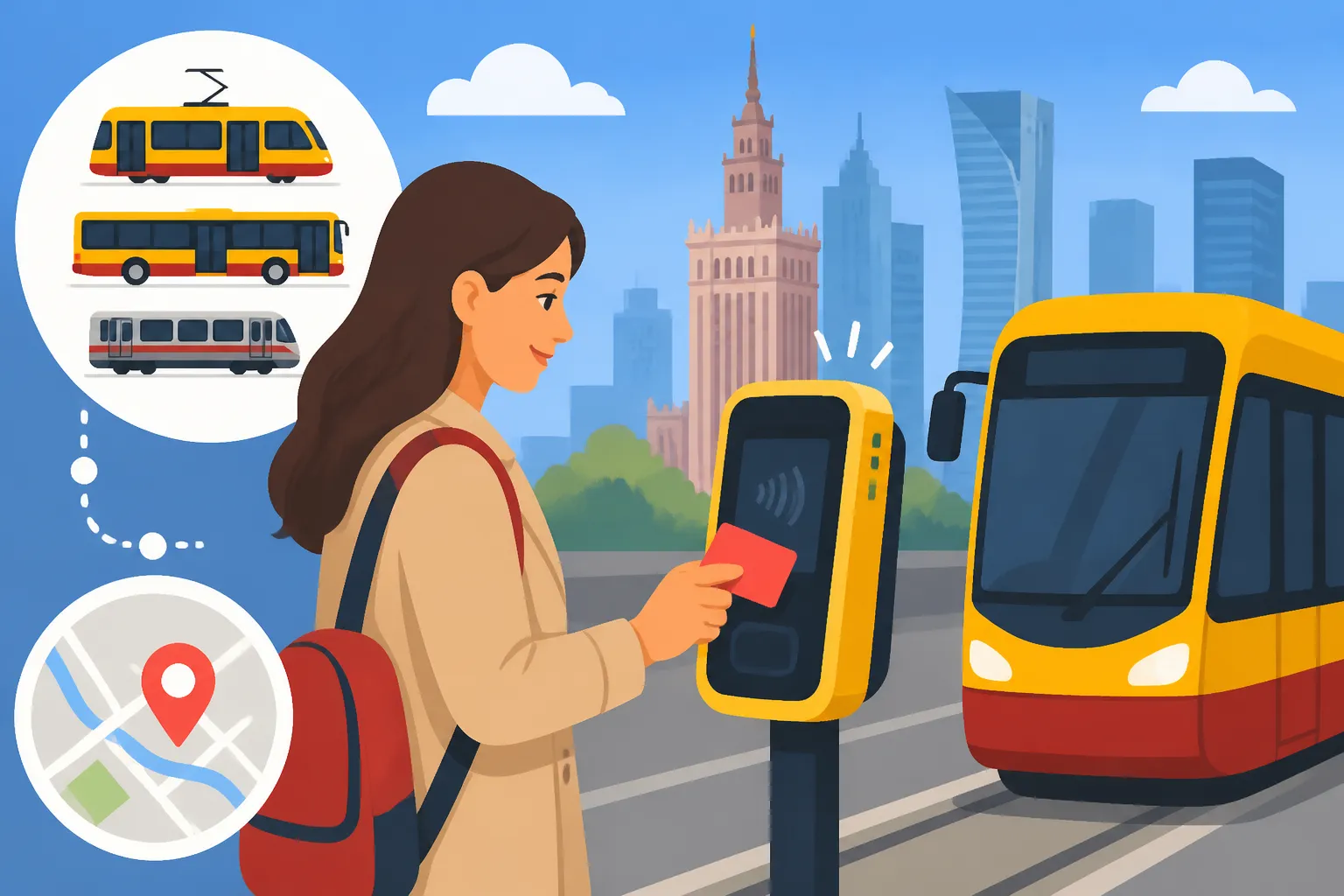
The process is usually simple: download the app, register an account, link a payment method (card, Blik, or top-up your account), select your city, choose the ticket type, and then activate it when you board the vehicle. Activation is critical – simply buying the ticket isn't enough; it needs to be validated within the app to be valid for travel. Inspectors will ask to see your phone with the active ticket. Another increasingly popular option is contactless payment directly on board. Many newer trams and buses, especially in Warsaw, Krakow, and Gdansk, have card readers where you can tap your debit/credit card or even your phone/watch to purchase a 20 or 30-minute ticket. It's incredibly fast and eliminates the need for physical tickets or pre-purchased digital ones. This is truly a game-changer for those quick, spontaneous journeys. For seamless connectivity to use these apps and other online services while you’re settling in, consider an eSIM from a provider like Airalo, so you're not scrambling for Wi-Fi. It’s one less thing to worry about when you're already juggling so much.
Specific City Examples: Warsaw, Krakow, and Gdansk
While the general principles apply across Poland, each city's system has its nuances.
- Warsaw (ZTM): The Zarząd Transportu Miejskiego (ZTM) system is highly integrated. You'll find ticket machines at nearly every stop and on most vehicles. The Warszawska Karta Miejska (Warsaw City Card) is their long-term solution, which you load with passes. For digital, apps like Jakdojade, moBiLET, and SkyCash are widely used, and contactless payments on board are very common. They also have a popular Veturilo bike-sharing scheme, though it’s a separate system.
- Krakow (MPK): The Municipal Transport Company (MPK) in Krakow also has an excellent network. Ticket machines are plentiful. Digital options like moBiLET and SkyCash work seamlessly here, and contactless payment on board is increasingly available. Krakow is slightly smaller than Warsaw, so their zone system is less complex for most urban journeys.
- Gdansk, Sopot, Gdynia (ZTM/ZKM/SKM): The Tri-City area has a somewhat unique, yet efficient, integrated system. While each city (Gdansk, Gdynia) has its own local transport authority (ZTM Gdansk, ZKM Gdynia), a common fare system exists for many routes, especially for the Fast Urban Railway (SKM) which connects all three cities. You can often use tickets from one city's system on parts of the others, or buy a dedicated "Metropolitan" ticket for seamless travel across the entire agglomeration. Contactless payments are becoming more common, and mobile apps like SkyCash are essential for navigating the various transport options across the Tri-City.
Ticket Types for Expats: Short-Term vs. Long-Term Solutions
As an expat, your public transport needs will likely evolve from short-term tourist-style usage to regular commuting. Poland’s public transport systems cater to both, offering flexible options to suit your lifestyle and duration of stay. Understanding these different ticket categories can save you money and hassle in the long run.
Single-Use and Short-Term Time-Based Tickets
When you first arrive, or for those occasional trips, single-use and short-term time-based tickets will be your bread and butter. As mentioned earlier, single-ride tickets are often being phased out in favour of time-based tickets. A typical time-based ticket might be valid for 20, 30, 75, or 90 minutes, allowing you to make transfers within that time frame. These are perfect for tourists, visitors, or new arrivals who haven't yet committed to a long-term pass. They're also great for those spontaneous trips where you only need public transport sporadically.
For example, if you're exploring a new neighborhood in Wroclaw for the day and just need a couple of bus rides, buying individual 30-minute tickets via an app or a ticket machine is straightforward. The flexibility is their biggest advantage. The cost of these tickets varies by city and duration, but they are generally very affordable. In Warsaw, for instance, a 20-minute ticket might cost around 3.40 PLN, while a 75-minute ticket for Zone 1 is about 4.40 PLN. These prices are subject to change, of course, but it gives you a ballpark idea. They offer excellent value compared to taxis or ride-sharing for individual journeys, especially if you're used to public transport prices in Western Europe or North America.
Long-Term Passes: Monthly, Quarterly, and Annual Cards
Once you’re settled and commuting regularly, investing in a long-term pass is almost always the most economical choice. These passes, often loaded onto a personalized city card, offer unlimited travel within specific zones for a set period. Most cities offer monthly, quarterly (90-day), and annual (365-day) passes. In Warsaw, this is the Warszawska Karta Miejska (WKM), in Krakow, it’s the Krakowska Karta Miejska (KKM), and similar systems exist in other major cities.
To get a personalized city card, you'll typically need to apply at a customer service point (like ZTM points in Warsaw or MPK points in Krakow). This often involves filling out a form, providing a passport-style photo, and sometimes proof of residence or a PESEL number. Getting your PESEL number is quite important for many administrative tasks in Poland, including personalized long-term passes. It can take a few days for the card to be issued, so plan ahead. Once you have your personalized card, you can easily top it up with passes at ticket machines, kiosks, or online. The benefits are clear: you pay a flat fee, and you never have to worry about buying individual tickets or validating them again for the duration of your pass. It simplifies your commute immensely, removing one more administrative burden when you're busy adapting to life in Poland.
| Pass Type | Duration | Flexibility | Cost-Effectiveness | Ideal For |
|---|---|---|---|---|
| Single-use | One ride | Low | Low | Very rare trips, last resort |
| Time-based | 20-120 mins | Medium | Medium | Occasional trips, multiple transfers |
| 24/72-hour pass | 1-3 days | High | High (short-term) | Tourists, intense short visits |
| Monthly pass | 30 days | High | High | Regular commuters, new residents |
| Quarterly pass | 90 days | High | Very High | Established residents, cost-savers |
| Annual pass | 365 days | Very High | Excellent | Long-term residents, maximum convenience |
Special Passes and Discounts: Student, Senior, and Family Options
Poland is quite generous with public transport discounts, which can make a significant difference to your monthly budget. However, these usually require specific eligibility and documentation.
- Student Discounts: If you're a student enrolled in a Polish university, you're typically eligible for a 50% discount on all public transport fares. This is a huge perk! To qualify, you’ll need a valid Polish student ID card (legitymacja studencka). Your student status is usually checked during ticket inspections, so always carry your ID. International students enrolled in Polish institutions also qualify, making student life much more affordable.
- Senior Discounts: Polish citizens and residents above a certain age (e.g., 70 in Warsaw) can often travel for free or at heavily discounted rates. While this primarily targets Polish seniors, long-term expat residents who reach this age might also qualify, usually requiring proof of age and residency, like their PESEL and residence card.
- Family/Child Discounts: Depending on the city, there might be schemes for families or children. In some cities, young children (under a specific age, like 7) can travel for free when accompanied by an adult. Larger families might also benefit from special passes, though these are less common for general public transport and more often apply to specific programs or cultural institutions. Always check the specific city’s transport authority website for the latest details on these reductions, as they can change.
Validating Your Ticket: The Crucial Step You Can't Forget
You've bought your ticket – great! But your journey isn't complete until you've validated it. This might sound like a minor detail, but it’s probably the most common reason expats get fined. A purchased but unvalidated ticket is, in the eyes of a ticket inspector, no different from not having a ticket at all. So, let’s make sure you never fall into that trap.
Physical Ticket Validation: Stamping Machines
If you've bought a physical paper ticket from a kiosk or a ticket machine, you absolutely must validate it the moment you board the bus, tram, or enter the metro station’s paid area. On buses and trams, you'll see small yellow or orange validation machines (kasowniki) mounted on the poles throughout the vehicle. Simply insert your ticket into the slot, and it will print the date and time of validation onto it. You'll usually hear a little beep or a whir as it stamps.
It's astonishing how many people, especially new arrivals, forget this step. I’ve seen countless bewildered faces when a ticket inspector comes around, only to find their freshly purchased ticket pristine and unvalidated. Always do it immediately, without hesitation. Even if the machine seems broken, try another one in the vehicle. If all are truly out of order, you might be able to explain the situation to an inspector, but it's a risky gamble and rarely accepted as an excuse. This is a common pitfall that can easily ruin an otherwise pleasant day out.
Digital Ticket Activation: App-Based Confirmation
For those using mobile apps like Jakdojade, moBiLET, or SkyCash, the validation process is slightly different but equally important. After selecting and paying for your ticket within the app, you need to activate it. This typically involves clicking an "activate" button when you board the vehicle. The app will then display a dynamic QR code, a countdown timer, and all your ticket details. This is your proof of purchase and validation.
Just like with physical tickets, activate your digital ticket immediately upon boarding. Don't wait until you see an inspector! The app will usually require you to select the specific line number and vehicle number (often displayed inside the bus/tram near the doors) to correctly link your ticket to your journey. When an inspector checks, they'll ask to see your phone with the activated ticket. They have special scanners that can verify the authenticity of your digital ticket. It's a quick and efficient process, provided your phone has battery and the app is working correctly. It’s definitely a more modern way to deal with things.
The Consequences of Unvalidated Tickets: Fines and Spot Checks
This is the part no one wants to experience. Public transport in Poland is subject to frequent, often discreet, spot checks by ticket inspectors (kontrolerzy biletów). These aren't uniformed police officers, but plainclothes individuals who will suddenly brandish their badges and demand to see your ticket. They work quickly, often blocking exits to ensure no one escapes.
If you are caught without a valid, validated ticket, you will be issued a fine, known as a kara or opłata dodatkowa. The amount of the fine is substantial, far exceeding the cost of a ticket – often in the range of 200-300 PLN, sometimes more depending on the city and the specific transgression. This is why understanding this system is so critical. The inspectors are generally unyielding; they are not there to sympathize with your language barrier or your "I didn't know" excuses. They will ask for your ID (passport or residence card) to issue the fine. If you refuse to show ID, they can call the police. You typically have a short period (e.g., 7 days) to pay the fine at a reduced rate; otherwise, it increases. Unpaid fines can escalate and eventually be pursued through legal channels, potentially affecting future visa or residence permit applications. It's simply not worth the risk. Just buy and validate your ticket! If you’re planning a bigger move to Poland and want to avoid unnecessary hassles, services like Sirelo can help with the larger relocation picture, but knowing the small details like ticket validation will save you immediate headaches on the ground.
Navigating Different City Systems: A Closer Look
While the core principles of public transport in Poland are similar, each major city has developed its own identity and specific quirks when it comes to systems, pricing, and infrastructure. Understanding these local flavors can significantly enhance your travel experience and save you from unnecessary frustration.
Warsaw (ZTM): The Integrated Capital System
Warsaw's public transport, managed by Zarząd Transportu Miejskiego (ZTM), is arguably the most comprehensive and integrated in Poland. It features an extensive network of buses, trams, and two metro lines (M1 and M2) that cut across the city, providing quick connections. The system is designed with commuters in mind, offering a seamless experience across different modes of transport. The ZTM network also extends into Zone 2, covering many surrounding municipalities.
A key feature in Warsaw is the Warszawska Karta Miejska (WKM), a personal electronic card used for loading long-term passes. It's indispensable for anyone living in Warsaw. You can apply for one at ZTM Passenger Service Points (Punkt Obsługi Pasażerów), which are scattered across the city, including at major metro stations. Beyond the WKM, Warsaw has been a leader in implementing modern payment solutions. Many trams and buses are equipped with contactless payment terminals, allowing you to tap your card or phone for a 20-minute journey in Zone 1. This is a blessing for those spur-of-the-moment trips when you don't have a pre-purchased ticket. Planning your journey is made easy with apps like Jakdojade and Google Maps, which integrate ZTM schedules and real-time information. You can also monitor your Internetowe Konto Pacjenta (IKP) to stay on top of other aspects of your life.
Krakow (MPK): Historic City, Modern Transport
Krakow, with its historic charm, also boasts a very efficient public transport system run by MPK Kraków (Miejskie Przedsiębiorstwo Komunikacyjne). Trams are the heart of Krakow's network, efficiently connecting the Old Town, Kazimierz, and various residential districts. Buses fill in the gaps, serving areas not reached by trams and extending into the city's outskirts. Krakow uses a similar zone system to Warsaw, with Zone I covering the city administrative area and Zone II extending to surrounding communes.
While Krakow doesn't have a metro, its tram network is robust and generally punctual. For regular users, the Krakowska Karta Miejska (KKM) is the equivalent of Warsaw's WKM, allowing you to load monthly, quarterly, or annual passes. You can obtain these personalized cards at MPK customer service points. Krakow has also embraced digital ticketing, with apps like SkyCash and moBiLET widely accepted. Contactless payment directly on board is also becoming more prevalent in their newer vehicles. Navigating Krakow's smaller, more concentrated city center is often best done on foot, but for longer distances or bad weather, the tram system is fantastic. Remember to validate your ticket as soon as you board; the inspectors in Krakow are just as diligent as those in Warsaw.
Other Major Cities: Wroclaw, Gdansk, and Poznan
Each major Polish city has its own public transport flavor, though the underlying principles remain constant.
- Wroclaw (MPK Wroclaw): Known for its extensive tram network and charming islands, Wroclaw's MPK system is equally efficient. Trams are the primary mode of transport, complemented by a comprehensive bus network. Wroclaw also uses a time-based ticket system and offers long-term passes on its Urbancard (Wrocławska Karta Miejska). Digital ticketing apps are popular, and contactless payments are available on many vehicles.
- Gdansk, Sopot, Gdynia (Tri-City): This unique metropolitan area operates a highly integrated system due to the close proximity of the three cities. Local transport in Gdansk is run by ZTM Gdansk, and in Gdynia by ZKM Gdynia. However, the real backbone connecting them is the Szybka Kolej Miejska (SKM), a fast urban railway. You can purchase specific Tri-City metropolitan tickets that allow travel across all systems and zones, or use individual city tickets if you're staying within one city. Mobile apps like SkyCash are particularly useful here due to the complexity of overlapping systems, making it easier to select the correct ticket for your multi-city journey.
- Poznan (ZTM Poznan): Poznan also features a strong tram and bus network managed by ZTM Poznan. Their system utilizes a combination of single-ride, time-based, and zone-based tickets. For residents, the PEKA Card is the electronic card for loading long-term passes, often requiring a PESEL and proof of residence for personalization. Poznan also actively supports mobile ticketing apps and is continuously upgrading its fleet with contactless payment options.
No matter which city you're in, the fundamental rule is to always verify the specific ticket requirements and validation procedures for that local transport authority. A quick check of their official website (usually available in English) or a local expat forum can clear up any doubts.
Tips and Tricks for a Smooth Ride
Living in Poland, especially in its vibrant cities, means you’ll be relying on public transport quite a bit. Over the years, I've picked up a few insider tips and tricks that can make your public transport experience not just tolerable, but genuinely enjoyable and stress-free.
Language Barriers and Finding Information
Yes, Poland is becoming increasingly English-friendly, especially in major cities like Warsaw and Krakow, but don’t assume everyone you encounter, especially outside the main tourist hubs, will speak fluent English. This can sometimes make asking for directions or clarification about tickets a bit challenging. However, this is where technology truly shines.
Firstly, transport authority websites (like ZTM Warszawa, MPK Kraków, etc.) almost always have an English version with detailed fare information, route maps, and operational updates. These are your official sources of truth. Secondly, mobile apps are your best friend. Applications like Jakdojade are invaluable. They offer real-time schedules, journey planning with multiple transport options, and often allow you to buy tickets directly. Most of these apps are fully functional in English and account for real-time traffic and delays. They'll even tell you which tram or bus line to take, how many stops, and how long it should take. If you’re ever unsure, consult the app. You can also find a lot of general expat information on online forums or social media groups dedicated to expats in Poland. When you're first moving to Poland, having reliable internet access on your phone, perhaps through an Airalo eSIM, is crucial for using these apps and generally staying connected.
Planning Your Journey: Apps and Schedules
Effective journey planning is the cornerstone of stress-free public transport use. While glancing at a paper map might give you a general idea, digital tools offer dynamic, real-time insights that can save you precious minutes, especially if you're dealing with transfers or unexpected delays.
- Jakdojade: This is the undisputed king of public transport apps in Poland. It provides comprehensive route planning across all modes of transport in almost every major city. It shows real-time vehicle positions, predicts arrival times, suggests alternative routes, and even allows you to buy tickets directly within the app for many cities. If you download one public transport app for Poland, make it Jakdojade.
- Google Maps: Google Maps has significantly improved its public transport integration in Poland. It offers solid route planning, real-time departure information, and can often show you how to combine different modes, including walking. It’s a great backup or alternative to Jakdojade, especially if you're already familiar with its interface.
- Official City Apps: Some cities also have their own official apps, though they might not be as universally feature-rich as Jakdojade. These can sometimes offer unique benefits like local alerts or specific integration with city services. Always check the official transport provider’s website for recommendations.
Familiarize yourself with the concept of the Polish academic calendar if you're a student, as public transport schedules often change during school holidays or summer breaks. This can affect frequency on certain lines.
Handling Special Situations: Night Buses and Emergencies
Life as an expat isn't always routine, and sometimes you'll find yourself needing public transport outside regular hours or in an emergency.
- Night Buses (Autobusy Nocne): Most major cities operate a network of night buses (indicated by an 'N' prefix, e.g., N12, N25). These typically run from late evening (around 11 PM or midnight) until the early morning hours (around 4-5 AM), often once an hour or every half-hour. They usually follow different routes than day buses, concentrating on connecting key residential areas with city centers. Always check the night bus schedules carefully, as they are less frequent. Standard tickets are usually valid on night buses.
- Emergencies: In a medical emergency, you won’t be using public transport. It's crucial to know the emergency numbers in Poland. The general emergency number is 112, which connects you to all emergency services (ambulance, police, fire). For specific medical emergencies, you can also dial 999 directly for an ambulance. When it comes to healthcare, knowing how to access emergency medical care in Poland is vital. Public transport employees are not trained for medical emergencies, though they can assist with contacting emergency services if needed.
- Lost and Found: If you leave something on a bus or tram, most transport authorities have a central lost and found office (Biuro Rzeczy Znalezionych). While chances can be slim, especially for smaller items, it's always worth checking, particularly for wallets or phones. Information on how to contact them can be found on the transport authority’s website.
By keeping these tips in mind, you'll be navigating Poland's public transport like a seasoned local in no time, freeing you up to enjoy the rich culture and vibrant life this country has to offer.
Disclaimer
Please note that while this guide provides comprehensive information based on current knowledge and typical practices in Poland, public transport rules, ticket prices, and system specifics can change. It is always recommended to check the official websites of the relevant city's public transport authority (e.g., ZTM Warsaw, MPK Krakow) for the most up-to-date information before your journey. This content is for informational purposes only and does not constitute official legal or travel advice.